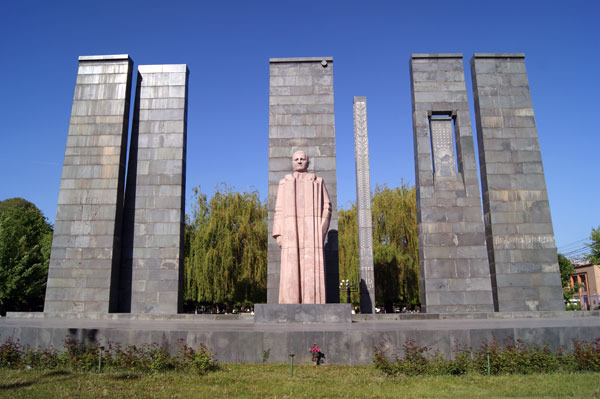
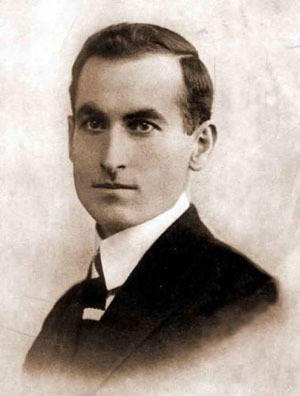
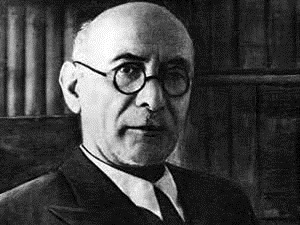
Avedis Aharonian

THIS WEEK IN ARMENIAN HISTORY

(Prepared by the Armenian National Education Committee[ANEC])


Death of Avedis Aharonian

(April 20, 1948)
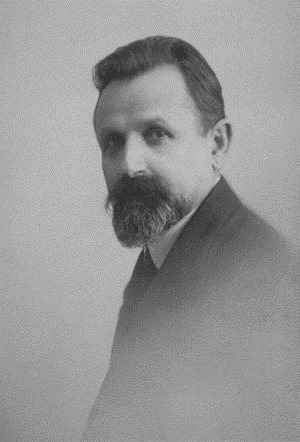
AvedisAharonan

Avedis Aharonan

Avedis Aharonian, known as the “singer of Armenian sorrow,” was one of the popular names of Eastern Armenian literature in the first half of the twentieth century. He was equally noted for his active participation in the revolutionary movement and the first Republic of Armenia.

Aharonian was born in 1866 in the village of Igdir Mava, in the district of Surmalu, which would be lost to Turkey after the Moscow and Kars treaties of 1921. He graduated from the Gevorgian Lyceum of Etchmiadzin in 1886, and taught for a few years. He became a member of the Armenian Revolutionary Federation in the 1890s and in 1897 he departed to Europe, where he graduated from the literature course of the University of Lausanne (Switzerland) in 1901. His first stories on Western Armenian emigrants and the movement of national liberation, published in the A.R.F. organ Troshag, attracted the attention of the readers. His most famous stories on these subjects are collected in the volume On the Road to Freedom (1908) and would make him the successor to novelist Raffi (1835-1888) as an inspiration for the Armenian liberation movement.

In 1902 he returned to the Caucasus and became the principal of the Nersesian Lyceum of Tiflis from 1907-1909. The persecution started by the Russian government against revolutionary parties, including the A.R.F., targeted him and he was arrested and jailed for two years. Due to his poor health, he was liberated and went first to Constantinople and then to Europe for treatment. He returned to the Caucasus before World War I, and in 1917 he was elected president of the Armenian National Council in Tiflis. After the independence of Armenia, he was elected a Parliament member and then president. He went to Paris in 1919, where he headed the Delegation of the Republic of Armenia that signed the Treaty of Sevres in 1920. He also participated in the conventions of London (1921) and Lausanne (1922-1923). He wrote down his reflections on the Armenian Cause in a book called From Sardarabad to Sevres and Lausanne (1943).

He had to stay abroad after the establishment of the Soviet regime in Armenia, where his works were banned. Besides his political activities, Aharonian continued writing a steady flow of stories, novellas, literary and political studies, memoirs, travelogues. Symbolist in some of his works and romantic in some others, his emotional style appealed to the heart of the masses and made him particularly cherished among Armenian readers throughout the world, even after his death.

It may be said that he fell on the line of duty. He was one of the keynote speakers at an event organized by Hamazkayin in Marseilles on February 11, 1934, before an audience of 2,000 people. His speech started with the following paragraph: “Armenian people, you have to know that this is a waiting situation. You have to believe that you will return to the land of your ancestors, your braves. We have not come here to stay; we have come here to return…”  He had just reached the fourth paragraph of his speech, when he was silenced by a stroke. He lived for the next fourteen years in Marseilles, unable to speak or write.

He passed away on April 20, 1948, and was buried in the cemetery of Père Lachaise, in Paris. His collected works were published in 10 volumes in Boston and Venice between 1947 and 1951.

After the independence of Armenia, his name was returned to the homeland. His works have been published over the years and a street in Yerevan bears his name.
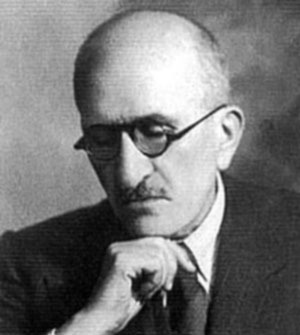
Foundation of Armenfilm

THIS WEEK IN ARMENIAN HISTORY

(Prepared by the Armenian National Education Committee[ANEC])


Foundation of Armenfilm (April 16, 1923)

The first Armenian movie, called “Armenian Cinema” (Հայկական սինեմա), was filmed in 1912 in Cairo (Egypt). In the same year, it was shown in several Armenian communities of the United States. But the first and biggest Armenian studio was created eleven years later, in 1923, in Yerevan.

The Council of Popular Commissars (Council of Ministers) of Soviet Armenia adopted a decision on April 16, 1923, to nationalize all private cinemas and to found the company “Petkino” (State Cinema), which was shortly thereafter renamed “Haypetfotokino” (Armenian State Photo Cinema). The board of the company was directed by Daniel Dznuni. The company was renamed “Haykino” in 1928 and then Yerevan Film Studio (1937).

The first film was a documentary, “Soviet Armenia” in 1924 (directed by I. Kraslavski). It was followed by the first feature film, H. Bek-Nazarian’s Namus (The Honor), a year later. A series of silent films by Bek-Nazarian, the pioneering director of Armenian cinema, and others brought recognition to Armenian productions within the Soviet Union. The beginning of the “talkies” was marked by the production of the masterpiece of Armenian cinema, Pepo (1935), also directed by Bek-Nazarian. It followed a long period of historical films, before and during World War II, including Zangezur (1938), by Bek-Nazarian, which won the USSR State Prize. However, Lev Atamanov filmed the first Armenian cartoon, The Dog and the Cat (1938), during this period.

After a period dominated by the production of documentaries, feature films resumed in 1954, and the period of maturity was reached in the 1960-1980s, when some of those films even made their way to the international market. The company was renamed Armenfilm in 1957 (it was known in Armenian as Hayfilm) and the studios were baptized with the name of Hamo Bek-Nazarian in 1966. Some of the more remarkable films of this period were: “Hello, It’s Me” (Frunze Dovlatyan, 1965), “Triangle” (Henrik Malian, 1967), “We Are Our Mountains” (Henrik Malian, 1969), “The Color of Pomegranate” (Sergei Parajanov, 1969), “Nahapet” (Henrik Malian, 1977), “A Piece of Sky” (Henrik Malian, 1980), “White Dreams” (Sergei Israelian, 1984), “The Tango of Our Childhood” (Albert Mkrtchyan, 1985), “Nostalgia” (Frunze Dovlatyan, 1990), and others.

After the fall of the Soviet Union, Armenfilm entered a period of decline and was privatized in 2005 to Armenia Studios LLC (a branch of CS Media Holding).

Henrik Malian’s “The Tango of Our Childhood” (Մեր մանկութեան Թանկոն), 1985. Watch the entire film by clicking the above link.

Vahan Tekeyan

THIS WEEK IN ARMENIAN HISTORY

(Prepared by the Armenian National Education Committee[ANEC])


Death of Vahan Tekeyan
(April 4, 1945)

Poet and public figure, Vahan Tekeyan belonged to the surviving generation of the Armenian Genocide and during the last three decades of his life he influenced an entire generation.

Tekeyan was born in Constantinople on January 21, 1878. He was the youngest of five children, fourteen years younger than his closest brother. His father passed away when he was eleven. He attended Nersesian, Berberian, and Getronagan schools, but did not finish his secondary schooling and was self-taught for the most part.

He went to work with an insurance firm as a secretary at the age of sixteen. Two years later, in 1896, he was transferred to Liverpool, England, just before the massacres of Armenians in Constantinople ordered by Sultan Abdul Hamid II. In 1897 he was sent to Marseilles, where he stayed for four years, and then to Hamburg (Germany). In 1901 he published his first volume of poetry, Burdens, in Paris. In 1904 he was in Egypt and the following year he began publishing the literary monthly Shirag with Mikayel Gurjian (1878-1965). After the restoration of the Ottoman Constitution in 1908, Tekeyan returned to Constantinople and resumed publication of Shirag for a short while. He was elected a member of the National Church Council. In 1911 he visited Armenia for the first time for the election of Catholicos of All Armenians Gevorg V Sureniants.VahanTekeyan

He published his second book, Miraculous Rebirth, in 1914, which was received with unanimous praise. It was on the eve of World War I, and Tekeyan would escape the fate of Armenian intellectuals during the genocide by chance. He was sent to Jerusalem to settle a church dispute as a representative of the Armenian National Assembly. At the outbreak of the war, he went to Cairo and followed the developments from there.

Tekeyan had been originally a member of the Social Democrat Hunchakian Party, and after its split in 1896 he entered the Reorganized Hunchakian Party. He went back to Yerevan in 1919 to lead negotiations on behalf of the Armenian National Delegation headed by Boghos Nubar Pasha with representatives of the Republic of Armenia. Then he participated in the Armenian Congress held in Paris in the same year.

He published his third book in 1919 (From Midnight to Dawn). The next year he returned to Constantinople after an absence of six years. In 1921 he was instrumental in the fusion of four parties that gave origin to the Democratic Liberal Party (Ramgavar Azadagan). Tekeyan became the editor of its organ, Joghovurti Tzayne, and in 1922, together with four other noted intellectuals (Gostan Zarian, Hagop Oshagan, Shahan Berberian, and Kegham Kavafian), founded the short-lived literary monthly Partzravank. From 1921-1922 he was also principal of Getronagan School.

After the occupation of Constantinople by Kemalist forces, Tekeyan left the city, and went to Bulgaria, Greece, Egypt, and Syria to supervise Armenian refugee and orphan care. He was particularly helpful to one of those orphans, future Armenian American writer Leon Surmelian (1906-1998), and encouraged and collected his Armenian poetry, which he published in a book in 1924, Joyful Light.

From 1926-1932 he became editor of Arev, his party’s publication in Cairo. He moved to Paris, where he published his fourth collection of poetry, Love (1933). After a stint at the Melkonian Educational Institution in 1935-1936, he became the founding editor of the daily Zartonk of Beirut in 1937. Then he returned to Cairo to resume editorship of Arev.

He published his last two books in 1943 (Song of Armenia) and 1944 (Odes). His poetry, be it lyrical, patriotic, or philosophical, would always reflect the sobriety of its author. By the time of his death, some of his poems had become classics, and had earned him the title of “Prince of Armenian poetry.” His literary style had already created a numerous following, which would be active for several decades after him.

After a long life of service, Tekeyan died in Cairo on April 4, 1945. The Tekeyan Cultural Association, founded in 1947, bears his name.


Alexander Miasnikian

THIS WEEK IN ARMENIAN HISTORY

(Prepared by the Armenian National Education Committee[ANEC])


Death of Alexander Miasnikian
(March 22, 1925)

Few communist leaders are still celebrated in Armenia after the collapse of the Soviet Union and the second independence. Alexander Miasnikian is one of them.

He was born in Nakhichevan-on-Don (Nor Nakhichevan), the town near Rostov founded by Armenian migrants from Crimea in the late eighteenth century, on January 28 (February 9 in the Gregorian calendar), 1886. Son of a small merchant, he studied first at the diocesan school of his hometown and then at the Lazarian Lyceum of Moscow from 1904-1906. He was attracted by revolutionary ideology as a student, first in Nakhichevan and then in Moscow. Miasnikian formally became a member of the underground revolutionary movement (the Bolshevik branch of the Russian Social-Democratic Party) in 1904 and was arrested and exiled to Baku in 1906. He continued his revolutionary activities, first in Baku and then in Moscow, where he graduated from the law department of Moscow University in 1911. Between 1912 and 1914, he worked as an assistant to a lawyer in Moscow and participated in the dissemination of political literature. His revolutionary nom de guerre was Al. Martuni (“son of fight”). AlexandrMiasnikian1

During those years, he also devoted himself to literary criticism and journalism. He edited ten periodicals. He published articles in the 1910s about the meaning of the discovery of the Armenian alphabet and the works of poets Mikayel Nalbandian, Hovhannes Tumanian, Hovhannes Hovhannisian, and Alexander Tzaturian. He wrote many times about the Armenian Question, which he labeled “Gordian knot,” where the disagreements and the interests of the European powers were tied.

Miasnikian was drafted into the Russian Army in 1914, where he promoted revolutionary ideas among the soldiers. After the February Revolution of 1917, he became a member of the Western Front’s frontline committee and was elected as a delegate for the 6th Congress of the Bolshevik Party. He later became chairman of the Northwestern Regional Committee of the Bolshevik Party, member of the Military Revolutionary Committee of the Western Region, and commander of the Western Front. In early 1919 he was appointed chairman of the Central Executive Committee and the Bolshevik Party in Bielorussia (Belarus).

After his long parenthesis outside Armenian life, Miasnikian, who was on the Polish front in 1920, was appointed chairman of the Council of People’s Commissars, the newly installed government of Soviet Armenia which replaced the Revolutionary Committee that had been in power after the fall of independent Armenia. He took the position in April 1921, after the end of the February uprising against the Soviet regime. He brought a letter from Vladimir Lenin, where the leader of the Soviet revolution exhorted his Armenian comrades: “(…) A slower, more careful, more systematic transition towards socialism; this is what is possible and necessary. To work at the same time to improve the situation of the villager and took over the great work of electrification and watering…”

Miasnikian’s constructive policy led to the formation of state institutions and the economic infrastructure of the republic, stabilizing the internal situation. He actively pursued work towards the eradication of illiteracy and the development of local manufacturing. Many intellectuals exiled in Iran before and after the February uprising returned to Armenia, while many others settled from Constantinople and other places. Many refugees from Western Armenia also started to settle in the country. He voted in July 1921 against the decision of incorporating Mountainous Karabagh into the territory of Azerbaijan, which was fueled by Joseph Stalin.

After the creation of the Transcaucasian Federative Republic in March 1922, where Armenia, Georgia, and Azerbaijan were integrated in one political unit, Miasnikian left his position and went to occupy leadership positions in the government of the federation as one of the chairmen of the Executive Committee and later first secretary of the Transcaucasian Committee of the Communist Party. AlexandrMiasnikian2

He died tragically on March 22, 1925, when he was departing from Tiflis (Tbilisi) to Sukhumi with Gevorg Atarbekian and S. Mogilevsky to participate in the Congress of the Soviets of Abkhazia. The “Junkers” airplane took fire due to an engine problem and the three men died. They were buried in Tbilisi three days later. Although the official version was an accident, there are views that it was not, and that the incident was orchestrated by, among others, the influential Georgian Bolshevik Laurenti Beria, who had started his career as right hand of Stalin. 

A factory, a square, and a street took Miasnikian’s name (in Russian Myasnikov) in Minsk, the capital of Belarus. Later, two cities in Armenia and Karabagh were named Martuni after his pseudonym, while a village in the province of Armavir was called Miasnikian. His statue is placed in Miasnikian Square of Yerevan.

THIS WEEK IN ARMENIAN HISTORY

(Prepared by the Armenian National Education Committee[ANEC])

March 15, 1921: Assassination of Talaat Pasha

On March 16, 1921, one of the headlines of The New York Times read: “Talaat Pasha Slain in Berlin Suburb.” After giving the details of the killing the day before, the report noted: “Talaat, whose name was on the second Entente list of Turkish war criminals, left Constantinople two years ago and had been living as a fugitive ever since under assumed names, first in Switzerland and later in Germany. He evidently feared the fate which has now overtaken him, for he had frequently changed his address in Berlin and at the time of his death was living at a pension in the West End.” The correspondent for the American newspaper added that the killer had been identified as an Armenian student (“Solomon Tellirian,” according to the Associated Press) and that “it is assumed that the deed was an act of revenge for the massacres of his compatriots.”
Jagadamard

On the front page of the daily paper, Jagadamard, the headline in Armenian below the banner reads, "An Armenian student kills Talaat Pasha."

In July 1919, the Turkish martial court of Constantinople had condemned to death in absentia, among others, the “Three Pashas,” the members of the Young Turk triumvirate that had led the Ottoman Empire during the war: Talaat (Minister of Interior and Great Vizir in 1917-1918), Enver (Minister of War), and Djemal (Minister of Navy). The three had already fled Turkey, and the sentences were never carried out either by Turkey or by the allies.

The 9th General Assembly of the Armenian Revolutionary Federation convened in Yerevan, the capital of the Republic of Armenia, between September and October 1919, and adopted a resolution to punish those responsible for the genocide. A list of 200 names was prepared. The secret operation received the code name “Nemesis” (the name of the Greek god of vengeance). It was led by Shahan Natalie (Hagop Der-Hagopian, 1884-1983) and Armen Garo (Bastermadjian, 1873-1923), the latter being the Armenian ambassador to the United States.
SoghomonTehlerian

The number one target of the operation was Talaat, who the U.S. Ambassador Henry Morgenthau had called the “Big Boss” of Turkey and already considered responsible of the extermination in his memoirs.

Soghomon Tehlirian (1897-1960), a 23-year-old student who had survived the Armenian Genocide in Erzinga, was selected to execute the mission. Some of the personnel in the Armenian diplomatic mission in Berlin gave logistic support, and other A.R.F. members worked from outside. Once Talaat’s whereabouts were established, Tehlirian arrived in the German capital in December 1920. For the next three months, he carried a surveillance task with his associates. He rented an apartment near the Turkish leader’s house in order to study his everyday movements. Talaat was killed by Tehlirian with a single shot on March 15, 1921, as he came out of his house in the Charlottenburg district. The assassination took place in broad daylight and led to Tehlirian’s immediate arrest by German police.

The young avenger was tried for murder on June 2-3, 1921. The three German defense attorneys focused on the influence of the genocide on Tehlirian’s mental state. When asked by the judge if he felt any sort of guilt, Tehlirian remarked, “I do not consider myself guilty because my conscience is clear … I have killed a man. But I am not a murderer.” It took the jury slightly over an hour to render a verdict of “not guilty.”

Operation Nemesis, which continued until 1922, went totally unnoticed at the time. The partial story of Talaat’s liquidation was told by Tehlirian in his memoirs, published in 1953. The main details of the operation were not uncovered until the 1980s.

THIS WEEK IN ARMENIAN HISTORY

(Prepared by the Armenian National Education Committee[ANEC])


Birth of Hrachia Adjarian
(March 8, 1876)

In times when “social mobility” was not a fashionable concept yet, the son of a shoemaker could become the foremost expert of the Armenian language as per European standards. Hrachia Adjarian, born in the Samatya neighborhood of Constantinople and blind in his left eye since the age of one, would be a legend in his lifetime and afterwards.Adjarian

In 1883, Adjarian, then seven, started his primary studies at the grammar school of Samatya, where he studied Armenian, Turkish, and French, and finished the entire school course in two years. He then attended the Sahagian School and graduated with honors in 1890. Three years later, he would graduate from the Getronagan School of Constantinople. He taught for a year in Kadiköy and then for another year at the Sanasarian Lyceum of Karin (Erzerum). After writing the first draft of his future Armenian Etymological Dictionary, in 1895 he went to Europe and studied with two eminent linguists of the time, who were also experts in the Armenian language: Antoine Meillet at the Sorbonne of Paris and Heinrich Hubschmann at the University of Strasbourg. He graduated in 1898 from the Sorbonne. A year before, at the age of 21, he was elected member of the prestigious Société de Linguistique de Paris.

Adjarian returned from Europe in 1898 to start his career as a teacher at the Gevorgian Seminary of Etchmiadzin, and then taught in Shushi (Gharabagh), Nor Bayazet (nowadays Gavar), Nakhichevan-on-Don (Nor Nakhichevan), Tehran, and Tabriz until 1923. He met his first wife, Arusiak, in Shushi. Meanwhile, he published studies of various Armenian dialects, catalogs of Armenian manuscripts and many other articles and also books. In the period until 1915, his most important works were Classification of dialectes arméniennes (1909), Armenian Dialectology (1911) and Armenian Provincial Dictionary, published in 1913 with more than 30,000 words. He became the founder of a series of branches of Armenian Studies, such as history of the Armenian language, Armenian dialectology, etcetera.

He survived the turmoil of World War I, the Armenian Genocide, the massacres of Armenians in Azerbaijan, and found refuge in Iran. In 1923 he was invited to settle in Soviet Armenia and join the faculty at Yerevan State University, where he taught for the next thirty years. He lost his wife in 1925, and later, at the insistence of his friends, he remarried one of his students, Sofia, who would be his faithful companion for the rest of his life. They adopted a daughter, Knarik.

In 1926 Adjarian started to publish his magnum opus, the Armenian Etymological Dictionary (1926-1935, seven volumes), which contained 11,000 roots of the Armenian language.

In 1937 he was elected corresponding member of the Academy of Sciences of Czechoslovakia. Ironically, in September of the same year, he would be arrested during the Stalinist purges on charges of having been an English spy in Soviet Azerbaijan and a member of a counter-revolutionary group of professors. He was interrogated and beaten on those trumped-up charges. His wife, under great peril, was able to hide his priceless manuscripts. The court condemned him to six years of imprisonment. Adjarian was finally released in December 1939 “for lack of corpus delicti.” He got back his position at the University.

In 1943 he would become a founding member of the Armenian Academy of Sciences. In the remaining years of his life, he started to publish some other fundamental works: History of the Armenian Language (2 vols., 1940-1951), Dictionary of Armenian Names (5 vols., 1942-1962), Complete Grammar of the Armenian Language in Comparison with 562 Languages (7 vols., 1952-1971). At the end of his life, he had accumulated over 200 scholarly publications. He left many unpublished volumes, some of which are still being published.

Adjarian passed away on April 16, 1953. The Institute of Linguistics of the Armenian National Academy of Sciences bears his name.


SUNDAY OF THE EXPULSION

SUNDAY OF THE EXPULSION

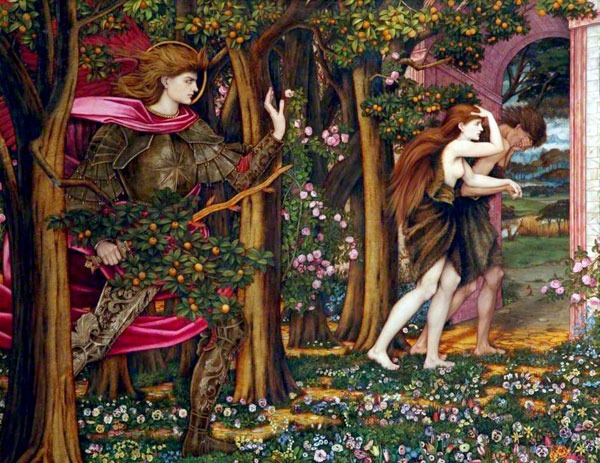
As of Monday we entered the period of Great Lent (Medz Bahk), and the Church has taken on a somber, mournful, and penitential manifestation. Beginning last Sunday, which was Poon Paregentan, the altar is closed with a dark curtain, symbolic of the expulsion of Adam and Eve from the Garden of Eden (See Geneses, Chapters 2 and 3).

Holy Communion is not offered during the Liturgy. It is a period of repentance and reflection on our spiritual journey toward Easter. We are reminded that through prayers and fasting we strive to please God and regain mankind’s original sinless formation.

Each of the Sundays during Lent has a theme. This Sunday is the Sunday of the Expulsion (Ardaksman Giragi). The message of this day is a continuation of last Sunday’s Paregentan theme, namely, Adam and Eve’s fall from grace and banishment from Paradise. The hymns sung on the first two Sundays of Lent remind us of the expulsion and give sinners the good tidings that they may render themselves worthy through repentance.
ExpulsionSunday

O Lord, you first gave the holy observance of the law in paradise. But the first creatures disobeyed you by eating the forbidden fruit and thus tasted the bitterness of sin and death. Therefore, enable us to taste the sweetness of your commandments.
(From the hymn sung on the Sunday of the Expulsion)

The February Revolt

THIS WEEK IN ARMENIAN HISTORY
(Prepared by the Armenian National Education Committee[ANEC])


The February Revolt

(February 18, 1921)

The government of the Republic of Armenia transferred the power to the incoming Armenian Bolsheviks on December 2, 1921, and the first independence came to an end: Armenia became a Soviet republic, nominally independent. The Military-Revolutionary Committee (Revkom) led by Sarkis Kasian arrived in Yerevan on December 6.FebruaryRevolt

The transference of government and loss of independence had been the choice between the lesser of two evils. On the west, Armenia had been defeated by the Turkish nationalist forces that responded to Mustafa Kemal, which had occupied Alexandropol, and the danger of a new massacre that would complete the genocide loomed over the country. It was expected that the new government, while dealing with the Turks with the sponsorship of Soviet Russia, would also address the myriad of problems that affected the exhausted population.

This did not happen. The newcomers, instead, caught in the fever of revolution and war communism, tried to apply to Armenia the same recipes that were being practiced in Soviet Russia.  Food was requisitioned from the starving population to be sent to Russia as “help from the Armenian workers.”  Repression against the former government and the Armenian Revolutionary Federation started. In late December about 1,200 high-ranking officers of the army of independent Armenia were arrested, including the heroes of the May 1918 battles, like generals Tovmas Nazarbekian, Movses Silikian, Daniel Bek-Pirumian, and Dro. They were forced to walk from Yerevan to Alaverdi (about 100 miles), and then dispatched to prisons in Baku and Russia; Daniel Bek-Pirumian, hero of the battle of Sardarabad, was shot in the Yerevan prison in February 1921.

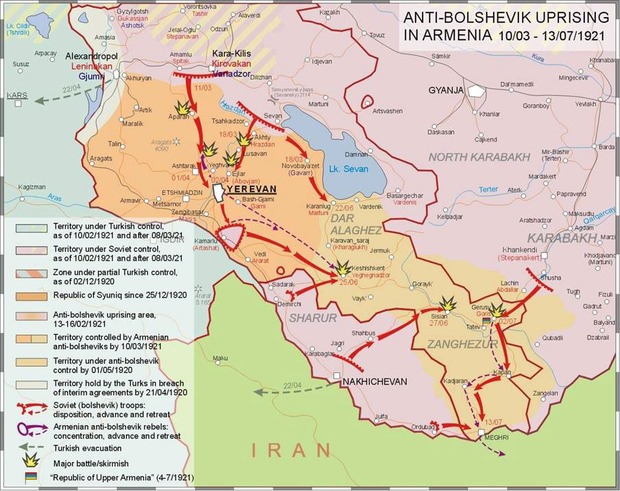
Economic suffering and political violence led to the brewing of a popular movement to put an end to the situation. In February 1921 many prominent A.R.F. members, who had also been active in the years of the Republic, like Levon Shant, Nikol Aghbalian, and Hovhannes Kajaznuni, were arrested. Some of them were killed in prison by Azeri killers armed with axes. Others were saved by the rebellion, which started on February 13 amid a group of refugees from Sasun who had settled on the foot of Mount Aragatz. In the next four days, the rebel forces, now headed by members of the A.R.F. who had eluded persecution, took Ashtarak, Echmiadzin, Garni, and Hrazdan. Yerevan was liberated on February 18 and the Bolshevik-led Military Revolutionary Committee retreated. The rebellion had been helped by the fact that the troops of the XI Red Army had been taken out of Armenia to participate in the sovietization of Georgia.

On February 18 the independence of Armenia was again proclaimed and the “Committee for the Salvation of the Homeland” took power under the leadership of the last prime minister of the independent Republic, Simon Vratzian. It issued an order that stated: “The Bolshevik regime in Armenia has been eliminated. Until the formation of a government, the whole authority is in the hands of the Committee for the Salvation of the Homeland.” A message to the delegation of the Republic of Armenia and to the leaders of the world powers, sent on the same day, remained unanswered. A response to a message sent to Georgia was received on February 21, when the Armenian embassy was reopened in Tiflis. However, four days later Georgia fell to the Soviet forces, and the rebellion in Armenia was left alone against the Communist forces. There was no help from the outside world, because it was obvious that the rebellion would fail sooner or later; the Soviet forces in Armenia had the support of Soviet Russia.

Bloody battles took place between the opposing sides during the short-lived period of freedom. The Bolsheviks attacked Yerevan on February 27, but were forced to retreat on March 1. After a two-week stop, they attacked again and briefly took Ashtarak, but were repelled on March 17. However, the numerical superiority of the Bolsheviks became crucial. Their great offensive started on March 24 and nine days later, on April 2, Yerevan fell.

The A.R.F. forces retreated without opposing serious resistance to avoid the destruction of the capital. Thousands of people, both civilians and soldiers, retreated to Zangezur, where the Republic of Mountainous Armenia had been formed, and joined the forces of Garegin Nzhdeh. The resistance ended in July, while the refugees and the leaders of the rebellion had already crossed the border to Persia.

The reasons of the revolt were later discussed by the Bolshevik authorities in Russia and the Military-Revolutionary Committee was replaced in April 1921 by the Council of People’s Commissars, led by Alexander Miasnikian until his death in 1925, whose policies ensured a more tolerant treatment of the population, the end of the rebellion, and the partial return of some of the refugees from Persia.

map 


Barouyr Sevag

THIS WEEK IN ARMENIAN HISTORY
(Prepared by the Armenian National Education Committee[ANEC])


Birth of Barouyr Sevag
 (January 26, 1924)

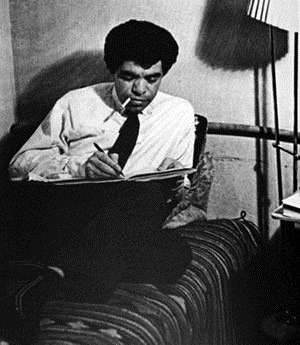
Barouyr Sevag was the successor of Yeghishe Charents in Soviet Armenian poetry, and was widely admired during his lifetime. Both had a short life, tragically cut off, although under different circumstances.

Barouyr Ghazarian was born in the small village of Chanakhchi (now Zankagadoun), in the district of Ararat, in Armenia. His parents were humble villagers. He attended the local school and graduated with honors in 1940, moving to Yerevan to study at the philological faculty of Yerevan State University. He had written his first poetry at the age of thirteen, and three of his poems appeared for the first time in the monthly Sovetakan Grakanutiun in 1942, with the signature Barouyr Sevag. The editor of the monthly, Ruben Zarian, was a literary scholar fond of Roupen Sevag, a fine poet who had been killed together with Taniel Varoujan in the Armenian genocide, and thought of perpetuating his memory by using his name as a pseudonym for the 18-year-old beginner.BarouyrSevag

Sevag graduated in 1945 and started postgraduate studies of Armenian literature at the Manuk Abeghian Institute of Literature of the Armenian Academy of Sciences. However, he had to cut his studies short in 1948. In the same year, he published his first book, The Immortals Command. He married linguist Maya Avakian and had a son, Hrachia.

In 1951 he moved to Moscow to study at the Maxim Gorky Institute of World Literature. There he met his future second wife, Nelly Menagharishvili, who would give him two more sons, Armen and Koriun. He graduated in 1955 and worked there from 1957-1959 as an instructor at the chair of Literary Translation.

Meanwhile, during the eight years of ostracism, he had managed to publish poetry, translations, and literary criticism in the Soviet Armenian press. His three books of poetry, however (Uncomprising Intimacy, 1953; Love Road, 1954; and With You Again, 1957), failed to unleash his entire potential. His long poem of 1959, The Unsilenced Belfry, dedicated to the life of Gomidas Vartabed, made his name instantly known by Armenian readers throughout the world. The book earned him the National Prize of Armenia in 1966.

Sevag went back to Yerevan in late 1959, and returned to the Manuk Abeghian Institute of Literature as a scholarly researcher from 1963-1971. He served as secretary of the Board of the Writers Union of Armenia from 1966-1971. In 1968 he was elected a representative at the Supreme Soviet of the Armenian SSR.

During the sixties, Sevag became the most powerful voice of Armenian poetry, and his articles on literary and public issues were widely read. In 1963 he published a groundbreaking collection of poetry, The Man in the Palm, which marked the return to the path of modernism that had been closed since the death of Charents a quarter of a century before.

In 1966 the poet and scholar defended a doctoral dissertation on the life and work of Sayat-Nova, the popular troubadour of the eighteenth century. After a defense of his dissertation that lasted four hours, his work was so highly esteemed that he was conferred with a second doctorate degree when the dissertation was approved and published in 1969.

Barouyr Sevag was not a dissident, but, as many intellectuals under the Soviet regime, some of his work clashed with censorship. This was particularly notorious when his last collection of poetry, Let There Be Light, was printed in 1969, but because of censorship issues, the entire edition of 25,000 copies remained undistributed until his death on June 17, 1971, in a car crash, while driving back to Yerevan. His wife also died in the crash, and only his two children survived. The circumstances of the accident were suspicious, and they have given fodder to lingering doubts about foul play by the Soviet regime.

The 47-year-old poet and his wife were buried in the backyard of his home, in Chanakhchi, which later became a museum. The village was renamed Zankagadoun after the independence of Armenia in honor of his poem The Unsilenced Belfry (Անլռելի զանգակատուն, Anlreli Zankagadoun).

Sergei Parajanov

THIS WEEK IN ARMENIAN HISTORY
(Prepared by the Armenian National Education Committee [ANEC])

Birth of Sergei Parajanov (January 9, 1924)

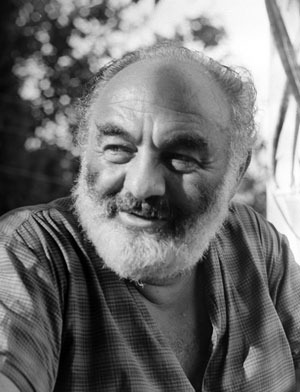
"Everyone knows that I have three Motherlands. I was born in Georgia, worked in Ukraine and I’m going to die in Armenia," declared Sergei Parajanov, one of the most talented names of Soviet cinematography. Despite running afoul of censorship and repression, his original cinematic style made significant contributions to Ukrainian, Armenian, and Georgian cinema.Parajanov

Parajanov was born in Tiflis, capital of Georgia, to Iosif Parajanov and Siranush Bejanova. At the age of 21, he traveled to Moscow (1945), enrolled in the directing department of VGIK (the All-Union State Institute of Cinematography), the oldest film school in Europe, and studied under directors Igor Savchenko and Aleksandr Dovzhenko.

In 1948 he was convicted of homosexual acts and sentenced to five years in prison, but was released under an amnesty after three months. In video interviews, friends and relatives contested the truthfulness of the charges. In 1950 he married his first wife, Nigyar Kerimova, from a Muslim Tatar family, in Moscow. She converted to Eastern Orthodox Christianity to marry him, and was murdered by her relatives because of her conversion a year later. After her murder, he left Russia for Kiev (Ukraine), where he produced three documentaries and several narrative films. He married his second wife, Svetlana Sherbatiuk, in 1956. Their son Suren was born in 1958 and they divorced in 1962.

In 1964 Parajanov abandoned socialist realism (the state-sanctioned art style in the Soviet Union) and directed Shadows of Forgotten Ancestors, a poetic film over which he had complete creative control. He would later dismiss all films he had directed before 1964 as “garbage.” This film won numerous international awards and turned him into a cult director.

He later left Kiev and moved to Armenia. He filmed Sayat Nova in 1968, choosing the life of the famous eighteenth-century Armenian troubadour as the apparent subject, but the film was immediately banned. He re-edited his footage and renamed the film The Color of Pomegranates. The film won much praise internationally and increased his popularity as a venerated director.

His projects were systematically banned or scraped between 1965 and 1973 because of charges of deviation from accepted artistic norms, until Parajanov was sentenced to five years in a hard labor camp in Siberia on charges of homosexuality and pornography in December 1973. Many international artists protested on behalf of the filmmaker without effect, including Federico Fellini, Michelangelo Antonioni, Jean-Luc Godard, François Truffaut, Luis Buñuel, Françoise Sagan, Yves Saint Laurent, Andrei Tarkovsky, and others. He obtained an early release in December 1977.

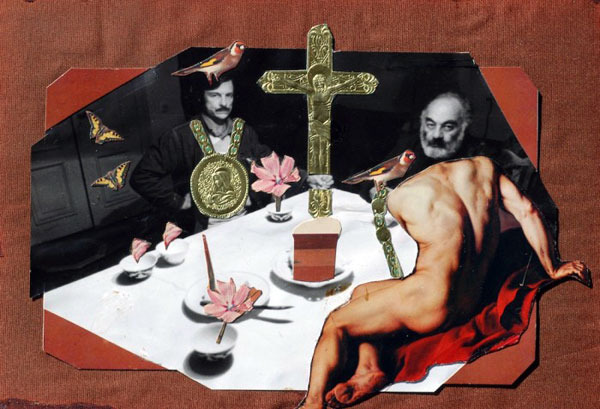
nightbirdThe imprisoned filmmaker produced a large number of miniature doll-like sculptures and some 800 drawings and collages, many of which are currently displayed at the Parajanov Museum in Yerevan.

After his return from prison to Tbilisi, he could not pursue his career. He was imprisoned again in February 1982 on charges of bribery and freed nine months later, although his health was seriously compromised after the harsh conditions of the Siberian camp.

After his release, the support of Georgian intellectuals allowed him to produce his last two films, which received critical and public acclaim: The Legend of Suram Fortress (1984) and Ashik Kerib (1988). He moved back to Armenia, where he started a project that would remain unfinished: his final film, The Confession. Its original film footage was assembled and released as Parajanov: The Last Spring, by his close friend Mikhail Vartanov in 1992.

Sergei Parajanov passed away on July 20, 1990, in Yerevan, a victim of cancer, at the age of 66. He left a legacy of sixteen films (feature and documentary), and ten unproduced screenplays and projects, including films on the Armenian legend of Ara the Beautiful and the Armenian epic David of Sassoun.