Christianity in Armenia

The origin of the Armenian Church dates back to the Apostolic age. According to the ancient tradition well supported by historical evidence, Christianity was preached in Armenia as early as the second half of the first century by the two disciples of Jesus Christ, namely, St. Thaddeus (John 14:22-24) and St. Bartholomew (John 1:43-51). During the first three centuries Christianity in Armenia was a hidden religion under heavy persecution.

It was at the beginning of the fourth century, 301 AD, that Christianity was officially accepted by the Armenians as the state religion. St. Gregory the Illuminator, the patron Saint of the Armenian Church, and King Thiridates III, the ruler of the time, played a pivotal role in the official Christianization of Armenia. It is a well recognized historical fact that the Armenians were the first nation to formally adhere to Christianity. This conversion was followed in the fourth and fifth centuries by a process of institutionalization and Armenization of Christianity in Armenia.


A Migrating Catholicossate

St. Gregory the Illuminator became the organizer of the Armenian Church hierarchy. From that time, the heads of the Armenian Church have been called Catholicos and still hold the same title. St. Gregory chose as the site of the Catholicosate then the capital city of Vagharshapat, in Armenia. He built the pontifical residence next to the church called "Holy Mother of God" (which in recent times would take on the name of St. Etchmiadzin, meaning the place where the Only-Begotten Son has descended), according to the vision in which he saw the Only-Begotten Son of God coming down from heaven with a golden hammer in his hand to locate the site of the new cathedral to be built in 302.

The continuous upheavals, which characterized the political scenes of Armenia, made the political power move to safer places. The Church center moved as well to different locations together with the political authority.

Thus, in 485, the Catholicosate was transferred to the new capital Dvin. In the 10th century it moved from Dvin to Dzoravank and then to Aghtamar (927), to Arghina (947) and to Ani (992). After the fall of Ani and the Armenian Kingdom of Bagradits in 1045, masses of Armenians migrated to Cilicia. The Catholicosate, together with the people, settled there. It was first established in Thavblour (1062), then in Dzamendav (1072), in Dzovk (1116), in Hromkla (1149), and finally in Sis (1293), the capital of the Cilician Kingdom, where it remained for seven centuries. After the fall of the Armenian Kingdom in Cilicia, in 1375, the Church also assumed the role of national leadership, and the Catholicos was recognized as Ethnarch (Head of Nation). This national responsibility considerably broadened the scope of the Church’s mission.


Two Catholicosates within the Armenian Church

The existence of two Catholicosates within the Armenian Church, namely the Catholicosate of Etchmiadzin (the Catholicosate of All Armenians), Etchmiadzin-Armenia, and the Catholicosate of the Graet House of Cilicia, Antelias-Lebanon, is due to historical circumstances. In the 10th century, when Armenia was devastated by Seljuks, many Armenians left their homeland and came to settle in Cilicia where they re-organized their political, ecclesiastical and cultural life. The Catholicosate also took refuge in Cilicia.

In 1375 the Armenian Kingdom of Cilicia was destroyed. Cilicia became a battleground for hostile Seljuks, Mamluks and other invaders. In the meantime Armenia was having a relatively peaceful time. The deteriorating situation in Cilicia on one hand and the growing cultural and ecclesiastical awakening in Armenia on the other, led the bishops of Armenia to elect a Catholicos in Etchmiadzin. The latter was the original seat of the Catholicosate, but it had ceased to function as Catholicossal See after 485. Thus, in 1441, a new Catholicos was elected in Etchmiadzin in the person of Kirakos Virapetsi. At the same time Krikor Moussapegiants (1439-1446) was the Catholicos of Cilicia. Therefore, since 1441, there have been two Catholicosates in the Armenian Church with equal rights and privileges, and with their respective jurisdictions. The primacy of honor of the Catholicosate of Etchmiadzin has always been recognized by the Catholicosate of Cilicia.


The Faith of the Armenian Church by Hratch Tchilingirian

The Faith of the Armenian Church is transmitted through the church’s Holy Tradition, that is, the ongoing life of the church from the time of Christ to our times. The Bible, liturgy and worship, writings of the church fathers, church councils, saints, canons, religious art and rituals organically linked together formulate the Holy Tradition of the Church. This Faith is articulated in the Creed of the Armenian Church, the formal declaration of beliefs, which in turn defines the church’s raison d’etre and sets the parameters of its mission and functioning.

The Armenian Church professes her faith in the context of her worship. Theologically, whatever the church believes, the church prays . As such, the Armenian Church’s worship and liturgy constitute a prime source for teaching and living her faith. Tradition, on the other hand, defines and formulates the "articles of faith" and transmits them from generation to generation.

As articulated in the Creed, the Armenian Church believes in One God, the Father Almighty who is the Creator of heaven and earth, of all things visible and invisible. Humanity (male and female) is created in the image and likeness of God, and as such is a special creature. However, because of the Fall of man, sin entered the world.

The Church believes in Jesus Christ, "the only begotten Son of God, who came down from heaven, was incarnate, was born of the Virgin Mary, by the Holy Spirit." He became man, suffered and was crucified, and was buried. He rose again from the dead on the third day and ascended into heaven and sits at the right hand of the Father. He will come again with glory to judge the living and the dead.

The Armenian Church believes in the Holy Spirit, uncreated and perfect, who proceeds from the Father, and together with the Father and the Son is worshipped and glorified. The Holy Spirit spoke to the prophets and apostles and descended into the Jordan river, witnessing Christ’s Baptism.

The Armenian Church is One, Holy, Apostolic, Catholic Church . She believes in one Baptism with repentance for the remission and forgiveness of sins. On judgment day, Christ will call all men and women who have repented to eternal life in His Heavenly Kingdom, which has no end. Christ overcame the power of death with His own death and gave salvation to all mankind.


Qestions & Answers on Armenian Christianity


Who brought Christianity to Armenia?

Christianity was brought to the kingdom of Armenia by two of Jesus’ Apostles, Thaddeus and Bartholomew in first century A.D.


When did the Armenian nation become Christian?

Christianity became the national religion in 301 A.D.


Who was responsible for Armenians embracing Christianity?

St. Gregory the Enlightener was imprisoned for years, and upon his release he converted King Tiridates III, by healing the king of an incurable affliction through the power of God. After, the king proclaimed Christianity the official religion of Armenia, making it the first country with a national Christian church, the pair helped spread the religion.


Who were Hripsime and the virgins?

Hripsime was one of a group of nuns who lived in Rome under the direction of their superior, Gayane, around 284-305 A.D. When Roman Emperor Diocletian tried to force the beautiful Hripsime to marry him, the nuns fled to Armenia. There, the Armenian king, Drtad, fell in love with Hripsime’s beauty and decided she should be his wife. But the nun refused to break her vows to God by marrying the king. King Drtad tortured Gayane, trying to get her to permit Hripsime to marry him, but Gayane refused to give in. Eventually King Drtad had Gayane, Hripsime, and the 32 nuns tortured and killed because they chose their faith and devotion to God over the wishes of a king.


What was the Battle of Avarayr?

Avarayr is the site in southeastern Armenia where St. Vartan and 1,036 noblemen fell defending the Christian faith against the Persian Empire.


Why is Mt. Ararat important to Armenians?

Mt. Ararat, now in Turkey, but once part of the ancient Armenian kingdom, is traditionally known as the resting place of Noah’s Ark.


Why was the Armenian alphabet created?

Until the 5th century, Christian worship in Armenia was conducted in Greek or Syriac, since there was no Armenian alphabet, hence no written language. In 404 A.D., St. Mesrob (at that time a monk) completed an alphabet of 36 letters. His objective was to translate the Bible into Armenian, and the golden age of classical Armenian literature began shortly thereafter.


What is Holy Muron?

Holy Muron is oil from extracts of more than 40 different kinds of plants that is blessed by the Catholicos once every seven years.

 
http://canadahye.com/en/frontend/home/page/78
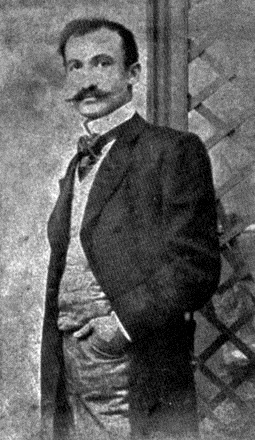
 

TEOTIG


THIS WEEK IN ARMENIAN HISTORY

(Prepared by the Armenian National Education Committee[ANEC])


Death of Teotig
 (May 24, 1928)

Almanacs were very fashionable in the Western world at the beginning of the twentieth century, when a real fever of publication started in the Armenian realm. Almanacs (daretsuyts) of very different size, quality, and duration—sometimes confused with yearbooks (darekirk)—would be published until the 1970s. In the history of Armenian almanacs, Teotig and his almanac would become synonyms and models.

Teotoros Lapjinjian was born in 1873 in Scutari (Üsküdar), a suburb of Constantinople on the Asiatic side of the Bosphorus, in a modest family that migrated from Erzinga. He would later adopt his childhood nickname Teotig as a literary pseudonym.

After primary studies at the local school, he first attended the Berberian College, but could not graduate due to financial problems. For a while, he attended the American-financed Robert College (now Bogazici University), which he could not finish either. In 1889, at the age of 16 he went to work as a bookkeeper in a store.

However, his avid interest in books and reading led him to self-teaching. He was just past his teens when he started to contribute literary pieces and essays to various newspapers. Meanwhile, he became a “bibliomaniac,” as he called himself: “I have not eaten, drunk, or bought clothes, and have allocated all my earnings to books,” he confessed once.Teotig

In 1902 he married Arshaguhi Jizvejian (1875-1922), a young woman educated in Paris and London. Three years later, he won the prestigious Izmirlian Literary Prize for a voluminous work on the Armenian dialect of Constantinople, which remained unpublished until the present.

1907 would become a crucial date in Teotig’s life. With the crucial assistance of his wife, he started the publication of his lifelong project, Amenun daretsutyse (Ամէնուն տարեցոյցը “Everyone’s Almanac”). For the next twenty-two years, the nineteen volumes, with a total of 8,500 pages, would offer the reader the most complete information about every aspect of Armenian life. The most important writers of the time would contribute literary pieces and articles on the most various topics. The almanac became a sort of illustrated encyclopedia of Armenian life during the first quarter of the twentieth century, with much information and photographs of unique nature in its pages.

In 1912 Teotig produced a book called Dib oo Dar (Typeface and Letter), on the 1500th anniversary of the creation of the Armenian alphabet (which at the time was commemorated in 1913) and the 400th anniversary of Armenian printing. In the same year, he published a collection of short stories, The New Year.

Teotig became one of the targets of the Turkish secret police at the beginning of World War I. In March 1915, right after the publication of the 1915 issue of the almanac, he was arrested and on the grounds of trumped-up charges, a war tribunal sentenced him to one year in the central prison of Constantinople. In March 1916, just out of prison, he was arrested in the street and sent to Anatolia with a caravan of deportees. He reached Bozanti, in Cilicia, where a group of Armenian young people was able to rescue him and hide him in a workplace of the Constantinople-Baghdad railway. He remained there, with a false identity, until the armistice of Mudros in November 1918, when he returned to Constantinople.

He resumed the publication of his beloved almanac. In the meantime, in 1919 he published Memorial to April 11 (April 24 in the old Ottoman calendar), on the first commemoration of the arrests of April 24, with 761 biographies of intellectuals. He also published a booklet, The Catastrophe and Our Orphans, in 1920, and wrote a lengthy study on the Armenian clergy victims of the genocide, commissioned by the Armenian Patriarchate, which was posthumously published in 1985.

His wife Arshaguhi, a writer and educator, died of tuberculosis in a sanatorium in Switzerland in 1922, and Teotig was left with their only son, Vahakn. In the same year, the triumph of Kemalism in Turkey prompted him to leave his birthplace and become an exile. He would live in precarious conditions in Corfu, Cyprus, and finally Paris, continuing the publication of his almanac in Vienna, Venice, and Paris. He passed away in Paris on May 24, 1928, when the publication of the 1929 issue was halfway. His son had come to the United States, where he would die in the 1960s.

In 2006, the Cilicia Publishing House of Aleppo, with the sponsorship of the Calouste Gulbenkian Foundation, started to reprint Teotig’s almanac in a photographic edition introduced and indexed by Aleppine intellectual Levon Sharoyan. Unfortunately, only 13 volumes had been published until 2011, when the catastrophic Syrian civil war disrupted the project, as well as the entire life of the Syrian Armenian community.


Syria: Love in the Time of War

By Sarkis Balkhian

Special for the Armenian Weekly
 http://www.armenianweekly.com/2014/05/16/syria-love-time-war/

Two years ago, Ani’s husband committed suicide, leaving behind a 3-year-old son and a 32-year old widow to endure the horrors of Syria on their own. To support her son, Ani started working as a saleswoman. But as the situation in Aleppo disintegrated, she was laid off and forced to survive on her husband’s savings.

Enduring the grotesque environment of Syria for two years was enough. Ani and her family moved to Lebanon with the hope that the conflict would soon subside and they would return back home.

In December 2013, Ani was ecstatic to have been allocated a cheap room in a shelter home administered by Catholic nuns. “My fortunes are changing,” she thought.

A few weeks later, she discovered that her son, Hagop, had developed a medical condition that required surgery. “I do not have the $2,700 needed for the operation,” she told me. “I spoke to the doctors and they informed me that the only way to secure a free of charge surgery is to bring medical documents from Syria. I have to go back!”

On Jan. 19, as politicians were convening in Montreux, Switzerland, to further demonstrate their diplomatic impotence at the Geneva II Conference on Syria, Ani was traveling back to Aleppo. Along the journey, she gazed upon a dozen corpses and hundreds of buildings that had turned into ruins. “Is my house still around,” she wondered.

Upon her return to Beirut, Ani had retrieved Hagop’s documents, but in the process had a near-death experience that would alter the course of her life forever. “If I had taken one more step, the bullet would have ripped open my skull,” she said. “I realized then, that Syria, my house, my properties have no value. The only thing that matters in this world is my son and his future.”

As she was leaving Aleppo, Ani brought with her all of the cash and jewelry she could gather. “I will run as far away from Syria as possible,” she said. “My son, my mother, and I will start a new life far away from this hell. I will never go back to Syria.”

The same week that Ani left Syria for the last time, Shaghig made the opposite journey back to Aleppo.

In April 2010, Shaghig was reciting a poem dedicated to the Armenian Genocide. Her recital was resounding and her stage presence was illuminating. Everyone at Aleppo’s Zvartnots Church Hall was mesmerized by her performance. Back then, she was a member of the AYF in Aleppo and a student of biotechnical engineering at the state university.

In 2012, her family fled the conflict in Aleppo and moved to the United States. Her father became a senior fellow at a highly reputable institute, while her mother was appointed to the regional director position of a women’s rights organization.

While living in a Fifth Avenue apartment in New York City, Shaghig completed her master’s degree in molecular biology. After graduation, she had everything one could hope for—money, education, connections, and a wealth of possibilities. But instead of pursuing the American Dream, Shaghig chose the Syrian nightmare.

In February 2014, she deserted the city that never sleeps, where blackouts are instantly associated with terrorism, and moved back to the hub of global jihad—Aleppo —a place where electricity and water are rare commodities these days.

Over the past several years, jihadists from across the globe have arrived in Syria to spread their perverted fatwas via destruction and annihilation. In February, when Shaghig returned to Aleppo, she had a fatwa of her own: the fatwa of love.

She had met Antranig during AYF meetings in Aleppo. Initially, they were Ungers [Comrades], but in time, the relationship evolved into a love affair.

Due to financial limitations and commitments to his family, Antranig was unable to leave Syria to seek a new life with Shaghig elsewhere. The only place where the couple could reunite was this, the ghost city of Aleppo. After returning to Syria, Shaghig began working at a medical institution and got engaged to Antranig.


Freedom!


Ani’s love for her son and Shaghig’s love for her fiancé led them in opposite directions—in and out of Syria. But along their journey, they attained something that most Syrians have sought for a very long time: freedom.

In Syria, freedom is often associated with a change in the government, but a true form of freedom is only attained through the liberation of the mind from the shackles of fear.

In Ani’s case, her love for her son Hagop forced her to overcome her fear of the unknown world that awaited her outside of Syria. This prompted her to leave behind an entire lifetime of memories, friends, and family to pursue a safe haven far away from the satanic environment of Aleppo.

On the other hand, Shaghig’s love for her fiancé helped her overcome the fear of death and destruction, now common features of life in Syria.


The names of individuals have been changed to protect their identities.


http://www.armenianweekly.com/2014/05/16/syria-love-time-war/

SIMON VRATSIAN

THIS WEEK IN ARMENIAN HISTORY

(Prepared by the Armenian National Education Committee[ANEC])


Death of Simon Vratsian
(May 21, 1969)

The last Prime Minister of the first Republic of Armenia, Simon Vratsian, was born in 1882, in the village of Medz Sala, near Nakhichevan-on-the-Don (today Rostov-on Don, in the northern Caucasus). He studied in the local Armenian and Russian schools, and in 1900 he was admitted in the Kevorkian Lyceum of Etchmiadzin, of which he was a brilliant graduate in 1906. By that time, he was already a member of the Armenian Revolutionary Federation. He had participated in the protests against the confiscation of the properties of the Armenian Church by the imperial regime (1903-1905), in the first Russian Revolution (1905), and in the Armenian self-defense during the Armeno-Tatar conflict of 1905-1906.SimonVratsian

He was a representative of the A.R.F. Student Union to the fourth General Assembly of the party (Vienna, 1907), which would have a decisive importance in its ideological orientation. He later went to St. Petersburg, where he studied law, agronomy, and pedagogy at the university. In 1910, when the persecution against the A.R.F. had peaked in the Russian Empire, he went to Karin (Erzerum), where Rostom, one of the founders of the party, had settled, gathering around him many experienced and promising members in order to dedicate himself to the development of Western Armenians in the country itself.

Vratsian edited the A.R.F. organ Harach in Karin for a year (1910-1911), and then, by Rostom’s recommendation, he was sent to Boston, where he edited Hairenik, then a biweekly, until 1914. He returned to Karin and participated in the crucial eighth General Assembly of the A.R.F., where he was elected a member of the Bureau and left for Tiflis, in the Caucasus. There, he took the editorship of the party daily Horizon and was elected member of the Armenian National Council, which dedicated itself to the organization of the volunteer movement.

After the independence of Armenia, Vratsian moved to Yerevan, where he was elected member of the Parliament and collaborated with the governments of Hovhannes Kachaznuni and Alexander Khatisian. In May 1920, when Hamo Ohanjanian became prime minister, Vratsian took the position of Minister of Labor and Agriculture, until the fall of the government in November 1920. As prime minister from November 24 to December 2, 1920, he would become the witness of the final agony of the independence after the defeat in the Armeno-Turkish war, which would force the sovietization of the country to escape destruction. He signed the agreement to transfer power to the Revolutionary Committee of the Bolsheviks, and he also became the president of the Committee of Salvation of the Homeland, which led Armenia after the rebellion of February 18, 1921.

After the re-establishment of Soviet power in April 1921, Vratsian took the road of exile and settled in Paris, where in 1924 he became the editor of Droshak [Pronounced Troshag], the A.R.F. central organ, until its demise in 1933. He wrote his monumental work, The Republic of Armenia, which he published in 1928, with a second, revised edition published in 1958. He was a prolific writer on political, historical, and literary subjects, and published and edited a journal of history and culture, Vem, between 1933 and 1939.

During the war, he moved to the United States, where he was one of the founders of the Armenian National Committee in 1945 and participated in the lobbying for the Armenian Cause during the founding meetings of the United Nations in San Francisco. In 1952, after the death of writer Levon Shant, Vratsian succeeded him as principal of the Nshan Palandjian Lyceum of Hamazkayin in Beirut, a position that he maintained until his death. He worked actively to consolidate the economic foundations of the Lyceum and continued the publishing of books, including a revised edition of The Republic of Armenia in 1958 and his memoirs in six volumes, “On the Path of Life."

He had written: “The regimes are a temporary phenomenon. The leaders are temporary. Nations and fatherlands, the people sitting in their homeland, are eternal. The freedom-loving Armenian people, which had trampled death with death, forged the independence of the fatherland. The Republic of Armenia continues to live in the heart of the Armenian people as a burning reminder of the past and a lively hope of the future.” He was far from imagining that Armenia would become an independent country less than a quarter of a century after his death in Beirut on May 21, 1969.


Stepanos Nazariants

THIS WEEK IN ARMENIAN HISTORY

(Prepared by the Armenian National Education Committee[ANEC])


Death of Stepanos Nazariants
(May 9, 1879)

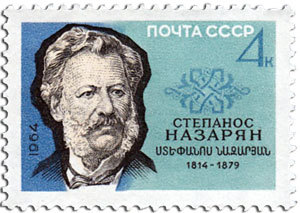
The nineteenth century was a period of awakening for Armenians both in the Ottoman and the Russian Empire. In Russia, one of its pioneers was Stepanos Nazariants, a journalist, teacher, and orientalist.StepanosNazariants

He was born on May 27, 1812, in Tiflis (now Tbilisi), in the family of a priest. The Nersisian Lyceum, founded by the primate of the Armenian Apostolic Church in Georgia, Nerses Ashdaragetsi, was opened in 1824, and Nazariants studied there between 1824 and 1829. He became also one of the first Armenian students of the Caucasus to study in Dorpat (now Tartu, in Estonia), which had one of the best, German-speaking universities in the Russian Empire.

In Dorpat, Nazariants first studied at the gymnasium for a year (1833-1834) and then at the schools of Medicine (1835-1836) and Philosophy (1836-1840). He wrote his doctoral dissertation on the work of Persian poet Ferdowsi, Shahnameh (Book of Kings). From 1842-1849 he was the chair of the Armenian language department at the University of Kazan. Later he moved to Moscow, where he was professor of Persian language and literature at the famous Lazarian Lyceum until his death. From 1869-1871 he was also principal of the lyceum.

Influenced by European enlightenment and Russian social movements of the 1840s, Nazariants wrote against the ruling feudal system and its ideology. He was a fervent advocate of modernization, as well as of patriotic ideas, such as the struggle against Turkish domination. He saw education as the key of Armenian progress, and supported the development of secular instruction and methods of pedagogy that were consistent and age-appropriate. He advocated the use of Modern Armenian, and perhaps his greatest achievement was the publication of the monthly Hiusisapayl (Aurora Borealis, 1858-1864), together with his younger associate Mikayel Nalbandian, which had an important role in the development of Eastern Armenian. The monthly became the voice of progressive ideas, and ran afoul of the Armenian establishment due to the discussion of sensitive issues, such as his criticism of serfdom and clerical power. Nazariants and Nalbandian developed principles to modernize literary criticism among Armenians.

Nazariants wrote a number of books in Russian (A Brief Survey of Thirteenth Century Armenian Literature, 1844; A Survey of Armenian Literature in the Modern Period, 1846) and Armenian (Discourse on Experimental Psychology, 1853; First Spiritual Nutrition for Armenian Children, 1853; Source Book of Religion, 1854, and Review of Modern Armenian Speaking, 1857). He also wrote poetry and translated many works, including those of Swiss poet Friedrich Schiller. He passed away on May 9, 1879, in Moscow.


KING LEVON I

THIS WEEK IN ARMENIAN HISTORY

(Prepared by the Armenian National Education Committee[ANEC])


Death of Levon I (May 2, 1219)


The Armenian state of Cilicia (1080-1375) started as a princedom under the rule of Rupen I (1080-1095). It played an important role during the first Crusades under the Rupenian dynasty. In a hundred years, it would become a kingdom due to the efforts of Prince Levon II.

Levon (known as Leo in non-Armenian sources) was born in 1150. His father Stepan, the third son of Prince Levon I (1129-1137), was murdered by the Byzantines in 1165. His paternal uncle, Mleh I (1169-1175), had made a host of enemies and was assassinated by his own soldiers in Sis. Levon’s elder brother, Rupen, elected to succeed Mleh, was imprisoned in 1183 by Prince Bohemond III of Antioch, who had begun hostilities against him in alliance with Prince Hetum III of Lambron.Levon_I

Levon became regent during his brother’s absence. Rupen was released in 1187 after the payment of a large ransom and cession of two cities to Antioch. He relinquished power to his brother and retired to the monastery of Drazark.

Levon II had an initial rapprochement with Bohemond III as a result of the alliance between Byzantium and Sultan Saladin of Egypt. He even married Isabelle, a niece of his rival’s wife.

He approached Frederick I Barbarossa, the German emperor, when he entered the Armenian territories on his way during the Third Crusade, but the emperor drowned in Cilicia in 1190. Nevertheless, Levon participated in the siege of Acre and in 1191 he joined King Richard the Lionheart in the conquest of Cyprus.

Levon II was intent upon ensuring the security of Cilicia. He entered in conflict with Saladin, who died in 1193, and Bohemond III, whom he took prisoner in the same year. A solution of the conflict between Cilicia and Antioch was found when Raymond of Antioch, son of Bohemond III, married Levon’s niece Alice. However, Raymond died soon and Alice and her infant son Raymond-Rupen were returned to Cilicia. The Armenian prince determined that his great-nephew should inherit Antioch on the death of Bohemond III.

Levon II pressed for a royal crown and sought the assistance of German emperor Henry VI and Pope Celestine III. The latter required submission of the Armenian Church to Rome, but this was opposed by the Armenian bishops. Byzantine emperor Alexios III sent Levon a royal crown, and the negotiations between an Armenian embassy headed by Bishop Nerses of Lambron and the Byzantine side in Constantinople centered on religious questions, and were fruitless in the end.

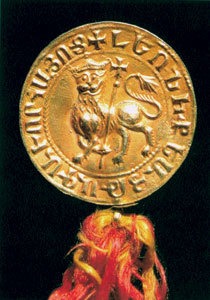
Finally, Levon II was crowned on January 6, 1198, in Tarsus by Catholicos Gregory VI Abirad, and received another royal insignia by the Papal legate, Archbishop Conrad of Mainz. After the fall of the Bagratuni kingdom of Ani in 1045, an Armenian kingdom had been restored. He was Levon II when a prince, but after his coronation, he became Levon I, because he was the first king of that name. He would issue coins with the legend “King of All Armenians” (Takavor Amenayn Hayots).

Levon I was entangled in the conflict of succession of Antioch. When Bohemond III died in 1201, although the barons had sworn allegiance to the king’s great-nephew Raymond-Roupen, Bohemond’s second son, Count Bohemond of Tripoli, opposed the validity of the oath and was installed as Bohemond IV of Antioch. The Papacy, the Templars, the emir of Aleppo, and the Seljuk Sultan of Konia were involved in the conflict at one time or another. Levon was finally able to install Raymond-Roupen as prince of Antioch in 1216.

Meanwhile, he received “injurious information” about his wife Isabelle. The king imprisoned her in the fortress of Vahka, where she died around 1206. He married Sibylle, the half-sister of King Hugh I of Cyprus, in 1211. His daughter Rita (d. in 1220) married King John I of Jerusalem in 1214.

However, before his death in 1219, Levon quarreled with his great nephew Raymond Roupen and named his young daughter Zabel (born in 1215) as his rightful heir. Levon I is known in Armenian history as Levon I Medzakordz (the Magnificent). Several years of conflict for the succession of the throne of Cilicia would ensue. Finally, in 1226 Zabel would marry Hetum, son of Constantin of Baberon, and this would end the long dynastic and territorial rivalry, unifying the two most powerful families of the kingdom: the Rupenians and the Hetumians.


Panos Terlemezian

THIS WEEK IN ARMENIAN HISTORY

(Prepared by the Armenian National Education Committee[ANEC])


Death of Panos Terlemezian
(April 30, 1941)

Many Armenian intellectuals were also involved in the movement of national liberation at the end of the nineteenth and beginning of the twentieth century. Painter Panos Terlemezian was one of them.

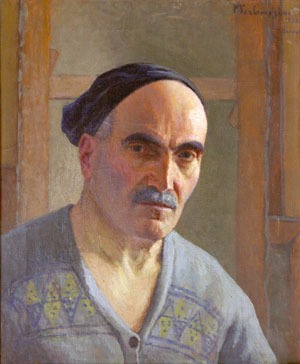
Self portrait by Panos TerlemezianHe was born in Aygestan, the Armenian suburb of the city of Van, on March 3, 1865. His father was a farmer. After studying at the elementary school, he attended the Van Central College (1881-1886), which he graduated with honors. He became a teacher, while at the same time he joined the first Armenian political party, the Armenagan Organization, founded in 1885.

His political activities attracted the attention of the Turkish government, which tried him in absentia. In 1893 he escaped to Persia and later to Tiflis, in the Russian Empire. After working for a while there, he 1895 he moved to St. Petersburg, where he entered the school of the Art Society. The Turkish government had him imprisoned in 1897 and sent to prison in Tiflis and then in Yerevan, from where he was exiled to Persia. In 1898 he clandestinely traveled to Paris and entered the Académie Julian in 1899. He graduated in 1904, when he won the first prize for his works in the academy’s exhibition. His work “ThKomitas Vardapet by Panos Terlemeziane Entrance of the Monastery of Sanahin” (1904) won the gold medal of an all-European exhibition in Munich (Germany).

After living and creating in Armenia between 1905 and 1908, he returned to Paris for the next two years. In 1910 he moved to Constantinople, where he lived and exhibited until 1913, when he returned to Van. He was one of the seven members of the military authority that led the successful self-defense of Van in April-May 1915 and allowed some 200,000 Armenians of the town and the environment to save their lives. After the evacuation of the town and the emigration of the population towards the Caucasus, he settled in Tiflis, where he participated in the organization of the Union of Armenian Artists.

After the end of the war, Terlemezian lived again on the move. He was in Constantinople, Italy and France between 1919 and 1922, and crossed the Atlantic Ocean to the United States, where he lived for the next five years, always painting and giving exhibitions. Finally, in 1928 he settled in Soviet Armenia, where he continued producing landscapes, a genre where he excelled, and portraits of celebrated Armenians. He received the title of People’s Artist in 1935. He passed away on April 30, 1941. The Art School (now Art College) of Yerevan bears his name.


The Message of His Holiness KAREKIN II
Supreme Patriarch and Catholicos of All Armenians
On the Occasion of the Feast of the Holy Resurrection
 of our Lord Jesus Christ
Mother See of Holy Etchmiadzin, April 20, 2014

In the Name of the Father, Son and Holy Spirit, Amen.

“I am the light of the world.
Whoever follows me will never walk in darkness,
but will have the light of life.”
John 8:12

Dearly Beloved Sons and Daughters in Armenia and the Dispersion,

The feast of the wonderful Holy Resurrection of our Lord Jesus Christ has illuminated our souls with bountiful hope. Our Savior has Risen from the dead; the tool of execution – the Cross – has been transformed into the tree of life; man and universe have been renewed by the grace of life and eternity.

Today risen with Christ, is the new creation, the path of a new life, bright with life-giving light, which is granted by the Savior. “I am the light of the world. Whoever follows me will never walk in darkness, but will have the light of life.” These words of our Risen Lord are a divine invitation for an eternal, as well as an earthly illuminated life, directed to each individual since the graces of the Holy Resurrection are distributed for all; including those who as yet, are not walking the path of faith; including those, who brokenhearted by the trials of life, are rebelling against God. The graces of the Holy Resurrection are dispersed also in those places where men and women have become bitter through wars and enraging terrorism, where hearts have become hardened, where people bear the severe burden of misery, where angelic children are sacrificed, all as results of poverty, indifference, and military actions. Today, the darkness-dispersing light of Christ’s Resurrection shines over all conflicts that disrupt the life of mankind, over humanitarian and environmental disasters, economic and political crises, and all worries and challenges. The belief in the Resurrection, which transformed the course of history, and educated soul and mind, created culture, guided states to progress; offered standards for justice and rights for all mankind, philanthropic values and principles; remains also today the miraculous power on which we shall rely and through which the world and the souls of men shall be renewed by new achievements, peace and love, to transfigure with goodness the life of humankind. Today, there are no societies or states without concerns, needs or problem. However, societies and states cannot have progress – and are even doomed to annihilation – if they do not possess the vision and goals of life, progress, and perfection, established on spiritual-moral values; and apostles devoted to the same.

Indeed, the greatest achievements of mankind are the heroisms of individuals who possessed vision; just as those disciples of Christ who spread the light of Christianity, who with their powerful faith in God, and a self-sacrificing sense of duty, laid the beginning of the path of eternal life in this world, for the sake of humanity’s salvation, happiness and wellbeing. Everyone who believes in God, who has love for creation and his fellow man, is an apostle and will implement his mission with the confident knowledge that the source of grace is God’s blessing, which dispels the gloom from life; that God’s help multiplies the fruits of labor, God’s consolation dissipates hopelessness and sadness, and God’s heavenly justice reinforces the foundations of earthly justice. It is with this knowledge and the elevation of this spirit that the wounds of the present world shall be healed, the course of nations and societies be established on paths of love and solidarity, and life be transformed by the light of resurrection, which is the commandment of our Lord and the sacred mystery of the Resurrection of Christ.


Dear and Pious Faithful,

The good news of the Risen Savior today is an invitation to our people dispersed throughout the world to not submit to the difficulties of our national life; rather to invest efforts with steadfast will for the prosperous and bright future of our native land and our people. In the tempests of centuries, where would our people be if not strengthened by the graces of Christ’s Resurrection? If not having love for our homeland and nation? And not able to turn that, into a buttress in times of difficulties, and strength, to live, create and rise up? We can determine solutions to the trials and challenges we face with unshakeable desire to transform life, by fidelity to our Christian values, via the noble and good path, and with our undertakings, and our nation-devoted and beneficial works. The feast of the Holy Resurrection brings to us the encouragement to bring to life with a hopeful spirit those plans that each individual – by responding to the call of the Lord – is able to realize for our familial, societal, state and national life, by not differentiating between the personal interest and the national and people’s interest. Let us serve in our calling and responsibility with spirit and devotion; let us not aspire for successes only for ourselves, rather for one another, for the progress of our native and national life, and as the Lord instructs, consider that we have done all that we were obligated to do. (Luke 17:10.)

We extend our fatherly words especially to our young children in Armenia and the Diaspora, exhorting them to be the bearers of the divinely commanded mission; combining with hope and faith the marvelous vigor of youth with our national life. Keep strong the life-affirming spirit of youth when facing the difficulties and imperatives of our lives, the self-centered and passing soul-destructive trends and views of our times, and all gales of temptation, by steadfastly standing on the rock of faith and recalling the words of our Lord Jesus Christ, “I am the light of the world. Whoever follows me will never walk in darkness, but will have the light of life.” Dear and beloved young sons and daughters, you who are the first generation of our free homeland, keep and protect in your hearts as your most precious treasure, the light of your souls that is free with Christ, that is bright through Christ. A people that has scions educated with the laws of God, has real hopes and a positive future. You shall bring to fruition those hopes in the fields of our state, national and ecclesiastical life, at the borders of our homeland, at the positions of defense of our language and culture in the Diaspora; to strengthen our country, to defend the right of Artsakh to live free, to defend our righteous cause on the fields of battle; and with the devotion of your souls, through your responsibilities in our native and national life, you shall weave the victories of our life in this new day.

At present, the difficult situation of the Armenians in the Middle East, continues to concern our national life, especially in Syria. In recent weeks, a new crisis has arisen in Kessab where militant extremists have engaged in military actions with the assistance of the Republic of Turkey. The destruction of an Armenian populated area and the deportation of its Armenian residents is the continuation of the same criminal policy adopted by Turkey towards the Armenian people, which we shall confront through state, ecclesiastical and national structures, to defend the rights of our people through unified efforts.

Today, beloved, when the light and excitement of the Feast of the Resurrection of Christ once again beat in our hearts, and in accord to the apostolic words, having put on the armor of light (Romans 13:12), as one who rejoices in our Risen Lord, and as apostles who reject grief, fear and despair, let us go out to transform our lives and the lives of our brethren and people with new accomplishments, through steadfast steps that shall turn the vision of our bright future into a shining reality.

It is with this faith and wish that we extend the greetings with the good tiding of the Holy Resurrection to the incumbents of the hierarchal sees of our Holy Apostolic Church: His Holiness Aram I, Catholicos of the Great House of Cilicia; His Beatitude Archbishop Nourhan Manougian, Armenian Patriarch of Jerusalem; His Beatitude Archbishop Mesrob Mutafian, Armenian Patriarch of Constantinople; and all clergy of our Church; as well as to the heads of all sister Churches and their faithful flock. We appeal for the Lord’s protection for them and His daily assistance in their divinely commanded mission.

With the appeal for the graces of Christ’s Resurrection, we convey our greetings to the President of the Republic of Armenia, Serzh Sargsian, and the First Lady, present here today for the Divine Liturgy. We extend our greetings and best wishes as well to the President of the Artsakh Republic, Bako Sahakian, and to all state officials of the Armenians, and all representatives of diplomatic missions accredited in Armenia. We extend our fatherly love and blessings with the joyful news of the Holy Resurrection to all of our sons and daughters dispersed throughout the world.

On this holy and cherished Easter Sunday, our prayer from the depths of our heart, is for the graces of Resurrection to reinforce you, dear Armenian people, to live in faith and hope and love, and to build the new good day of our lives in solidarity.

         May God grant peace to the entire world under His Holy Right Hand, grant prosperity and progress to our homeland, and brilliance to our Holy Church and our faithful Armenian nation, to praise today and always, the Holy Resurrection of our Savior.


Christ is Risen from the dead.
Blessed is the Resurrection of Christ.


MESSAGE OF HIS HOLINESS KAREKIN II, SUPREME PATRIARCH AND CATHOLICOS OF ALL ARMENIANS, ON HOLY WEEK

“Dear faithful people,

Great Lent marked the days of prayer, spirituality and reflection, a time for meditation, penitence and repentance to rejuvenate our spirits and strengthen our faithfulness, piousness and love for one another.

The genuine desire and the honorable aspirations of God-willing brotherly love, solidarity and support are a powerful and vital force that will help us to overcome our hardships, keeping the independent and peaceful foundations of our Homeland unshaken. The doors of God’s mercy and blessings will be widely opened before our personal and national life if we keep God’s commandments.

We are entering Holy Week. With the sacrament of the church services, through contemplation and empathy we witness the last events of Our Lord’s earthly life – Christ’s passion, His Crucifixion and Death, also His miraculous Resurrection, granting humanity a resurrected life on Earth and eternal life in the Heavenly Kingdom.

Beloved faithful children in Armenia and the Diaspora, let the message of Holy Week become a call for all of us to reinforce our path to God, rejecting unworthy thoughts, words and deeds, so that we can accept the good news of Our Lord’s life- giving Resurrection with a pure heart, and a hopeful and joyful spirit. Let us make the effort to have the Christian spirit manifested everywhere in our reality, valuing honesty and devotion of the spirit, righteousness, sympathy and mercy, and become closer to God. Let us pray for each other, extending our joint prayers for the Syrian people, the Armenians in Kessab and all the Syrian Armenians, and offer them our support so that our brothers and sisters in Kessab, who were displaced by armed extremists, can overcome the hardships and return to their homes and continue living peacefully with God’s will.

From the Mother See of Holy Etchmiadzin we extend Our Pontifical blessings, wishing from the bottom of Our heart that the graces of Our Lord’s Holy Resurrection descend upon our lives, and reinforced with divine blessings, that we always remain loyal children of God, and devoted children of our nation and Holy Church. May the heaven- sent peace be established in all the corners of the world, staying strong in our independent Homeland and in the lives of our people dispersed throughout the Diaspora.

May Our Lord Jesus Christ’s grace, love and mercy be with us and all for now and forevermore. Amen.”


Avedis Aharonian

THIS WEEK IN ARMENIAN HISTORY

(Prepared by the Armenian National Education Committee[ANEC])


Death of Avedis Aharonian

(April 20, 1948)

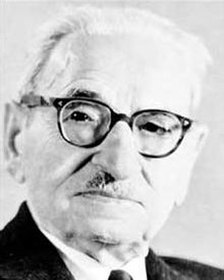
AvedisAharonan

Avedis Aharonan

Avedis Aharonian, known as the “singer of Armenian sorrow,” was one of the popular names of Eastern Armenian literature in the first half of the twentieth century. He was equally noted for his active participation in the revolutionary movement and the first Republic of Armenia.

Aharonian was born in 1866 in the village of Igdir Mava, in the district of Surmalu, which would be lost to Turkey after the Moscow and Kars treaties of 1921. He graduated from the Gevorgian Lyceum of Etchmiadzin in 1886, and taught for a few years. He became a member of the Armenian Revolutionary Federation in the 1890s and in 1897 he departed to Europe, where he graduated from the literature course of the University of Lausanne (Switzerland) in 1901. His first stories on Western Armenian emigrants and the movement of national liberation, published in the A.R.F. organ Troshag, attracted the attention of the readers. His most famous stories on these subjects are collected in the volume On the Road to Freedom (1908) and would make him the successor to novelist Raffi (1835-1888) as an inspiration for the Armenian liberation movement.

In 1902 he returned to the Caucasus and became the principal of the Nersesian Lyceum of Tiflis from 1907-1909. The persecution started by the Russian government against revolutionary parties, including the A.R.F., targeted him and he was arrested and jailed for two years. Due to his poor health, he was liberated and went first to Constantinople and then to Europe for treatment. He returned to the Caucasus before World War I, and in 1917 he was elected president of the Armenian National Council in Tiflis. After the independence of Armenia, he was elected a Parliament member and then president. He went to Paris in 1919, where he headed the Delegation of the Republic of Armenia that signed the Treaty of Sevres in 1920. He also participated in the conventions of London (1921) and Lausanne (1922-1923). He wrote down his reflections on the Armenian Cause in a book called From Sardarabad to Sevres and Lausanne (1943).

He had to stay abroad after the establishment of the Soviet regime in Armenia, where his works were banned. Besides his political activities, Aharonian continued writing a steady flow of stories, novellas, literary and political studies, memoirs, travelogues. Symbolist in some of his works and romantic in some others, his emotional style appealed to the heart of the masses and made him particularly cherished among Armenian readers throughout the world, even after his death.

It may be said that he fell on the line of duty. He was one of the keynote speakers at an event organized by Hamazkayin in Marseilles on February 11, 1934, before an audience of 2,000 people. His speech started with the following paragraph: “Armenian people, you have to know that this is a waiting situation. You have to believe that you will return to the land of your ancestors, your braves. We have not come here to stay; we have come here to return…”  He had just reached the fourth paragraph of his speech, when he was silenced by a stroke. He lived for the next fourteen years in Marseilles, unable to speak or write.

He passed away on April 20, 1948, and was buried in the cemetery of Père Lachaise, in Paris. His collected works were published in 10 volumes in Boston and Venice between 1947 and 1951.

After the independence of Armenia, his name was returned to the homeland. His works have been published over the years and a street in Yerevan bears his name.