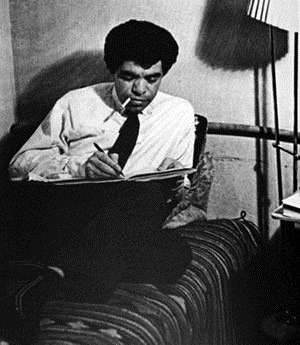
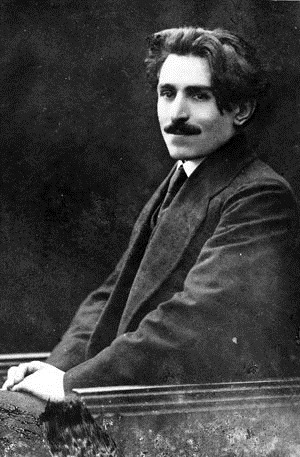
Barouyr Sevag

THIS WEEK IN ARMENIAN HISTORY
(Prepared by the Armenian National Education Committee[ANEC])


Birth of Barouyr Sevag
 (January 26, 1924)

Barouyr Sevag was the successor of Yeghishe Charents in Soviet Armenian poetry, and was widely admired during his lifetime. Both had a short life, tragically cut off, although under different circumstances.

Barouyr Ghazarian was born in the small village of Chanakhchi (now Zankagadoun), in the district of Ararat, in Armenia. His parents were humble villagers. He attended the local school and graduated with honors in 1940, moving to Yerevan to study at the philological faculty of Yerevan State University. He had written his first poetry at the age of thirteen, and three of his poems appeared for the first time in the monthly Sovetakan Grakanutiun in 1942, with the signature Barouyr Sevag. The editor of the monthly, Ruben Zarian, was a literary scholar fond of Roupen Sevag, a fine poet who had been killed together with Taniel Varoujan in the Armenian genocide, and thought of perpetuating his memory by using his name as a pseudonym for the 18-year-old beginner.BarouyrSevag
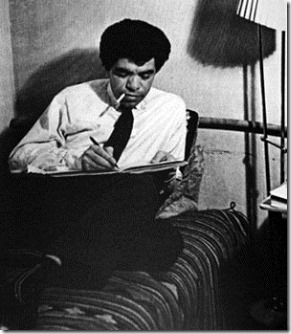
Sevag graduated in 1945 and started postgraduate studies of Armenian literature at the Manuk Abeghian Institute of Literature of the Armenian Academy of Sciences. However, he had to cut his studies short in 1948. In the same year, he published his first book, The Immortals Command. He married linguist Maya Avakian and had a son, Hrachia.

In 1951 he moved to Moscow to study at the Maxim Gorky Institute of World Literature. There he met his future second wife, Nelly Menagharishvili, who would give him two more sons, Armen and Koriun. He graduated in 1955 and worked there from 1957-1959 as an instructor at the chair of Literary Translation.

Meanwhile, during the eight years of ostracism, he had managed to publish poetry, translations, and literary criticism in the Soviet Armenian press. His three books of poetry, however (Uncomprising Intimacy, 1953; Love Road, 1954; and With You Again, 1957), failed to unleash his entire potential. His long poem of 1959, The Unsilenced Belfry, dedicated to the life of Gomidas Vartabed, made his name instantly known by Armenian readers throughout the world. The book earned him the National Prize of Armenia in 1966.

Sevag went back to Yerevan in late 1959, and returned to the Manuk Abeghian Institute of Literature as a scholarly researcher from 1963-1971. He served as secretary of the Board of the Writers Union of Armenia from 1966-1971. In 1968 he was elected a representative at the Supreme Soviet of the Armenian SSR.

During the sixties, Sevag became the most powerful voice of Armenian poetry, and his articles on literary and public issues were widely read. In 1963 he published a groundbreaking collection of poetry, The Man in the Palm, which marked the return to the path of modernism that had been closed since the death of Charents a quarter of a century before.

In 1966 the poet and scholar defended a doctoral dissertation on the life and work of Sayat-Nova, the popular troubadour of the eighteenth century. After a defense of his dissertation that lasted four hours, his work was so highly esteemed that he was conferred with a second doctorate degree when the dissertation was approved and published in 1969.

Barouyr Sevag was not a dissident, but, as many intellectuals under the Soviet regime, some of his work clashed with censorship. This was particularly notorious when his last collection of poetry, Let There Be Light, was printed in 1969, but because of censorship issues, the entire edition of 25,000 copies remained undistributed until his death on June 17, 1971, in a car crash, while driving back to Yerevan. His wife also died in the crash, and only his two children survived. The circumstances of the accident were suspicious, and they have given fodder to lingering doubts about foul play by the Soviet regime.

The 47-year-old poet and his wife were buried in the backyard of his home, in Chanakhchi, which later became a museum. The village was renamed Zankagadoun after the independence of Armenia in honor of his poem The Unsilenced Belfry (Անլռելի զանգակատուն, Anlreli Zankagadoun).
Sergei Parajanov

THIS WEEK IN ARMENIAN HISTORY
(Prepared by the Armenian National Education Committee [ANEC])

Birth of Sergei Parajanov (January 9, 1924)

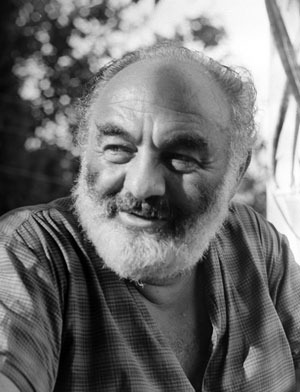
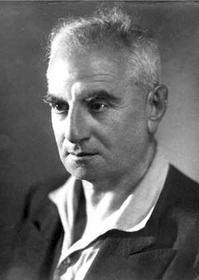
"Everyone knows that I have three Motherlands. I was born in Georgia, worked in Ukraine and I’m going to die in Armenia," declared Sergei Parajanov, one of the most talented names of Soviet cinematography. Despite running afoul of censorship and repression, his original cinematic style made significant contributions to Ukrainian, Armenian, and Georgian cinema.Parajanov

Parajanov was born in Tiflis, capital of Georgia, to Iosif Parajanov and Siranush Bejanova. At the age of 21, he traveled to Moscow (1945), enrolled in the directing department of VGIK (the All-Union State Institute of Cinematography), the oldest film school in Europe, and studied under directors Igor Savchenko and Aleksandr Dovzhenko.

In 1948 he was convicted of homosexual acts and sentenced to five years in prison, but was released under an amnesty after three months. In video interviews, friends and relatives contested the truthfulness of the charges. In 1950 he married his first wife, Nigyar Kerimova, from a Muslim Tatar family, in Moscow. She converted to Eastern Orthodox Christianity to marry him, and was murdered by her relatives because of her conversion a year later. After her murder, he left Russia for Kiev (Ukraine), where he produced three documentaries and several narrative films. He married his second wife, Svetlana Sherbatiuk, in 1956. Their son Suren was born in 1958 and they divorced in 1962.

In 1964 Parajanov abandoned socialist realism (the state-sanctioned art style in the Soviet Union) and directed Shadows of Forgotten Ancestors, a poetic film over which he had complete creative control. He would later dismiss all films he had directed before 1964 as “garbage.” This film won numerous international awards and turned him into a cult director.

He later left Kiev and moved to Armenia. He filmed Sayat Nova in 1968, choosing the life of the famous eighteenth-century Armenian troubadour as the apparent subject, but the film was immediately banned. He re-edited his footage and renamed the film The Color of Pomegranates. The film won much praise internationally and increased his popularity as a venerated director.

His projects were systematically banned or scraped between 1965 and 1973 because of charges of deviation from accepted artistic norms, until Parajanov was sentenced to five years in a hard labor camp in Siberia on charges of homosexuality and pornography in December 1973. Many international artists protested on behalf of the filmmaker without effect, including Federico Fellini, Michelangelo Antonioni, Jean-Luc Godard, François Truffaut, Luis Buñuel, Françoise Sagan, Yves Saint Laurent, Andrei Tarkovsky, and others. He obtained an early release in December 1977.

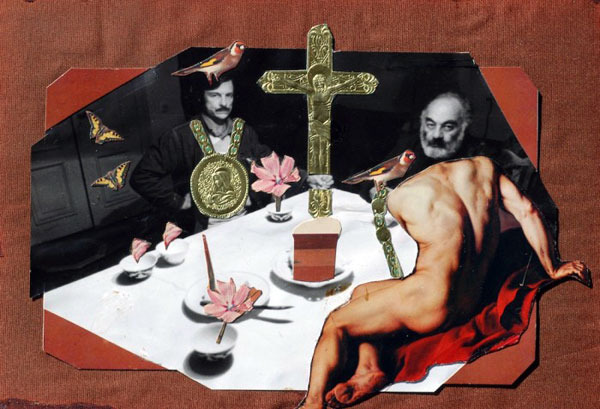
nightbirdThe imprisoned filmmaker produced a large number of miniature doll-like sculptures and some 800 drawings and collages, many of which are currently displayed at the Parajanov Museum in Yerevan.

After his return from prison to Tbilisi, he could not pursue his career. He was imprisoned again in February 1982 on charges of bribery and freed nine months later, although his health was seriously compromised after the harsh conditions of the Siberian camp.

After his release, the support of Georgian intellectuals allowed him to produce his last two films, which received critical and public acclaim: The Legend of Suram Fortress (1984) and Ashik Kerib (1988). He moved back to Armenia, where he started a project that would remain unfinished: his final film, The Confession. Its original film footage was assembled and released as Parajanov: The Last Spring, by his close friend Mikhail Vartanov in 1992.

Sergei Parajanov passed away on July 20, 1990, in Yerevan, a victim of cancer, at the age of 66. He left a legacy of sixteen films (feature and documentary), and ten unproduced screenplays and projects, including films on the Armenian legend of Ara the Beautiful and the Armenian epic David of Sassoun.


Christmas on January 6th

Christmas on January 6th?

by Hratch Tchilingirian


            "Armenian Christmas," as it is popularly called, is a culmination of celebrations of events related to Christ’s Incarnation. Theophany or Epiphany (or Astvadz-a-haydnootyoon in Armenian) means "revelation of God," which is the central theme of the Christmas Season in the Armenian Church. During the "Armenian Christmas" season, the major events that are celebrated are the Nativity of Christ in Bethlehem and His Baptism in the River Jordan. The day of this major feast in the Armenian Church is January 6th. A ceremony called “Blessing of Water” is conducted in the Armenian Church to commemorate Christ’s Baptism.

            It is frequently asked as to why Armenians do not celebrate Christmas on December 25th with the rest of the world. Obviously, the exact date of Christ’s birth has not been historically established—it is neither recorded in the Gospels. However, historically, all Christian churches celebrated Christ’s birth on January 6th until the fourth century.

            According to Roman Catholic sources, the date was changed from January 6th to December 25th in order to override a pagan feast dedicated to the birth of the Sun which was celebrated on December 25th. At the time Christians used to continue their observance of these pagan festivities. In order to undermine and subdue this pagan practice, the church hierarchy designated December 25th as the official date of Christmas and January 6th as the feast of Epiphany. However, Armenia was not affected by this change for the simple fact that there were no such pagan practices in Armenia, on that date, and the fact that the Armenian Church was not a satellite of the Roman Church. Thus, remaining faithful to the traditions of their forefathers, Armenians have continued to celebrate Christmas on January 6th until today.

In the Holy Land: January 19th

            In the Holy Land, the Orthodox churches use the old calendar (which has a difference of thirteen days) to determine the date of the religious feasts. Accordingly, the Armenians celebrate Christmas on January 19th (January 6 in Julian calendar) and the Greek [Russian, Coptic …] Orthodox Church celebrates on January 7th (December 25 in Julian Calendar).

THIS WEEK IN ARMENIAN HISTORY
(Prepared by the Armenian National Education Committee[ANEC])

Death of Vahan Terian [Derian]
(January 7, 1920)

At the beginning of the twentieth century, the lyrical production of Vahan Derian marked a new era in Eastern Armenian poetry. He was hailed by Hovhannes Tumanian as the most original poetical voice of his age, and his works closed the first period of modern Armenian literature.VahanDerian

His real name was Vahan Der Krikorian. He was born on January 28, 1885 in the village of Gandza, in the region of Akhalkalak (Djavakhk), today in Georgia. He departed to Tiflis, where his elder brothers were studying, in 1897. He learned Russian with them and prepared to enter the Lazarian Oriental Institute in Moscow. He was admitted in 1899 at the Institute, where he met and befriended several young people who would become important public and literary figures, such as Alexander Miasnikian, Boghos Makintsin, Tsolak Khanzadian, and others. He graduated in 1906 and entered Moscow University.

However, Terian had already engaged in revolutionary activities, as a sympathizer of the Bolshevik branch of the Russian Social Democratic Party. Soon after entering the university, he was arrested and briefly jailed in the prison of Butirka in Moscow.

After his liberation, he published his first volume of poetry, Twilight Dreams, in Tiflis (1908). It was very well-received by readers and critics for its originality. Sadness and pain, spring and love, the homeland and its fate were some of the markers of his poetry, which became the basis for many songs still interpreted today. He married Susanna Pakhalova in 1911 and published the first volume of his collected poetry, titled Poems, in 1912, where he gathered also works written after 1908. He left Moscow University in 1913 and went to St. Petersburg University, where he majored in Oriental Studies.

His wife died in 1916 after giving birth to a daughter, who did not survived. In the same year, the first signals of tuberculosis appeared in the poet. Terian went to the Caucasus for treatment, but the first Russian Revolution (March 1917) prompted him to abandon the region and return to St. Petersburg. He became a close collaborator to Stalin, the future strongman of the Soviet Union.

Derian participated actively in the second Russian Revolution of November 1917, led by the Bolshevik Party, and the civil war that ensued. As Armenian representative at the Commissariat of Nationalities led by Stalin, he participated actively in the writing of the decree on Western Armenia that was issued in January 1918 and proclaimed its freedom of self-determination. As a member of the Central Executive Committee of Soviet Russia, Terian was assigned a mission in Turkestan in late 1919, but his illness had gotten worse and the poet was forced to stop in Orenburg, in Russia, where he passed away on January 7, 1920 at the age of 35. His daughter Nvard, fruit of his relationship with Anahit Shahinjanyan, was born posthumously, in April 1920.

The memory of the poet has been evoked in July in his birthplace with a “Day of Derian Poetry” since 1967, which gathers thousands of admirers every year.

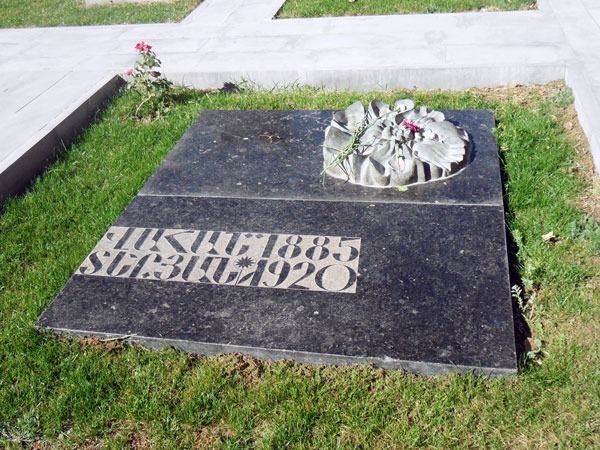
DeriansToumb

The tomb of Vahan Derian at the Pantheon in Yerevan’s Gomidas Park.

Armenian Music in Milwaukee

By David Luhrssen 


Armenian music from the present and past will be live on stage in Milwaukee during the next several months. 

First up, a composition by Detroit’s Eve Beglarian, based on a traditional melody, will be performed as part of Present Music’s "Women in the Chamber" program. An internationally acclaimed ensemble from Milwaukee dedicated to exploring classical music from the 20th and 21st centuries, Present Music will perform Beglarian’s music as part of a concert of work by contemporary female composers. The concert is scheduled for 2 p.m., Jan. 9 at the Women’s Club of Wisconsin, 813 E. Kilbourn Ave.; and 7:30 p.m., Jan. 10 and 11 at Anodyne Coffee Roasters, 224 W. Bruce St. For tickets call (414) 271-0711 or go to www.presentmusic.org. 

Later this year, a nationally recognized touring group called East of the River will present a performance of centuries-old music in a program called "Levantera." Led by Jesse Kotansky on oud and violin, the concert promises to "travel east through the Balkans to Armenia and the Middle East." East of the River will perform at 5 p.m., March 15 at UWM’s Zelazo Center, 2400 E. Kenwood Blvd. For tickets call (414) 225-3113 or go to EarlyMusicNow.org. 

Birth of Hagop Oshagan

THIS WEEK IN ARMENIAN HISTORY
(Prepared by the Armenian National Education Committee[ANEC])

Birth of Hagop Oshagan

(December 9, 1883)

When Hagop Oshagan, one of the foremost Armenian writers of the twentieth century, passed away at the age of 65, he left many thousands of pages of published works in newspapers and many more that were unpublished. In Beirut alone, 33 volumes of published or previously unpublished works bearing his name were published after his death, between 1958 and 2013.HagopOshagan

He was born Hagop Kufejian in the village of Sölöz, near Brusa, in Asia Minor. He was a dropout from school and an autodidact, who read voraciously the classics of the nineteenth century, including Dostoyevsky, his inspiration for his novels. He published his first story in 1902, but his literary career started after 1909 in Constantinople. By 1914 he was already known by his literary criticism and his short stories. He became, along with Gostan Zarian, Kegham Parseghian,  Taniel Varoujan, and Aharon, the founder of the short-lived monthly Mehyan, with the hope of starting a literary movement among Western Armenians that was cut short by the genocide.

He was on the Turkish list of targeted intellectuals, but he managed to escape persecution and arrest, and lived in hiding in Constantinople until early 1918, when he surreptitiously crossed the border into Bulgaria, where he married Araksi Astarjian. They would have three children, Vahe, Anahid, and Garo, of which the first two would be writers. (Vahe Oshagan would become one of the leading intellectuals of the Diaspora in the second half of the twentieth century.) They returned to Constantinople after the Armistice. Kufejian started to use the name Hagop Oshagan around 1920 in the newspaper Jagadamard. He became a teacher and continued his literary production. In 1922 he published another short-lived journal, together with Zarian, Vahan Tekeyan, Shahan Berberian, and Kegham Kavafian, but the new attempt at a literary revival was cut short by the retreat of the Allied forces from Constantinople and the victory of the Kemalist movement in Turkey. He left the city, as many other Armenian intellectuals and much of the community did, and moved back to Bulgaria. After 1924, Oshagan worked as a teacher, first in Cairo, then in Nicosia, at the Melkonian Educational Institute, and finally, after 1934, at the Seminary of Jerusalem. He forged his reputation as a charismatic literature teacher, and a demanding literary critic.

Oshagan published two collections of short writings in the early 1920s, but then he focused on his novels. His literary life was defined by the Catastrophe (he practically coined the term Aghed to name the event that had swept over Western Armenian culture in 1915), as he shifted into the literary reconstruction of the lost world. His magnum opus, Mnatsortats (The Remnants), a three-volume novel published in 1932-1934, depicted the life of a Western Armenian family and the complicated Turkish-Armenian relationship on the eve of the Catastrophe. However, he was unable to write a projected final volume where he intended to represent the deportation itself. The first volume of this novel has just been translated into English by G. M. Goshgarian.

He also wrote the “novel of Western Armenian literature,” Panorama of Western Armenian Literature, a monograph that encompassed the period 1850-1915 in ten volumes, of which only the first was published at the time of his death, and the last nine were published in the next quarter of a century.

Hagop Oshagan passed away in Aleppo on February 17, 1948, on the eve of a planned visit to the killing fields of Der Zor. He was buried at the Armenian Cemetery of the city, in an imposing funeral attended by some 20,000 people.


Hagop Baronian

THIS WEEK IN ARMENIAN HISTORY

(Prepared by the Armenian National Education Committee [ANEC])


Birth of Hagop Baronian
(November 19, 1843)

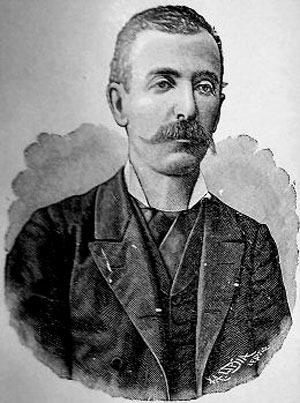
Every society and every point in time needs critics. Critics may lash out at negative points, and they can hit very hard. However, they will hit even harder if they use satire as their weapon. This is why the late nineteenth century critics of Armenian society are not remembered today, but Hagop Baronian has become the most famous Armenian satirist writer of all time.

He was born in Adrianople (nowadays Edirne, in Eastern Thrace) on November 19, 1843, in a family belonging to the poor class. After graduating from the local Arshaguniats School, he studied for a year at the Greek school of the town (1857-1858). Then he had to contribute to family living. He first worked two years at a pharmacy, and then entered a tobacco company as a bookkeeper. Self-teaching and continuous reading made up for his lack of formal education.

He moved to Constantinople in 1863 and taught at the Scutari Baronian Lyceum, where one of his students was Bedros Turian, the future poet. He entered journalism in 1871 as editor-in-chief of the newspaper Yeprad, but soon took a position as editor of the newspaper Meghu, published by Harutiun Svajian, and turned it into a well-known satirical publication. Meghu ceased publication in 1874 and Svajian transferred the right of publication to Baronian, who renamed it Tadron. Becoming the publisher, Baronian gave a free ride to his lashing and educational wit to criticize the negative aspects of society. However, economic troubles ended the publication of Tadron in 1879.

Baronian married Satenik Etmekjian in 1879 and they had two children, Zabel and Ashod. In the same year, he started to work for Minas Kapamajian’s Luys, as the editor of the comic section. His writing attracted a lot of attention, but Kapamajian did not appreciate him, and Baronian was forced to stop his contribution to Luys.

He started to publish the monthly Khigar in 1884, and despite financial hurdles and short interruptions, managed to continue it until 1888. Some of his most important satirical works were published here.

Between 1871 and 1888, he published more than 10,000 pages in the newspapers, although most of his works were published in book form posthumously. His most important works were the novel The Honorable Beggars, the collection of stories The Perils of Politeness, the satirical chronicles A Trip in the Neighborhoods of Constantinople and National Big Shots, and the comedies The Oriental Dentists and Brother Baghdasar.

To make ends meet, Baronian became a teacher of accountancy at the Getronagan School of Galatia from 1888-1890. One of his students was the famous linguist Hrachia Ajarian. He died of tuberculosis on May 27, 1891, at the age of 48, leaving his widow and his young children penniless. Nevertheless, a compact crowd participated in his burial. His colleague Mateos Mamurian, another noted journalist, wrote: “How many people who loved education and the nation responded to the invitation formulated by the Armenian newspapers at the time of his illness…? As a matter of fact, what did we do for the poor man? What did the nation make collectively for its brave son? It made the burial and just decided to collect monies for his orphans. There was not a single official body or individual who would put a crown of flowers on the immortal Baronian, even though his works are his perennial crowns.”

As supreme irony, Baronian was buried in the cemetery of Ortakeuy without a tombstone marking his grave, and the exact location was soon forgotten. Nevertheless, his works were widely published and read after his death; his plays have been frequently performed and even turned into movies (The Perils of Politeness and The Honorable Beggars were adapted into plays), and the comedy theater of Yerevan bears his name.

MARIE JACOBSEN

130th BIRTHDAY OF MARIE JACOBSEN

Yesterday, November 6, was the 130th birthday of Marie Jacobsen, the 24-year old Danish missionary who saved thousands of Armenian children during the Genocide. She was lovingly called “Mama” by the thousands who grew up under her care, first in Kharpurt, and later in an orphanage located between Byblos and Beirut in Lebanon called “The Birds Nest.”

The Birds Nest remained under DanMarieJAcobsonish supervision until 1970 when the Danish missionaries turned it over to the care of the Catholicosate of the Great House of Cilicia, as it continues to this day. Marie Jacobsen was extraordinary because of her lifelong devotion to missionary work and to Armenian children, but she was also extraordinary because she kept voluminous diaries. She kept extensive day by day accounts and records of events. Her diaries are one of the most detailed and most important primary accounts of the genocide.

We will light a candle in her memory this Sunday in church. Hope you will also.

To read a remembrance of Marie Jacobsen, “Pink Flowers for Mama,” that appeared in the April 1996 issue of Outreach click here.

Posted from Eastern Prelacy’s E-Newsletter.

Stepan Malkhasiants

THIS WEEK IN ARMENIAN HISTORY
(Prepared by the Armenian National Education Committee[ANEC])

Birth of Stepan Malkhasiants
(November 7, 1857)

Modern Armenian did not have a fully comprehensive dictionary of the language until the mid-twentieth century, and such a dictionary was the result of the two-decade efforts of one man, Stepan Malkhasiants.

Stepan (Stepanos) Malkhasiants was born on November 7, 1857 in Akhaltskha, actual Djavakhk, in the Republic of Georgia. He graduated from the Armenian parish school and then continued studies at the Russian district school of his hometown and the Kevorkian Seminary of Vagharshapat (1874-1878). He entered the School of Oriental Studies of the Imperial University of St. Petersburg in 1878 and graduated with a Ph.D. in Armenian, Sanskrit, and Georgian in 1889. By then, he had already published his first scholarly work, the critical edition of tenth-century historian Asoghik’s Universal History (1885).

In 1890 Malkhasiants started his long educational career as teacher at the Nersisian School of Tbilisi, where he worked for twenty years. He was also the principal of the school from 1903-1906, and during these years he married Satenik Benklian. He produced the history of the Nersisian School, as well as several textbooks and many articles in the scientific and popular press. He also wrote two seminal monographs on the grammar of Classical Armenian.
Malkhasiants

A portrait of Stepan Malkhasiants painted by Martiros Saryan.

Between 1910 and 1919 he became principal of several schools:  Hovnanian Girls’ School of Tbilisi (1910-1914), Kevorkian Seminary of Vagharshapat (1915-1917), Gayanian School of Tbilisi (1915-1919). After 1917 he became one of the leading figures of the newly-founded Armenian Popular Party (one of the ancestors of the current Armenian Democratic Liberal Party). Finally, in 1919 he settled in Armenia and worked for a year at the University of Armenia, which was opened in Alexandropol (now Gumri). His report to the Parliament in 1918 became the grounds for the adoption of the Armenian tricolor flag as the official symbol of the first independent Republic (1918-1920). He gave the first lecture at the recently opened Yerevan State University on February 1, 1920.

Malkhasiants published several important works in the last decades of his life, such as the critical edition of seventh century historian Sebeos (1939), and the Modern Armenian version of Movses Khorenatsi’s (1940) and Pavstos Buzand’s (1947) histories. He received a doctorate honoris causa in 1940 and became a founding member of the Armenian Academy of Sciences in 1943. But his lifetime achievement was the publication of the Explanatory Dictionary of the Armenian Language (Հայերէն բացատրական բառարան), in four volumes and 2,380 pages in three columns, in 1944-1945.

He had already acquired great experience in the preparation of dictionaries and the publication of the four-volume dictionary was the result of more than two decades of meticulous research. The dictionary, with 120,000 entries, comprised the vocabulary of Classical, Medieval, and Modern Armenian (both Eastern and Western), as well as dialects and even neologisms entering the language until 1940 with examples of usage. The dictionary, published exceptionally in Classical spelling (instead of the spelling currently in use in Armenia), still remains a fundamental source for any student of the Armenian language. It won the State Prize of the Soviet Union and was reprinted three times (Beirut, 1955-1956; Tehran, 1982; Yerevan, 2008).

Malkhasiants became a member of the Supreme Council of Holy Echmiadzin after 1944 and a member of the editorial board of the journal Echmiadzin. He passed away on July 21, 1947 in Yerevan, shortly before his ninetieth anniversary.


By David Luhrssen


(Greenfield, Wis.) The Mazmanian Family took its audience on a musical world tour with Armenia as the home base. At their Oct. 26 concert at St. John the Baptist Armenian Church in Greenfield, the quartet journeyed across Eastern Europe, to Spain via Cuba, to Ireland and the U.S., but their repertoire’s heart and soul was rooted in the Armenian homeland.

Leading the San Francisco ensemble was violinist Greg Mazmanian, a veteran musician who has performed with the San Francisco Symphony Orchestra along with Frank Sinatra, Tony Bennett and Ray Charles. He acted as the evening’s gracious host and humorous icebreaker in brief introductions for each piece on the program, and leading his three grown children through the selections. Ida anchored the quartet on piano with siblings Eddy and Rose joining their father on violin.

The Mazmanian Family

The Mazmanians harmonized virtuosity and entertainment in a program that included Gypsy music, a rendition of the jazz standard “Take Five” as never heard before and an original variation on the familiar melody of “Fiddler on the Roof.” The torrid flamenco rhythms of “Malaguena” by Cuban composer Ernesto Lecuona provided lively contrast. The Mazmanians responded to an audience request by performing a medley of Irish jigs.

Much of the evening, however, was rooted in Armenian traditional music, especially the melodies collected at the turn of the 20th century by Gomidas Vartabed and transmuted into art songs. After a standing ovation, the Mazmanians concluded their concert with a rousing encore of Aram Khachaturian’s “Sabre Dance.”