IVAN AIVAZOVSKY

THIS WEEK IN ARMENIAN HISTORY
(Prepared by the Armenian National Education Committee [ANEC])


Birth of Ivan Aivazovsky
(July 29, 1817)

Ivan Aivazovsky is considered one of the greatest marine painters in history. Famous Russian story writer Anton Chekhov popularized the winger word “worthy of Aivazovsky’s brush,” used for “describing something ineffably lovely.”
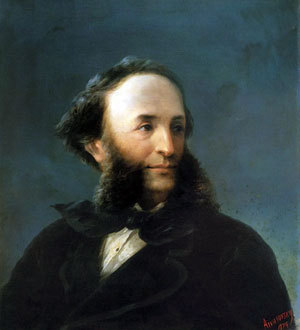
aivazovskySelfPortrait

Self Portrait, 1874

Aivazovsky was born Hovhannes Aivazian on July 29, 1817, in Feodosia, a port on the Black Sea in Crimea. He received parochial education at the local St. Sargis Armenian Church and was taught drawing by a local architect. He attended the Russian gymnasium of Simferopol from 1830-1833 and then studied at the Imperial Academy of Arts from 1833-1837, graduating with gold medal two years in advance.

The promising painter was sent by the Academy in 1840 to study in Europe. He first traveled to Venice, where his brother Gabriel was a member of the Mekhitarist Congregation (he would leave the congregation and return to the Armenian Apostolic Church in the 1850s). Aivazovsky studied Armenian manuscripts and became familiar with Armenian art. After a four year sojourn in Italy and France, with visits to half a dozen European countries and prolific exhibitions, he returned to Russia in 1844.
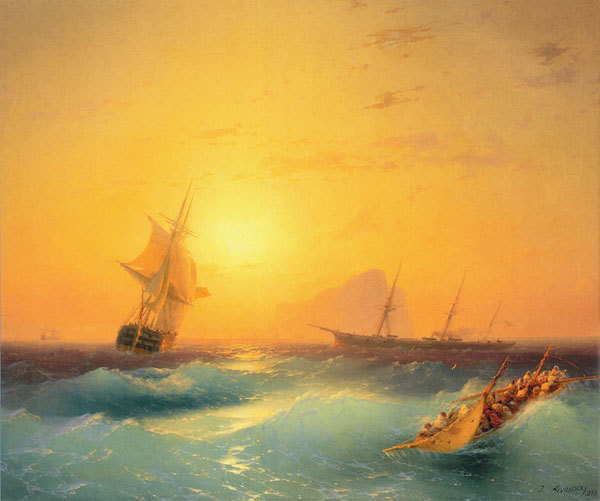
American Shipping off the Rock of Gibraltar1873

American Shipping off the Rock of Gibraltar, 1873

Upon his return, he was appointed academician of the Imperial Academy of Arts, from where he had graduated seven years before, and appointed the official artist of the Russian Navy. After traveling to the Aegean Sea and Constantinople in 1845, he settled in his hometown, Feodosia. The Academy gave him a title of professor of seascape painting in 1847, while the Royal Netherlands Academy of Arts and Sciences elected him a member in the same year.

He married English governess Julia Graves in 1848 and had four daughters. They separated in 1860 and divorced in 1877 with permission from the Armenian Church, since Graves was a Lutheran.

Aivazovsky would receive many honors throughout his life: first non-French artist to receive the Legion d’Honneur in France (1857), Order of the Medjidie (Ottoman Empire, 1857), honorary member of the Moscow Art Society (1857), Order of the Redeemer (Greece, 1859), Order of St. Vladimir (Russia, 1865), Order of Osmanieh (Ottoman Empire, 1874), member of the Academy of Arts of Florence (Italy, 1876), honorary member of the Royal Academy of Fine Arts of Stuttgart (Germany, 1878), and others. He held fifty-five solo exhibitions over the course of his career in the Russian Empire, Europe, and the United States (New York, Chicago, and San Francisco, 1893), and participated in many collective exhibitions. He was one of the most prolific artists of his time: he created around 6,000 paintings during his almost sixty-year career. The vast majority of his works are seascapes, but he often depicted battle scenes, Armenian themes, and portraiture. He never painted his pictures from nature, but from memory. His artistic memory was legendary, The Ninth Wave (1850, State Russian Museum, St. Petersburg) is generally considered his masterpiece.

Aivazovsky visited Russian Armenia for the first time in 1868. The next year, he participated in the opening ceremony of the Suez Canal in Egypt, and became the first artist to paint the Canal. He continued his travels abroad during the next three decades, including a trip to the United States in 1892. In 1880, he opened an art gallery in his Feodosia house, which became the third museum in the Russian Empire, after the Hermitage Museum of St. Petersburg and the Tretyakov Gallery of Moscow. Two years later, he remarried to a young Armenian widow, Anna Burnazian. He said that he “became closer to [his] nation” by marrying her. His career across the civil ranks of Russian government reached its highest position in 1896 when, at the age of 79, he was promoted to the rank of full privy councillor.

Aivazovsky was deeply affected by the Hamidian massacres of 1894 and 1896. He painted a number of works on the subject. More symbolically, he threw the medals given to him by the Ottoman Sultan into the sea and told the Turkish consul in Feodosia: “Tell your bloodthirsty master that I’ve thrown away all the medals given to me, here are their ribbons, send it to him and if he wants, he can throw them into the seas painted by me.” He spent his last years in his hometown, to which he contributed many efforts to its improvement.

Aivazovsky passed away on May 2, 1900, in Feodosia and was buried in the courtyard of the St. Sarkis Church. A quote in Classical Armenian from Movses Khorenatsi’s History of Armenia is engraved on his tombstone: “Born as a mortal, left an immortal memory of himself.



THIS WEEK IN ARMENIAN HISTORY
(Prepared by the Armenian National Education Committee [ANEC])


Assassination of Djemal Pasha
(July 21, 1922)

JamalPasha

Djemal Pasha

The Nemesis Operation, approved by the Armenian Revolutionary Federation in its 9th World Assembly, held in Yerevan in September-October 1919, had a long list of Turkish leaders responsible for the Armenian Genocide among its targets.

One of them was Ahmed Jemal, minister of Marine of the Ottoman Empire and member of the leading triumvirate of the Committee of Union and Progress (Ittihad), together with Talaat, minister of Interior, and Enver, minister of War. Jemal had taken the command of the IV Ottoman Army, based in Syria, and had overseen the execution of the second phase of the genocide, when the survivors of the caravans of deportees were dispatched and killed in the  camps along the Euphrates River. He had also been in charge of the assimilation of Armenian orphans.

Some targets of the operation, such as Talaat and former grand vizier Said Halim, Behaeddin Shakir (leader of the Special Organization) and Jemal Azmi (the “monster of Trebizond”), had been liquidated in Berlin and Rome, under the supervision of the special body created by the A.R.F. (Enver would be killed by a Bolshevik Armenian in August 1922, in Central Asia.) Jemal Pasha was also in Berlin, but had been able to avoid the Armenian avengers.

On July 26, 1922, The New York Times published a dispatch of the Associated Press, with byline Tiflis:

“Djemal Pasha, former Minister of Marine in the Turkish Unionist Government, Chief of Staff of the Afghan Army, has been assassinated here. Two Armenians are charged with the crime.

“Djemal Pasha was accompanied by two aides, who were also shot dead. He was traveling to Kabul from Berlin, where he had made important purchases from [sic] the Afghan Army.”

The Central Committee of the A.R.F. in Georgia still operated, although clandestinely, after Georgia had become a Soviet republic in March 1921. It organized the killing, according to Simon Vratzian:

“At the initiative of the Armenian Revolutionary Federation’s Central Committee of Georgia, on July 21, 1922, in Tiflis and in broad daylight, the last surviving member [of the Ittihad triumvirate] and friend and accomplice of the Bolsheviks, Jemal Pasha, was assassinated. The incident had a shocking effect on everyone. The Cheka made innumerable arrests but did not dare to violent measures for fear of retaliations. Dro got permission from Moscow and quickly left for Tiflis, where all the distinguished Dashnaktsakans had been arrested. Dro’s prestige in the eyes of both the Dashnaktsakan comrades and the Bolsheviks was so great that it was possible for him to get the members of the Central Committee and other prisoners out of jail with conditions acceptable to both parties.”

Little is known about the details of the operation. The name of Stepan Dzaghigian (who would later die in Siberia, exiled during the Stalinist purges) has been mentioned as one of the executors, helped by Petros Ter Poghosian and Ardashes Gevorgian. A fourth name, Zareh Melik-Shahnazarian, has also been mentioned as their collaborator in the last years, with the archives still waiting to yield their secrets.


ARSHAG TCHOBANIAN

THIS WEEK IN ARMENIAN HISTORY
(Prepared by the Armenian National Education Committee [ANEC])


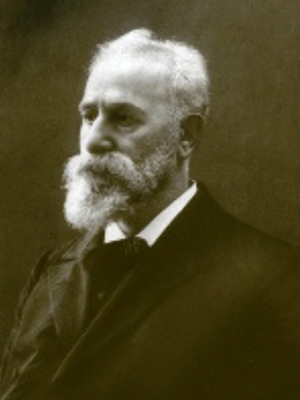
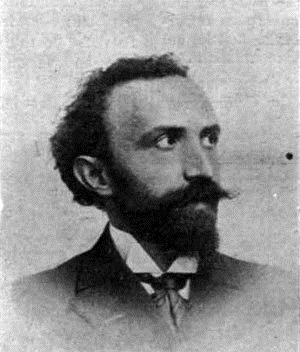
Arshag Tchobanian
(July 15, 1872)

An influential literary critic and political activist, Arshag Tchobanian would become a sought-after name in the first half of the twentieth century.

ArshagTchobanian

Arshag Tchobanian

He was born in Constantinople on July 15, 1872. He lost his mother when he was a year old. After graduating from the Makruhian School in his neighborhood of Beshigtash (1886), he entered the newly founded Getronagan (Central) School in 1886. He graduated in 1891, when he had already started his literary contributions to the most important newspapers of the time, Arevelk and Hairenik. He published his first two books in 1891 and 1892. He taught at his alma mater in 1892-1893 and, after a year sojourn in France, continued his teaching. In 1895 he published a literary monthly, Dzaghig, but, due to the political repression and the Hamidian massacres of 1895-1896, he decided to leave Constantinople for good. He settled in Paris, where he would live the rest of his life.

Tchobanian became the leading voice of the Armenians in France and a promoter of Armenian literature and the Armenian Cause in Europe, with many publications in various journals and newspapers, and a series of books in French, along with his own wide production in Armenian. Among his books in French, the most important would be the three-volume Roseraie de l’Arménie (Rose Garden of Armenia), dedicated to Armenian medieval poetry, a subject of which he was a respected translator and scholar.

Between 1898 and 1911, he published the literary journal Anahid, which would become an influential name in Armenian literature. He also wrote for many Armenian newspapers throughout the world.

Tchobanian adopted ideological positions closer to the Reorganized Hunchakian Party, created after the division of the Hunchakian Party in 1896. Later, he entered the ranks of the Liberal Party, created after 1908 in Europe by members of the Reorganized Hunchakian Party.

The Armenian writer was an activist of the Armenian Cause during World War I and denounced the genocidal policy of Turkey. He was the editor of the newspaper Veradznunt from 1917-1919 and became a member of the Armenian National Delegation led by Boghos Nubar in February 1919. He was sent to Lebanon and Cilicia in 1920 to negotiate with the French authorities, at a time when Cilicia was still under French mandate, before being abandoned to the forces of Mustafa Kemal.

In October 1921 Tchobanian entered the Democratic Liberal (Ramgavar Azadagan) Party, founded in Constantinople, and was elected first chairman of its Central Board. During the 1920s, along with the party, he adopted a position favorable to cooperation with Soviet Armenia to further its economic and social development, including the settlement of Armenian refugees and orphans. He visited year the United States from coast to coast in 1926-1927. In 1929 he relaunched Anahid, which would last until 1949, with a pause between 1940 and 1946 due to World War II.

Tchobanian would continue his literary and public activities until his death on June 8, 1954, killed by a car when crossing a street in Paris at the age of 82.


THIS WEEK IN ARMENIAN HISTORY
(Prepared by the Armenian National Education Committee [ANEC])


Mountainous Gharapagh
Becomes Part of Soviet Azerbaijan
(July 5, 1921)

The establishment of the Soviet regime in the Southern Caucasus between April 1920 and April of 1921 included the solution of ethno-territorial conflicts such as that of Mountainous Gharapagh, which had been in dispute between Armenia and Azerbaijan since 1918.

Soviet Russia had recognized the mountainous area of Gharapagh as a disputed zone and, in August 1920, after an agreement signed by Soviet Russian and the Republic of Armenia, Russian forces had been temporarily deployed in the region.

On November 30, 1920, one day after the Armenian Bolsheviks had proclaimed Armenia as a Soviet republic (the power was actually transferred on December 2), the Revolutionary Committee of Azerbaijan (the highest executive power of the country at the moment) recognized that Gharapagh, Zangezur, and Nakhichevan, territories formerly pretended by Azerbaijan, were indivisible part of Armenia. GharabaghMap

The National Council of Azerbaijan, on the basis of the agreement signed by Soviet Azerbaijan and Soviet Armenia, proclaimed Mountainous Gharapagh as indivisible part of Armenia by the declaration of June 12, 1921. On the basis of the November 30, 1920 declaration and the agreement signed by the Soviet governments of Azerbaijan and Armenia, Armenia also made a similar declaration.

The text of the decree approved by the government of Armenia was published in the Armenian and Azerbaijani press (Bakinski rabotchi, organ of the Communist Party of Azerbaijan, June 22, 1921), thus confirming legally the union of Mountainous Gharapagh to Armenia. In the context of international law, this was the last legal act regarding Mountainous Gharapagh during the Communist regime.

The fact was totally overlooked by the Caucasian Bureau of the Communist Party of Russia, which invited to a plenary session on July 4, 1921 in Tbilisi, where the union of Mountainous Gharapagh to Soviet Armenia was confirmed as a fact. However, by suggestion of Moscow and the immediate intervention of Joseph Stalin, the decision of the previous day was revised in the wee hours of July 5 and a new resolution was imposed, which established that Mountainous Gharapagh would be part of Soviet Azerbaijan as an autonomous region. This resolution was an unprecedented legal act in the history of international law, when the party body of a third country (Russia), without any legal grounds or jurisdiction, decided the status of Mountainous Gharapagh after another decision had been agreed before.

The Soviet republics of Azerbaijan and Armenia were included in the process of the formation of the Union of Soviet Socialist Republics in December 1922. Despite the resistance of the Armenian population, on a small fraction of the territory of Gharapagh, by decision of the Central Executive Revolutionary Committee of Soviet Azerbaijan, on July 7, 1923, the Autonomous Region (Oblast) of Mountainous (Nagorno) Gharapagh was formed as part of the Soviet Socialist Republic of Azerbaijan, without having any common borders with Armenia.

This would not solve, but just freeze the question of Gharapagh for the next six decades and half, until the popular explosion of 1988 and the beginning of the Gharapagh movement.


THIS WEEK IN ARMENIAN HISTORY
(Prepared by the Armenian National Education Committee[ANEC])


Fall of Hromkla [Hromgla]
(June 28, 1292)

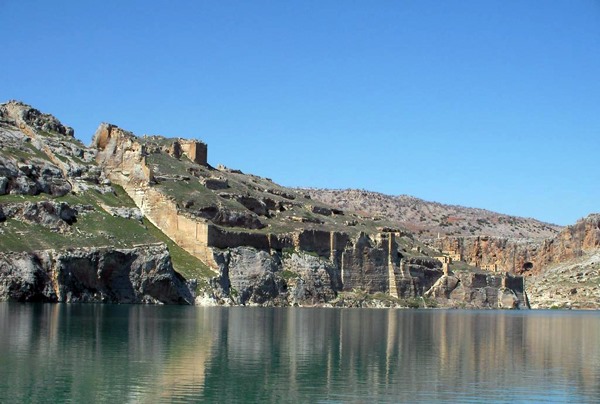
Hromkla means “Roman Castle” (Qal’at al-Rum in Arabic, Rumkale in Turkish ). It was the Armenian name of a fortress built on the right bank of the Euphrates River, on the place of its confluence with the Parzman (Merzumen) Creek, 50 kilometers west of Urfa (Edesa).

A strategic border crossing during Byzantine domination of the area, Hromkla was surrounded by water on three sides and by inaccessible rocks on the remaining, with a four-layer wall.

Hromkla

Hromkla Fortress (Pronounced Hromgla)

Around 1080-1086 the fortress was occupied by the short-lived Armenian princedom of Philartos (Filaret) Varajnuni, and afterwards by the Armenian prince Kogh Vasil. After the death of the latter (1112), the dux Baldwin II of Edessa seized the fortress from his son, also called Vasil, and offered it to his relative, Joscelin I de Courtenay, who would succeed him as Count of Edessa (1119-1131).

The Seljuk invasions had forced to move the Holy See of the Armenian Apostolic Church outside Armenia in the middle of the eleventh century. After various moves, Catholicos Grigor III Pahlavuni (1113-1166) settled in Hromkla in 1149 and two years later bought the fortress from Beatrice, wife of count Joscelin II de Courtenay, who had been imprisoned in 1150 after the fall of Edessa in 1144.

Catholicos Grigor III rebuilt the fortifications of Hromkla and founded two magnificent churches, St. Gregory the Illuminator and St. Mary. The church of St. Savior was built at a later time. Hromkla became a cultural center during the tenure of Grigor III’s successor, the famous Catholicos St. Nerses IV Shnorhali (1166-1173). Many old manuscripts were collected and illustrated, and new ones were copied and written. Hromkla was famous for its school of miniatures. Two councils held there in 1178 and 1179, with the participation of almost all Armenian archbishops and bishops, studied and rejected the proposal to join the Greek Orthodox, and recognized the authority of the Catholicosate over all Armenians.

Hromkla was a domain of the Catholicos until the beginning of the thirteenth century, when King Levon I of Cilicia (1198-1219) turned the fortress into part of the court domains.

In May 1292 the Mamluk Sultan of Egypt, Melik-al-Ashraf, besieged the fortress. After a heroic resistance of 33 days by the population and the Armenian troops, the superior number of the attackers and the impossibility to obtain outside help forced the defenders to surrender on June 28. The guardians were killed, the fortress was ransacked, and most of the population, including Catholicos Stepanos IV, was taken prisoner. The fall of Hromkla was considered by contemporary historians as a catastrophe. The seat of the Catholicosate was moved to Sis, in Cilicia proper where it would remain until 1920.

The church of St. Mary was turned into a mosque after the sixteenth century, during Ottoman dominion, and the other churches were ruined (the  remains of the Catholicoi Grigor III and Nerses IV were buried at the church of St. Gregory the Illuminator). The bombing by Ibrahim Pasha of Egypt, in 1839, destroyed Hromkla for good. Until the beginning of the twentieth century, St. Gregory the Illuminator Church was a sanctuary for Armenians and Yezdies.


GHAZAROS AGHAYAN

THIS WEEK IN ARMENIAN HISTORY
(Prepared by the Armenian National Education Committee[ANEC])

Death of Ghazaros Aghayan
(June 20, 1911)

Ghazaros Aghayan was one of the important names in the literary and education awakening of Eastern Armenians in the late nineteenth century.

ghazarosaghayan1

Ghazaros Aghayan

He was born on April 4, 1840, in the Armenian village of Bolnis-Khachen, currently in Georgia. After receiving elementary education in his birthplace, in 1853 he entered the Nersisian School of Tiflis, but left after a year. He would become an autodidact.

He worked as a typographer in Tiflis, Moscow, and St. Petersburg. In 1867 he returned to the Southern Caucasus, and became the manager of the printing house of Holy Etchmiadzin and the editor of the monthly Ararat of the Holy See (1869-1870). He later entered the educational field and taught in schools of Akhaltskha (Akhaltsikhe), Alexandropol (Gumri), Yerevan, and Shushi (1870-1882), and was also the diocesan director of the Armenian schools of Georgia.

He was a theoretician of education. The aim of his pedagogical system was to develop “strong, smart, and virtuous” citizens. He gave preeminence to learning the mother tongue and to moral and esthetic education. He was against corporal punishments and favored co-ed schools, as well as practical education and physical education. He wrote many works in the field, and his textbook “Study of the Mother Tongue” was particularly appreciated; its first volume, with 33 printings, was the most commonly used first-grade textbook in Armenian schools for four decades (1875-1916.

Aghayan, who wrote the first autobiographical novel in Armenian literature (“AGhazaros Aghayan and Hovhannes Toumanianrutin and Manuel,” 1867) was also a famed author of children’s poetry and tales; his tale “Anahit” (1881) is a classic of the genre. His fairy tale “Aregnazan” and his poem “Tork Angegh” are also well-known works.

He worked in the editorial boards of the monthly Portz and the children journal Aghbiur. In 1895 he was arrested with the charge of being a member of the Hunchakian Party; he was exiled first to Nakhichevan-on-the-Don, and then to Crimea (1898-1900). He remained under police surveillance until the end of his life. In the 1900s he was the elder member of the literary cenacle “Vernatun” (Attic), together with Hovhannes Tumanian, Avetik Isahakian, Levon Shant, and Derenik Demirjian. He passed away on June 20, 1911, in Tiflis.

Aghayan was the father-in-law of renowned painter Martiros Sarian (1880-1972) and maternal grandfather of composer Ghazaros

Today, June 19, is the Feast of St. John the Baptist (also called the Forerunner), and Bishop Athenogenes.

John the Baptist is prominent in each of the four Gospels. He is associated with the beginning of the ministry of Jesus and is considered to be the “forerunner” to Jesus the Messiah. He baptized those who repented their sins, and he preached of the coming of one after him who is greater than he and would baptize not with water but with the Spirit. In the third chapter of Matthew, John is reluctant to baptize Jesus and does so only after encouragement from Jesus. The Armenian Church considers St. John the Baptist as one of the two prime intercessors to Jesus, the other being the Blessed Mother.

Athenogenes, a bishop and theologian was burned to death along with ten of his disciples in Sebastia, Armenia, during the persecution of Christians by Emperor Diocletian. Athenogenes wrote a hymn of praise proclaiming the divinity of the Holy Spirit. He is remembered as singing this hymn as he went into the flames.


Posted from Armenian Prelacy’s (Eastern) Crossroads E-Newsletter

FEAST OF HOLY ETCHMIADZIN
This Sunday, June 22, is the Feast of Holy Mother Etchmiadzin, the cathedral built by St. Gregory after his deliverance from the pit, to the specifications he saw in a vision, and on the place marked by the Lord with a golden hammer. This feast day commemorates the establishment of the Armenian Church and the end of paganism.
Etchmiadzin is the oldest example of a four-altar, four-pillar, domed, cruciform church in Christian architecture. More than 1,700 years old, it is the oldest surviving Armenian Christian site. Relief sculptures on the exterior walls are some of the oldest examples of the Christian Armenian art of sculpting.
Posted from Armenian Prelacy’s (Eastern) Crossroads E_Newsletter

HIJACKING FATHERS’ DAY

Hijacking Father’s Day …

By Katrina Fernandez

… Every Father’s Days it’s the same. An annual invitation to bash fatherhood.

Can you imagine if Mother’s Day got hijacked to such a degree.

It doesn’t build up motherhood or empower woman to tear down fathers, whether you think they deserve it or not.

Single moms, this Father’s Day lets try a different approach.

1- Don’t be bitter.

Even if you feel your bitterness is justified and caused by circumstances that may have been out of your control you have to stop and consider what message that bitterness is sending to your children, especially if you have sons.

Children internalize everything. When you speak ill of another parent in front of them they perceive it as an insult aimed at them. After all they are their father’s child.

All bitterness begets is man hating feminists out of our daughters and sons who think being a father can be replaced by a mother because their own mothers deemed fatherhood useless.

Bitterness perpetuates the cycle of abandonment.

2- Don’t ignore Father’s Day completely.

It’s OK to talk about it and celebrate Father’s Day whether the father of your child is going to be around or not. Even if you don’t think your child’s father is a good one or deserves an ounce of recognition.

Father’s Day is important because fatherhood and father’s are important. When you ignore the holiday it sends an unspoken message to your children that being a father is unimportant and not worthy of celebration.

Also, ignoring Father’s Day and avoiding the topic of conversation with your children doesn’t mask his absence anymore than ignoring a disease around a person who is ill makes them forget they’re sick.

Your child won’t forget daddy’s not around simply because you’ve elected not to talk about him. In anything, the silence punctuates the void.

Fill that absence with positive remarks about your child’s father. There has to be something you can find good to say. It doesn’t have been detailed. Say he had a nice smile and a jovial sense of humor. Say he was handsome. Whatever. I mean you were attracted to something about him at some time.

I’ve seen this scenario so many times — a woman hurting from abandonment, bitter by her burden, will cut his face out of photos and remove all evidence of his existence from her life. This isn’t a healthy reaction even if you didn’t have children with the man whose memory you hope to wipe from your mind, and it’s certainly not a healthy one to have in front of your kids.

Your child is going to be a constant reminder of that broken relationship, so those feelings need to be dealt with. Also, your child deserves to have some connection to his father. Even a distant, remote connection is better than none. Let them have pictures of their father. Encourage discussion, but also encourage prayer.

Always pray. Teach your child simple prayers early on and encourage them to pray for their fathers; living, dead, or absent.

3- Celebrate Fatherhood.

As there is biological fatherhood, there is also spiritual fatherhood and mentoring. Recognize and celebrate those relationships in your child’s life.

Grandfathers, Uncles, older male role models in the family, male teachers, Scout leaders, coaches, and your parish priest all deserve some recognition if they’ve taken on the role of mentor to your child.

If your child doesn’t have any of these male influences in their life it is imperative you go out right now and work on cultivating them. Especially if you have a son.

You’re just going to have to face the fact that you will not be able to fully teach and illustrate manhood to your sons because you lack that unique male perspective. It’s not admitting defeat or failure to recognize deficiencies in areas of our parenting and then seek outside help.

And just as boys need a male influence, girls too need to learn that not all men leave and that some men are strong and loyal and love the women in their lives.

I know the temptation is great to bash men this time of year because the hurt is so profound. Believe me, I understand completely.

However, part of being a responsible grown up and parent is to learn to deal with life’s hardships. You don’t want your children to grow up believing there is no value in fatherhood, do you? Or to teach them to be chronic victims of their circumstance and perpetuate a generational cycle of abandonment?

Of course not.

Read more: http://www.patheos.com/blogs/thecrescat/2014/06/hijacking-fathers-day.html#ixzz34d9TKoJz


VAHAN CARDASHIAN

THIS WEEK IN ARMENIAN HISTORY
(Prepared by the Armenian National Education Committee[ANEC])


Death of Vahan Cardashian
(June 9, 1934)

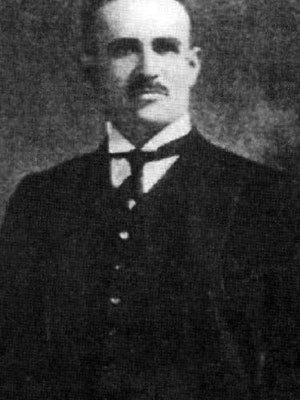
An American-educated lawyer, Vahan Cardashian became the pioneer of the Armenian Cause lobby in the United States at the beginning of the twentieth century.

Cardashian was born on December 1, 1883, in Caesarea (actual Kayseri). He lost his father at an early age, and, after elementary education at a local Armenian school, he attended the French lyceum and the Talas American College. In 1902 he immigrated to the United States and attended the law school at Yale University from 1904-1908. In 1907 he married Cornelia Alexander Holub, a women rights advocate. Meanwhile, he published several books, A Brief Commentary on the Eastern Question, The Ottoman Empire of the Twentieth Century, and Actual Life in Turkish Harem.VahanCardashian

After graduation he went into private practice. Cardashian took a job as adviser of the Ottoman embassy in Washington D.C. in 1911 and general counselor of the consulate in New York. He was designated head of the Ottoman Chamber of Commerce and, in 1915, high commissioner of the Ottoman exhibition at the Panama-Pacific Universal Exposition in San Francisco. At the Exposition, he learned that his mother and sister had perished in the Armenian Genocide. He did not abandon his post, but started a secret campaign of letter-writing to inform American officials of the ongoing annihilation. He had already warned Secretary of War Lindsay Garrison in July 1914:

"I have information, bearing on the program of the Turkish Government, to be put into operation in the event of Turkey’s being involved in the European War with reference to all the native and foreign Christians in Turkey . . . Unless some powerful restraining forces are brought into play from without, you can rest assured that the Turk, with the opportunity for untrammeled action, such as he now believes to enjoy, will perpetrate upon helpless humanity the most ghastly horrors of his entire loathsome career."

When the Ottoman embassy discovered Cardashian’s backdoor work, he was fired. In early 1916, he sued for divorce from his wife. At the end of the war, Cardashian relied on his diplomatic and high society contacts to spearhead a lobbying effort, to which he committed his own personal resources. To reach beyond the Armenian American community, he founded the American Committee for the Independence of Armenia (ACIA) in December 1918. He gathered there some of the most prominent names of the day in American politics: James W. Gerard, former ambassador to Germany, who was the driving force of the ACIA along with Cardashian and the chairman of its Executive Board; Charles Hughes, 1916 presidential candidate of the Republican party; William Jennings Bryan, former Secretary of State; senator Henry Cabot Lodge (Massachusetts); and many others.

Cardashian’s tireless efforts included tours, letter campaigns, a flood of editorials in various newspapers, memoranda to the highest rank of officials, and many books and pamphlets.  The ACIA advocated for American recognition of the Republic of Armenia and an American mandate. It had 23 branches in thirteen states.

In the end, the ACIA efforts were fruitless, as the isolationist majority in the Senate, ironically headed by Lodge himself, rejected the American mandate over Armenia in May 1920. A few months later, the independent republic collapsed, and the Armenian Cause took another direction. However, Cardashian did not calm down. In 1924 he created the American Committee Opposed to the Lausanne Treaty (ACOLT) and led a successful campaign to block the ratification of the Treaty of Lausanne by the U.S. Senate. The ratification was rejected by the Senate in January 1927, citing Turkish failure to execute the Arbitral Award of President Woodrow Wilson as the main cause.

Exhausted and penniless after a two-decade long crusade for Armenian rights, Vahan Cardashian passed away on June 9, 1934, at the age of fifty-one. He was buried in Cedar Grove cemetery in Long Island. The legacy of the lone crusader for the Armenian Cause is a remarkable example for future generations.