HIJACKING FATHERS’ DAY

Hijacking Father’s Day …

By Katrina Fernandez

… Every Father’s Days it’s the same. An annual invitation to bash fatherhood.

Can you imagine if Mother’s Day got hijacked to such a degree.

It doesn’t build up motherhood or empower woman to tear down fathers, whether you think they deserve it or not.

Single moms, this Father’s Day lets try a different approach.

1- Don’t be bitter.

Even if you feel your bitterness is justified and caused by circumstances that may have been out of your control you have to stop and consider what message that bitterness is sending to your children, especially if you have sons.

Children internalize everything. When you speak ill of another parent in front of them they perceive it as an insult aimed at them. After all they are their father’s child.

All bitterness begets is man hating feminists out of our daughters and sons who think being a father can be replaced by a mother because their own mothers deemed fatherhood useless.

Bitterness perpetuates the cycle of abandonment.

2- Don’t ignore Father’s Day completely.

It’s OK to talk about it and celebrate Father’s Day whether the father of your child is going to be around or not. Even if you don’t think your child’s father is a good one or deserves an ounce of recognition.

Father’s Day is important because fatherhood and father’s are important. When you ignore the holiday it sends an unspoken message to your children that being a father is unimportant and not worthy of celebration.

Also, ignoring Father’s Day and avoiding the topic of conversation with your children doesn’t mask his absence anymore than ignoring a disease around a person who is ill makes them forget they’re sick.

Your child won’t forget daddy’s not around simply because you’ve elected not to talk about him. In anything, the silence punctuates the void.

Fill that absence with positive remarks about your child’s father. There has to be something you can find good to say. It doesn’t have been detailed. Say he had a nice smile and a jovial sense of humor. Say he was handsome. Whatever. I mean you were attracted to something about him at some time.

I’ve seen this scenario so many times — a woman hurting from abandonment, bitter by her burden, will cut his face out of photos and remove all evidence of his existence from her life. This isn’t a healthy reaction even if you didn’t have children with the man whose memory you hope to wipe from your mind, and it’s certainly not a healthy one to have in front of your kids.

Your child is going to be a constant reminder of that broken relationship, so those feelings need to be dealt with. Also, your child deserves to have some connection to his father. Even a distant, remote connection is better than none. Let them have pictures of their father. Encourage discussion, but also encourage prayer.

Always pray. Teach your child simple prayers early on and encourage them to pray for their fathers; living, dead, or absent.

3- Celebrate Fatherhood.

As there is biological fatherhood, there is also spiritual fatherhood and mentoring. Recognize and celebrate those relationships in your child’s life.

Grandfathers, Uncles, older male role models in the family, male teachers, Scout leaders, coaches, and your parish priest all deserve some recognition if they’ve taken on the role of mentor to your child.

If your child doesn’t have any of these male influences in their life it is imperative you go out right now and work on cultivating them. Especially if you have a son.

You’re just going to have to face the fact that you will not be able to fully teach and illustrate manhood to your sons because you lack that unique male perspective. It’s not admitting defeat or failure to recognize deficiencies in areas of our parenting and then seek outside help.

And just as boys need a male influence, girls too need to learn that not all men leave and that some men are strong and loyal and love the women in their lives.

I know the temptation is great to bash men this time of year because the hurt is so profound. Believe me, I understand completely.

However, part of being a responsible grown up and parent is to learn to deal with life’s hardships. You don’t want your children to grow up believing there is no value in fatherhood, do you? Or to teach them to be chronic victims of their circumstance and perpetuate a generational cycle of abandonment?

Of course not.

Read more: http://www.patheos.com/blogs/thecrescat/2014/06/hijacking-fathers-day.html#ixzz34d9TKoJz


VAHAN CARDASHIAN

THIS WEEK IN ARMENIAN HISTORY
(Prepared by the Armenian National Education Committee[ANEC])


Death of Vahan Cardashian
(June 9, 1934)

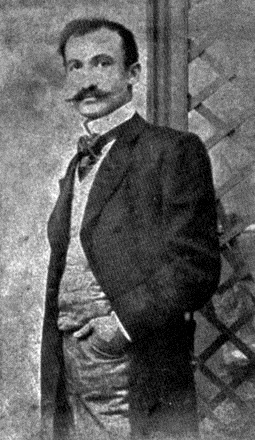
An American-educated lawyer, Vahan Cardashian became the pioneer of the Armenian Cause lobby in the United States at the beginning of the twentieth century.

Cardashian was born on December 1, 1883, in Caesarea (actual Kayseri). He lost his father at an early age, and, after elementary education at a local Armenian school, he attended the French lyceum and the Talas American College. In 1902 he immigrated to the United States and attended the law school at Yale University from 1904-1908. In 1907 he married Cornelia Alexander Holub, a women rights advocate. Meanwhile, he published several books, A Brief Commentary on the Eastern Question, The Ottoman Empire of the Twentieth Century, and Actual Life in Turkish Harem.VahanCardashian

After graduation he went into private practice. Cardashian took a job as adviser of the Ottoman embassy in Washington D.C. in 1911 and general counselor of the consulate in New York. He was designated head of the Ottoman Chamber of Commerce and, in 1915, high commissioner of the Ottoman exhibition at the Panama-Pacific Universal Exposition in San Francisco. At the Exposition, he learned that his mother and sister had perished in the Armenian Genocide. He did not abandon his post, but started a secret campaign of letter-writing to inform American officials of the ongoing annihilation. He had already warned Secretary of War Lindsay Garrison in July 1914:

"I have information, bearing on the program of the Turkish Government, to be put into operation in the event of Turkey’s being involved in the European War with reference to all the native and foreign Christians in Turkey . . . Unless some powerful restraining forces are brought into play from without, you can rest assured that the Turk, with the opportunity for untrammeled action, such as he now believes to enjoy, will perpetrate upon helpless humanity the most ghastly horrors of his entire loathsome career."

When the Ottoman embassy discovered Cardashian’s backdoor work, he was fired. In early 1916, he sued for divorce from his wife. At the end of the war, Cardashian relied on his diplomatic and high society contacts to spearhead a lobbying effort, to which he committed his own personal resources. To reach beyond the Armenian American community, he founded the American Committee for the Independence of Armenia (ACIA) in December 1918. He gathered there some of the most prominent names of the day in American politics: James W. Gerard, former ambassador to Germany, who was the driving force of the ACIA along with Cardashian and the chairman of its Executive Board; Charles Hughes, 1916 presidential candidate of the Republican party; William Jennings Bryan, former Secretary of State; senator Henry Cabot Lodge (Massachusetts); and many others.

Cardashian’s tireless efforts included tours, letter campaigns, a flood of editorials in various newspapers, memoranda to the highest rank of officials, and many books and pamphlets.  The ACIA advocated for American recognition of the Republic of Armenia and an American mandate. It had 23 branches in thirteen states.

In the end, the ACIA efforts were fruitless, as the isolationist majority in the Senate, ironically headed by Lodge himself, rejected the American mandate over Armenia in May 1920. A few months later, the independent republic collapsed, and the Armenian Cause took another direction. However, Cardashian did not calm down. In 1924 he created the American Committee Opposed to the Lausanne Treaty (ACOLT) and led a successful campaign to block the ratification of the Treaty of Lausanne by the U.S. Senate. The ratification was rejected by the Senate in January 1927, citing Turkish failure to execute the Arbitral Award of President Woodrow Wilson as the main cause.

Exhausted and penniless after a two-decade long crusade for Armenian rights, Vahan Cardashian passed away on June 9, 1934, at the age of fifty-one. He was buried in Cedar Grove cemetery in Long Island. The legacy of the lone crusader for the Armenian Cause is a remarkable example for future generations.


VAZKEN SHOUSHANIAN

THIS WEEK IN ARMENIAN HISTORY

(Prepared by the Armenian National Education Committee[ANEC])


Death of Vazken Shoushanian
(June 2, 1941)


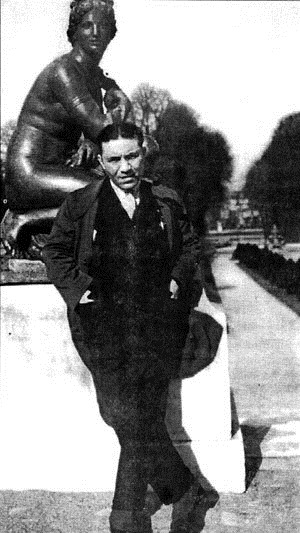
Vazken Shoushanian, a talented young writer of the “School of Paris,” was also one of the orphans of the Armenian Genocide.

He was born in Rodosto (nowadays Tekirdag), a city of Eastern Tracia, on February 9, 1902. His birth name was Onnig. He studied and graduated from the local elementary schools. In September 1915 the Shoushanian family was deported to Asia Minor, from where they continued on the exile routes. Onnig lost his father, mother, brother, and sister on the deportation routes between 1915 and 1917. Meanwhile, he had reached Aleppo in February 1916. The young orphan, deprived of any family support, managed to survive doing various menial work in Aleppo and elsewhere until the end of the war, when he went to Constantinople and then to Rodosto.Shooshanian

In 1919, Shoushanian entered the Agriculture School of Armash, and moved to the Republic of Armenia with the rest of his schoolmates in September 1920. Caught in the whirlwind of the end of the independence and the beginning of the Soviet regime, the students finally left the country and returned to Constantinople in May 1921.

In July 1922, Shoushanian came to the United States, but he was not admitted in Ellis Island due to trachoma and he had to return to Constantinople. Months later, he managed to travel to France. He became a factory worker, and in the meantime, he studied agronomy from 1923-1926 in Valabre, near Marseilles. Meanwhile, he had started to write poetry, prose, and essays in the Armenian press of the Diaspora under the name Vazken Shoushanian, including Hairenik daily and monthly, in Boston. He had also become a member of the Armenian Revolutionary Federation and in his twenties he represented the party at the Socialist International. He would pursue studies of Social Sciences in Paris and graduate in 1930.

From 1931-1932 he was part of the literary group Menk, which published the homonymous journal and gathered, for a short while, the most promising names in Armenian literature in the Diaspora, such as Shahan Shahnour, Zareh Vorpouni, and others.

Shoushanian was already a noted writer when in 1932-1933 he became entangled in the internal struggles of the A.R.F. and was left outside the party. However, as he wrote in a journal entry of 1939, he considered himself a member, “whether I have a party card or not.”

In the last years of his life, Shoushanian remained on the margin of Armenian life. He worked at a French boarding school in Rouen from 1933-1939. The school was closed due to the war in 1940 and Shoushanian made a dangerous trip to bring the students to their homes. After a seven-year absence, he then returned to Paris.

He caught pneumonia in the spring of 1941 and died practically alone, forgotten by almost everyone, in a Paris hospital. He did not have a tomb and was buried in an unmarked grave.

Few of his books were published in his lifetime; some remained scattered in the press, while others were left unpublished. His archives, in the end, went to Armenia, and some of his work started to be published in the 1950s, with publication still continuing until this day. A famous passage in his Journal was a testimony of his love for the Armenian language: “Armenian language, how much I love you! No girl on earth can brag that has received so much warm affection, so much love, so much entreaties from me. The fidelity that I feel towards you is more powerful than this miserable life of ours. I would like to study you until my last moment, your ultimate accents and your ultimate words, your internal music and the road you have traced in history. You are our prayer and our pleasure, Armenian language, I love you.”


Christianity in Armenia

The origin of the Armenian Church dates back to the Apostolic age. According to the ancient tradition well supported by historical evidence, Christianity was preached in Armenia as early as the second half of the first century by the two disciples of Jesus Christ, namely, St. Thaddeus (John 14:22-24) and St. Bartholomew (John 1:43-51). During the first three centuries Christianity in Armenia was a hidden religion under heavy persecution.

It was at the beginning of the fourth century, 301 AD, that Christianity was officially accepted by the Armenians as the state religion. St. Gregory the Illuminator, the patron Saint of the Armenian Church, and King Thiridates III, the ruler of the time, played a pivotal role in the official Christianization of Armenia. It is a well recognized historical fact that the Armenians were the first nation to formally adhere to Christianity. This conversion was followed in the fourth and fifth centuries by a process of institutionalization and Armenization of Christianity in Armenia.


A Migrating Catholicossate

St. Gregory the Illuminator became the organizer of the Armenian Church hierarchy. From that time, the heads of the Armenian Church have been called Catholicos and still hold the same title. St. Gregory chose as the site of the Catholicosate then the capital city of Vagharshapat, in Armenia. He built the pontifical residence next to the church called "Holy Mother of God" (which in recent times would take on the name of St. Etchmiadzin, meaning the place where the Only-Begotten Son has descended), according to the vision in which he saw the Only-Begotten Son of God coming down from heaven with a golden hammer in his hand to locate the site of the new cathedral to be built in 302.

The continuous upheavals, which characterized the political scenes of Armenia, made the political power move to safer places. The Church center moved as well to different locations together with the political authority.

Thus, in 485, the Catholicosate was transferred to the new capital Dvin. In the 10th century it moved from Dvin to Dzoravank and then to Aghtamar (927), to Arghina (947) and to Ani (992). After the fall of Ani and the Armenian Kingdom of Bagradits in 1045, masses of Armenians migrated to Cilicia. The Catholicosate, together with the people, settled there. It was first established in Thavblour (1062), then in Dzamendav (1072), in Dzovk (1116), in Hromkla (1149), and finally in Sis (1293), the capital of the Cilician Kingdom, where it remained for seven centuries. After the fall of the Armenian Kingdom in Cilicia, in 1375, the Church also assumed the role of national leadership, and the Catholicos was recognized as Ethnarch (Head of Nation). This national responsibility considerably broadened the scope of the Church’s mission.


Two Catholicosates within the Armenian Church

The existence of two Catholicosates within the Armenian Church, namely the Catholicosate of Etchmiadzin (the Catholicosate of All Armenians), Etchmiadzin-Armenia, and the Catholicosate of the Graet House of Cilicia, Antelias-Lebanon, is due to historical circumstances. In the 10th century, when Armenia was devastated by Seljuks, many Armenians left their homeland and came to settle in Cilicia where they re-organized their political, ecclesiastical and cultural life. The Catholicosate also took refuge in Cilicia.

In 1375 the Armenian Kingdom of Cilicia was destroyed. Cilicia became a battleground for hostile Seljuks, Mamluks and other invaders. In the meantime Armenia was having a relatively peaceful time. The deteriorating situation in Cilicia on one hand and the growing cultural and ecclesiastical awakening in Armenia on the other, led the bishops of Armenia to elect a Catholicos in Etchmiadzin. The latter was the original seat of the Catholicosate, but it had ceased to function as Catholicossal See after 485. Thus, in 1441, a new Catholicos was elected in Etchmiadzin in the person of Kirakos Virapetsi. At the same time Krikor Moussapegiants (1439-1446) was the Catholicos of Cilicia. Therefore, since 1441, there have been two Catholicosates in the Armenian Church with equal rights and privileges, and with their respective jurisdictions. The primacy of honor of the Catholicosate of Etchmiadzin has always been recognized by the Catholicosate of Cilicia.


The Faith of the Armenian Church by Hratch Tchilingirian

The Faith of the Armenian Church is transmitted through the church’s Holy Tradition, that is, the ongoing life of the church from the time of Christ to our times. The Bible, liturgy and worship, writings of the church fathers, church councils, saints, canons, religious art and rituals organically linked together formulate the Holy Tradition of the Church. This Faith is articulated in the Creed of the Armenian Church, the formal declaration of beliefs, which in turn defines the church’s raison d’etre and sets the parameters of its mission and functioning.

The Armenian Church professes her faith in the context of her worship. Theologically, whatever the church believes, the church prays . As such, the Armenian Church’s worship and liturgy constitute a prime source for teaching and living her faith. Tradition, on the other hand, defines and formulates the "articles of faith" and transmits them from generation to generation.

As articulated in the Creed, the Armenian Church believes in One God, the Father Almighty who is the Creator of heaven and earth, of all things visible and invisible. Humanity (male and female) is created in the image and likeness of God, and as such is a special creature. However, because of the Fall of man, sin entered the world.

The Church believes in Jesus Christ, "the only begotten Son of God, who came down from heaven, was incarnate, was born of the Virgin Mary, by the Holy Spirit." He became man, suffered and was crucified, and was buried. He rose again from the dead on the third day and ascended into heaven and sits at the right hand of the Father. He will come again with glory to judge the living and the dead.

The Armenian Church believes in the Holy Spirit, uncreated and perfect, who proceeds from the Father, and together with the Father and the Son is worshipped and glorified. The Holy Spirit spoke to the prophets and apostles and descended into the Jordan river, witnessing Christ’s Baptism.

The Armenian Church is One, Holy, Apostolic, Catholic Church . She believes in one Baptism with repentance for the remission and forgiveness of sins. On judgment day, Christ will call all men and women who have repented to eternal life in His Heavenly Kingdom, which has no end. Christ overcame the power of death with His own death and gave salvation to all mankind.


Qestions & Answers on Armenian Christianity


Who brought Christianity to Armenia?

Christianity was brought to the kingdom of Armenia by two of Jesus’ Apostles, Thaddeus and Bartholomew in first century A.D.


When did the Armenian nation become Christian?

Christianity became the national religion in 301 A.D.


Who was responsible for Armenians embracing Christianity?

St. Gregory the Enlightener was imprisoned for years, and upon his release he converted King Tiridates III, by healing the king of an incurable affliction through the power of God. After, the king proclaimed Christianity the official religion of Armenia, making it the first country with a national Christian church, the pair helped spread the religion.


Who were Hripsime and the virgins?

Hripsime was one of a group of nuns who lived in Rome under the direction of their superior, Gayane, around 284-305 A.D. When Roman Emperor Diocletian tried to force the beautiful Hripsime to marry him, the nuns fled to Armenia. There, the Armenian king, Drtad, fell in love with Hripsime’s beauty and decided she should be his wife. But the nun refused to break her vows to God by marrying the king. King Drtad tortured Gayane, trying to get her to permit Hripsime to marry him, but Gayane refused to give in. Eventually King Drtad had Gayane, Hripsime, and the 32 nuns tortured and killed because they chose their faith and devotion to God over the wishes of a king.


What was the Battle of Avarayr?

Avarayr is the site in southeastern Armenia where St. Vartan and 1,036 noblemen fell defending the Christian faith against the Persian Empire.


Why is Mt. Ararat important to Armenians?

Mt. Ararat, now in Turkey, but once part of the ancient Armenian kingdom, is traditionally known as the resting place of Noah’s Ark.


Why was the Armenian alphabet created?

Until the 5th century, Christian worship in Armenia was conducted in Greek or Syriac, since there was no Armenian alphabet, hence no written language. In 404 A.D., St. Mesrob (at that time a monk) completed an alphabet of 36 letters. His objective was to translate the Bible into Armenian, and the golden age of classical Armenian literature began shortly thereafter.


What is Holy Muron?

Holy Muron is oil from extracts of more than 40 different kinds of plants that is blessed by the Catholicos once every seven years.

 
http://canadahye.com/en/frontend/home/page/78
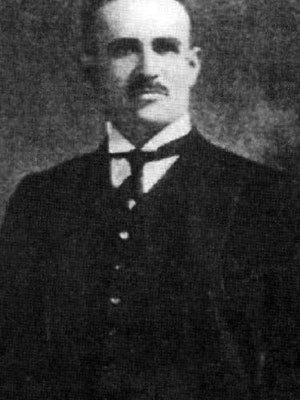
 

TEOTIG


THIS WEEK IN ARMENIAN HISTORY

(Prepared by the Armenian National Education Committee[ANEC])


Death of Teotig
 (May 24, 1928)

Almanacs were very fashionable in the Western world at the beginning of the twentieth century, when a real fever of publication started in the Armenian realm. Almanacs (daretsuyts) of very different size, quality, and duration—sometimes confused with yearbooks (darekirk)—would be published until the 1970s. In the history of Armenian almanacs, Teotig and his almanac would become synonyms and models.

Teotoros Lapjinjian was born in 1873 in Scutari (Üsküdar), a suburb of Constantinople on the Asiatic side of the Bosphorus, in a modest family that migrated from Erzinga. He would later adopt his childhood nickname Teotig as a literary pseudonym.

After primary studies at the local school, he first attended the Berberian College, but could not graduate due to financial problems. For a while, he attended the American-financed Robert College (now Bogazici University), which he could not finish either. In 1889, at the age of 16 he went to work as a bookkeeper in a store.

However, his avid interest in books and reading led him to self-teaching. He was just past his teens when he started to contribute literary pieces and essays to various newspapers. Meanwhile, he became a “bibliomaniac,” as he called himself: “I have not eaten, drunk, or bought clothes, and have allocated all my earnings to books,” he confessed once.Teotig

In 1902 he married Arshaguhi Jizvejian (1875-1922), a young woman educated in Paris and London. Three years later, he won the prestigious Izmirlian Literary Prize for a voluminous work on the Armenian dialect of Constantinople, which remained unpublished until the present.

1907 would become a crucial date in Teotig’s life. With the crucial assistance of his wife, he started the publication of his lifelong project, Amenun daretsutyse (Ամէնուն տարեցոյցը “Everyone’s Almanac”). For the next twenty-two years, the nineteen volumes, with a total of 8,500 pages, would offer the reader the most complete information about every aspect of Armenian life. The most important writers of the time would contribute literary pieces and articles on the most various topics. The almanac became a sort of illustrated encyclopedia of Armenian life during the first quarter of the twentieth century, with much information and photographs of unique nature in its pages.

In 1912 Teotig produced a book called Dib oo Dar (Typeface and Letter), on the 1500th anniversary of the creation of the Armenian alphabet (which at the time was commemorated in 1913) and the 400th anniversary of Armenian printing. In the same year, he published a collection of short stories, The New Year.

Teotig became one of the targets of the Turkish secret police at the beginning of World War I. In March 1915, right after the publication of the 1915 issue of the almanac, he was arrested and on the grounds of trumped-up charges, a war tribunal sentenced him to one year in the central prison of Constantinople. In March 1916, just out of prison, he was arrested in the street and sent to Anatolia with a caravan of deportees. He reached Bozanti, in Cilicia, where a group of Armenian young people was able to rescue him and hide him in a workplace of the Constantinople-Baghdad railway. He remained there, with a false identity, until the armistice of Mudros in November 1918, when he returned to Constantinople.

He resumed the publication of his beloved almanac. In the meantime, in 1919 he published Memorial to April 11 (April 24 in the old Ottoman calendar), on the first commemoration of the arrests of April 24, with 761 biographies of intellectuals. He also published a booklet, The Catastrophe and Our Orphans, in 1920, and wrote a lengthy study on the Armenian clergy victims of the genocide, commissioned by the Armenian Patriarchate, which was posthumously published in 1985.

His wife Arshaguhi, a writer and educator, died of tuberculosis in a sanatorium in Switzerland in 1922, and Teotig was left with their only son, Vahakn. In the same year, the triumph of Kemalism in Turkey prompted him to leave his birthplace and become an exile. He would live in precarious conditions in Corfu, Cyprus, and finally Paris, continuing the publication of his almanac in Vienna, Venice, and Paris. He passed away in Paris on May 24, 1928, when the publication of the 1929 issue was halfway. His son had come to the United States, where he would die in the 1960s.

In 2006, the Cilicia Publishing House of Aleppo, with the sponsorship of the Calouste Gulbenkian Foundation, started to reprint Teotig’s almanac in a photographic edition introduced and indexed by Aleppine intellectual Levon Sharoyan. Unfortunately, only 13 volumes had been published until 2011, when the catastrophic Syrian civil war disrupted the project, as well as the entire life of the Syrian Armenian community.


Syria: Love in the Time of War

By Sarkis Balkhian

Special for the Armenian Weekly
 http://www.armenianweekly.com/2014/05/16/syria-love-time-war/

Two years ago, Ani’s husband committed suicide, leaving behind a 3-year-old son and a 32-year old widow to endure the horrors of Syria on their own. To support her son, Ani started working as a saleswoman. But as the situation in Aleppo disintegrated, she was laid off and forced to survive on her husband’s savings.

Enduring the grotesque environment of Syria for two years was enough. Ani and her family moved to Lebanon with the hope that the conflict would soon subside and they would return back home.

In December 2013, Ani was ecstatic to have been allocated a cheap room in a shelter home administered by Catholic nuns. “My fortunes are changing,” she thought.

A few weeks later, she discovered that her son, Hagop, had developed a medical condition that required surgery. “I do not have the $2,700 needed for the operation,” she told me. “I spoke to the doctors and they informed me that the only way to secure a free of charge surgery is to bring medical documents from Syria. I have to go back!”

On Jan. 19, as politicians were convening in Montreux, Switzerland, to further demonstrate their diplomatic impotence at the Geneva II Conference on Syria, Ani was traveling back to Aleppo. Along the journey, she gazed upon a dozen corpses and hundreds of buildings that had turned into ruins. “Is my house still around,” she wondered.

Upon her return to Beirut, Ani had retrieved Hagop’s documents, but in the process had a near-death experience that would alter the course of her life forever. “If I had taken one more step, the bullet would have ripped open my skull,” she said. “I realized then, that Syria, my house, my properties have no value. The only thing that matters in this world is my son and his future.”

As she was leaving Aleppo, Ani brought with her all of the cash and jewelry she could gather. “I will run as far away from Syria as possible,” she said. “My son, my mother, and I will start a new life far away from this hell. I will never go back to Syria.”

The same week that Ani left Syria for the last time, Shaghig made the opposite journey back to Aleppo.

In April 2010, Shaghig was reciting a poem dedicated to the Armenian Genocide. Her recital was resounding and her stage presence was illuminating. Everyone at Aleppo’s Zvartnots Church Hall was mesmerized by her performance. Back then, she was a member of the AYF in Aleppo and a student of biotechnical engineering at the state university.

In 2012, her family fled the conflict in Aleppo and moved to the United States. Her father became a senior fellow at a highly reputable institute, while her mother was appointed to the regional director position of a women’s rights organization.

While living in a Fifth Avenue apartment in New York City, Shaghig completed her master’s degree in molecular biology. After graduation, she had everything one could hope for—money, education, connections, and a wealth of possibilities. But instead of pursuing the American Dream, Shaghig chose the Syrian nightmare.

In February 2014, she deserted the city that never sleeps, where blackouts are instantly associated with terrorism, and moved back to the hub of global jihad—Aleppo —a place where electricity and water are rare commodities these days.

Over the past several years, jihadists from across the globe have arrived in Syria to spread their perverted fatwas via destruction and annihilation. In February, when Shaghig returned to Aleppo, she had a fatwa of her own: the fatwa of love.

She had met Antranig during AYF meetings in Aleppo. Initially, they were Ungers [Comrades], but in time, the relationship evolved into a love affair.

Due to financial limitations and commitments to his family, Antranig was unable to leave Syria to seek a new life with Shaghig elsewhere. The only place where the couple could reunite was this, the ghost city of Aleppo. After returning to Syria, Shaghig began working at a medical institution and got engaged to Antranig.


Freedom!


Ani’s love for her son and Shaghig’s love for her fiancé led them in opposite directions—in and out of Syria. But along their journey, they attained something that most Syrians have sought for a very long time: freedom.

In Syria, freedom is often associated with a change in the government, but a true form of freedom is only attained through the liberation of the mind from the shackles of fear.

In Ani’s case, her love for her son Hagop forced her to overcome her fear of the unknown world that awaited her outside of Syria. This prompted her to leave behind an entire lifetime of memories, friends, and family to pursue a safe haven far away from the satanic environment of Aleppo.

On the other hand, Shaghig’s love for her fiancé helped her overcome the fear of death and destruction, now common features of life in Syria.


The names of individuals have been changed to protect their identities.


http://www.armenianweekly.com/2014/05/16/syria-love-time-war/

SIMON VRATSIAN

THIS WEEK IN ARMENIAN HISTORY

(Prepared by the Armenian National Education Committee[ANEC])


Death of Simon Vratsian
(May 21, 1969)

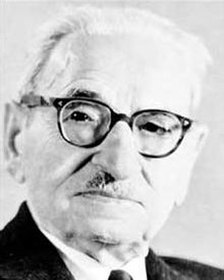
The last Prime Minister of the first Republic of Armenia, Simon Vratsian, was born in 1882, in the village of Medz Sala, near Nakhichevan-on-the-Don (today Rostov-on Don, in the northern Caucasus). He studied in the local Armenian and Russian schools, and in 1900 he was admitted in the Kevorkian Lyceum of Etchmiadzin, of which he was a brilliant graduate in 1906. By that time, he was already a member of the Armenian Revolutionary Federation. He had participated in the protests against the confiscation of the properties of the Armenian Church by the imperial regime (1903-1905), in the first Russian Revolution (1905), and in the Armenian self-defense during the Armeno-Tatar conflict of 1905-1906.SimonVratsian

He was a representative of the A.R.F. Student Union to the fourth General Assembly of the party (Vienna, 1907), which would have a decisive importance in its ideological orientation. He later went to St. Petersburg, where he studied law, agronomy, and pedagogy at the university. In 1910, when the persecution against the A.R.F. had peaked in the Russian Empire, he went to Karin (Erzerum), where Rostom, one of the founders of the party, had settled, gathering around him many experienced and promising members in order to dedicate himself to the development of Western Armenians in the country itself.

Vratsian edited the A.R.F. organ Harach in Karin for a year (1910-1911), and then, by Rostom’s recommendation, he was sent to Boston, where he edited Hairenik, then a biweekly, until 1914. He returned to Karin and participated in the crucial eighth General Assembly of the A.R.F., where he was elected a member of the Bureau and left for Tiflis, in the Caucasus. There, he took the editorship of the party daily Horizon and was elected member of the Armenian National Council, which dedicated itself to the organization of the volunteer movement.

After the independence of Armenia, Vratsian moved to Yerevan, where he was elected member of the Parliament and collaborated with the governments of Hovhannes Kachaznuni and Alexander Khatisian. In May 1920, when Hamo Ohanjanian became prime minister, Vratsian took the position of Minister of Labor and Agriculture, until the fall of the government in November 1920. As prime minister from November 24 to December 2, 1920, he would become the witness of the final agony of the independence after the defeat in the Armeno-Turkish war, which would force the sovietization of the country to escape destruction. He signed the agreement to transfer power to the Revolutionary Committee of the Bolsheviks, and he also became the president of the Committee of Salvation of the Homeland, which led Armenia after the rebellion of February 18, 1921.

After the re-establishment of Soviet power in April 1921, Vratsian took the road of exile and settled in Paris, where in 1924 he became the editor of Droshak [Pronounced Troshag], the A.R.F. central organ, until its demise in 1933. He wrote his monumental work, The Republic of Armenia, which he published in 1928, with a second, revised edition published in 1958. He was a prolific writer on political, historical, and literary subjects, and published and edited a journal of history and culture, Vem, between 1933 and 1939.

During the war, he moved to the United States, where he was one of the founders of the Armenian National Committee in 1945 and participated in the lobbying for the Armenian Cause during the founding meetings of the United Nations in San Francisco. In 1952, after the death of writer Levon Shant, Vratsian succeeded him as principal of the Nshan Palandjian Lyceum of Hamazkayin in Beirut, a position that he maintained until his death. He worked actively to consolidate the economic foundations of the Lyceum and continued the publishing of books, including a revised edition of The Republic of Armenia in 1958 and his memoirs in six volumes, “On the Path of Life."

He had written: “The regimes are a temporary phenomenon. The leaders are temporary. Nations and fatherlands, the people sitting in their homeland, are eternal. The freedom-loving Armenian people, which had trampled death with death, forged the independence of the fatherland. The Republic of Armenia continues to live in the heart of the Armenian people as a burning reminder of the past and a lively hope of the future.” He was far from imagining that Armenia would become an independent country less than a quarter of a century after his death in Beirut on May 21, 1969.


Stepanos Nazariants

THIS WEEK IN ARMENIAN HISTORY

(Prepared by the Armenian National Education Committee[ANEC])


Death of Stepanos Nazariants
(May 9, 1879)

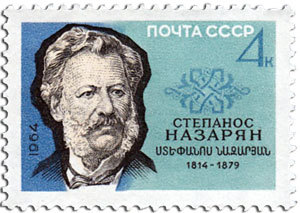
The nineteenth century was a period of awakening for Armenians both in the Ottoman and the Russian Empire. In Russia, one of its pioneers was Stepanos Nazariants, a journalist, teacher, and orientalist.StepanosNazariants

He was born on May 27, 1812, in Tiflis (now Tbilisi), in the family of a priest. The Nersisian Lyceum, founded by the primate of the Armenian Apostolic Church in Georgia, Nerses Ashdaragetsi, was opened in 1824, and Nazariants studied there between 1824 and 1829. He became also one of the first Armenian students of the Caucasus to study in Dorpat (now Tartu, in Estonia), which had one of the best, German-speaking universities in the Russian Empire.

In Dorpat, Nazariants first studied at the gymnasium for a year (1833-1834) and then at the schools of Medicine (1835-1836) and Philosophy (1836-1840). He wrote his doctoral dissertation on the work of Persian poet Ferdowsi, Shahnameh (Book of Kings). From 1842-1849 he was the chair of the Armenian language department at the University of Kazan. Later he moved to Moscow, where he was professor of Persian language and literature at the famous Lazarian Lyceum until his death. From 1869-1871 he was also principal of the lyceum.

Influenced by European enlightenment and Russian social movements of the 1840s, Nazariants wrote against the ruling feudal system and its ideology. He was a fervent advocate of modernization, as well as of patriotic ideas, such as the struggle against Turkish domination. He saw education as the key of Armenian progress, and supported the development of secular instruction and methods of pedagogy that were consistent and age-appropriate. He advocated the use of Modern Armenian, and perhaps his greatest achievement was the publication of the monthly Hiusisapayl (Aurora Borealis, 1858-1864), together with his younger associate Mikayel Nalbandian, which had an important role in the development of Eastern Armenian. The monthly became the voice of progressive ideas, and ran afoul of the Armenian establishment due to the discussion of sensitive issues, such as his criticism of serfdom and clerical power. Nazariants and Nalbandian developed principles to modernize literary criticism among Armenians.

Nazariants wrote a number of books in Russian (A Brief Survey of Thirteenth Century Armenian Literature, 1844; A Survey of Armenian Literature in the Modern Period, 1846) and Armenian (Discourse on Experimental Psychology, 1853; First Spiritual Nutrition for Armenian Children, 1853; Source Book of Religion, 1854, and Review of Modern Armenian Speaking, 1857). He also wrote poetry and translated many works, including those of Swiss poet Friedrich Schiller. He passed away on May 9, 1879, in Moscow.


KING LEVON I

THIS WEEK IN ARMENIAN HISTORY

(Prepared by the Armenian National Education Committee[ANEC])


Death of Levon I (May 2, 1219)


The Armenian state of Cilicia (1080-1375) started as a princedom under the rule of Rupen I (1080-1095). It played an important role during the first Crusades under the Rupenian dynasty. In a hundred years, it would become a kingdom due to the efforts of Prince Levon II.

Levon (known as Leo in non-Armenian sources) was born in 1150. His father Stepan, the third son of Prince Levon I (1129-1137), was murdered by the Byzantines in 1165. His paternal uncle, Mleh I (1169-1175), had made a host of enemies and was assassinated by his own soldiers in Sis. Levon’s elder brother, Rupen, elected to succeed Mleh, was imprisoned in 1183 by Prince Bohemond III of Antioch, who had begun hostilities against him in alliance with Prince Hetum III of Lambron.Levon_I

Levon became regent during his brother’s absence. Rupen was released in 1187 after the payment of a large ransom and cession of two cities to Antioch. He relinquished power to his brother and retired to the monastery of Drazark.

Levon II had an initial rapprochement with Bohemond III as a result of the alliance between Byzantium and Sultan Saladin of Egypt. He even married Isabelle, a niece of his rival’s wife.

He approached Frederick I Barbarossa, the German emperor, when he entered the Armenian territories on his way during the Third Crusade, but the emperor drowned in Cilicia in 1190. Nevertheless, Levon participated in the siege of Acre and in 1191 he joined King Richard the Lionheart in the conquest of Cyprus.

Levon II was intent upon ensuring the security of Cilicia. He entered in conflict with Saladin, who died in 1193, and Bohemond III, whom he took prisoner in the same year. A solution of the conflict between Cilicia and Antioch was found when Raymond of Antioch, son of Bohemond III, married Levon’s niece Alice. However, Raymond died soon and Alice and her infant son Raymond-Rupen were returned to Cilicia. The Armenian prince determined that his great-nephew should inherit Antioch on the death of Bohemond III.

Levon II pressed for a royal crown and sought the assistance of German emperor Henry VI and Pope Celestine III. The latter required submission of the Armenian Church to Rome, but this was opposed by the Armenian bishops. Byzantine emperor Alexios III sent Levon a royal crown, and the negotiations between an Armenian embassy headed by Bishop Nerses of Lambron and the Byzantine side in Constantinople centered on religious questions, and were fruitless in the end.

Finally, Levon II was crowned on January 6, 1198, in Tarsus by Catholicos Gregory VI Abirad, and received another royal insignia by the Papal legate, Archbishop Conrad of Mainz. After the fall of the Bagratuni kingdom of Ani in 1045, an Armenian kingdom had been restored. He was Levon II when a prince, but after his coronation, he became Levon I, because he was the first king of that name. He would issue coins with the legend “King of All Armenians” (Takavor Amenayn Hayots).

Levon I was entangled in the conflict of succession of Antioch. When Bohemond III died in 1201, although the barons had sworn allegiance to the king’s great-nephew Raymond-Roupen, Bohemond’s second son, Count Bohemond of Tripoli, opposed the validity of the oath and was installed as Bohemond IV of Antioch. The Papacy, the Templars, the emir of Aleppo, and the Seljuk Sultan of Konia were involved in the conflict at one time or another. Levon was finally able to install Raymond-Roupen as prince of Antioch in 1216.

Meanwhile, he received “injurious information” about his wife Isabelle. The king imprisoned her in the fortress of Vahka, where she died around 1206. He married Sibylle, the half-sister of King Hugh I of Cyprus, in 1211. His daughter Rita (d. in 1220) married King John I of Jerusalem in 1214.

However, before his death in 1219, Levon quarreled with his great nephew Raymond Roupen and named his young daughter Zabel (born in 1215) as his rightful heir. Levon I is known in Armenian history as Levon I Medzakordz (the Magnificent). Several years of conflict for the succession of the throne of Cilicia would ensue. Finally, in 1226 Zabel would marry Hetum, son of Constantin of Baberon, and this would end the long dynastic and territorial rivalry, unifying the two most powerful families of the kingdom: the Rupenians and the Hetumians.


Panos Terlemezian

THIS WEEK IN ARMENIAN HISTORY

(Prepared by the Armenian National Education Committee[ANEC])


Death of Panos Terlemezian
(April 30, 1941)

Many Armenian intellectuals were also involved in the movement of national liberation at the end of the nineteenth and beginning of the twentieth century. Painter Panos Terlemezian was one of them.

Self portrait by Panos TerlemezianHe was born in Aygestan, the Armenian suburb of the city of Van, on March 3, 1865. His father was a farmer. After studying at the elementary school, he attended the Van Central College (1881-1886), which he graduated with honors. He became a teacher, while at the same time he joined the first Armenian political party, the Armenagan Organization, founded in 1885.

His political activities attracted the attention of the Turkish government, which tried him in absentia. In 1893 he escaped to Persia and later to Tiflis, in the Russian Empire. After working for a while there, he 1895 he moved to St. Petersburg, where he entered the school of the Art Society. The Turkish government had him imprisoned in 1897 and sent to prison in Tiflis and then in Yerevan, from where he was exiled to Persia. In 1898 he clandestinely traveled to Paris and entered the Académie Julian in 1899. He graduated in 1904, when he won the first prize for his works in the academy’s exhibition. His work “ThKomitas Vardapet by Panos Terlemeziane Entrance of the Monastery of Sanahin” (1904) won the gold medal of an all-European exhibition in Munich (Germany).

After living and creating in Armenia between 1905 and 1908, he returned to Paris for the next two years. In 1910 he moved to Constantinople, where he lived and exhibited until 1913, when he returned to Van. He was one of the seven members of the military authority that led the successful self-defense of Van in April-May 1915 and allowed some 200,000 Armenians of the town and the environment to save their lives. After the evacuation of the town and the emigration of the population towards the Caucasus, he settled in Tiflis, where he participated in the organization of the Union of Armenian Artists.

After the end of the war, Terlemezian lived again on the move. He was in Constantinople, Italy and France between 1919 and 1922, and crossed the Atlantic Ocean to the United States, where he lived for the next five years, always painting and giving exhibitions. Finally, in 1928 he settled in Soviet Armenia, where he continued producing landscapes, a genre where he excelled, and portraits of celebrated Armenians. He received the title of People’s Artist in 1935. He passed away on April 30, 1941. The Art School (now Art College) of Yerevan bears his name.