ASSASSINATION OF HRANT DINK

THIS WEEK IN ARMENIAN HISTORY
(Prepared by the Armenian National Education Committee)

[ANEC]


Assassination of Hrant Dink
(January 19, 2007)


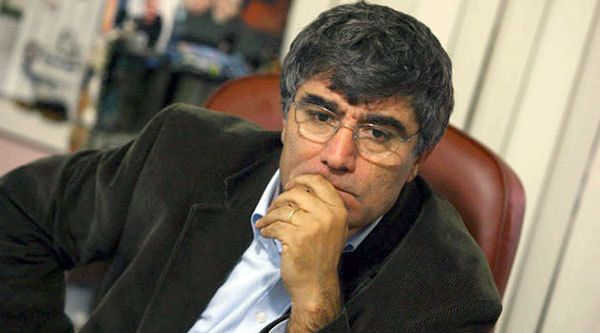
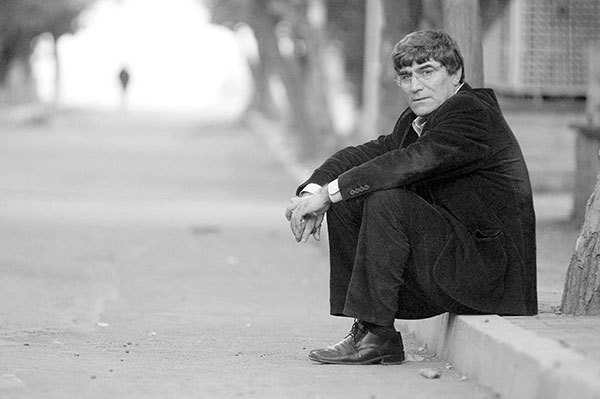
Eight years ago, the assassination of journalist Hrant Dink became a crucial moment in the last decade of Turkish public life and a symbol of intolerance against freedom of speech.hDink1

Dink was born in Malatia on September 15, 1954. At the age of five, his family moved to Istanbul. Due to the separation of their parents, he and his two brothers were sent to the kindergarten of the Armenian Evangelical Church of Gedigpaşa as boarders. The three brothers continued their education at the elementary school of the same church in Incirdibi and went to its summer camp in Tuzla. Hrant went to the Bezjian School in junior high and to the Surp Khach Tbrevank in high school, and graduated as a senior from the public school of Şişli.

At summer camp, he met Rakel Yagbasan, five years his junior, who was born in Silopi and came from the Varto clan. In 1972 he entered university and engaged in the Turkish leftist movement, which he left four years later, when he got married. Hrant and Rakel Dink had three children. He completed his degree in zoology, but could not finish his second bachelor degree in philosophy.

In 1979 he opened a bookstore with his brothers, which they ran successfully. From 1979-1984, he and his wife also ran the Tuzla summer camp, until the Turkish government seized it after a five year legal battle.

In the 1990s Dink was a contributor to Marmara newspaper, reviewing Turkish books about Armenians with the pen name “Chutak” (Violin). On April 5, 1996, he launched the first bilingual (Turkish and Armenian) weekly in the history of Turkey, Agos, which he edited until his death. Agos spoke loudly against any unfair treatment of the Armenian community in Turkey, covered human rights violations and problems of democratization in Turkey, carried news of developments in the Republic of Armenia, with special emphasis on Turkey-Armenia relations, published articles and serials on the Armenian cultural heritage and its contributions to the Ottoman Empire and Turkey, and criticized malfunctions and lack of transparency in Armenian institutions.

Dink was also a commentator for Turkish periodicals. He wrote about the establishment of good neighborhood relations between Turkey and Armenia, the opening of the borders, support of Turkish democratic processes, and the Armenian genocide. He also lectured in many countries about Armenian identity and Turkish-Armenian relations.HDink2

His views and his outspokenness started to discomfort many people. He was prosecuted three times for denigrating Turkishness, pursuant to article 301 of the Turkish Penal Court.  He was taken to court for statements during a lecture in Urfa (2002), but acquitted in 2006. A second trumped-up charge, stemming from the purposeful misunderstanding of a statement, resulted in a six-month suspended sentence (2005) that Dink, after ending all avenues in the Turkish judicial system, had appealed to the European Court of Human Rights at the time of his death. The ECHR concluded in 2010 that Turkish authorities had violated his freedom of speech. A third trial came in 2006 after he declared to Reuters that what happened in 1915 was genocide. The latter was dropped after his death, but Agos general director Arat Dink (his son) and publisher Sarkis Seropyan were sentenced to one year of prison.

The actual witch hunt had started in February 2004, after the mainstream Hurriyet daily reprinted a news piece from Agos, published in September 2003, claiming that Sabiha Gökçen, one of the adoptive daughters of Mustafa Kemal Atatürk, was actually an Armenian orphan of the genocide. The press release from the office of the Chief of General Staff stated on February 22, 2004: “Whatever the reason, opening up such a symbol to public debate is a crime against national unity and social peace.”. Dink was called to the governor’s office in Istanbul and given a warning by two people whose identities remained undisclosed. Afterwards, a virulent campaign started in the press that continued until his death. The well-known journalist Mehmet Ali Birand wrote, “We are the real murderers of Hrant. We have brought up our murderers in an atmosphere and mentality created by Article 301.”

On January 19, 2007, Hrant Dink was killed outside the offices of Agos by seventeen-year-old Ogün Samast. His burial ceremony became a demonstration of more than one hundred thousand people protesting the killing and claiming, “We are all Armenians. We are all Hrant Dink.” His assassin was condemned to 22 years and 10 months in prison in 2011, while another suspect, Yasin Hayal, convicted of ordering the murder, was sentenced to life imprisonment.

However, it has become clear that justice has not been served yet. The Turkish top court ruled in July 2014 that the investigation of the killing was flawed, and recent arrests of policemen for “negligence” in the inquiry of the murder have shown that there is still a long way before closing the books on the assassination of the brave Armenian journalist.


BAKU POGROM

THIS WEEK IN ARMENIAN HISTORY
(Prepared by the Armenian National Education Committee)

[ANEC]


Baku Pogrom
(January 13, 1990)


Baku, the capital of Azerbaijan, which had a large Armenian community since the late nineteenth century, was the theater of anti-Armenian massacres in 1905 and 1918. In January 1990, the local community was persecuted, massacred, and forced to leave the city forever.

The beginning of the Karabagh conflict, followed by the pogrom of Sumgait in February 1988, was marked with a violent Azerbaijani response to the peaceful Armenian demonstrations and claims. Exchange of population started. However, while Armenians were expelled by force from Kirovabad (currently Ganja, the second city of Azerbaijan) in the fall of 1988, as well as from other locations, Azerbaijanis were able to sell their properties and leave Armenia without being disturbed.

Azerbaijani mass media, and particularly television, were flooded with anti-Armenian propaganda, which paved the way for violence. The Popular Front of Azerbaijan, a nationalist and anti-communist movement, called to expel Armenians from Baku and take up their homes. Killings and robbery became frequent throughout 1989.

On December 1 of that year, the Supreme Councils of the Armenian SS Republic and the Mountainous Karabagh Autonomous Region passed a joint resolution on the formal unification of Armenia and Karabagh. This resolution triggered the anti-Armenian massacre of Baku from January 13-19, 1990 as a direct response.

The violence was preceded by demonstrations of the Popular Front, which called for the defense of Azerbaijan’s sovereignty from Armenian demands. Groups of young Azerbaijanis roamed the streets, terrorizing Armenians and warning them to leave Baku. Azaddin Gyulmamedov, a young Azerbaijani who attended the rally in Baku on January 13 and witnessed the outbreak of anti-Armenian violence, gave the following testimony: “We went to see what was happening. We saw these guys in the streets. I don’t know who they were – drug addicts, maybe. They had sticks and clubs, and lists of Armenians and where they lived. They wanted to break down the doors of Armenian apartments and chase them out. The police didn’t do anything. They just stood and watched. Same with the soldiers, who had weapons. We asked them to help. There were about a dozen soldiers and ten of us, and there were about twenty in the gang, but the soldiers wouldn’t help. They said: ‘You can do it yourself, Blackie. We’re not getting involved.’”

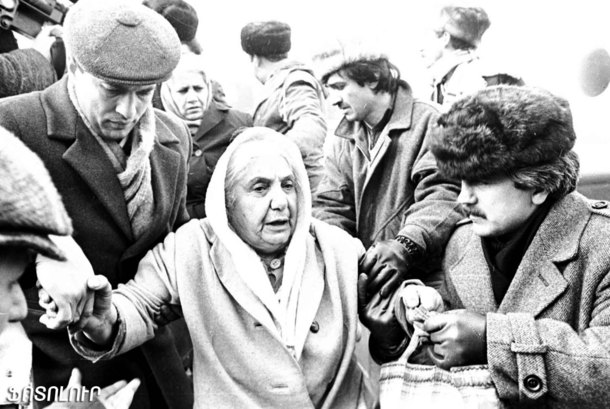
An elderly Armenian woman is one of many evacuees that escaped Baku after the massacres of Armenians by Azeris began in mid-January of 1990.

An elderly Armenian woman is one of many evacuees that escaped Baku after the massacres of Armenians by Azeris began in mid-January of 1990.

At nightfall of January 12-13, attacks started; Armenian homes were set on fire and looted, while Armenians were killed or injured. The homes of Armenians had been previously identified and mapped, while law enforcement bodies stood idle, and ambulance people made fake medical certificates, according to which the deaths of Armenians were caused by circulatory injury and not by the violence.

According to Radio Liberty, on the night of January 14 alone, 25 people were killed in the Armenian district. The Russian daily Izvestia reported on January 18 and 19 that 64 cases of pogrom had been identified, with Armenians as victims, on January 16, and 45 pogroms and arsons of residential houses on January 17. The New York Times wrote on January 19: “Nationalists in Lithuania are struggling to wrest independence from Moscow by nonviolent, political means. Nationalists in Azerbaijan also talk of independence, but their protest includes bloody pogroms against their Armenian neighbors.”

One of the leaders of the National Front of Azerbaijan, Etibar Mamedov, testified about the cruelties and the lack of official intervention: “I myself witnessed the murder of two Armenians near the railway station. A crowd gathered, threw petrol on them and burned them, whereas the regional militia division was only 200 meters away with some 400-500 soldiers of the internal forces. The soldiers passed by the burning bodies at a distance of some 20 meters, and nobody attempted to circle the area and dissolve the crowd.”

Central authorities in Moscow did little to stop the violence until January 20, when Soviet troops entered Baku and declared the state of emergency. As Moscow News wrote on February 4, “the troops entered the town seized with pogroms not to stop them, but to prevent the final seizure of power by the People’s Front of Azerbaijan, which was planned for January 20.” Most Armenians fled Baku. Former world chess champion Garry Kasparov and his family was among the evacuees. Kasparov later testified:  “No one would halt the Armenian pogroms in Baku, although there were eleven thousand soldiers of internal troops in the city. No one would intervene until the ethnic cleansing was carried out. The pogroms were happening not in a random place but in the huge capital city with blocks of flats. In such a megapolis as Baku the crowd simply cannot carry out targeted operations like that. When the pogrom-makers go purposefully from one district to another, from one apartment to another this means that they had been given the addresses and that they had a coordinator.”

The number of victims of the Armenian massacres in Baku is not clear yet, with estimates going up to 400. The events were never assessed from a legal point of view and the damages were not repaid.


Armenian Christmas

Why Do Armenians Celebrate Christmas on January 6th?

by Hratch Tchilingirian

“Armenian Christmas,” as it is popularly called, is a culmination of celebrations of events related to Christ’s Incarnation. Theophany or Epiphany (or Astvadz-a-haytnootyoon in Armenian) means “revelation of God,” which is the central theme of the Christmas Season in the Armenian Church. During the “Armenian Christmas” season, the major events that are celebrated are the Nativity of Christ in Bethlehem and His Baptism in the River Jordan. The day of this major feast in the Armenian Church is January 6th. A ceremony called “Blessing of Water” is conducted in the Armenian Church to commemorate Christ’s Baptism.

It is frequently asked as to why Armenians do not celebrate Christmas on December 25th with the rest of the world. Obviously, the exact date of Christ’s birth has not been historically established—it is neither recorded in the Gospels. However, historically, all Christian churches celebrated Christ’s birth on January 6th until the fourth century.

According to Roman Catholic sources, the date was changed from January 6th to December 25th in order to override a pagan feast dedicated to the birth of the Sun which was celebrated on December 25th. At the time Christians used to continue their observance of these pagan festivities. In order to undermine and subdue this pagan practice, the church hierarchy designated December 25th as the official date of Christmas and January 6th as the feast of Epiphany. However, Armenia was not effected by this change for the simple fact that there were no such pagan practices in Armenia, on that date, and the fact that the Armenian Church was not a satellite of the Roman Church. Thus, remaining faithful to the traditions of their forefathers, Armenians have continued to celebrate Christmas on January 6th until today.

In the Holy Land: January 19th

In the Holy Land, the Orthodox churches use the old calendar: Julian Calendar (which has a difference of thirteen days) to determine the date of the religious feasts. Accordingly, the Armenians celebrate Christmas on January 19th (January 6 in Julian Calendar) and the Greek Orthodox celebrate on January 7th (December 25 in Julian Calendar). On the day before Armenian Christmas, January 18th, the Armenian Patriarch together with the clergy and the faithful, travels from Jerusalem to the city of Bethlehem, to the Church of Nativity of Christ, where elaborate and colorful ceremonies take place. Outside, in the large square of the Church of Nativity, the Patriarch and his entourage are greeted by the Mayor of Bethlehem and City officials. A procession led by Armenian scouts and their band, advance the Patriarch into the Church of Nativity, while priests, seminarians and the faithful join in the sing of Armenian hymns. Afterwards, church services and ceremonies are conducted in the Cathedral of Nativity all night long and until the next day, January 19th.

Source: St. Andrew Information Network

BATTLE OF SARIKAMISH

THIS WEEK IN ARMENIAN HISTORY
(Prepared by the Armenian National Education Committee)

[ANEC]


Russian Victory in the Battle of Sarikamish
(January 4, 1915)


The alignment of the Ottoman Empire with the Central Powers (Germany and Austria-Hungary) and its declaration of war against Russia brought inevitably a winter campaign in the Caucasus. Russia had taken Kars during the Russo-Turkish War in 1877 and feared a campaign aimed at retaking Kars and the port of Batum in Georgia.

An initial Russian offensive in the first half of November was stopped 25 kilometers inside Turkish territory along the Erzerum-Sarikamish axis. War Minister Enver Pasha devised an operation plan and decided to take personal charge and execute his plan through a winter offense. The Turkish Third Army included 83,000 regular troops, reserves, and personnel of the Erzerum fortress added to 118,000. The Russian Caucasus Army was a well-equipped 100,000 troops. It included two battalions of Armenian volunteers, commanded by Hamazasp (Servantzdian) and Keri.

The Turkish plan was two-step: a sudden initial attack and a second step with two corps (Ninth and Tenth) of the army proceeding at full speed. After a very hard march under heavy snow in the mountainous territory, and various delays, the Turkish army started its attack on Sarikamish on December 29, instead of December 25 as planned. The troops were worn out, half-starved, and short of guns and ammunition. Enver thought that the Russians, who had initially evacuated Sarikamish, were retreating to Kars, when they were actually executing an encircling movement.

The IX and X Turkish Corps, totaling 12,000 men, began to attack Sarikamish. At the end of the day, they were driven off, losing 6,000 troops. Enver’s positive mood was replaced with disappointment when he received information that the Russians were preparing to encircle his forces with a force of five regiments. On January 1, the commander of the XI Corps pressed a frontal attack on Sarikamish lasting for the next 4 days; after that the heavy fighting began to lose momentum. Snow hindered advancing forces which were supposed to bring the relief.

On January 2, Russian artillery fire caused severe casualties. Enver Pasha received two reports; both were saying that they did not have any capacity to launch another attack. The Russians were advancing now and the circle was getting narrower. On January 4, Turkish Brigadier General Hafız Hakkı Pasha toured the front line and saw that the fight was over.

Afterwards, Turkish divisions started to surrender. Hafız Hakkı ordered a total retreat on January 7. The Ottoman Third Army started with 118,000 fighting power and was reduced to 42,000 effectives in January 1915. Russian losses were 16,000 killed in action and 12,000 who died of sickness, mostly due to frostbite.

Enver was the strategist of the operation and the failure was blamed on him. Beyond his faulty estimate on how the encircled Russians would react, his failure was on not keeping operational reserves that matched the needs of the conditions. He did not have enough field service to factor the hardships faced by the soldiers and analyzed the operational necessities theoretically rather than contextually. Carrying out a military plan in the winter was not the major failure of the operation, but the level of its execution.

The Armenian detachment units are credited no small measure of the success which attended by the Russian forces, as they were natives of the region, adjusted to the climatic conditions, familiar with every road and mountain path, and had real incentive to fierce and resolute combat.

On his return to Constantinople, Enver Pasha blamed his failure on the actions of the local Armenians, initiating the repressive measures against the empire’s Armenian population that were an early stage of the Armenian Genocide.


ARMENIAN LANGUAGE CORNER

Prepared by the Armenian National Education Committee (ANEC)


Two Other Ways to Say “New Year” in Armenian


1. Amanor

As anyone knows, “new year” is nor dari (նոր տարի) in Armenian, and of course, New Year = Nor Dari (Նոր Տարի). But, unlike English, the Armenian language has a second, much older and “fancy” way to name the first day of the forthcoming year as Amanor (Ամանոր).

Someone may suppose that this word is related to aman (աման) “vessel” and nor (նոր) “new,” and that it designated a custom of replacing the old china on New Year. Besides the fact that such a pricey custom did not exist among Armenians, this would go against language rules. In that case, the word would be amananor or amannor, which has never existed.

They would be partly right, however: the second part of Amanor is nor “new.”

What about the first? This is the Classical Armenian (Krapar) word am (ամ “year”), derived from the Proto-Indo-European word *sama. The word am does not exist alone in Modern Armenian, but it appears in compound words. Besides Amanor, how do you say, for instance, “decade” in Armenian? Dasn-am-eag (տասնամեակ). What about “biennial” or “that happens every two years”? Yerg-am-ea (երկամեայ).

In the same way that Latin annus lives in English annual, Krapar am lives in Modern Armenian amenamea (ամենամեայ). Don’t put aside Latin and Krapar!


2. Gaghant

Did you know that Armenian Gaghant (Կաղանդ) and the English word calendar are related? English calendar comes from Old French, and then from Latin calendarium (“account book”), which has its origin in calendae (“the first day of the month”).

This Latin word was also the source for the Greek word khalándai, which actually took a different meaning, “new year.” The word and the meaning went into Classical Armenian as gaghant (kaghant, in Classical Armenian pronunciation). Most interestingly, the word was only inherited by Western Armenian.

The familiar figure of Gaghant Baba (Կաղանդ Պապա), incidentally, is only known to Western Armenians too; Eastern Armenians know him as Tsemer Babig (Ձմեռ Պապիկ, “Grandfather Winter”). Gaghant Baba appears to be the Armenian version of French Père Noël ("Father Christmas"), but unlike his French colleague, the name is unrelated to Christmas, because it means “Father New Year.” Since Père Noël and Santa Claus bring presents on Christmas, perhaps this is why many people mistakenly think that Gaghant is a synonym of Dzenunt (Ծնունդ, “Christmas”), which is a mistake. Gaghant Baba has a different timing: he actually comes to Armenian children in the wee hours of New Year. By the way, if people tell you that they are coming for a visit on Gaghant, be aware: this means January 1.

THIS WEEK IN ARMENIAN HISTORY
(Prepared by the Armenian National Education Committee)

[ANEC]


Closure of the Kevorkian Lyceum
(December 21, 1917)


In the nineteenth century, the Armenian Church did not have an institution that provided superior religious education and prepared its future members. At the beginning of his tenure, Catholicos Kevork IV (1866-1882) met Russian czar Alexander II (1855-1881) and asked for permission to found such an institution. The construction of the lyceum (jemaran) started on May 25, 1869 and the grand opening was held five years later, on September 28, 1875. The bylaws approved by the Ministry of Education of the Russian Empire in the same year established that the lyceum would have two sections: a six-year school and a three-year auditory, and would provide higher religious education. After the death of the Catholicos, the lyceum was named in his honor.

Despite many efforts, Kevork IV did not see any graduate becoming a celibate priest during his tenure. A secularist spirit predominated in the lyceum. His successor Magar I (1885-1891) played an important role to redirect the institution into its actual purpose. He invited a qualified faculty, which included Bishop Maghakia Ormanian, future Armenian Patriarch of Constantinople. The latter became the teacher of theological subjects, and thanks to his efforts, four graduates were consecrated celibate priests in 1888.

The level education at the lyceum was quite high. At the school level, the following subjects were taught: Armenian history and geography, general history and geography, ancient Armenian literature, Armenian and foreign (Russian, French, German) languages, natural sciences, astronomy, mathematics, the Bible, religious music, logics, etc. The auditory section included Armenian language (Classical and Modern), Armenian history, religious literature, Armenian literature, European literature, philosophy, psychology, pedagogy, political economy, history of the Armenian Church, Armenian religious law, ritual studies, ancient Greek, etcetera.
kEVORKIANLYCEUM

The graduates presented final essays, which were defended before an examining committee and then they became clerics or continued their higher studies in Russian and European universities.

At the beginning of the twentieth century, the lyceum had 20 paying students and 230 others with scholarships. It was maintained through the incomes of the monastery of Holy Etchmiadzin, as well as fundraisers and donations. The Catholicos was the principal, who followed the activities of the lyceum through the Educational Council and the dean. The deans included Bishop Gabriel Ayvazovsky (brother of the famous painter), Rev. Garegin Hovsepiants (future Catholicos of Cilicia), Rev. Mesrop Ter-Movsisyan, and other names, generally but not exclusively ecclesiastics. Among the teachers of the Kevorkian lyceum were such luminaries of Armenian culture as Manuk Abeghian, Hrachia Ajarian, Leo, Stepan Lisitsian, Gomidas, Hakob Manandian, and many others. Those teachers were partly graduates of the same lyceum.

Within the frame of the lyceum there was an intensive intellectual activity: preparation of Armenian schools programs, writing of textbooks and handbooks, as well as many historiographic, philological, pedagogical, and theological works. The faculties of the Armenian schools of the Caucasus were filled by graduates of the Kevorkian lyceum for more than half a century.

Due to the political and military unfavorable conditions at the end of 1917, Catholicos Kevork V (1911-1930) decided to cease temporarily the activities of the lyceum on December 21, 1917. Attempts to reopen the Kevorkian Lyceum during the first independent Republic did not succeed. The unique and rich collection of its library (45,000 volumes) became one of the starting points of the collections of the National Library of Armenia and the Matenadaran.

The Etchmiadzin lyceum was finally reopened in 1945 and continues its activities until today.

FOUNDATION OF ORIENTAL THEATER

HIS WEEK IN ARMENIAN HISTORY
(Prepared by the Armenian National Education Committee)

[ANEC]


Foundation of the Oriental Theater
(December 14, 1861)


The 1850s became a period of cultural awakening for the Western Armenian centers of Constantinople and Smyrna. Many young people were getting their higher education and bringing back new ideas with them. Armenians and Greeks used to be the carriers of European innovation in the Ottoman Empire. Theater was among those innovations.

Patriotic plays in Classical Armenian and comedies in Turkish were developing the interest for theater among the public. The Altunduri (Altunian) brothers headed the formation of a theatrical committee at the beginning of 1861 in Constantinople. Arakel and Stepan Altunduri knew good French and made several translations, but above all, they had the financial means to organize theater performances. The theatrical committee would become the founder of the first Armenian professional drama theater in modern times. They rented a building that belonged to Holy Trinity Armenian Church in Pera (nowadays Beyoglu), which was called Cafe Oriental. The premises were revamped and decorated, and a state license was secured. The theater was renamed “Oriental Theater.”

The first performance, on December 14, 1861, was “Two Sergeants,” a melodrama by French playwright Rota. The theatrical group was formed by ten actors (including important names of the time such as Bedros Maghakian, Serovpe Benklian, and Mardiros Menakian) and two actresses (Arusiak Papazian and Aghavni Papazian); the presence of women on the stage was a novel element in Armenian theater. The theatrical committee had hired an Italian director, Asti. An interesting element was that Mikayel Nalbandian, the Eastern Armenian writer and journalist, who was visiting Constantinople at the time, read a speech at the inaugural performance. He reminded the public that, “The theater stage is not less than the study chair; the stage of the theater is that chair where philosophy sits and, embodying the living word, with practical ideas and examples, liberates the public from the effort of understanding those ideas only through imagination.” He also encouraged the bravery of the actresses: “The history of Armenian theater will not forget the names of the respectable damsels, Arusiak and Aghavni Papazian, who are the first to have set foot on the theatrical stage. They have fought against common prejudices and have come to the arena after overcoming them. Long live them!”

The first season of the Oriental Theater lasted five months, until May 1862. The group presented four original plays and four translations. However, theater was still a field of polemics among progressive and conservative writers and public figures, and the Oriental Theater ceased its activities in April 1863. It was reopened in 1865 under the direction of playwright Srabion Hekimian. It was finally closed again in mid-1867 after several performances of Romanos Sedefjian’s  play “Vartan Mamigonian, Savior of the Fatherland,” dedicated to the memory of Nalbandian, who had passed away the previous year in a Russian prison.

Despite its short life, the impact of the Oriental Theater would be lasting. Many of its members would continue their activities in different groups and become pillars of Western Armenian theater until the beginning of the twentieth century.


MIKAYEL CHAMCHIAN

THIS WEEK IN ARMENIAN HISTORY
(Prepared by the Armenian National Education Committee [ANEC])


Birth of Mikayel Chamchian

(December 4, 1738)


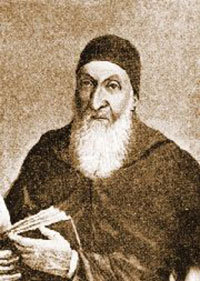
Fifth century historian Movses Khorenatsi has been commonly labeled as the Father of Armenian History. It is not unfair to call Father Mikayel Chamchian the Father of Modern Armenian Historiography.

Mikayel Chamchian

Mikayel Chamchian

Chamchian was born in Constantinople. He was initially homeschooled and then attended the local Catholic school. He later studied jewelry with Mikayel chelebi Diuzian, imperial jeweler and a distant relative. The young Garabed (that was Chamchian’s baptismal name) was so famous in town for his talent as a jeweler that a contemporary wrote: “Not even one was found like him.” Diuzian thought of turning him into his business partner and even arranging marriage with his daughter. However, in 1757, barely eighteen, Chamchian left his promising career and went to the island of San Lazzaro, in Venice, to enter the Mekhitarist monastery and satisfy his thirst for knowledge. His elder brother Hagopos was a member of the Mekhitarist Congregation.

After graduating from the island’s school in 1762, Chamchian joined the congregation and became a teacher at the school. His scholarly studies were interrupted in 1769, when he was consecrated vartabed and sent to serve the Armenian Catholic community of Basra (Iraq). He traveled through the Armenian communities of the Middle East (Alexandria, Beirut, Damascus, Aleppo, Baghdad, etcetera) and collected manuscripts for the library of the monastery. In the 1770s he wrote a four-volume polemical work (each volume contained 800-900 pages) entitled Shield of Orthodoxy. This work was destined to demonstrate “the orthodox doctrine of the Armenian Church.” His enemies robbed this work from his room, and the Vatican called him for an interrogation, since his defense of Catholicism seemed to have been accompanied with some sympathy for the “schismatic” Armenian Apostolic Church.

He returned to the monastery in 1775 and taught at the seminary for the next fourteen years. Many of the best scholars of the congregation in the next several decades were his students. He produced a remarkable grammar of Classical Armenian in 1779, which he abridged in 1801 and became the main textbook of Armenian schools in the nineteenth century (eleven reprints).

Between 1780 and 1788, Chamchian dedicated himself to write the first comprehensive history of Armenia from the origins to his days. The author was an enormously fastidious writer and made countless changes and additions in his volumes until they went into printing. The thick three volumes, which had the publishing dates 1784-1786, were actually published between 1785 and 1788. Chamchian’s History of Armenia would become a reference work for Armenian Studies scholars for over a century and, besides, it would offer a full picture of the past for a people that were trying to construct their national identity.

Afterwards, he devoted himself to religious and theological works. Due to his poor health, the congregation sent him back to Constantinople as its resident representative. He would remain in the capital of the Ottoman Empire and he would continue producing with incredible fecundity; among other works, he published a ten-volume commentary of the Psalms, more than 6,000 pages (1815-1823). He also worked on a project to create a school of Armenian higher education in any European university town. Besides a history of the Ottoman Empire that remained unpublished, he produced an abridged version of his History of Armenia, both in Armenia (1811) and in Turkish (1812). The Armenian version was translated into English and published in Calcutta in 1827.

Following the ecumenic orientation that had been the focus of the founder of the congregation, Mekhitar of Sepastia, Chamchian dedicated himself also to solve the disputes among Armenian Apostolics and Catholics in Constantinople, in the understanding that the Armenian Church was not heretic, as it was frequently portrayed at the time, and there was no need to shock the Armenian nation with new quarrels. He even tried to unify both communities. During four decades (1776-1815), he wrote a theological work of some 900 pages, Shield of Faith, Which Confirms the Orthodoxy of the Armenian Church from St. Gregory, the Illuminator of Armenia, until Today. Another Catholic priest robbed the book and took it to Rome, where it had the impact of a bomb. After four years of discussions and debates, the book was destroyed by order of the Propaganda Fide and only an abridged version was published half a century after Chamchian’s death (Calcutta, 1873).

Chamchian passed away on November 30, 1823 and was buried in the Armenian cemetery of Pera (today Beyoglu). His History of Armenia still remains as a classic, and has been the foundation of his intellectual fame.

THIS WEEK IN ARMENIAN HISTORY
(Prepared by the Armenian National Education Committee [ANEC])


The “Self-Liquidation” of the

Armenian Revolutionary Federation in Yerevan

(November 20-23, 1923)


The first years of the Soviet experience were marked by the struggle to establish the foundations of the new regime that included the need to end all remaining opposed forces throughout the Soviet Union. Ceremonies of “self-liquidation” of various parties that had been on the anti-Soviet front were staged.

The turn of the Southern Caucasus came in 1923. First the Social Democrat Hunchakian Party (June) and then Georgian Menshevik (Social Democrats) and Azerbaijani Musavat parties (both in August) announced their dissolution in congresses “organized” by their ex-members. The Armenian Revolutionary Federation followed suit in November.

After the Sovietization of Armenia in December 1920 and the retreat of the leadership of the party from the country following the revolt of February 1921, the A.R.F. was going through an organizational crisis, which was part of the critical moment being lived by the Armenian people worldwide. It was an hour of reckoning and self-criticism, as the Vienna Conference held in April-May 1923 showed. This conference decided to convene abroad what would be the 10th World Congress of the A.R.F.

The purpose of the “Congress of Former Dashnaks in Armenia” was to impede the reconstitution of the A.R.F. outside Armenia. The Armenian Communists’ concern was to combat the idea of independence and to renounce publicly any territorial claims against the neighbor republics and Turkey, aiming “to open the eyes of the Armenian workers of the colonies."

Upon the invitation of an “organizing bureau” of seventeen members, 247 delegates representing 4,032 members of the party (a striking number in comparison to the number of members of the Communist Party of Armenia, namely, 4,230) gathered at the State Theater of Armenia on November 20, 1923. The opening was by young agronomist and writer Aksel Bakunts (1899-1937), who would soon become one of the leading story writers of Soviet Armenia before his death in the Stalinist purges. As he said in his opening remarks, the congress was organized to allow the “four thousand Dashnak party members who had never been able to express their aspirations” to break with their old party and “to put their revolutionary energies at the service . . . of the Soviet state.” During three days, the delegates evaluated the current situation of the A.R.F., analyzed critically its ideology and its political activities during the preceding thirty years, and measured the extent of its current activities in an environment that enjoyed relative freedom of expression but did not lack theatrical elements. Old Bolshevik Askanaz Mravian had a major address during the second day of sessions, where he analyzed the international and domestic situation in Armenia and Soviet Russia. The closing address on November 23 was by Lukashin (Sargis Srapionian), chairman of the Council of Popular Commissars of Armenia (equivalent to prime minister) and representative of the Central Committee of the Communist Party.

The congress stressed that the peasants and workers of Armenia, whose fate had been sacrificed during the previous years at the altar of “national independence,” would henceforth enjoy “peace and security.” It called upon Armenian workers abroad to liquidate the A.R.F. committees and to struggle against capitalism, waiting for the final victory of the international working class, which would allow the resolution of the “bloody question of the liberation of the small nations.”

The main utility of the congress was internal. The “former Dashnaks” contributed to the legitimization of Soviet rule in Armenia playing the role of mediators between the Communist Party, yet poorly rooted in the country, and a population longing for peace and security. The congress failed in its key mission however, as the A.R.F. gathered its 10th World Congress from November 1924-January 1925 in Paris and retained its goals for a free, independent, and united Armenia in its program, although stressing that it had no plan to overthrow the Soviet regime. A.R.F. clandestine structures would remain active in Armenia until 1933.


MIKAEL NALBANDIAN

THIS WEEK IN ARMENIAN HISTORY
(Prepared by the Armenian National Education Committee [ANEC])


Birth of Mikael Nalbandian

(November 14, 1829)


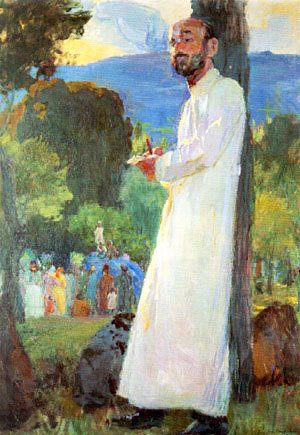
Francis Scott Key is just remembered as the author of the lyrics of the U.S. national anthem. It is not the same in the case of Mikael Nalbandian, who was an influential intellectual of the nineteenth century and is an important name in the history of Armenian culture, besides being the author of the lyrics of the Armenian anthem.Nalbandian

Nalbandian was born on November 14, 1829, in Nor Nakhichevan, the town close to Rostov-on-Don founded in the late eighteenth century by Armenian emigrants from Crimea, in the family of a craftsman. He studied in his hometown at the school of Gabriel Patkanian, and for a while he was classmate of his son, the future poet Rafael Patkanian (Kamar Katipa). He worked as a secretary in the Armenian diocese of Nor Nakhichevan and Besarabia from 1848-1853. Then he left his post and went to Moscow, where he taught Armenian language at the Lazarian College for a short while, and took classes at the Medicine School of Moscow University as an auditor (1854-1858).

Similar to Khachatur Abovian, Nalbandian championed the introduction of Modern Armenian (ashkharhapar) instead of Classical Armenian (krapar), and confronted the opposition of ecclesiastics and conservatives. He translated poems of Alexander Pushkin, Mikhail Lermontov, Heinrich Heine, and others. Among his own poetry, three poems became favorites of the public: “The Song of the Italian Girl” (Idalatsi aghchga yerke), “Freedom” (Azadutiun), and “Days of Childhood” (Mangootian orer). The first, better known as Mer Hairenik (“Our Fatherland”), would become the anthem of the first Republic of Armenia in 1918, and was adopted again after the new independence of 1991.

NalbandianStatue

A statue of Nalbandian located on the street named after the author in central Yerevan.

Nalbandian published the journal Hiusisapayl (Aurora Borealis) with another influential intellectual, Stepanos Nazarian (1812-1879), in Moscow. During its five years of existence (1859-1864), the journal became a leading name in the cultural awakening of Eastern Armenians. Nalbandian had already made a name for himself since the 1850s due to his progressive and liberal views, as well as his outspoken and ironic style. Reform and renewal were his main ideas, as he espoused them in his writings on different issues. He published various political tracts, of which the most important was Agriculture as the Right Way (1862), where he criticized the peasant reform of 1861 in Russia.

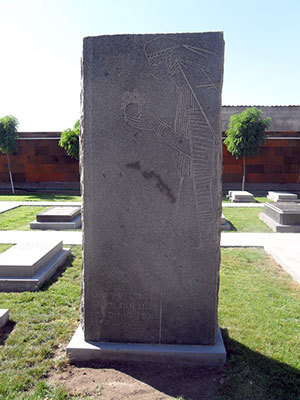
The writer made two trips to Europe (1859 and 1860-1862), and he also visited India. In London he became friends with various famous Russian revolutionaries, such as Alexander Herzen and Mikhail Bakunin. After his return in 1862, he was arrested by the Russian secret police and spent three years in prison in St. Petersburg. He was accused of inciting anti-government sentiments and exiled to the fortress of Kamyshin, in the province of Saratov. He passed away at the age of 37, victim of tuberculosis, on April 12, 1866. He was buried in the Armenian monastery of Holy Cross, in Nakhichevan-on-Don. An important street in central Yerevan and a statue remember him.