SOAR-WISCONSIN REPORT

SOAR-Wisconsin Field Trip to Armenia
April 19-29, 2015


Our Society for Orphaned Armenian Relief (SOAR) Wisconsin chapter delegation included the two chapter co-presidents (Dr. Chuck and Mary Kay Hajinian), the vice president (Harry Aghjian), and the treasurer (Leon A. Saryan).   SOAR is a charitable organization recognized by the US government under applicable law. The purpose of our visit was to visit an orphanage to which our chapter has provided assistance and to evaluate the economic, historical and social makeup of the people to better understand the orphan situation in Armenia.


On our first day we met with the SOAR representative in Armenia, Siranoush Hovannesian.  She escorted us to the Mari Izmirlian orphanage in northeast Yerevan, which we first visited in 2013 and which our chapter has supported financially in the past.  This facility cares for children who are handicapped, disabled, or otherwise have special needs.   The number of children being cared for has climbed to 110 from 90 two years ago.  Staff salaries and basic essentials are covered by the government’s Ministry for Social Services, but very little money is allotted to capital needs and facility upgrades.

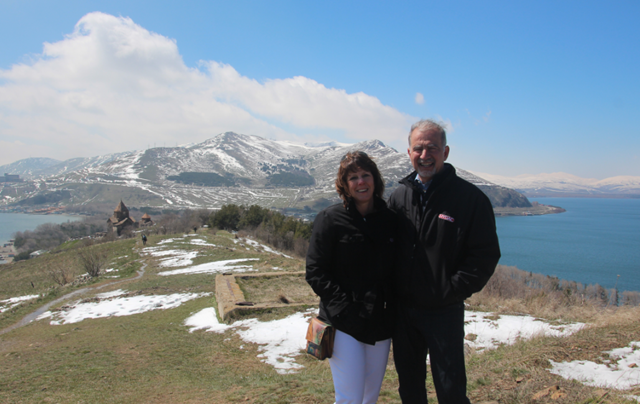
SOAR-Wisconsin vice president Harry Aghjian and his wife Casey at Lake Sevan, Armenia

SOAR-Wisconsin vice president Harry Aghjian and his wife Casey at Lake Sevan, Armenia


We were able to observe several improvements from our visit two years earlier, made possible in large part by donations from our SOAR chapter and other diaspora organizations.   Sinks now had faucets, toilets had seats, and damaged walls were painted.  Fire-damaged areas were repaired.  Medical and kitchen refrigerators donated by our chapter two years earlier have been installed.  Also, many children have been provided with new beds, mattresses, and closets for their clothing.  We noted that bronze plaques have been mounted acknowledging the Wisconsin and Chicago chapters of SOAR for their donations.


We met with the orphanage staff and found them deeply appreciative and committed to the care of these children. This is a government sponsored home where workers are not highly compensated.  To do this work of caring, cooking, cleaning up these kids requires a special heart.  This staff seems to have that.


We were also able to assess additional needs:  another forty new beds and mattresses, kitchen equipment (commercial blenders, a commercial bread slicer, food processors, large pots and pans etc.) are needed.  Another large commercial refrigerator is also needed (estimated at $5000) as well as some additional new washing machines and clothes dryers.


During our meeting with Siranoush, we delivered 14 large bottles of multi-vitamins for orphan children donated and carried to Armenia by the SOAR-WI chapter.  We also gave her over 5000 custom-prepared prayer cards in English and Armenian. These prayer cards were designed by Wisconsin SOAR members and Father Yeghia Hairabedian of Glendale, California thru Renewal in Christ Ministries. The cards have a picture of Christ with children and an encouraging spiritual prayer for the children to recite.  Some cards were also given to a pastor to take to Jordan and Syria for refugees and orphans.


We also delivered over $2000 worth of dental supplies to support the establishment of dental clinics in Armenia’s orphanages.  Partially at our initiative, the Mari Izmirilian Orphanage has a new two-operatory dental clinic operated by a Polish dentist who comes to Armenia twice a year to care for all the children at that orphanage.  Siranoush was instructed to distribute the dental supplies as she saw fit.


We also met with several Armenian institutional directors to discuss synergy with SOAR, including Vahram Kazhoyan (vahram@rocketmail.com).  Vahram wears multiple “hats” for the government and helps oversee NGO’s.  He is the hospitality spokesperson for the Foreign Ministry and works as a Goodwill Ambassador.  He was instrumental in working with businessman James Tufenkian in setting up a shelter for battered women in Yerevan.  We also met James Tufenkian and stayed at his hotel.

Casey Aghjian with SOAR sponsored orphans

Casey Aghjian with SOAR sponsored orphans

While in Yerevan, we also met with an NGO for Syrian-Armenian refugees. This “New Aleppo” group are relocating families and orphans. These numbers are as high as 16,000 people.  We met with families whose ancestors operated ran orphanages during the Genocide. Dr. Hajinian was interviewed on Armenian H3 television, a Danish newspaper and the New York Times published my comments.  Others in our group were also interviewed.


During the visit the Wisconsin SOAR officers were able to observe the general status of living conditions that make orphanage institutions essential for the social fabric of the country.


We returned with a new list of needs for the Mari Izmirlian Orphanage and introduced many to the work of SOAR.


Document prepared by Dr. Chuck Hajinian, President, SOAR-Wisconsin, and Dr. L. A. Saryan, Treasurer, SOAR-Wisconsin.

June 1, 2015

DEATH OF NERSESS SHNORHALI

THIS WEEK IN ARMENIAN HISTORY
(Prepared by the Armenian National Education Committee)

[ANEC]

Death of St. Nerses Shnorhali

(August 13, 1173)

One of the saints of the Armenian and the universal Church, Nerses Shnorhali, is also one of the most revered names in the Armenian Christian tradition. He was known with the appellative of Shnorhali (“Graceful”) due to his multiple talents: he was theologian, poet, musicologist, composer, and historian, and excelled in all those endeavors

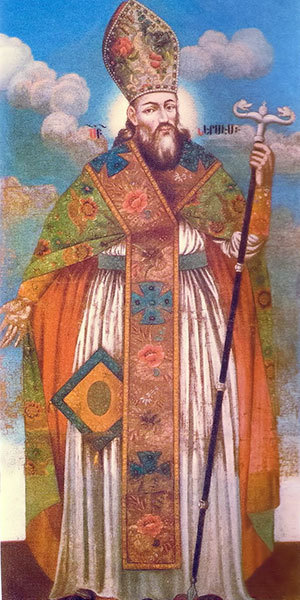
Nesess Shnorhali

Nesess Shnorhali

Nerses Glayetsi was born in the castle of Tzovk, in the district of Tluk, in the Armenian Mesopotamia (the area around the city of Edesa or Urfa) in 1102. He belonged to the princely Pahlavuni family. His great-grandfather was Krikor Pahlavuni or Magistros (990-1058), a famous writer, scholar, and public official.

After the early death of his father, Prince Apirat Pahlavuni, Nerses and his older brother Krikor were placed under the guardianship of their maternal great uncle, Catholicos Krikor II Martyrophile (1066-1105), who placed them in the monastery at Fhoughri. Later, Krikor’s successor, Barsegh (1105-1113) sent them to the school of the monastery of Karmir Vank, headed by Bishop Stepanos Manouk, a highly regarded scholar and theologian.

Nerses’ brother Krikor became Catholicos at the age of 21, in 1113. Nerses was ordained a celibate priest in 1119 and consecrated a bishop at the age of 35, in 1137. He was one of the best educated men of his time.

He assisted Catholicos Krikor III in moving the Catholicosate to Dzovk, on the property of their father, in 1125. This move was brief, as in 1151 the Catholicosate moved its headquarters to the fortress of Hromkla, near the Euphrates River (Nerses’ surname “Glayetsi” was derived from the name of the fortress). In 1165 hostilities broke out between Toros II, Prince of Cilicia, and one of the strongest princes of the country, Oshin of Lambron. Krikor III sent his brother to mediate.

On his way to the mediation, Nerses met Byzantine governor Alexios and discussed the strained relations between the Armenian and Greek churches since the Greek Orthodox Church had declared that the Armenian Church and the Jacobite Church were heretics in 1140. This discussion impressed the Byzantine governor to the point that he urged the Armenian bishop to write an exposition of the Armenian faith. Nerses stressed in his letter that, as both the Armenian and Greek churches accepted the statements of the first Council of Ephesus (431), there was no clear reason for them not to be in agreement, and did not make any polemical statements about the later Council of Chalcedon and its Confession.

On Nerses’ return from his successful mediation effort and the death of his brother shortly thereafter, he was made Catholicos of the Armenian Church. He convened a council with emissaries selected by Byzantine emperor Manuel I Comnenos to discuss how they might be able to reunite the two churches (1171). The terms the emperor offered were, however, unacceptable to both Nerses and the Armenian Church, and the negotiations collapsed.

Nerses Shnorhali passed away on August 13, 1173 and was buried in the fortress of Hromkla. The Armenian Church celebrates him as a saint on October 13, during the feast of the Holy Translators, while the Catholic Church also celebrates him, but on August 13.

His prolific literary output included long poems like Lament of Edesa (1145-1146), Jesus the Son (1152), and others, such as the cosmological poem About the Sky and Its Ornaments. He refined and completed the Sharaknots (collection of liturgical hymns) and the Divine Liturgy, enriching it with his own songs, whose number amounts to more than a hundred. One of his best sharakans is the well-known Morning of Light (Առաւօտ լուսոյ, Aravod luso). He also composed some 300 riddles, extracted from Armenian folklore. His Universal Epistle, written in 1166 and addressed to the entire Armenian people, was particularly influential in Armenian medieval thought.

Birth of Stepan Lianozov

THIS WEEK IN ARMENIAN HISTORY
(Prepared by the Armenian National Education Committee)

[ANEC]


Birth of Stepan Lianozov

(August 9, 1872)

John Reed, the American Communist militant who witnessed the October Revolution that would give birth to the Union Soviet, called Stepan Lianozov the “Russian Rockefeller.” Both Lianozov and Rockefeller competed for the oil of Baku in the early twentieth century, at the time when Armenians like Lianozov had an important share in its production and exploitation.

Stepan Lianozov (Lianosian) was born on August 9, 1872 in Moscow. His father, Gevorg Lianozov (1835-1906), descended from an Armenian family that had been deported from Eastern Armenia by Iranian Shah Abbas III at the beginning of the seventeenth century.  He was a dominant name in the production of caviar from the Caspian Sea, and would inherit the interests in the oil of Baku that his brother, also called Stepan, had built since 1872.

Gevorg Lianozov’s son Stepan graduated from high school and in 1894 entered the School of Natural Sciences of the University of Moscow. He changed his career and graduated from the School of Law four years later. He worked for two years as an assistant to a magistrate in the court chamber of Moscow.

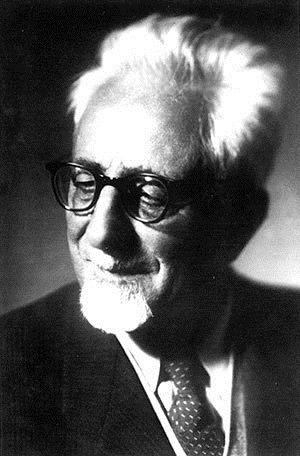
Stepan Lianozov

Stepan Lianozov

In 1901 Stepan left to his brothers Martin and Levon the caviar business and entered the growing and lucrative field of oil to assist his father.

After the death of his father, Stepan Lianozov founded the oil company G. M. Lianozov and Sons in St. Petersburg (1907), with a statutory capital of 2 million rubles. He transformed the family business into a corporative activity, attracting big investors, and engaging the biggest players in Baku: the Nobels, the Rothschilds, and the Shell Company. Between 1907 and 1910, G. M. Lianozov and Sons multiplied its production almost nine times.


The company owned oil fields, as well as subsidiaries in Baku that produced kerosene and refined petroleum, a pipeline in the Caspian shore, and others. Lianozov was elected member of the Baku City Council and the Baku Stock Exchange council.

On July 28, 1912 the Russian Main Oil Union, also called Oil, was founded in London. It united three Armenian and one Russian oil companies, several big Russian banks and representatives of British business, with a founding capital of 2.5 million sterling pounds. Stepan Lianozov became director-manager of the new company, which soon bought twelve big oil companies (including Mantashov and Co., Mirzoyev Brothers and Co., A. S. Melikov and Co., and Aramazd), and became the third biggest oil company in the world, after Standard Oil and Royal Dutch Shell.

G. M. Lianozov and Sons paid 18% to its shareholders in 1913. It had representative companies in Great Britain (British Lianosoff Wite Oil Company), France (La Lianosoff Français), and Germany (Deutsche Lianozoff Mineralöl Import Act.Ges).

In the spring of 1914 Lianozov and the Mantashov brothers (sons of the late Armenian oil magnate Alexander Mantashov or Mantashiants) made a big investment in the movie company Biochrome, founded by Sergei Prokudin-Gorski. The headquarters of the company were in Moscow, in one of the houses of the Lianozovs, which would become the offices of the Ministry of Cinematography after the Russian Revolution. The company filmed several movies until 1918, when the movie sets were burned by a fire: “No Exit,” “The God of Revenge,” “The Eternal Tale of Life.”

Lianozov’s business activities continued successfully after the beginning of World War I, but the Russian Revolution ruined the oil magnates of Baku. Unlike many other businessmen, Stepan Lianozov actively entered politics and participated in the civil war that followed. After migrating to Finland, in May 1919 he participated in a meeting organized by the counterrevolutionary forces (the Whites), which decided to create the Northwest Republic with center on the north of current Estonia. Lianozov was designated head of government, and took the positions of Prime Minister, Minister of Finances, and Minister of Foreign Affairs. General Nikolai Yudenich, who had been one of the main Russian commanders in the Caucasian front, and was one of the military leaders of the counterrevolutionary movement, together with Generals Kolchak and Denikin, took the position of Minister of War and commander in chief of the Northwest Army.

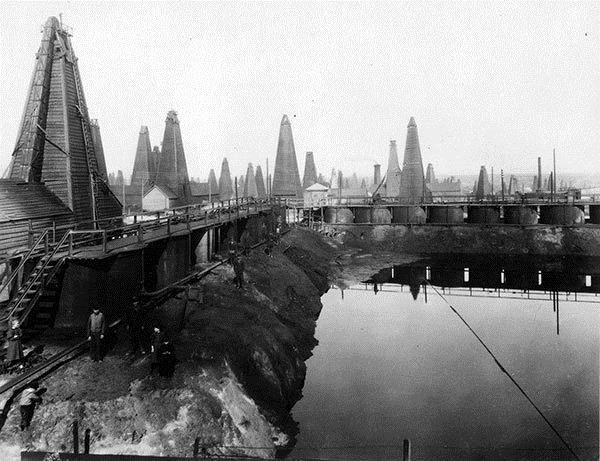
Oil rigs around a pool of crude in Baku around 1900

Oil rigs around a pool of crude in Baku around 1900

One of the first measures by Lianozov was to recognize the independence of Estonia on August 11, 1919, followed by the recognition of Latvia (September 3) and Finlandia (September 23). He also issued rubles of the Northwest Republic, signed by Yudenich and himself.

In October 1919 Yudenich headed an attack against St. Petersburg. However, the White offensive failed to occupy the capital of Soviet Russia, and, as a result, the Northwest Republic self-dissolved on December 5, 1919 and Lianozov moved to Paris.

In 1920 Stepan Lianozov founded TorgProm (Russian Trade-Industrial and Financial Union), together with the brothers Poghos and Abraham Ghukasian, and some Russian emigré businessmen, to protect the interests of Russian businessmen in Francia. He worked as a film producer in 1925, which became his main source of income for several years. Meanwhile, in 1926 he was the representative for France of the Russian Congress Abroad. This organization published its own newspaper from 1925 to 1940, called Renaissance.

Stepan Lianozov passed away on August 10, 1951 in Paris and was buried in the cemetery of Passy. He left one son, called Nikolai.


HAMO OHANJANIAN

THIS WEEK IN ARMENIAN HISTORY
(Prepared by the Armenian National Education Committee)

[ANEC]


Death of Hamo Ohanjanian

(July 31, 1947)

Ohanjanian was a prominent member of the Armenian Revolutionary Federation in the first half of the twentieth century and also served as Prime Minister of the Republic of Armenia.


He was born in Akhalkalak (Javakhk, nowadays Georgia) in 1873. After his elementary studies in his birthplace, he moved to Tiflis, where he graduated from the Russian lyceum. He entered medical school in Moscow (1892), where he joined the Armenian Revolutionary Federation, and because of his participation in student agitation, he was left out of the university. He returned to Tiflis, and in 1899 he continued his studies in Lausanne (Switzerland), which he finished in 1902. He returned to Tiflis in 1902, where he became a leading figure of the party, and in 1905 was elected a member of the Eastern Bureau of the A.R.F. He would coordinate the popular action that opposed the confiscation of the properties of the Armenian Church in 1903 and he established relations with Russian and Georgian revolutionaries during the revolutionary movements of Russia in 1905-1907. He played an important role in the crucial A.R.F. Fourth General Assembly (Vienna, 1907), where he helped preserve the unity of the party by stopping extreme-left and extreme-right wing dissension.

Hamo Ohanjanian

Hamo Ohanjanian


In 1908 the Czarist government launched a persecution against revolutionary parties, including the A.R.F. Ohanjanian, together with 160 party members, was arrested. He was sentenced to hard labor in Siberia during the infamous “Trial of the Tashnagtsutiun” in 1912. Roubina Areshian, one of the organizers of the failed attempt against Sultan Abdul Hamid in 1905, followed him there and married him.


In 1915 Ohanjanian was set free thanks to the intercession of Catholicos Kevork V and Caucasus viceroy Ilarion Vorontsov-Dashkov. He returned to Tiflis and assisted the volunteer battalions as a physician, as well as the refugees from Western Armenia.


After the Russian Revolution of 1917, he departed to Petrograd and Kharkov to exhort Armenians to bring their help to the refugees. In May 1918 he participated in the battle of Gharakilise, where his elder son (born from his first marriage to Olga Vavileva) was killed.


After the birth of Armenia, Ohanjanian became a member of the Delegation of the Republic presided by Avetis Aharonian to participate in the Peace Conference in Europe. He remained in the West until the beginning of 1920. In October 1919 he was elected member of the A.R.F. Bureau during its Ninth General Assembly held in Yerevan.


He returned to the Armenian capital in January 1920 as Minister of Foreign Affairs in the cabinet of Alexander Khatisian. Following the failed Bolshevik uprising of May 1, 1920, Khatisian resigned, and Ohanjanian was charged with forming a new government on May 5, 1920. It was called the Bureau-Government, because all of its members were members of the A.R.F. Bureau.


Ohanjanian’s premiership coincided with the most crucial period of the Republic of Armenia, which would practically lead to its demise. The Treaty of Sevres was signed on August 10, 1920, but the following Armeno-Turkish war, started in September, ended with the defeat of the Armenian army. Ohanjanian resigned on November 23, 1920. Simon Vratzian would become the fourth and last prime minister, and ten days later the Soviet regime was established.


Ohanjanian, with other A.R.F. leaders, was imprisoned in January 1921 during the wave of terror that followed the Sovietization. The prisoners were saved by the popular rebellion of February 1921. After the end of the rebellion in April 1921, Ohanjanian moved to Zangezur and then to Iran. In the end, he settled in Egypt, where he would live until his death.


Besides his political activities as a party member, Ohanjanian, well-aware of the importance of language and culture for the preservation and development of the Armenian identity in the Diaspora, became a founding member of the Hamazkayin Cultural Association in 1928 and its chairman for the next 18 years. He also provided important support for the establishment of the Armenian Lyceum of Beirut in 1930.


The former prime minister of the Republic of Armenia passed away on July 31, 1947 in Cairo, where he was buried.


“I AM ARMENIAN”

David Luhrssen at UCLA 


On July 1, Milwaukee Armenian Community member David Luhrssen was the guest speaker at UCLA’s “I Am Armenian” program. A film series marking the centennial of the Genocide, “I Am Armenianfeatures Armenian films and discussion between guests and host Carla Garapedian. Luhrssen was invited on the strength of his recent book, Mamoulian: Life on Stage and Screen, the most complete account of director Rouben Mamoulian’s work in theater and film. The discussion between Luhrssen and Garapedian took place after a screening of Mamoulian’s final film, the Fred Astaire musical Silk Stockings, in the Billy Wilder Theatre at UCLA’s Hammer Museum. 


Luhrssen is the author of several books and is arts editor and film critic for Milwaukee’s weekly newspaper, the Shepherd Express. Garapedian was the anchor for BBC World News and is an award-winning filmmaker best known for her documentary on the band System of a Down, Screamers. 

For a video of their conversation, go to: http://hammer.ucla.edu/programs-events/2015/07/silk-stockings/

http://livestream.com/hammermuseum/silkstockings/videos/91947438

Armenian Fest a Success

By David Luhrssen


The 2015 Armenian Fest (July 19) was St. John’s most successful picnic in recent years. The Cultural Hall was packed for much of the afternoon, the tent outside was crowded, food sales were brisk and many church-historical tours were given. This year, MidEast Beat provided music outside and Stepan Frounjian performed Armenian melodies on electric keyboards indoors.  


As usual, Armenian Fest was an opportunity for fellowship among Armenians of Southeastern Wisconsin; many regulars from the outside community returned, complementing our crew the delicious food. Especially gratifying this year was the large turnout by non-Armenians who came for the first time as a result of advanced publicity. 


Special thanks to Diane Blinka and Jan Kopatich for organizing the event and to all the volunteers who prepared the food, set up the hall, pitched the tent and staffed the event. 


YERVANT DER-MINASIAN

THIS WEEK IN ARMENIAN HISTORY
(Prepared by the Armenian National Education Committee)

[ANEC]


Death of Yervant Ter-Minasian
(July 12, 1974)

Yervant Ter-Minasian had a short and eventful ecclesiastic career (he left the Church at the age of 31), when he was already an important name in Armenian scholarship. He would still be active for the next six decades and leave a prolific legacy.


YervantDerMinasian

Yervant Ter-Minasian

He was born in the village of Harich, now in the province of Shirak (Republic of Armenia), on November 19, 1879, into a family of priests. He graduated from the school of the local monastery in 1892 and entered the Kevorkian Seminary of Holy Etchmiadzin. After his graduation in 1900, Catholicos Mgrdich Khrimian sent him to Germany, where he studied theology and ancient languages at the universities of Berlin and Leipzig with famous theologian Adolf Harnack among other professors. He defended his dissertation in 1904 with a study of the relations between the Armenian and Syriac Churches, published in German in the same year, which became the cornerstone of this field.


Back in Etchmiadzin, Ter-Minasian was consecrated celibate priest (vartabed) in 1905 and taught at the Kevorkian Seminary, becoming also the director of the printing house of the Holy See. He published a revised version of his doctoral dissertation in Armenian (1908), as well as half a dozen books, including several textbooks, between 1906 and 1909. An ongoing polemics between conservative and liberal members of the congregation about reform in the Armenian Church ended with an article by the young vartabed, published in the monthly Ararat of the Catholicosate, being publicly burned by order of the locum tenens, Archbishop Kevork Surenian (later Catholicos Kevork V), in 1909. This polemics led him to leave the Church in February 1910. He would later marry and have five children. Nevertheless, his relations with the Holy See soon returned to normalcy. In 1944 he even declined an offer from Catholicos Kevork VI to return to the Church and become a bishop.


Ter-Minasian devoted himself to his pedagogical vocation. He taught in schools at Alexandropol (Gumri, 1910-1917) and Tiflis (1918-1919). In late 1919 he was entrusted by the government of the Republic of Armenia to become one of the organizers of the University of Yerevan, and was a professor there in 1920. After the fall of the independent republic, he became scientific secretary of the Scientific Institute of Etchmiadzin (1921-1922) and then principal of the school of second degree of Vagharshapat (1922-1928) and teacher until 1930.


Ter-Minasian’s past both as a former ecclesiastic and as researcher in ecclesiastic history was not politically correct in the Soviet regime. He took as many precautions as he could to avoid unpleasant surprises: after 1930, when he moved to Yerevan, he earned his living as one of the most authoritative experts of the German language in the country. Furthermore, he would be one of the foremost translators and editors of Marxist classics (Marx, Engels, Lenin) from German and Russian. He initially taught at the Pedagogical Technical School (1930-31) and the Agricultural Institute (1940-1947) as German teacher and chair of the foreign language department. He also taught at Yerevan State University with the same positions from 1943-1948.


In 1945 Ter-Minasian was invited by the Academy of Sciences to deliver a lecture on “The Armenian Literature of the Golden Age,” which was published as a booklet in 1946. The word vosgetar (ոսկեդար, “Golden Age”), commonly used to describe Armenian literature of the fifth century A.D., became a pretext for political attacks, and the almost seventy-year-old scholar was fired from his position at the university in 1948.


Two years later, he was able to take a part-time job as a teacher at the Institute of Foreign Languages, and in 1951 he got a position as senior researcher in the Institute of Linguistics of the Academy of Sciences. He became head of the section of dictionary writing in the same institute from 1955-1970.


Ter-Minasian left an important work in the field of bilingual dictionaries, but most importantly as a scholar of Armenian-Syriac relations, the origin of Christian sects, the doctrinal position of the Armenian Church in the 5th-7th centuries, and other related issues. He also prepared the critical edition of Yeghishe’s On Vartan and the War of the Armenians (the history of the war of Vartanantz), as well as its translation into Modern Armenian.


In his last years, Ter-Minasian wrote his memoirs, which remained unpublished until 2005. He passed away on July 12, 1974, at the age of 95.

Hampartsum Limonjian

THIS WEEK IN ARMENIAN HISTORY
(Prepared by the Armenian National Education Committee)

[ANEC]


Death of Hampartsum Limonjian
(June 29, 1839)

Hampartsum Limonjian, better known by the sobriquet Baba Hampartsum, was one of the most important figures of Armenian music. He opened a new era in Armenian songs, as he cleaned them from foreign influences, and became the creator of the Armenian new musical notation, which helped maintain the heritage of popular and spiritual songs.


Limonjian was born in Constantinople in 1768. His childhood was marked by poverty. As soon as he had learned how to write and to read, he became an apprentice in a tailor shop and, after learning the trade, became a tailor himself.


He had an innate love for singing and music, and in his free time he devoted himself to learning music, and this is how he advanced in musicology. He later became a student of Zenne Boghos and learned Armenian religious music. He met Turkish dervishes and in a short time learned the style of their classical singing. The mystic teachings of the dervishes made a great impact on him, as well as their introspective life and their prayers that were accompanied by songs, music, and ritual dances.


Afterwards, Hampartsum Limonjian, who was already known as Baba Hampartsum, studied also European musical theory. His acquaintance with Hovhannes Chelebi Duzian became crucial. Hovhannes Chelebi, who was also a music lover, noted the exceptional abilities of Baba Hampartsum and had him hired as a music teacher in the Mekhitarist School of Constantinople. Simultaneously, he also worked as a scribe for the Balians, who were the imperial architects.


Once he assured his living, Baba Hampartsum strove to improve his musical knowledge. He took lessons from Greek musicians and maintained his links with the dervishes. He also studied old Armenian religious songs and tried to transcribe them. The European notation was not appropriate and he invented an Armenian notation system that resembled the khaz (the Armenian notation used in the Armenian hymns or sharagan) and corresponded to the European musical scale. He worked on his invention until 1815. In 1837 he wrote his autobiography, in Turkish, where he wrote about the motives that had led him to create the Armenian notation.


Hampartsum Limonjian had a group of students who continued his work, among them his son Nezen Zenob (1810-1866), Tamburi Alexan, Apisoghom Utudjian, Aristakes Hovhannesian, Bedros Cheomlekian and Hovhannes Muhendisian.


He passed away on June 29, 1839, at the age of 71. Decades later, Kevork IV, Catholicos of All Armenians, took the initiative to organize the teaching and the promotion of the notation system invented by Baba Hampartsum, which was particularly important in the maintenance and the normalization of Armenian religious music.

ASSEMBLY OF SHAHABIVAN

THIS WEEK IN ARMENIAN HISTORY
(Prepared by the Armenian National Education Committee)

[ANEC]


Assembly of Shahabivan

(June 24, 444)

In a period when the kingdom had fallen (428) and the country was divided between Persia and Byzantium, the Armenian Church rose as the main unifying force. Victim of various accusations, after the fall of the kingdom Catholicos Sahag Bartev was retained in Persia, and Surmak, from the house of Aghbianos—rival to the house of St. Gregory of Illuminator—became Catholicos, supported by the Persian king Vram V, although he never enjoyed the support of the Armenian Church. After his death in 443, Hovsep I Hoghotsmetsi, a student of Mesrop Mashtots, was elected Catholicos and was recognized both by the Church and by new Persian king Yazkert II.


Catholicos Hovsep and governor of Armenia Vasak Siuni agreed to convene a national-ecclesiastical assembly in the town of Shahabivan, in the district of Dzaghkotn of the province of Ayrarat (Great Armenia), which was the headquarters of the Armenian royal army. The assembly was attended by 40 bishops and other ecclesiastics, as well as many laymen, including princes, members of the military, etcetera. It started on June 24, 444.


The assembly was convened, mainly, to confirm the rules established by the Apostles and the Council of Nicea, which many ecclesiastics had broken, and to reaffirm the internal order and moral norms of the Armenian Church, as well as to give its judgment upon various heresies and wrongdoings.


The assembly of Shahabivan was canonical, but its resolutions, unlike other cases, were the only ones that established punishment for various transgressions. For these reason, its resolutions took the character of a judicial code. Only one of the 20 rules had an advisory character. Otherwise, ten rules (six of them fully, and four partly) were devoted to ecclesiastics, and they established canonical and criminal punishments for canonical violations and transgressions. Nine rules in their totality and four of them partly were about princes and villagers, with different punishments. Interestingly, while villagers received corporal punishment (beating), the princes were only sentenced to advice, fine, and repentance.


However, some transgressions had the same punishment for both villagers and princes. The fines established for villagers were half or less than half of the fines for princes. The rules took into consideration the economic situation of both social classes.


According to the resolutions of the assembly, all fines would go to the churches and homes for the aged, and in certain cases a portion of the fines would be distributed among the poor. In the canons of the assembly, women and men were equal before the law: “Whether male or woman, the canon applies.”


The assembly passed severe resolutions against the heresy of the Messalians. This heresy, which had originated in the fourth century, denied that the Sacraments gave grace, including baptism, and declared that the only spiritual power was constant prayer that led to possession by the Holy Spirit. The adult members of heretical families were confined to leper colonies, while the children were delivered to the Church, which took their spiritual education in its hands.


The assembly of Shahabivan was very important in the consolidation of the grounds of the Armenian Church and the formation and development of a corpus of Armenian law. It might also be said that its momentum was still felt a few years later, when the attempt of Persia to impose Zoroastrianism met a fiery Armenian resistance symbolized by the battle of Avarair in 451.


AXEL BAKUNTS

THIS WEEK IN ARMENIAN HISTORY
(Prepared by the Armenian National Education Committee)

[ANEC]


Birth of Axel Bakunts

(June 13, 1899)

Axel Bakunts was the most important prose writer in the first generation of Soviet Armenian literature. As many other intellectuals, he would also become a victim of totalitarianism.


BaAxelBakuntskunts was born Alexander Tevosian on June 13, 1899, in Goris (Zangezur), in a family with eleven children. As he wrote in his autobiography, “my parents had had land and wealth, but I did not see either that land or that wealth. I recall horrendous poverty and a house filled with children. . .” He studied in the parish school from 1905-1910 and then he was admitted in the Kevorkian Seminary of Etchmiadzin, where he studied until 1915. After his short story, “The Fool Man,” published in the children’s monthly Aghbiur in 1911, a satirical piece appeared in July 1915 in the newspaper Paylak under a pseudonym, that cost him a stint in prison, as it was a criticism of the mayor of Goris and the provincial administration. The Seminary was closed in the school year 1915-1916 due to the flow of refugees from the genocide, and after 34 days, the future writer was freed from prison and invited to teach at the village school of Lor, in Zangezur.


By then, Alexander had been replaced by Axel, as his friends called him after the name of the character he played in a comedy, “The Newly Married,” by Norwegian writer and Nobel laureate Bjørnstjerne Bjørnson. He would later adopt the family name Bakunts as his pseudonym.


He graduated in 1917 from the Seminary, and in the fall he became a soldier in the battlefronts of Erzerum and Kars, until his participation in the crucial battle of Sardarabad in late May 1918. He worked in Yerevan as a proofreader and reporter in 1918-1919, and in 1919-1920 he studied at the Polytechnic Institute of Tiflis and taught at the high school of an orphanage. After three years of studies at the Agricultural Institute of Kharkov (Ukraine), in 1923 he returned to Armenia, where he worked as an agronomist. In the same year, the authorities organized the so-called “liquidation” of the Armenian Revolutionary Federation in a conference of party members, and 24-year-old Bakunts chaired the conference.


He worked in Goris from 1924-1926 as head of the land section of the executive provincial committee, and moved in 1926 to Yerevan, where he was deputy head in the Land Commission of the republican government until 1931. After a short stint at the Nor Ughi journal, he dedicated himself to literary activities until 1936.


Bakunts started a serious literary career in 1924, and his short stories soon established his reputation as a gifted writer, which was strengthened by his first collection, Mtnadzor (The Dark Valley), published in 1927. Together with Yeghishe Charents, Gurgen Mahari, and other first-rate writers, he was also involved in the literary movements of the time, and fought for the development of Armenian literature in years when the Soviet regime had not yet established its iron fist over culture. Besides several collections of short stories (The White Horse, The Walnut Trees of Brotherhood, etcetera), he published the satirical novel Hovnatan March and also wrote three novels that were lost. He also wrote the screenplays for the films Zangezur and The Son of the Sun.

As Charents wrote in a poem dedicated to his friend Bakunts, “Sadness flows in your Dark Valley / And longing of childhood in the familiar valley, / But work to ensure that in that dark valley / Your bright road will not be lost forever.” There was an insidious campaign against both writers, as well as their friends, especially by fellow writers who tried to follow faithfully the directives of the Communist party. Political accusations started to pile up and Bakunts, together with other names, was victim of a round up on August 9, 1936. He was charged with “anti-revolutionary, anti-Soviet and chauvinist activities.” He was tortured for eleven months in jail. All his attempts at defending himself were useless, and his letters remained unanswered. As many others who were subjected to the terror installed by Stalin in 1936-1938, he was finally given a 25-minute trial and summarily condemned to the firing squad. He was shot on July 18, 1937.


His name disappeared from public recognition until the death of Stalin in 1953. He was later rehabilitated and Bakunts became a classic of Armenian literature in the twentieth century. In 1957 his childhood house became a house-museum.