Prepared by

the Armenian National Education Committee (ANEC)


This year is the 160th anniversary of the birth of composer Kristapor Kara-Murza, introducer of choral music in Armenian culture. He was born on March 2, 1853 (February 18, according to the old Julian calendar) in the town of Gharasu-Bazar, currently Bielogorsk, in the Crimea (Ukraine). He started to play piano and flute at age 8 and also took private lessonsKaraKurza from music teachers in the town. He developed his abilities to read and write music. He was just a teenager when he started to organize and offer concerts.

He moved to Tiflis, the capital of the viceroyalty of the Caucasus, in 1882, and then to Baku from 1885-1892. He was the editor of musical criticism for the daily Mshak, edited by Grigor Artzruni. Kara-Murza offered the first concert of choral music in Armenian history, with a program of patriotic songs, at the theater founded by Artzruni in Tiflis. This was a novelty, as Armenian music was fundamentally written on a one-voice basis, as opposed to European four voices (polyphony). During the next seventeen years, until his premature death at the age of 49, the composer organized some 90 choral groups in fifty cities of Armenia and outside the country, including Tiflis, Baku, Etchmiadzin, Nakhichevan-on-the-Don, Odessa, Batum, Moscow, Kars, Shushi, Constantinople, and others, and gave more than 250 concerts with the participation of 6,000 people.

        Kara-Murza’s most important achievement was the collection of Armenian religious and popular songs, and their musical arrangement and conversion into polyphonic music. In 1887 he premiered his arrangement of the Divine Liturgy in a concert in Baku. He taught music at the Kevorkian Seminary of Holy Etchmiadzin in 1892-1893, and later settled back in Tiflis, where he gave special courses to musical conductors.

        He also composed songs with lyrics by Armenian poets, as well as music a cappella, and also arranged operatic melodies. He presented in Baku fragments of Faust, the famous opera of French composer Charles Gounod (1818-1893), in Armenian translation. Kara-Murza arranged 300 choral and popular songs, among them such classics as “Dzidzernag,” “Zinch oo zinch,” “Kezi mernim,” “Khorodig,” “Lepho lele.”  He also composed and transcribed popular dances, and became the precursor to the modern song and dance ensembles.

        In recent years, Kara-Murza has been credited with the composition of the music of the song “Mer Hairenik,” with lyrics by Mikael Nalbandian (1829-1866), which he premiered in Tiflis, in 1885. His music was the basis for the arrangement by Parsegh Ganachian (1885-1967), one of Gomidas’ disciples, which is performed today as the Armenian national anthem.

Prepared by

the Armenian National Education Committee (ANEC)


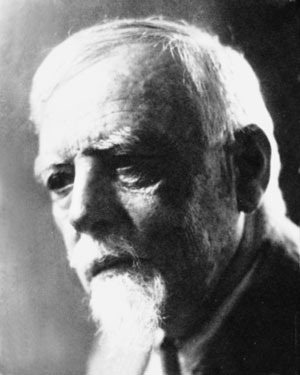
       An accomplished intellectual, educator, and public figure, Nikol [Nigol] Aghbalian was a self-appointed missionary of Armenian values wherever he went and wherever he worked, from the Caucasus to Beirut.

       He was born in Tiflis in a working-NigoleAghpalianclass family. He graduated from the Lyceum Nersisian in Tiflis and the Kevorkian Seminary in Etchmiadzin, and he dedicated himself to teaching. At the same time, he started writing literary criticism for the monthly Murj, and the quality of his writing attracted the attention of the readership and the intelligentsia. Despite his precarious financial situation, he managed to follow university courses in Moscow, Paris, and Lausanne, although he was never able to graduate.

       Aghbalian became a member of the Armenian Revolutionary Federation at a young age and he used his intellectual qualities to service the political cause. Since 1905, he was among the leading members of the Vernadun, the circle of intellectuals that gathered in the attic of poet Hovhannes Tumanian’s house to discuss literary and cultural issues of the day.

       He was the principal of the Armenian school of Tehran between 1909 and 1912. He returned to Tiflis in 1913, where he became the editor of the A.R.F. newspaper Horizon and vice president of the Armenian Writers Society.After the beginning of World War I, Aghbalian was one of the founders of the Armenian National Council and played a crucial role in the organization of the Armenian volunteer movement that gave several battalions of Armenian soldiers to the Russian army fighting on the Caucasian front. When the retreat of the Russian forces brought thousands of survivors of the Armenian genocide from Western Armenia, he devoted himself to the daily work of sheltering, nourishing, and treating those refugees.

       After the establishment of the Republic of Armenia, Aghbalian was elected a member of the Parliament and in 1919-1920 he became Minister of Education and Art. He established the grounds of the University of Yerevan and sponsored various educational and cultural initiatives. It is a well-known fact that his sponsorship of the yet unknown poet, Yeghishe Charents, whom he gave a job at the ministry, permitted him to concentrate on his  literary creations.

       After the sovietization of Armenia, he was incarcerated by the Bolshevik regime on February 9, 1921, and he was able to save his life, as well as many others, thanks to the popular rebellion of February 18, which liberated the prisoners, who had been condemned to death. After the end of the rebellion, he left Armenia and went to Tabriz, in Iran. A short time later, he moved to Alexandria (Egypt), where he worked as a teacher until 1928. In that year, he was among the initiators and founders of the Hamazkayin Armenian Educational and Editorial Society (today Hamazkayin Armenian Educational and Cultural Society). Later he moved with his friend and associate, the writer and educator Levon Shant (1869-1951), to Lebanon, where they founded the Armenian College (Jemaran) of Hamazkayin in Beirut (later Nshan Palanjian College and today Melanchton and Haig Arslanian College).

       Until his death on August 15, 1947, Aghbalian followed an active schedule as a teacher and scholar. He taught the history of Armenian literature, Classical Armenian, and Armenian classical literature. He also organized a cycle of widely attended popular lectures to attract the interest of the Armenian community towards its literature and culture. He remained one of the intellectual referents of the Diaspora in its first decades.

       His extended activities as a public figure and an educator did not allow Aghbalian to complete many of his projects. However, he managed to publish several books on Armenian literature and politics, and a four-volume collection of his works was published in the late 1950s in Beirut.

       His family remained in Yerevan after his exile in 1921. His name was forbidden in Armenia until the final years of the Soviet regime. His name and his work were fully rehabilitated after the second independence. Some of his works, as well as monographs about him, have been published, and a school has been named after him.


HOLY WEEK

We are now entering the most solemn period for Christians—Holy Week—leading us to our most sacred holiday, Easter and the Resurrection. The week before Easter marks a series of events in the life of Jesus that were ordained or prophesied. These events include the raising of Lazarus (described above) and the triumphal entry of Jesus into Jerusalem, where he is greeted by large assembly of people carrying olive and palm branches.

       On Palm Sunday (Dzaghgazart) the altar curtain, which was closed at the beginning of Lent, is open. The palms are blessed and distributed to the faithful. Children dressed in their best clothes and carrying beautifully decorated candles, parade around the church in a procession. In the evening, or as now done immediately following the Divine Liturgy, the faithful gather at the door of the church or at the closed altar, for the Opening of the Doors (Trnpatsek) ceremony, symbolizing the opening of the gates to the Kingdom of God. This solemn penitential service in preparation of Holy Week is unique to the Armenian Church.

       Each day of Holy Week (also called Great Week, Avak Shabat) is a holy day. Monday commemorates the barren fig tree (Matthew 21:18-20). Tuesday commemorates the Ten Virgins (Matthew 25:13). Wednesday commemorates the Anointment and Betrayal of Christ (Matthew 26). Thursday is Maundy Thursday, which originates from Christ’s command that His disciples love one another (John 13:34). In the evening the Washing of the Feet (Vodunlva) takes place in remembrance of the events of the Last Supper. Late Thursday evening the betrayal and torment of Christ, Tenebrae (Latin for darkness; in Armenian Khavaroum), is commemorated. In one of the most dramatic ceremonies, Gospel readings describing Christ in the Garden of Gethsemane, the betrayal by Judas, and denial by Peter, are read interspersed with the singing of hymns composed by Nerses Shnorhali, some of the most beautiful hymns in the Armenian Church. Holy Friday (Avak Ourpat), the solemnest day in the Christian calendar, commemorates the crucifixion, death and burial of our Lord.


THE RAISING OF LAZARUS

       This Saturday, March 23, the Armenian Church commemorates the Raising of Lazarus as told in the Gospel of John, Chapter 11.

       Lazarus and his sisters Mary and Martha were good friends of Jesus. Their home in Bethany (near Jerusalem) was Jesus’ home whenever he was in Jerusalem. Lazarus’s sudden death threw his sisters into deep mourning. Jesus also wept for his friend. John’s gospel account emphasizes the fact that Lazarus was indeed dead by pointing out that his body was in the tomb. Jesus’ raising of Lazarus convinced many people of his unique powers, and according to John, the authorities took steps to try to silence him.

       Lazarus personifies the whole of humankind and Bethany represents the whole world. Lazarus Saturday is the real beginning of the Cross. Its major themes are the forthcoming victory of Christ over death, the supreme sacrifice of love, and the resurrection as the ultimate triumph of love.

       A hymn traditionally sung on Saturday evening (eve of Palm Sunday) says: “With the raising of Lazarus by which the dead were given hope, the descendants of Adam were also raised….” Thus, as the Lenten period comes to an end, we are greeted by the hope of Christ’s promise of the resurrection of humankind.

       The forty days of Great Lent (Medz Bahk) come to an end with Vespers on the Friday prior to the commemoration of the Raising of Lazarus. A new fasting period for Holy Week begins on Monday and continues through Holy Saturday. 


ST. CYRIL OF JERUSALEM

This Saturday, February 23, the Armenian Church commemorates St. Cyril (315-386) of Jerusalem, a doctor of the church. St. Cyril had a pleasant and conciliatory disposition, but he lived at a time when bishops were embroiled in bitter controversies and were quick to condemn any attempts at compromises, even calling such attempts as treason. Sixteen years of his thirty-five years as a bishop were spent in exile. When a famine hit Jerusalem, he sold some of the possessions of the church to raise money for the poor starving people. He was condemned for selling church property and was banished. His best known work that has survived, “The Catechetical Lectures,” is believed to be one of the earliest systematic accounts of Christian theology. The lectures consist of an introductory lecture, followed by eighteen lectures on the Christian faith that were used during Lent for those preparing to be baptized on Easter, and five lectures on the sacraments to be used after Easter. The lectures have been translated into many languages, including English and Armenian, and are noted for their presentation of the Christian faith in a positive light and maintaining a balance between correct belief and holy action.

       Thousands of pilgrimages came to Jerusalem for Holy Week. Cyril instituted the liturgical forms for that week as they were observed in Jerusalem. A detailed account of Holy

Week observances in Jerusalem in the fourth century is available thanks to a woman named Egeria, believed by some to be a nun, who made a pilgrimage to Jerusalem and wrote letters describing the liturgical practices.

From the Armenian Church Eastern Prelacy’s Crossroads E-Newsletter

Feast of Vartanants

This year, on Thursday, February 7, the Armenian Church celebrates the Feast of Vartanants, commemorating the war between pagan Persia and Christian Armenia in 451. The king of Persia ordered all Christians under his rule to abandon Christianity and embrace Zoroastrianism. The Armenian clergy and ruling princes refused to follow this dictum. As recorded by the historian Yeghishe, the Christian soldiers took an oath to fight the enemies of truth: “We are ready for persecution and death and every affliction and torture for the sake of the holy churches which our forefathers entrusted to us by the power of the coming of our Lord Jesus Christ, whereby we were reborn ourselves by torments and blood. For we recognize the Holy Gospel as our Father, and the apostolic universal church as our Mother. Let no evil partition come between us to separate us from her.”

Vartan Mamigonian was the leader of the Armenians in the decisive battle of Avarayr, and although outnumbered, the Armenians put up a valiant defense. Vartan and many of his soldiers were killed, but the Persians suffered greater casualties and with this battle the Persians recognized the strong commitment the Armenians had for their Christian faith.

On the eve of the battle of Avarayr, Vartan spoke to his men, assuring them that righteousness was on their side and encouraged them to be brave and fearless:

“I entreat you, therefore, my brave companions, especially because many of you surpass me in valor and precede me in princely rank. But since you, of your own free will, have selected me as your leader and commander, let my words be pleasant and agreeable to you all, great and small: Fear not the heathen hordes and never turn your backs to the frightful sword of mortal men; because should our Lord grant us victory, we shall destroy their might and the cause of righteousness shall be exalted. But if the time has come for us to meet a holy death in this battle, let us accept our fate with joyful heart, without mingling cowardice with our valor and courage. … Our Commander is not a mere man, but the Commander-in-chief of all martyrs. Fear is a sign of doubt; but as we have repudiated doubt long since, let fear also disappear from our hearts and minds.”

The struggle continued for more than thirty years. In 484 Vahan Mamigonian, nephew of Vartan, successfully negotiated the Treaty of Nvarsag, the first document in history granting religious freedom and home rule, preceding the Magna Charta by nearly 750 years.

Posted from Crossroads E-Newsletter by the Eastern Prelacy of the Armenian Church.

To the Prelates,
The Clergy,
National Representative Assemblies and
Executive Councils, and
The Faithful People of
The Holy See of Cilicia

On the eve of the New Year filled with the mystery of the Epiphany, we greet you from the Catholicosate of the Holy See of Cilicia in Antelias, with pontifical blessings, fatherly care, and Christian love, wishing you a year filled with divine goodness and grace.

According to the tradition we have instituted, we dedicate each year to a unique value, major concern, or special event relevant to our people, our church, and our homeland, and invite our faithful to examine the given theme through different activities, with a realistic approach and serious evaluation, aimed at making our communal life more productive.

Taking into account the active presence and unique role of the Armenian mother in our church and community life, with this Pontifical Letter we declare the year 2013 to be,

YEAR OF THE MOTHER OF THE ARMENIAN FAMILY

Throughout our history, mothers have become not only a role model for the Armenian people, reflecting the sacred spiritual, moral, and national values and virtues in her life; not only the steady pillar of the family and the dedicated educator of her children, but also a person deserving the utmost respect for her committed participation in the sacred mission of protecting and defending the Christian faith, and strengthening the nation and homeland, by her exemplary behavior, solid attitude, and infinite sacrifice in the most crucial moments of our history.

Therefore, it is necessary to reevaluate the model of the mother in the Armenian family with a comprehensive approach, particularly in face of the concerns and challenges she confronts in current times, and the unique role attributed to her.

It is necessary first to turn to the Bible as the foundation of our Christian faith, life, and thought.

I
The Mother in the Bible

The Bible is the source of divine revelation. The church must always look at the Bible to receive its inspiration and direction regarding any teaching, principle, or value related to its life and mission.

In fact, there are many references to the mother in the Old and New Testaments.

God’s commandment: “Honor your father and your mother” (Exodus 20:12) is the basis of the biblical teachings. We read in the prophecy of Isaiah: “As a mother comforts her child, so I will comfort you” (66:13). And the book of Proverbs says: “Listen to your father who begot you, and do not despise your mother when she is old” (23:22). Another passage in Proverbs says: “Hear, my child, your father’s instruction, and do not reject your mother’s teaching; for they are a fair garland for your head, and pendants for your neck” (1: 8-9).

In the New Testament, the supreme model of the mother is St. Mary, the Holy Virgin. The selection of Mary by God as the exemplar mother to become the mother of the Only Begotten Son of God (Matthew 1:20), the care exhibited by the Virgin towards the infant Jesus born in Bethlehem (Luke 2:6-7), the role of the Virgin in the spiritual and intellectual growth of Jesus (Luke 2:22-24) and then the constant presence of the Virgin alongside her son during His apostolate (John 19:25) and, on the other hand, the deep respect showed by Christ towards His mother (John 19:26), are eloquent manifestations of the authentic image of the mother and the exemplary mother-son relationship based on mutual love and nurturing.

Indeed, the mother has been so much respected that even “Jerusalem above” has been characterized as “our mother” (Galatians 4:26).

The presence of the mother in the Bible may be summarized with the following points:
a) The mother is the basis of the family; her role is not only to guarantee the survival of the family by giving birth to children, but also to educate. The maintenance of a healthy family in the moral and spiritual sense is the first and foremost duty of the mother.
b) Taking into account the singular mission given to the mother by divine directive, she is called to express moral and spiritual values and principles in her life and deeds.
c) It is necessary that children obey their mother, following her directions and example.
d) St. Mary, Mother of God, is regarded as the example of true motherhood.

II
The Mother in the Teachings of the Church Fathers

The fathers of both the universal church and the Armenian Church have given particular importance to the mother, with the Bible as the natural axle of their teachings, and the Virgin as the exemplary mother.

It is worth to briefly recall some words of our church fathers.

John Chrysostom, referring to Isaiah 66:13 (“As a mother comforts her child, so I will comfort you”), says that God graces His children with love, care, and peace, like a nurturing mother.

Augustine, noting Deuteronomy 5:16 (“Honor your father and your mother, as the Lord your God commanded you, so that your days may be long…”) and Ephesians 6:1-3 (“Children, obey your parents in the Lord, for this is right. Honor your father and mother . . . so that it may be well with you and you may live long on the earth”), says that respect and honor showed to the mother open wide the doors of heavenly goodness before us.

Cyril of Alexandria quotes Luke 2:44, where Joseph and Mary “started to look for him [Jesus] among their relatives and friends,” and says that parents have always to look for their children to prevent them from getting lost in the dust of sin and lawlessness.

Origen cites Luke 2:27, “The parents brought in the child Jesus” to the temple, and says that by doing this Joseph and Mary teach parents to bring children to church.

The fathers of the Armenian Church have also frequently referred to the role of the mother.

Quoting Proverbs 29:15 (“The rod and reproof give wisdom, but a mother is disgraced by a neglected child”), Nerses of Lambron underscores that the demands of the mother towards her children teaches them to lead responsible lives.

Hovhannes of Erzinka underlines particularly the educational role of the mother, noting that if she fails in her responsibility, she will be responsible before the tribunal of God for the evils committed by her children.

Parsegh of Mashkevor emphasizes the importance of prayer and suggests mothers teach their children how to pray.

Krikor of Tatev says that the mother deserves high respect and honor, because she has a very important duty to form the image of God in the child.

Hovhan Mandakuni describes the model of the Armenian mother with such power that he regards her as the “mother of mothers.”

Khrimian Hayrig suggests mothers teach the Gospel to their children so they learn to love their brother, their friend, and their fellow humans.

In view of this cluster of testimonies taken from the fathers of the universal church and the Armenian Church, we consider necessary to make the following observations:

a) The fathers of the universal church and the Armenian Church have generally referred to the duty of parents towards their family and children, considering father and mother as one entity, but particularly emphasizing the role of the mother.
b) They have underlined the educational role of the mother and have regarded her as the authentic expression of Christian virtues within family and social life, and consider the Virgin Mary to be the unique model of motherhood.
c) The fathers of our Church have depicted the Armenian mother not only as a shining presence of Christian values and virtues in the family, but also as a person called to have a pivotal role in national life.

III
The Armenian Mother in Armenian Life

The mother has always had a central presence in Armenian history. Her dominant role is evident in religious, cultural, political, social, and humanitarian spheres of our life, and even in the liberation movement. Armenian history cannot be fully understood without referring to her mission, and equally the unique role of the mother in the Armenian family cannot be understood without examining Armenian history.

Mothers have brought an active participation to the mission of the Armenian Church and to the life of our nation, and with their modest lifestyle, devoted service, and exemplary dedication, have enriched our collective life, occupying positions of leadership in the decisive moments of our history. Our ancient writers (Agathangelos, Khorenatsi, Yeghishe, and others), as well as the Catholicoi of our church, from St. Gregory the Illuminator to St. Nerses Shnorhali and our spiritual fathers of modern times, have characterized the role of mothers with exquisite text.

Perhaps, Armenian culture has represented the figure of the Armenian mother, as well as her special place and role in our history, in the most vivid way, through letter and color, sound and form. In general, our literature, particularly poetry, has portrayed the mother in the Armenian family and the profound feelings our people have about her.

In fact, from Mateos Mamourian, who asked “Who taught prayer to my delicate mouth to adore God?,” to Taniel Varoujan, who wrote about the sadness and expectation of the mother waiting for the return of her emigrant son; from Alexander Dzadourian, who honored mothers who gave “heroic sons” to the nation and the homeland, to Bedros Tourian, who sang “Oh, forgive me… I have seen the tears of my mother!…”; from Hovhannes Shiraz, who recalled “My mother is the god of our house,” to Moushegh Ishkhan, who raised to the skies the prayer of the elderly Armenian mother, “It is enough, Dear Lord, give us back our home and place”; from Jacques S. Hagopian, who depicted in simple but eloquent words the prayerful life of the Armenian mother (“They burnt their souls like lanterns day and night so the piety of God would descend instead of darkness”), to dozens of other poets, all of whom have walked the footsteps of their mothers. And our mothers have walked along time, and even above time, as the guiding light in the turbulent life of the Armenian people.

Is it possible not to remember and not to pause before those revered mothers who lived “for faith and for homeland” and gave their life “with purpose-driven death” (Yeghishe)? How can we not remember those mothers who became church and school in the deserts of Deir-ez-Zor, who paved walls of faith with the epic of Sartarabad, who armed the mountains of Artsakh with the fire and blood of their vows, and who deserved love, even veneration, from church and nation?

For Armenians, the mother is unique as an authentic expression of faith, dedication, resolve, and love. In the words of the poet:

I wandered through countries, I crossed many roads,
I saw deprivation and pain, I saw love and laughter,
But I did not see, I did not find a heart as brave
and as noble as your soul, my sweet and good mother.

These words written by the Armenian American writer Hamasdegh depicts the genuine feelings of an Armenian towards his mother, and may be applied to mothers of all times, known and unknown.

Finally, how can we not recall the following lines by Baruyr Sevag about the deep faith, infinite love, and vast sacrifice of mothers?

Let us come today to kiss as children
these hands that have given us birth,
have nurtured us,
have kept us,
have never tired of us,
have cleaned, done laundry,
always tolerant, always toiling
these hands
rough and cracked,
but which, for us, are like silk,
these tender hands.

Avedik Isahakian captures the heart of mankind when he says: “The best woman is the mother. The heart of the mother is the heart of humankind, the heart of the universe. It is worth to come to the world just to have a mother.”

IV
The Mother of the Armenian Family Today
Facing New Challenges

Human words, despite their power and beauty, are unable to express the pure feelings, the infinite love, and the deep gratitude the children of our nation have for their mothers, who are the source of their existence. Truly, it is not by accident that our wise ancestors gave the distinction of “mother” to our most sacred realities and values: Mother Church, Mother Armenia, Mother Tongue…

The Armenian mother is the synonym of eternal values, supreme ideals, sublime virtues, and strong principles. The Armenian mother is the pedestal of our existence, the source of our power, the citadel of our identity, and the inspiration of our struggle.

Thus, without the radiant presence of the Armenian mother, our life is parched. Without her educational mission, our life is colorless. Without her committed presence, our life is impoverished.

In the face of the terrible waves of history, we remained Armenian thanks to our mothers.
In the face of current assimilating trends, we remain Armenian thanks to the mothers of Armenian families. We will remain Armenian even in the face of future challenges thanks mainly to them.

Today, as we observe the life of our people, we ask ourselves: Is the Armenian mother up to her mission? How faithful is she to her sacred calling? Questions need to be addressed seriously and realistically by our mothers and families.

We know it is not easy to be a mother and, particularly, to be a mother to an Armenian family. We know it is not easy to be a mother in today’s world.

We need the mother that inspires faith, strengthens will, instills hope, and transmits love. In other words, who forms the Christian and the Armenian person, and sacrifices herself on that path.

Let us never forget that the Armenian mother became a church where there was no church; a school where there was no school; a homeland when there was no homeland.

This is the task and authentic calling for the mothers of Armenian families today and forever.

We highly respect Armenian mothers.

* * *

By declaring this year the “Year of the Mother of the Armenian Family,” we expect:

a) To reflect on the sacred mission of the Armenian mother in our life;
b) To reaffirm our deep love and respect for the Armenian mother;
c) To remind the Armenian mother the importance of maintaining her unique role and true image.

Therefore, in view of these expectations, we suggest that our prelates, clergy, executive councils, and all community organizations reaffirm, recall, and reevaluate the unique place and role of the mother within the life of our church and community through special initiatives.

We pray to Almighty God to grace our mothers with His heavenly graces in order that they may continue their vocation with renewed dedication and faith.

With warm paternal love,
Prayerfully,
ARAM I
Catholicos of the Great House of Cilicia

January 1, 2013
Antelias, Lebanon
 

By Tavit Minassian


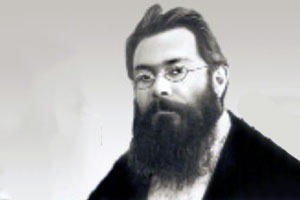
Mention Rouben Mamoulian and most people will respond with a blank stare. But mention what the director did on Broadway and in Hollywood and those same faces light up in recognition. Mamoulian directed the premieres of such groundbreaking musicals as Oklahoma, Carousel and Porgy and Bess, and classic films including Mark of Zorro, Queen Christina and Dr. Jekyll and Mr. Hyde. His importance has finally been acknowledged in David Luhrssen’s new biography, Mamoulian: Life on Stage and Screen, published by University Press of Kentucky.

Life on Stage and Screen paints a panoramic picture of Mamoulian’s many accomplishments. He was born in Tiflis, Georgia, in 1897, a time when Armenians dominated the city’s political and economic life. His mother, a vigorous patron of Armenian theater, was an important early inspiration. Mamoulian studied theater in Moscow in the studio of the influential director Konstantin Stanislavsky and left Russia during the turmoil of the civil war that followed the Bolshevik coup of 1917. After debuting as a director on the London stage, Mamoulian was offered an appointment at the Eastman School of Music in Rochester, New York, which became a steppingstone on the way to Broadway. After a successful career as a theater director, Mamoulian accepted offers from Hollywood. His first movie, Applause (1929), displayed his flair for innovation and helped restore motion to talking pictures, which had been static and slow moving because the early recording devices were cumbersome. Life on Stage and Screen shows that Mamoulian helped pioneer many things taken for granted today, including multi-track recording, voiceovers and full-color feature films. Unlike many Broadway directors who went to Hollywood, Mamoulian kept one foot in the theater world and returned to New York in between movie assignments to direct a remarkable run of productions.

During his time in Hollywood, Mamoulian directed many of the era’s prominent stars, including Marlene Dietrich, Greta Garbo, Fredric March, Gary Cooper, Gene Tierney, Henry Fonda, Mickey Rooney and Fred Astaire. Always a perfectionist, he was a thorn in the side of studios and producers and eventually paid for his dedication to the art of filmmaking by being cold-shouldered by the industry. He made no pictures after being fired from the 1963 movie Cleopatra, whose star, Elizabeth Taylor, he had recommended for the role. But Mamoulian remained busy through the end of his life in 1987, publishing a children’s Christmas book and a translation of Shakespeare into contemporary English as well as giving talks at film schools and film festivals.

Life on Stage and Screen is the first book to consider Mamoulian’s ethnic background, including the influence of Armenian theater and the pageantry of the Armenian Church, and explores his failed attempt to film Franz Werfel’s novel The Forty Days at Musa Dagh. The book’s author, David Luhrssen, is film critic for Milwaukee’s Shepherd Express newspaper and has written several previous books, including Hammer of the Gods: Thule Society and the Origins of Nazism and Elvis Presley: Reluctant Rebel. He has been a contributor to the Armenian press, covering Armenian events in Milwaukee for the national papers.

NUBAR PASHA

THIS WEEK IN ARMENIAN HISTORY
Prepared by
the Armenian National Education Committee (ANEC)

Throughout history, statesmen of Armenian origin have also served in different countries in the world. One of them was Nubar Pasha, who spent most of his life in Egypt, where he became Prime Minister three times.

Nubar Nubarian was born in Smyrna (Izmir) in 1825. He was the son of an Armenian merchant, Mgrdich Nubarian. His mother was a relative of Boghos Bey Yusufian, an influential minister of Muhammad Ali, Viceroy of Egypt (1805-1849) and the founder of the modern Egyptian state.

Nubar was educated in Switzerland (Vevey) and France (Toulouse), and acquired an excellent command of the French language. He went to Egypt before he was eighteen. He first was trained as secretary to Boghos Bey, Minister of Commerce and Foreign Affairs, and in 1845 started his state career, first under Muhammad Ali (second secretary), the heir apparent Ibrahim Pasha (first secretary), and then under the latter’s successor, Abbas Pasha.

He was the Egyptian representative for various diplomatic missions in London and Vienna between 1850 and 1854, and he was rewarded with the title of bey for his success. In 1856 the new viceroy, Said [Saaid], appointed him as his chief secretary, and then charged him with the important transport service from Egypt to India. Despite his success in that task, he was dismissed by Said and then rehired again as principal secretary, until the death of the viceroy in 1863.

Said [Saaid] was succeeded by Ismail Pasha, who recognized Nubar’s ability and charged him with a mission to Constantinople to smooth the way for several ambitious projects: the completion of the Suez Canal, the change in title to that of khedive, and the change in the order of succession. Nubar obtained the consent of the Sultan for the completion of the Canal and was made a pasha by Ismail. After his return from Paris, where he went to complete the arrangements for the construction of the Suez Canal, he was made Minister of Public Works. In 1866 he became Minister of Foreign Affairs and succeeded to complete the other two projects; in 1867 Ismail was declared khedive of Egypt, with succession in favor of his eldest son.

Despite mounting opposition, Nubar Pasha was able to replace the antiquated system of capitulations of the Ottoman Empire in Egypt by mixed international civil courts and a uniform code, instead of seventeen consulates administering seventeen different codes.

Ismail’s extravagant administration brought Egypt to the verge of bankruptcy, and prompted Great Britain and France to intervene. Representatives of both countries were included in the Egyptian cabinet, with Nubar as Prime Minister (1878-1879), who tried to reduce the khedive to the position of constitutional monarch. However, Ismail incited a military rising against him. Nubar was dismissed, but finally the British and the French realized that the situation was not to their advantage and Ismail was deposed in 1879. Nubar remained out of office until 1884, when he was designated Prime Minister by Ismail’s son Tawfiq. He was forced to carry out a policy which he openly disapproved, but which the country was forced to accept under British dictation.

Nubar was dismissed from his post in 1888 and returned for a short stint as Prime Minister between April 1894 and November 1895, when he retired after completing his fifty years of service.

He lived afterwards between Cairo and Paris, where he died on January 14, 1899. His son Boghos Nubar Pasha (1851-1930) was one of the founding members and first president of the Armenian General Benevolent Union (1906-1928).

Winter fest 2013

An evening of Dance, Fun and Fellowship.

St. Mesrob Armenian Church, 4605 Erie St. Racine, WI

 Admission Free.

***


St. John the Baptist Armenian Apostolic Church


7825 W. Layton Avenue, Greenfield, WI 53220


http://www.stjohnarmenianchurch.org


Poon Paregentan (Mardi Gras) Dinner and Dance


Saturday, February 2, 2013, 7:00 pm


Dinner served: 8:00 pm


Entertainment by Karoon Band of Chicago


Donation: Advance ticket purchase $25.00 for adults ($30.00 at the door)


$10.00 for Children 8 to 12 years old


Includes dinner, Desert and Refreshments


(Advance tickets’ payments must be received by January 27, 2013)