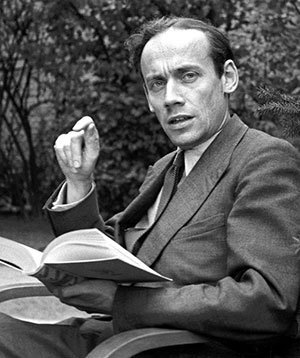
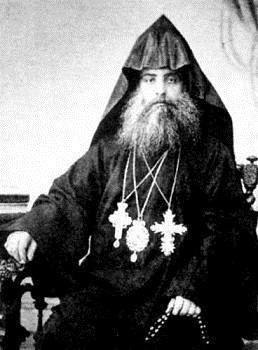
TOROS TORAMANIAN

THIS WEEK IN ARMENIAN HISTORY
(Prepared by the Armenian National Education Committee)

[ANEC]


Death of Toros Toramanian

(March 1, 1934)
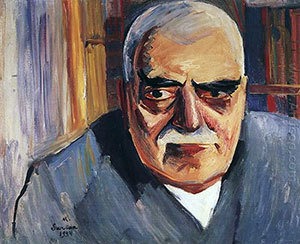
 

A portrait of Toramanian by Martiros Sarian.

A portrait of Toramanian by Martiros Sarian.

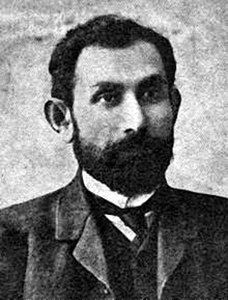
The scientific study of Armenian architecture has reached important milestones since the early twentieth century. One name is to be remembered as its pioneer: Toros Toramanian.


Toramanian was born on March 18, 1864 in the city of Shabin-Karahisar, in Western Armenia. (One year later, another famous Armenian would be born there: General Antranig.) He attended the local Armenian schools, and at the age of fourteen, he lost his parents. In 1884 he left for Constantinople to pursue higher education. After working for two years as a mason and stone worker, he approved the entrance exam of the School of Fine Arts and studied architecture from 1886 to 1893.


He graduated in 1893, but he had not begun his career yet, when he was forced to leave the city due to the massacres ordained by Sultan Abdul Hamid II. After going to Belgium, he then moved to Sofia and Varna, in Bulgaria, where he built several public and residential buildings. He went to Romania in 1900, and then visited Egypt, Italy, and Greece.


Toramanian settled in Paris in 1902, where he deepened his knowledge on history of architecture at the Sorbonne. There he met Garabed Basmajian, director of the journal Banaser, whom he already knew from Constantinople. They put together the project of a mission to Ani in order to study the monuments of the capital of the Bagratuni Kingdom. They traveled in 1903, and discovered that the task was immense, and their means were very limited. Basmadjian returned to Paris to collect the necessary funds, and Toramanian remained alone in Ani, but he never obtained any financial assistance.
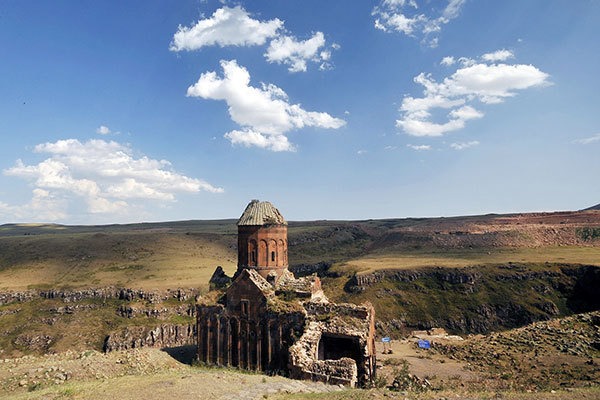
The ruins of a church in Ani.

The ruins of a church in Ani.


He wintered in Ani, in extremely difficult conditions. In an article on the church of Zvartnots published in 1905, he wrote: “I decided to stay and work in Ani to save from oblivion the remnants of the glorious past of our great people in order to be able to show them to the whole world.”


Toramanian had meanwhile participated in the excavations of Zvartnots, near Etchmiadzin, in the spring of 1904. He made a detailed study of the remaining pieces of the church, destroyed by an earthquake in the ninth century, and examined one by one all of them. This archaeological approach, quite unusual for the time, allowed him to propose the model of reconstruction of the circular church of Zvartnots that we know today.

The remains of Zvartnots Cathedral near the airport named after it in Armenia.

The remains of Zvartnots Cathedral near the airport named after it in Armenia.


In 1904 Professor Nicolas Marr, from the Imperial Academy of St. Petersburg, made his second campaign of excavations in Ani. Toramanian joined his team, and had the opportunity to study many monuments of the former Armenian capital, as well as of the surroundings, including the monasteries of Horomos, Tekor, and Bagnayr. In 1905-1906 the team of Marr discovered the remnants of the church of Gagikashen in Ani. Moreover, the finding of the statue of its builder, King Gagik I of Ani, holding the model of the church, confirmed Toramanian’s reconstruction of the circular church of Zvartnotz with three floors.
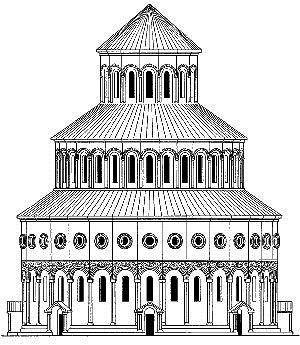
 

An image of what Zvartnots Cathedral would have looked like befor its destruction drawn by Toramanian.

An image of what Zvartnots Cathedral would have looked like befor its destruction drawn by Toramanian.

The architect continued his association with Marr at Ani and made various publications in Armenian journals, and became well-known in scholarly circles. In 1913 he was invited to Vienna by the famous Austrian art historian Josef Strzygowski (1862-1941) to give lectures on Armenian art, particularly about Ani. They had projected a joint work on the subject, based on the documents and materials that Toramanian had gathered. Afterwards, Toramanian accompanied Strzygowski on a brief trip in Armenia, and promised to complete the documentation for the joint publication.


The beginning of World War I made it impossible for Toramanian to travel back to Austria to continue work on the publication. In 1918, however, the cover of the two-volume Die Baukunst die Armenier und Europa (The Art of the Armenians and Europe), which would engage specialists of European medieval art in heated debates, only had Strzygowski’s name on it, with Toramanian reduced to the role of an informant. Besides, he had lost most of his archives and unpublished works during the Ottoman invasion of Armenia in 1918, followed by the flee of his family from Alexandropol to Tiflis, including a dictionary of Armenian architecture, a comparative study of Byzantine and Armenian architecture, and a study on the history of Armenian funerary monuments.


After the establishment of the Soviet regime in Armenia, Toramanian became one of the founding members of the Committee for the Maintenance of Monuments. He created the Department of Architecture of the State Museum of Armenia, which he directed for two years. He passed away on March 1,1934, and his archives provided the material for the two-volume Materials for the History of Armenian Architecture, posthumously published in 1942 and 1948.

 

THE FALL OF ERZERUM

THIS WEEK IN ARMENIAN HISTORY
(Prepared by the Armenian National Education Committee)

[ANEC]


The Fall of Erzerum

(February 16, 1916)


In 1915-1916 Western Armenia was mostly emptied of its native population, massacred and deported during the execution of the genocide planned by the Ottoman government. There was a moment during the war, when Armenians felt that the gigantic sacrifice of human lives had not been in vain. That moment came in February 1916 with the battle for Erzerum.

A general scene of Erzerum in the early 1900's.

A general scene of Erzerum in the early 1900’s.

The Ottoman Empire had entered World War I in November 1914 on the side of the Central Powers (Germany and Austria-Hungary, later joined by Bulgaria), which considered it a valuable ally for two reasons: first, it could threaten British interests in the Middle East, and second, it could divert Russian troops from the front in Europe to the Caucasus.

The Turkish offensive in the winter of December 1914-January 1915 had ended with the disastrous battle of Sarikamish, where the Armenian volunteer units had also had a share in the victory of the Russian army. It became the pretext for disarming the Armenian soldiers in the Ottoman army and turning them into labor battalions, to be later massacred. The subsequent invasion of the Russian army in May 1915, when the Armenian Genocide had already started, was able to save the population of the city of Van, but the Russian troops retreated in July. The annihilation of the Armenian population disrupted the supplying of the Ottoman forces. However, the front remained quiet until the end of the year.

The end of the Gallipoli campaign and the retreat of the Allied forces from the surroundings of Constantinople would free up considerable Turkish soldiers. General Nikolai Yudenich, one of the most successful and distinguished Russian commanders of the war and commander of the Caucasus army, was aware of this and prepared to launch an offensive. His aim was to take the strategic fortress of Erzerum, followed by Trebizond. It would be a difficult campaign, since Erzerum was protected by a number of forts in the mountains and was considered the second best defended town in the Ottoman Empire. Its fortress was defended by 235 pieces of artillery and the fortifications covered the city on a 180 degree arc in two rings. There were eleven forts and batteries covering the central area.

The Russians had 130,000 infantry and 35,000 cavalry. Further, they had 160,000 troops in reserve, 150 supply trucks, and 20 planes of the Siberian Air Squadron. On the other side, Ottoman forces were 126,000 men as of January 1916, only 50,539 being combat soldiers, with inadequate armament and food. They were big on paper, but not on the ground.

It seems that after the disastrous end of the Turkish winter offensive of 1914-1915, the Ottoman High Command did not expect the Russians to make operations during winter. Ottoman High Command did not expect any Russian operations during winter. Mahmut Kamil Pasha, commander of the Third Army, was in Constantinople, and his chief of staff, Colonel Felix Guse, was in Germany. General Yudenich launched a major winter offensive. In the middle of January, there was heavy snow, which often came up to four feet.

The Russian plan was to break through a weak part of the line. The initial offensive managed to break through the XI Ottoman Corps, which suffered high losses after a four-day engagement from January 10-14. The Ottoman defensive formation was dissolved within one week, by January 23.

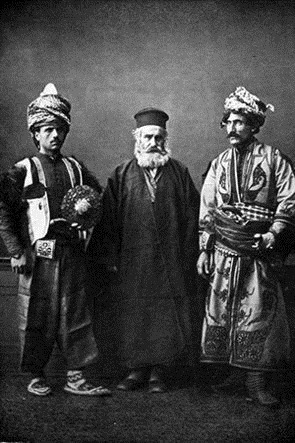
Citizens of Erzerum in their national costume.

Citizens of Erzerum in their national costume.

 Erzerum2

Mahmut Kamil returned from Istanbul on January 29. He could feel that the Russians would not only attack Erzerum, but also renew the offensive on the southern flank around Lake Van. Khnus, located further south, was taken on February 7 to prevent reinforcements from Mush from coming in. Turkish reserves were diverted from the northern front, but Russian forces captured Mush, seventy miles from Erzerum.


The attack on Erzerum started on February 11 from the south. Once the Russian forces broke through the Turkish lines to the south and began to attack other Turkish positions, the fall of the city seemed inevitable. In three days, the Russians managed to reach the heights overlooking the plain of Erzerum. The Turkish units began to retreat from the fortified zones at the front and also evacuate the city. On February 14 the Russians penetrated through both rings of Erzerum defenses and the remaining forts surrounding the city were evacuated the next day, avoiding encirclement. Russian Cossacks were among the first to enter the city in the early morning of February 16, 1916.

The Ottoman army lost a total of 17,000 soldiers during the campaign, including 5,000 prisoners. The Russians had 1,000 casualties, 4,000 wounded soldiers, and another 4,000 affected with frostbite.

The Russians gained the upper hand in the battle for control on the Caucasus front with the capture of Erzerum. This one victory, followed by the occupation of Trebizond in April 1916, enabled them to capture or control all the roads leading to Mesopotamia and Tabriz (Iran), and in essence, to control most of Western Armenia. The Russian victory allowed Armenian refugees and survivors from the Caucasus to return to their homes, and for the next year and a half, until the Bolshevik Revolution of November 1917, the liberation of Western Armenian from Ottoman yoke was a reality.

In the wake of the Bolshevik Revolution and the subsequent armistice between Russia and the Central Powers, Erzerum was returned to Turkish control. The transfer of power was made official under the terms of the Treaty of Brest-Litovsk in March 1918, when an Ottoman offensive on the Caucasus, against Eastern Armenia, was already on its way.


ARMEN DORIAN

THIS WEEK IN ARMENIAN HISTORY
(Prepared by the Armenian National Education Committee)

[ANEC]


Birth of Armen Dorian (January 28, 1892)


Anyone may probably cite a dozen major or less major names in Armenian literature who became victims of the genocide of 1915. Even among scholars, however, the name of Armen Dorian probably does not ring a bell. At the age of 23, he was one of the youngest writers to be caught in the roundup of April 23-24 and sent to death.


He was born Hrachia Surenian on January 28, 1892 in the city of Skopje, the current capital of the Republic of Macedonia. At the time, his birthplace was still part of the Ottoman Empire. His father was a contractor of roads and bridges.


There was no Armenian community and no school there. Hrachia first studied at a local Greek school and then at the French school of Manastir (current Bitola, also in Macedonia). The family later moved to Constantinople, where the future poet received his higher education at the Mekhitarist School of Pangalti, which belonged to the Viennese branch of the congregation. He graduated in 1911 and traveled to France, where he continued his studies at the Sorbonne.


It is not clear why and when he took his literary name. When in Paris, he joined the French literary scene and founded the French newspaper L’Arène in 1912. Filled with dynamic and progressive ideas in poetry, he followed the current known as “paroxyste,” first proposed by poet Nicolas Beaudoin (1881-1960) in 1911, which was a French correlative to another avant-garde movement, futurism. He also published poetry booklets.


As immersed as he was in French literature, Dorian did not leave aside his Armenian roots. He wrote and published both in French and in Armenian, and did not sever his links with the Armenian literary life in Constantinople.


Immediately after his graduation in 1914, he received an invitation to return to Constantinople as headmaster in his alma mater, the Mekhitarist School of Pangalti. He also taught in four other schools, and contributed to local journals with Armenian and French poems. He was arrested at the Modern School in the night of April 24, 1915.


Armen Dorian, together with some 150 people, including poets Taniel Varoujan and Roupen Sevag, among others, was initially sent to Çankırı. Thirty exiles were able to return to Constantinople in one way or another. From the remaining hundred and twenty, in June 1915 a first caravan of 52 people was dispatched with destination to Deir-er-Zor. One of the fifteen survivors of the entire group of 120, Mikayel Shamdanjian, wrote: “At the time, we were not familiar with that name. From the first caravan, only the Protestant bookseller Baronian, as the result of petitions, was excluded and returned to Constantinople. All the other comrades, including the promising and pleasant Armen Dorian, went to become the victims of the roads of Elbistan. . . . Armen Dorian became part of the first caravan because, as someone who had absorbed French humor, was dazzling and had always a song in his lips.”


Dorian’s poetry has remained dispersed in the Armenian and French journals of the time. Other poems were posthumously published in the Armenian press. His brother Zenob Surenian, who had settled in Austria, in 1931 published a small collection of poetry entitled Un poète français d’origine arménienne (A French Poet of Armenian Origin).


IVAN GALAMIAN

THIS WEEK IN ARMENIAN HISTORY
(Prepared by the Armenian National Education Committee)

[ANEC]


Birth of Ivan Galamian
(January 23, 1903)

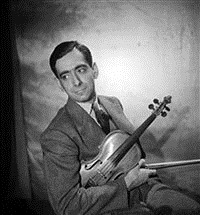
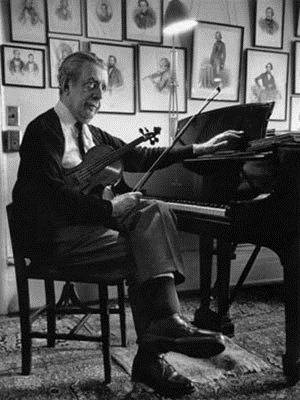
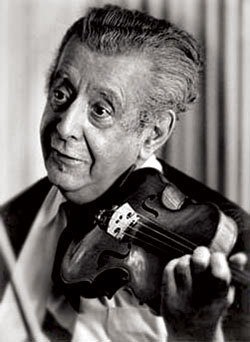
Galamian1Musicians would not develop their innate talents without their teachers. In the second half of the twentieth century, Ivan Galamian was a world-known violin teacher who taught many of the best-known violinists at the time, such as Itzhak Perlman and Pinchas Zukerman.

Ivan Alexander Galamian was born of Armenian parents in the city of Tabriz (Iran) on January 23, 1903. Soon after his birth, his family migrated to Moscow. He studied violin at the School of the Philharmonic Society of Moscow with Konstantin Mostras until he graduated in 1919. Still a teenager, the newly installed Bolshevik government threw him in jail. The opera manager at the Bolshoi Theater rescued Galamian; he argued that he was a necessary part of the opera orchestra, and the government allowed him to go free. Soon thereafter, he moved to Paris, where he studied with Lucien Capet in 1922-1923. He debuted in the French capital in 1924. After performing throughout Europe as a recitalist and soloist with orchestras, he eventually gave up the stage in order to teach full-time, due to a combination of nerves, health, and a fondness for teaching. Cellist Leonard Rose, later his colleague at the Juilliard School in New York, noted: “He told me that he had all the ambitions to be a great concert artist, but his nerves would bother him so much he would have backaches for weeks after concerts. So he said the hell with it.”Galamian2

He became a faculty member of the Conservatoire Rachmaninoff, where he taught from 1925-1937. He moved to the United States in 1937, where he married Judith Johnson in 1941, and became a citizen in 1944. In this period of time, his teaching abilities made him known everywhere. He was appointed to the Curtis Institute of Music in Philadelphia in 1944, and became the head of the violin department at the Juilliard School in 1946. He was also director of the Meadowmount Summer School of Music in Westport, N.Y., which he founded in 1944 and continues to be in operation today. He wrote two violin method books, Principles of Violin Playing and Teaching (1962) and Contemporary Violin Technique (1962). Almost anyone who wanted to be a violinist knew there was time to be spent under his tutelage. Parents would fly to New York with their would-be prodigies, and teachers from all over the world sent him their most gifted students.

Galamian3Galamian incorporated aspects of both the Russian and French schools of violin technique in his approach, which was described in the New Grove Dictionary of Music as “’analytical and rational, with minute attention to every technical detail.” “However,” the dictionary continues, “he rejects the enforcement of rigid rules and develops the individuality of each student. Mental control over physical movement is, in his opinion, the key to technical mastery.”

The teacher for generations of world-class violinists passed away on April 14, 1981. As Judith Karp wrote in The New York Times, “It was not entirely unexpected; at 78, the legendary Armenian pedagogue had been in less than perfect health for some time. But there was always a burning force in Mr. Galamian that almost made one believe he could defy nature’s rules; it was the force of his own wry conviction that ‘I cannot die as long as there are students around who want to learn to play the violin.’”

ANTOINE-JEAN SAINT-MARTIN

THIS WEEK IN ARMENIAN HISTORY
(Prepared by the Armenian National Education Committee)

[ANEC]


Birth of Antoine-Jean Saint-Martin
(January 17, 1791)

Antoine-Jean Saint-Martin was a pioneer of Armenian Studies in Europe at the beginning of the nineteenth century.

Antoine-Jean Saint-Martin

Antoine-Jean Saint-Martin

He was born in Paris on January 17, 1791 in the family of a prosperous merchant. He attended the Collège des Quatre-Nations, with the intention of entering commerce. However, his intellectual interests led him to a different field. At the age of twenty, he already mastered Armenian and Arabic. He would also learn by himself Persian, Syriac, and Turkish, as well as the basics of several other languages, such as Zend (the language of the Persian sacred books) and Georgian.

In 1818-1819 Saint-Martin published his masterwork, the two-volume Mémoires historiques et géographiques sur l’Arménie. This collection of studies and translations, which was quite influential in Armenian scholarship throughout the nineteenth century, had been completed in 1811, according to the author. It was reviewed very favorably, and on September 2, 1820, he was elected a member of the Académie des Inscriptions et Belles-lettres, a branch of the prestigious Institut de France.

He later entered the Ministry of Foreign Affairs as a consultant. In 1822 he was among the founders of the famous Société Asiatique, and directed the publication of its journal, the Journal Asiatique. In 1824 he was appointed director of the Bibliothèque de l’Arsenal. Among other works, in 1825 he published the Armenian text and the French translation of the fables of Vartan Aykegtsi, a work of the thirteenth century, and in 1827, the translation of the chronicle of Mardiros Erznkatsi, a bishop who traveled to Spain in the fifteenth century.

Based on the text of Movses Khorenatsi in his History of Armenia about the cuneiform inscriptions left by the mythical queen Semiramis in Van, he induced the French government to send German young scholar Friedrich Eduard Schulz to the Lake Van region in 1827. A year later, he published Schulz’s first report on the remains of the hitherto unknown civilization of Urartu.

Saint-Martin passed away on July 17, 1832, at the age of 41, victim of the second pandemic of cholera in Paris. His translation of the History of Armenia by Catholicos Hovhannes Draskhanakerttsi was posthumously published in 1841.


NIKOL DUMAN

THIS WEEK IN ARMENIAN HISTORY
(Prepared by the Armenian National Education Committee)

[ANEC]


Birth of Nikol Duman
(January 12, 1867)

Nikol Duman was one of the protagonists of the Armenian national movement of liberation from its early days until his death, from the expedition of Khanasor until the Iranian Constitutional Revolution. As national hero General Antranig once wrote, “Duman could rule over everyone and give orders, and everyone would know where to be and what to do.”

Nikol Duman

Nikol Duman

He was born Nikoghayos Ter-Hovhannisian in the village of Kishlak (nowadays Tzaghkashat) of the district of Askeran (Mountainous Gharabagh). His father, a priest, sent him to the Diocesan School of Shushi in 1876, from where he graduated in 1887. For the next four years, after a short stint at the Ecclesiastical Council of Shushi, he worked as a teacher at the Armenian schools of the Northern Caucasus.

The revolutionary movement had started among the Armenians of the Caucasus with the foundation of the Social Democrat Hunchakian Party (Geneva, 1887) and the Armenian Revolutionary Federation (Tiflis, 1890). Education was the way to sow the seeds of the future and to attract the sympathy of the people.  In 1891 Ter-Hovhannisian’s former schoolmate Hovnan Davtian was appointed principal of one of the Armenian schools of Tabriz, in Iranian Azerbaijan, and invited him as a teacher. Tabriz was a hub of revolutionary activities. In 1892 Ter-Hovhannisian participated in the first general assembly of the A.R.F. and, after Davtian’s departure to Geneva as newly-appointed editor of the party organ Droshak, he took a new teaching position in the nearby city of Salmast in 1894. A year later, he went to the nearby monastery of Derek, a center of revolutionary activity, and participated in the victorious self-defense fights against Turks and Kurds.

The tall, black-bearded fighter was one of the leaders in the combats of Saray-Boghazkiasan a few months later. The defeated Kurds, deeply impressed by his bravery, called him Duman (“storm”) in their songs. Nikoghayos Ter-Hovhannisian, whose first name was already shortened to Nikol, became Nikol Duman.

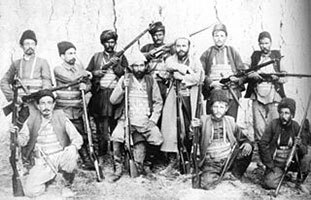
In the same year, Duman went to Van with a group of fifty fedayees (freedom fighters). In 1896 he came up with the idea of avenging the death of the young Armenians who had defended Van during the Hamidian massacres and who had perished in an ambush by the Kurdish Mazrik tribe during their retreat to Persia. The outcome was the expedition of Khanasor (July 1897), in which Duman was one of its leaders. He later went back to the Caucasus and settled in Baku. In 1904 he attempted to cross into Western Armenia to help the rebellion of Sassoun with a group of fedayees, but he engaged in combat with Kurdish gangs near the Turkish-Persian border and could not reach his aim.

Nigol Duman, seated, with his band of fedayees.

Nikol Duman, seated, with his band of fedayees.

Nikol Duman led the Armenian self-defense forces in the province of Yerevan and the plain of Ararat during the Armeno-Tatar inter-ethnic conflict of 1905-1906. Later, he left the Caucasus and went to Europe to avoid the persecution of the Czarist police. One of the “intellectual fedayees,” he stated his opposition to the “Caucasian Project” approved in the crucial 4th General Assembly of the A.R.F. (Vienna, 1907), which allowed the party to enter in an alliance with Russian revolutionaries. He also published a booklet, Project of Popular Self-Defense (Geneva, 1907), which became one of the mainstays of the strategic literature of the Armenian liberation movement.

In 1910 he was one of the representatives of the A.R.F. in the congress of the Second International held in Copenhagen (Denmark). A year later, he participated in the Iranian Constitutional Revolution, where the party had been active since 1908, and led the victorious defense of Tabriz against the counter-revolutionary forces in September 1911. When the Russian intervention turned the tide against the revolution, in late 1911 Nikol Duman gathered his group of fedayees and went to Western Armenia, where he stayed until 1913. Finally, he returned to the Caucasus.

At the beginning of World War I, Duman was opposed to the organization of the Armenian volunteer battalions in the Caucasus, since the 8th General Assembly (Erzerum, 1914) had not approved it. He was a natural candidate to lead one of them. However, his wandering and active life had taken its toll on his health. After his arthritic pains, he had got infected with tuberculosis. He could not stay in the hospital, waiting patiently for death while his comrades were in the battlefields. He had only one solution: on September 27, 1914 he committed suicide. He was buried in the cemetery of Khojivank, in Tiflis, near Simon Zavarian, one of the founders of the A.R.F


MATEOS MAMOURIAN


THIS WEEK IN ARMENIAN HISTORY
(Prepared by the Armenian National Education Committee)

[ANEC]


Death of Mateos Mamourian
(January 2, 1901)

Mateos Mamourian was born in Smyrna (currently Izmir) on October 17, 1830. He graduated from the Mesrobian School in 1845 and continued his studies at the Samuel-Moorat school in Paris, which belonged to the Mekhitarist Congregation. After graduation (1850), he returned to his hometown and was one of the founders of the Aghabekian School the following year. However, his efforts were unsuccessful and the school did not last long.

Mamourian moved to Constantinople in 1853 as a teacher, and also started contributing to the Armenian press. He was later called to the Ottoman army and worked as a translator during the Crimea war (1853-1856). After the end of the war, he was an auditor at Cambridge University, in Great Britain, from 1856-1857. He traveled through Europe and Russia in 1858, and then he returned to the Ottoman Empire. He was the chancellor (executive director) of the Armenian Patriarchate of Constantinople from 1860-1865.

Mateos Mamourian

Mateos Mamourian

In the meanwhile, the Armenian rebellion of Zeitun in 1862 generated a strong wave of solidarity. Mamourian organized a fundraiser for the rebels and published articles condemning the bloody policies of Aziz Pasha in Cilicia, which had been the cause of the rebellion. After 1865 he moved back to Smyrna and became the principal of his alma mater, the Mesrobian School, with interruptions, from 1865-1899. He taught English, French, Arabic, and world history.

In 1871 Mamourian founded the journal Arevelian Mamoul, which he edited for thirty years and had an important role in the intellectual life of Western Armenians. He collected his articles in two books, Armenian Correspondence (1872) and English Correspondence, or The Fate of an Armenian (1881), where he discussed the political liberation of Armenians in the Ottoman Empire and the economic development of Armenia. The first two parts of his novel The Man of the Black Mountain were published in his journal from 1871-1883. However, the third and last part was never written due to the attacks of both Western and Eastern Armenian conservatives, who criticized the ideas of the author. The novel was set during the Russian-Persian war of 1826-1828 that had led to the liberation of Eastern Armenia from Persian domination, including the participation of Armenian volunteers, but the author had found his own way to reflect the situation of the Ottoman Empire in his time, despite censorship. As he wrote in one of his articles, “In a tyrannical regime, an editor must be a sort of ventriloquist, who knows how to make his voice audible without touching his collar.”

This prolific author also published various textbooks of general history, Armenian history, literature, and grammar. He also translated works by Voltaire, Goethe, Alexander Dumas, Jules Verne, Walter Scott, Leo Tolstoy, and others, as well as the tales of the Thousand and One Nights in six volumes.

Mamourian passed away in Smyrna on January 2, 1830. His son Hrant Mamourian became the editor of Arevelian Mamoul, which was published until 1910, and then as a newspaper from 1919-1922, when the fire of Smyrna ended the Armenian presence in the second city of the Ottoman Empire.


KRIKOR DATEVATSI

THIS WEEK IN ARMENIAN HISTORY
(Prepared by the Armenian National Education Committee)

[ANEC]


Death of St. Krikor Datevatsi
(December 25, 1409)

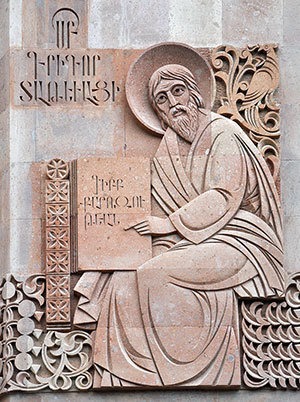
Until April 23, 2015, when the martyrs of the Armenian Genocide were canonized, Gregory of Datev (Krikor Datevatsi) was the last saint of the Armenian Church.

A frieze of St. Gregory of Datev located on the exterior of Holy Transfiguration Cathedral in Moscow, Russia.

Krikor Datevatsi was born in 1346 in the district of Vayots Dzor, in the province of Siunik (southern Armenia). At the age of seven, his parents sent him out for education. He later continued his education in the famed University of Datev, where he was a disciple of Hovhan Vorotnetsi (1315-1386), another saint of the Armenian Church commemorated on the twentieth day of the Great Lent.

In 1371 Krikor and his teacher went in pilgrimage to Jerusalem, where the 25-year-old student was consecrated celibate priest. On the way back, Krikor was ordained vartabed and received the doctorial staff from Vorotnetsi. The Matenadaran preserves a Bible copied in 1297, which Datevatsi illustrated in 1378.

Two years later, teacher and disciple moved to the convent of Aprakunis. After the death of Hovhan Vorotnetsi in 1388, Krikor became the head of the convent and gave courses of philosophy, theology, grammar, musical theory, and other subjects.

In 1390 he returned to Datev and congregated many students coming from various areas of Siunik and Armenia in general to continue his educational activities. His hundreds of students, among them famous writers like Tovma Medzopetsi and Arakel Siunetsi, played a remarkable role in Armenian cultural and religious life.

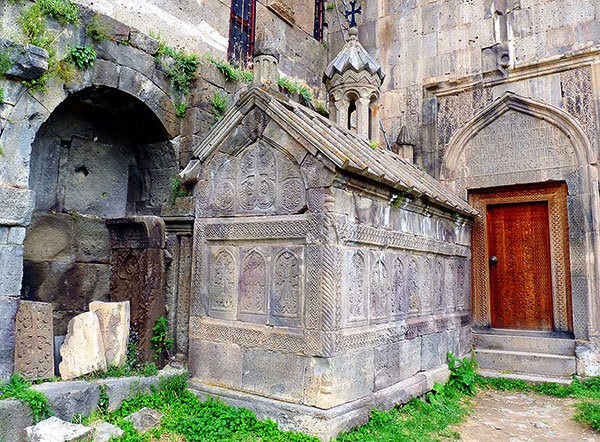
St. Gregory’s mausoleum located adjacent to St. Peter & Paul Cathedral at Datev Monastery in the Siunik province of Armenia.

During his tenure, the University of Datev reached the pinnacle of its flourishing as a center of science, culture, art, and spiritual life. It had three schools (philosophy and theology, calligraphy and manuscript illumination, and music), where they taught philosophy, religion, Armenian language and grammar, literature, history, rhetoric, manuscript copying, miniature painting, natural sciences and astronomy, mathematics, architecture, music and singing, pedagogy and social sciences, and other subjects. Studies lasted seven to eight years. The university had a rich library, with more than ten thousand manuscript books. The monastery would be totally destroyed and set to fire by Shahrokh, youngest son of Tamerlan, in 1435.

Krikor Datevatsi left an abundant corpus of works, including sermons, commentaries of the works of Aristotle and David the Invincible, and theological works. The most important of his works was the Book of Questions, a sort of encyclopedia that has been compared to the works of Western theologians like Thomas Aquinas and Albertus Magnus. This book also contained a critique of the doctrines of the Catholic Church, since Catholic missionaries had entered Armenia since the fourteen century and created the Armenian branch of the Dominican order, called Fratres Unitores, with proselytizing aims. He also wrote a book of sermons divided into two parts, For the Summer (Ամառան) and For the Winter (Ձմեռան).

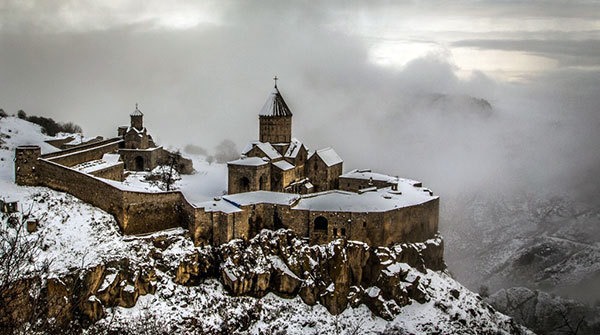
Datev Monastery above the Vorodan gorge in wintertime.

In 1408, apparently due to the political unrest after the death of Tamerlan in 1403, Datevatsi and his students moved to the monastery of Medzop, near Lake Van, but returned to Datev after a year. The great teacher and writer passed away on December 25, 1409, after a short illness. He is commemorated by the Armenian Church on the Saturday before the fourth Sunday of the Great Lent.

The cultural and religious stature of Datevatsi earned him a place among the twelve statues (the second to the left) surrounding Mesrob Mashdots and his disciple Koriun on the front of the Matenadaran, the library of manuscripts in Yerevan. The St. Gregory of Datev Institute, founded in 1987 by the Armenian Religious Education Council (AREC) under the aegis of the Armenian Prelacy, has also preserved the memory of his name.

EMIL ARTIN

THIS WEEK IN ARMENIAN HISTORY
(Prepared by the Armenian National Education Committee)

[ANEC]

Death of Emil Artin
(December 20, 1962)

People of Armenian descent are also, in a certain way, part of Armenian history. One of the leading mathematicians of the twentieth century, Emil Artin, and his son Michael, an emeritus professor at MIT who also specialized in algebra, have enabled another mathematician, Carl Faith, to write: “The Artins or Artinians are true mathematical royalty despite the assertion by Euclid: there is no royal road to geometry.”

Emil Artin was born in Vienna (Austria) on March 3, 1898. He descended from an Armenian merchant who had settled in the country in the nineteenth century. His father, also called Emil, was born in Austria from mixed Austrian and Armenian descent, and was either an opera singer or an art dealer. His mother Emma Maria Laura was an opera singer.

Emil lost his father in 1906 and his mother remarried a year later to Rudolf Hübner, a prosperous manufacturer in Reichenberg (now Liberec in the Czech Republic). After a year in a boarding school, he returned to Reichenberg in 1908, where he pursued his secondary education until 1916.

Emil Artin matriculated at the University of Vienna, having focused on mathematics. His studies were interrupted by the military draft in 1918. He stayed in Vienna from 1918-1919, when he matriculated at the University of Leipzig. In June 1921 he was awarded the degree of Doctor of Philosophy, based on his oral examination and his dissertation, “On the Arithmetic of Quadratic Function Fields over Finite Fields.”

Artin moved to Göttingen, considered the “Mecca” of mathematics at the time, in the fall of 1921. After a year of post-doctoral studies in mathematics and mathematical physics, in 1922 he accepted a position offered at the University of Hamburg, and by 1926 he had been promoted to full professor, becoming one of the two youngest professors of mathematics in Germany.

Emil Artin

Emil Artin

In August 1929 Artin married Natalia Naumovna Jasny (Natascha), a young Russian émigré who had been a student in several of his classes. Their first two children, Karin and Michael, were born in 1933 and 1934. Artin’s situation became increasingly precarious after Adolf Hitler became chancellor of Germany and the Nazi regime was established, not only because his wife was half Jewish, but also because Artin made no secret of his distaste for the Hitler regime.

In July 1937 Artin lost his post at the University. Thanks to the efforts of colleagues already relocated to the United States, a position was found for him at Notre Dame University in Indiana. After the arrival of the Artin family to the United States, the mathematician taught at Notre Dame for the rest of the academic year. He was offered a permanent position the following year at Indiana University, in Bloomington, where he taught from 1938-1946. His third son, Thomas, was born in November 1938.

In 1946 Artin was appointed Professor at Princeton University, which had become the center of the mathematical world following the decimation of German mathematics under the Nazis. He and his wife were granted American citizenship in the same year.

Artin was one of the leading algebraists of the century. He worked in algebraic number theory, and also contributed to the pure theories of rings, groups and fields. He was elected a Fellow of the American Academy of Arts and Sciences in 1957. In 1958 he moved permanently to Germany, where he was offered a professorship at Hamburg. His marriage was seriously frayed, and he divorced his wife in 1959. He was granted German citizenship in 1961, and passed away of a heart attack in Hamburg at the age of 64, on December 20, 1962. The University of Hamburg honored his memory on April 26, 2005 by naming one of its newly renovated lecture halls The Emil Artin Lecture Hall.

Before that, the Emil Artin Junior Prize in Mathematics was established in 2001. It is presented usually every year to a former student of a university in the Republic of Armenia, who is under the age of thirty-five, for outstanding contributions in algebra, geometry, topology, and number theory. The award is announced in the Notices of the American Mathematical Society.


CATHOLICOS MATEOS II

THIS WEEK IN ARMENIAN HISTORY
(Prepared by the Armenian National Education Committee)

[ANEC]


Death of Catholicos Mateos II
(December 11, 1910)

Mateos II was Patriarch of Constantinople and Catholicos of All Armenians in an extraordinarily difficult period of Armenian history, at the end of the nineteenth and beginning of the twentieth century.

Mateos II

Catholicos Mateos II Izmirlian

The future ecclesiastic was born on February 12, 1845, in Constantinople as Simeon Izmirlian. He studied at local schools (Bezjian and Kum Kapu) and became a teacher at the St. Mary Church of Ortakeuy in 1862. After being ordained deacon, he was ordained a celibate priest (vartabed) with the name Mateos in 1869.  Patriarch Mgrdich Khrimian noted his intellectual capability and turned him into his personal secretary. His impeccable credentials and active service earned him the rank of dzayrakuyn vartabed in 1873. He was elected primate of Balikesir in 1874 and two years later was consecrated bishop. In 1881 he published a voluminous book in Armenian (1300 pages), The Patriarchate of the Holy Armenian Apostolic Church and Aghtamar and Sis.

Izmirlian’s religious and political activities were at times inseparable from each other. In 1886-1890 he was primate of the diocese of Egypt, but had to resign for health reasons. He returned to his hometown, where he was ordained archbishop, and in December 1894 he was elected Patriarch of Constantinople. His activism in order to improve the situation of the Armenians in the provinces led him to constant clashes with the authorities. His tenure coincided with the Hamidian massacres of 1894-1896. His insistence on democratic reforms and Armenians rights, as well as his protest against the massacres earned him the title of “Iron Patriarch.” The Ottoman authorities tried to force him to present a letter that expressed his satisfaction with the situation, but Patriarch Izmirlian refused. Abdul Hamid II pressured him to abdicate, and in July 1896 he was exiled to Jerusalem for the next twelve years.

After the proclamation of the Ottoman Constitution (July 1908), Archbishop Mateos Izmirlian returned from his exile to Constantinople and was elected once again Patriarch after the resignation of Patriarch Maghakia Ormanian in October 1908. However, he did not remain in that position for long. Catholicos of All Armenians Mgrdich I Khrimian had passed away in October 1907. The National Ecclesiastical Assembly gathered in Holy Etchmiadzin elected Archbishop Mateos to replace Khrimian Hayrig in October 1908. The election was confirmed by a Russian imperial decree of April 15, 1909. The newly elected Catholicos departed from Constantinople in May. After introducing himself to Czar Nicholas II in St. Petersburg, he arrived in Etchmiadzin in June and was consecrated on September 13, 1909 as Mateos II.

Catholicos Mateos II would have a brief tenure of 15 months. He became the first Catholicos to make a pilgrimage to Ani, the ruined capital of medieval Armenia, by then within the Russian borders. His plan of action included the renewal of monastic life, the improvement of the Kevorkian Seminary, and the solution of various administrative issues.

The Catholicos passed away on December 11, 1910 and was buried in the courtyard of Holy Etchmiadzin. His correspondence was posthumously published in Cairo (1911).