Archive for the ‘the Armenian National Education Committee (ANEC)’ Category

Easter Sunday is followed by a period of fifty days (Hisnag) during which there are no fasting days and no saints’ days. This period from the Resurrection to Pentecost (Hokekaloost) is dedicated to the glorification of the Resurrections. Each of the seven Sundays of Hisnag has a special name. Last Sunday, the first Sunday after Easter, was New Sunday.

This Sunday, April 14, is Green Sunday (Ganach Giragi), also called Sunday of the World Church (Ashkharhamadoor). Green Sunday most probably originates from an ancient folk holiday celebrating spring. Our forefathers, seeing mother earth bloom after long winter months, glorified the Creator with an act of thanksgiving and celebrated by decorating the church and themselves with greenery. The reawakening of nature is symbolic of the Resurrection. Green is the color of life, freshness, and promise. After a barren winter we are filled with hope, life, and love

.

Read Full Post »

Prepared by

the Armenian National Education Committee (ANEC)


This year is the 160th anniversary of the birth of composer Kristapor Kara-Murza, introducer of choral music in Armenian culture. He was born on March 2, 1853 (February 18, according to the old Julian calendar) in the town of Gharasu-Bazar, currently Bielogorsk, in the Crimea (Ukraine). He started to play piano and flute at age 8 and also took private lessonsKaraKurza from music teachers in the town. He developed his abilities to read and write music. He was just a teenager when he started to organize and offer concerts.

He moved to Tiflis, the capital of the viceroyalty of the Caucasus, in 1882, and then to Baku from 1885-1892. He was the editor of musical criticism for the daily Mshak, edited by Grigor Artzruni. Kara-Murza offered the first concert of choral music in Armenian history, with a program of patriotic songs, at the theater founded by Artzruni in Tiflis. This was a novelty, as Armenian music was fundamentally written on a one-voice basis, as opposed to European four voices (polyphony). During the next seventeen years, until his premature death at the age of 49, the composer organized some 90 choral groups in fifty cities of Armenia and outside the country, including Tiflis, Baku, Etchmiadzin, Nakhichevan-on-the-Don, Odessa, Batum, Moscow, Kars, Shushi, Constantinople, and others, and gave more than 250 concerts with the participation of 6,000 people.

        Kara-Murza’s most important achievement was the collection of Armenian religious and popular songs, and their musical arrangement and conversion into polyphonic music. In 1887 he premiered his arrangement of the Divine Liturgy in a concert in Baku. He taught music at the Kevorkian Seminary of Holy Etchmiadzin in 1892-1893, and later settled back in Tiflis, where he gave special courses to musical conductors.

        He also composed songs with lyrics by Armenian poets, as well as music a cappella, and also arranged operatic melodies. He presented in Baku fragments of Faust, the famous opera of French composer Charles Gounod (1818-1893), in Armenian translation. Kara-Murza arranged 300 choral and popular songs, among them such classics as “Dzidzernag,” “Zinch oo zinch,” “Kezi mernim,” “Khorodig,” “Lepho lele.”  He also composed and transcribed popular dances, and became the precursor to the modern song and dance ensembles.

        In recent years, Kara-Murza has been credited with the composition of the music of the song “Mer Hairenik,” with lyrics by Mikael Nalbandian (1829-1866), which he premiered in Tiflis, in 1885. His music was the basis for the arrangement by Parsegh Ganachian (1885-1967), one of Gomidas’ disciples, which is performed today as the Armenian national anthem.

Read Full Post »

Prepared by

the Armenian National Education Committee (ANEC)


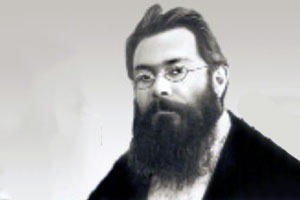
       An accomplished intellectual, educator, and public figure, Nikol [Nigol] Aghbalian was a self-appointed missionary of Armenian values wherever he went and wherever he worked, from the Caucasus to Beirut.

       He was born in Tiflis in a working-NigoleAghpalianclass family. He graduated from the Lyceum Nersisian in Tiflis and the Kevorkian Seminary in Etchmiadzin, and he dedicated himself to teaching. At the same time, he started writing literary criticism for the monthly Murj, and the quality of his writing attracted the attention of the readership and the intelligentsia. Despite his precarious financial situation, he managed to follow university courses in Moscow, Paris, and Lausanne, although he was never able to graduate.

       Aghbalian became a member of the Armenian Revolutionary Federation at a young age and he used his intellectual qualities to service the political cause. Since 1905, he was among the leading members of the Vernadun, the circle of intellectuals that gathered in the attic of poet Hovhannes Tumanian’s house to discuss literary and cultural issues of the day.

       He was the principal of the Armenian school of Tehran between 1909 and 1912. He returned to Tiflis in 1913, where he became the editor of the A.R.F. newspaper Horizon and vice president of the Armenian Writers Society.After the beginning of World War I, Aghbalian was one of the founders of the Armenian National Council and played a crucial role in the organization of the Armenian volunteer movement that gave several battalions of Armenian soldiers to the Russian army fighting on the Caucasian front. When the retreat of the Russian forces brought thousands of survivors of the Armenian genocide from Western Armenia, he devoted himself to the daily work of sheltering, nourishing, and treating those refugees.

       After the establishment of the Republic of Armenia, Aghbalian was elected a member of the Parliament and in 1919-1920 he became Minister of Education and Art. He established the grounds of the University of Yerevan and sponsored various educational and cultural initiatives. It is a well-known fact that his sponsorship of the yet unknown poet, Yeghishe Charents, whom he gave a job at the ministry, permitted him to concentrate on his  literary creations.

       After the sovietization of Armenia, he was incarcerated by the Bolshevik regime on February 9, 1921, and he was able to save his life, as well as many others, thanks to the popular rebellion of February 18, which liberated the prisoners, who had been condemned to death. After the end of the rebellion, he left Armenia and went to Tabriz, in Iran. A short time later, he moved to Alexandria (Egypt), where he worked as a teacher until 1928. In that year, he was among the initiators and founders of the Hamazkayin Armenian Educational and Editorial Society (today Hamazkayin Armenian Educational and Cultural Society). Later he moved with his friend and associate, the writer and educator Levon Shant (1869-1951), to Lebanon, where they founded the Armenian College (Jemaran) of Hamazkayin in Beirut (later Nshan Palanjian College and today Melanchton and Haig Arslanian College).

       Until his death on August 15, 1947, Aghbalian followed an active schedule as a teacher and scholar. He taught the history of Armenian literature, Classical Armenian, and Armenian classical literature. He also organized a cycle of widely attended popular lectures to attract the interest of the Armenian community towards its literature and culture. He remained one of the intellectual referents of the Diaspora in its first decades.

       His extended activities as a public figure and an educator did not allow Aghbalian to complete many of his projects. However, he managed to publish several books on Armenian literature and politics, and a four-volume collection of his works was published in the late 1950s in Beirut.

       His family remained in Yerevan after his exile in 1921. His name was forbidden in Armenia until the final years of the Soviet regime. His name and his work were fully rehabilitated after the second independence. Some of his works, as well as monographs about him, have been published, and a school has been named after him.


Read Full Post »

We are now entering the most solemn period for Christians—Holy Week—leading us to our most sacred holiday, Easter and the Resurrection. The week before Easter marks a series of events in the life of Jesus that were ordained or prophesied. These events include the raising of Lazarus (described above) and the triumphal entry of Jesus into Jerusalem, where he is greeted by large assembly of people carrying olive and palm branches.

       On Palm Sunday (Dzaghgazart) the altar curtain, which was closed at the beginning of Lent, is open. The palms are blessed and distributed to the faithful. Children dressed in their best clothes and carrying beautifully decorated candles, parade around the church in a procession. In the evening, or as now done immediately following the Divine Liturgy, the faithful gather at the door of the church or at the closed altar, for the Opening of the Doors (Trnpatsek) ceremony, symbolizing the opening of the gates to the Kingdom of God. This solemn penitential service in preparation of Holy Week is unique to the Armenian Church.

       Each day of Holy Week (also called Great Week, Avak Shabat) is a holy day. Monday commemorates the barren fig tree (Matthew 21:18-20). Tuesday commemorates the Ten Virgins (Matthew 25:13). Wednesday commemorates the Anointment and Betrayal of Christ (Matthew 26). Thursday is Maundy Thursday, which originates from Christ’s command that His disciples love one another (John 13:34). In the evening the Washing of the Feet (Vodunlva) takes place in remembrance of the events of the Last Supper. Late Thursday evening the betrayal and torment of Christ, Tenebrae (Latin for darkness; in Armenian Khavaroum), is commemorated. In one of the most dramatic ceremonies, Gospel readings describing Christ in the Garden of Gethsemane, the betrayal by Judas, and denial by Peter, are read interspersed with the singing of hymns composed by Nerses Shnorhali, some of the most beautiful hymns in the Armenian Church. Holy Friday (Avak Ourpat), the solemnest day in the Christian calendar, commemorates the crucifixion, death and burial of our Lord.


Read Full Post »

THIS WEEK IN ARMENIAN HISTORY
Prepared by

the Armenian National Education Committee (ANEC)

INTRODUCTION OF THE “DRAM” [TRAM]

AS ARMENIA’S CURRENCY
(November 22, 1993)

The first independent Republic of Armenia (1918-1920) used Russian rubles as currency. The Armenian banknotes, which kept “rubli” (ռուբլի, ruble) as the name of the currency, were designed by painter Arshag Fetvadjian (1866-1947). They were under printing in Europe when Armenia became a Soviet republic in December 1920 and were never put into circulation. 

            After the second independence, the Central Bank of Armenia was created on March 27, 1993. The new Armenian monetary unit was called dram [Tram] (դրամ); the name, which means “money” in Armenian, was also the name of the silver coins in circulation during the Armenian kingdom of Cilicia (1199-1375). Interestingly, the word դրամ, pronounced tram, designates “money” in Western Armenian; Eastern Armenian uses the word փող (pogh) to designate “money.” Pogh was also the name of a certain type of copper coins in the Armenian state of Cilicia. 

            The devaluation of the Russian ruble (which initially continued as the currency in the former Soviet Union following the collapse of the state) prompted the replacement of old currency by new one, and a flood of worthless old Russian rubles into Armenian forced the introduction of the dram, earlier than anticipated, on November 22, 1993. The initial value was 1 dram = 200 Russian rubles, while 1 American dollar equaled 14 drams. The high inflation of the period 1993-1994 in Armenia depreciated the dram to a value of 1 U$S = 100 AMD.  It reached 420 drams per dollar in March 1995 and stabilized afterwards (450 AMD per dollar in 1997). On November 19, 2012, the exchange rate was 407 dram per American dollar. 

            The banknotes issued in 1993-1995 were put out of circulation in 2005. Their value went from 10 to 5,000 drams. This old series, which today only has a historical value, featured different national symbols:  for instance, the 10 dram note showed the Yerevan Central Train Station and the statue of David of Sassoun (across the station) on the obverse and Mount Ararat on the reverse, while the 5000 dram note exhibited the pagan temple of Garni [Karni] on the obverse and the head of goddess Anahit kept in the British Museum on the reverse.

Tram

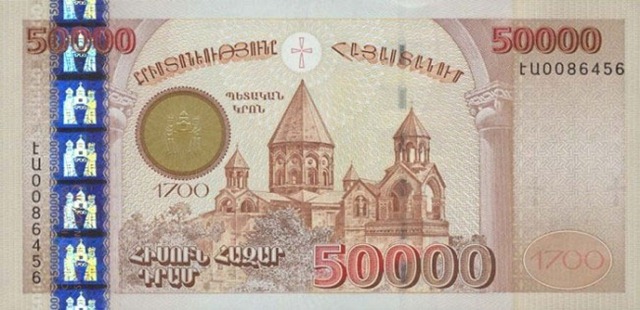
A new series of banknotes, currently in circulation, was  issued starting in 1998. The first six values, from 50 to 20,000 drams (the notes of 50, 100, and 500 were later put out of circulation and replaced by coins), featured six figures of twentieth century Armenian culture and an image related to them: Aram Khachaturian, Victor Hambardsumian, Alexander Tamanian, Yeghishe Charents, Hovhannes Tumanian, and Avetik Isahakian. The 50,000 dram banknote was issued in 2001, on the 1700th anniversary of Christianity in Armenia, and featured the cathedral of Holy Etchmiadzin. The highest value, 100,000 dram, pictured King Abgar V of Edessa, who according to tradition received the painting (portrayed alive) of Jesus Christ from St. Thaddeus.

Read Full Post »

THIS WEEK IN ARMENIAN HISTORY
Prepared by

the Armenian National Education Committee (ANEC)

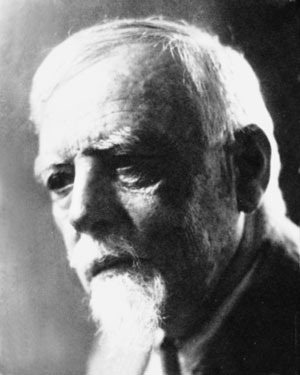
Death of Hovhannes Masehian (November 18, 1931)  

       Hovhannes Masehian (1864-1931) was a Persian Armenian diplomat and writer, who became the foremost translator of Shakespeare into Armenian. He was born in Tehran in 1864. His father, Dzeruni Khan Masehian, was the chief jeweler of Shah Naser al-Din (1848-1896). From 1870 to 1878 he studied at the newly opened Haigazian School in Tehran. Afterwards, he went to Tabriz to continue his studies with his maternal uncle, Andon Khan Yervandian, who was the tutor of the heir prince. After three years of studies, in 1881 he went to Paris where he studied philosophy, law, political economy, and literature at the College de France.

        Masehian returned to Tehran in 1884, where he taught at the Haigazian School and was hired as a translator at the royal court. He traveled to London in 1897 as the chief translator for the Persian delegation sent to participate in the fiftieth anniversary of the coronation of Queen Victoria. Ten years later, he would be the first secretary of another delegation sent to London for the Queen’s sixtieth anniversary. Meanwhile, in 1895 he had been named head of office of the Ministry of Foreign Affairs of Persia. He managed different positions in the ministry until 1901, when he was designated counselor to the Persian ambassador in Berlin. He became chargé d’affairs in 1906 and held the position until his return to Persia in 1911.

        By that time, Masehian had also become a household name in Armenian letters. As the official translator of the Shah’s court (he knew some ten languages), he had translated around 30 books into Persian, of which there is no trace. In 1894 he published his first version of Shakespeare’s Hamlet in Tiflis. The famous Eastern Armenian poet, Hovhannes Hovhannisian, wrote, “This translation of Hamlet leaves a very beautiful impression on us; first, because . . . the translator knows his mother tongue very well and uses his knowledge with confidence, an advantage that many of our famous authors and translators may envy; second, because that language is rich and poetic, a necessary condition to translate authors such as Shakespeare.” Other translations followed: As You Like It, King Lear, Romeo and Juliet, and Merchant of Venice. Masehian was unable, however, to publish his translations of Otello, Macbeth, and The Tempest. He continued his work until 1901, when he traveled to Europe as a diplomat; by 1909, he had translated nine Shakespearean plays and had translated anew his unpublished works.

        In 1912, after spending a year in Tehran as chief of the secretariat of the Persian court, Masehian was faced with an unprecedented task. It was unheard of a Christian to represent diplomatically an Islamic country like Persia. However, disputes among the officers of young Ahmad Shah (1909-1925) ended when in 1912 the sovereign signed the decree that designated the Armenian diplomat as Ambassador of Persia in Germany. He held this position until March 1916, when he went to Paris, probably commissioned by the Shah. In 1919 he represented Persia in the Peace Conference at Versailles.

        In the meantime, in 1916 Masehian had been officially invited to London as a speaker in the festivities of the 300th anniversary of Shakespeare’s birth. Between 1921 and 1923, he was able to publish several more of his translations in the presses of the Mekhitarist Congregation, in Vienna: Hamlet, Otello, Macbeth, and Merchant of Venice. Indeed, Hamlet and The Merchant of Venice were published in new versions. In the 1910s he had also translated Antonio and Cleopatra, Much Ado about Nothing, Julius Caesar, and A Midsummer Night’s Dream. Between 1923 and 1931, the indefatigable translator finished new translations: Coriolanus, Timon of Athens, and Winter’s Tale. “I am convinced that the translation of Shakespeare’s works,” he wrote to his friend, the poet Avetik Isahakian, “will leave a deep influence on our literature. If the giants of German literature have been impacted by Shakespeare, how much more our writers need that impact? This is why I have devoted myself to that task with all my energy.” He also was a translator of works by other literary giants: Johann Wolfgang Goethe, Lord George Byron, Heinrich Heine, Omar Khayyam, and Rabindranath Tagore.

        In 1927 Masehian was elected to the Persian Parliament. In the same year, he was designated as Ambassador to London. He held the position until 1929, when Persia established diplomatic relations with Japan and Masehian became the first ambassador to that country from 1929-1931. Because of illness, in 1931 he tended his resignation to Reza Shah (1925-1941) and left Tokyo to return to Persia. However, on his way he died in Harbin (China) on November 18, 1931. The efforts of the Armenian community of China and the special permission of Reza Shah allowed for his remains to be moved from China to Persia and be buried in Tehran on April 1, 1932.

        A school of Shakespeare studies was developed in Soviet Armenia and several good translators appeared in the next decades. However, according to many specialists, Masehian’s translations remain unsurpassed.


Read Full Post »
« Newer Posts