Archive for the ‘the Armenian National Education Committee (ANEC)’ Category

THIS WEEK IN ARMENIAN HISTORY
(Prepared by the Armenian National Education Committee)

[ANEC]


Terrorist attack on the National Assembly of Armenia

(October 27, 1999)

The election of Karekin II as Catholicos of All Armenians had just been held on October 27, 1999 in the afternoon when the news of a terrorist attack on the building of the National Assembly in Yerevan came to Holy Echmiadzin.


At around 5:15 p.m., five men led by journalist Nairi Hunanyan, armed with AK-47 assault rifles hidden under long coats, stormed into the building while the government was holding a question-and-answer session. The group included Hunanyan’s brother Karen and uncle Vram, as well as Derenik Bejanyan and Eduard Grigoryan.


The main target was Prime Minister Vazgen Sargsyan (1959-1999). According to reporters who witnessed the shooting, the men went up to Sargsyan and said, “Enough of drinking our blood,” to which he calmly responded, “Everything is being done for you and the future of your children.” The Prime Minister was shot point blank several times. Seven other people were also shot dead. The list included National Assembly Speaker Karen Demirchyan and two Deputy Speakers, Yuri Bakhsyan and Ruben Miroyan; Minister of Emergency Affairs Leonard Petrosyan, and MPs Henrik Abrahamyan, Armenak Armenakyan, and Mikayel Kostanyan. Some 30 people were injured.


The group claimed they were carrying out a coup d’état in a “patriotic” act. They claimed that Armenia was in a “catastrophic situation” and that “corrupt officials” were not doing anything to find a way out. The gunmen held around 50 hostages inside the building, surrounded by policemen and army forces personnel positioned on Baghramyan Avenue. After overnight negotiations with President Robert Kocharian, the gunmen released the hostages and, after a standoff that lasted 17-18 hours, they gave themselves up on the morning of October 28.


President Kocharian declared a three-day mourning period.  The state funeral ceremony for the victims of the parliament shooting took place from 30-31 October 1999. Their bodies were placed inside the Yerevan Opera Theater, with high-ranking officials from some 30 countries attending the funeral.


According to a poll carried out by the Center for Sociological Studies of the National Academy of Sciences on October 30-31, 56.9% of respondents said that the October 27 events were a crime against statehood and the country’s authorities, and 63.4% believed that the terrorist group consisted of assassins–traitors and enemies.


Armenian American journalist Garin Hovannisian described the aftermath of the attack in the following terms: “For weeks the Armenians mourned in silence, but from their grief a startling theory began to evolve. The assassinations had been pinned on the terrorist leader, an ex-journalist named Nairi Hunanyan, but the public was not satisfied. The fact was that Prime Minister Sargsyan and Speaker Demirchyan had recently created in parliament an alliance for democratic reform, and they were the only men who commanded the resources and popularity to challenge the president one day. Of course, there was no actual evidence that Robert Kocharyan was complicit in this monstrous crime against the Armenian people, but it was clear that he emerged from the bloodbath with absolute power.”
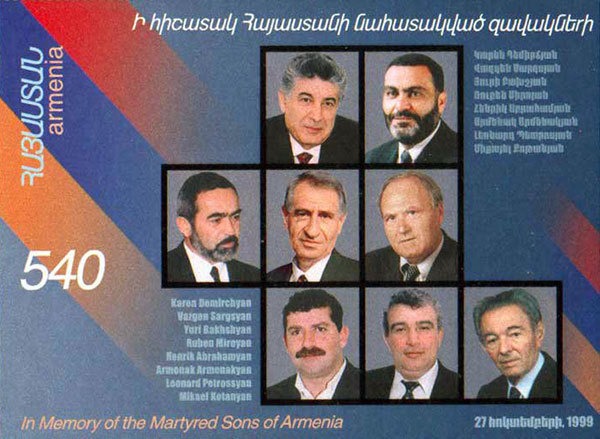
A stamp commemorating the victims of the terrorist attack on the Armenian Parliament on October 27, 1999 issued by the Republic of Armenia in 2000.

A stamp commemorating the victims of the terrorist attack on the Armenian Parliament on October 27, 1999 issued by the Republic of Armenia in 2000.


From early June to late October 1999, the Unity alliance forged by Demirchan and Sargsyan, which controlled the military and the legislative and executive branches, had become the pillar of the political system in Armenia. Their murder disrupted the balance of power and the political arena was left in disarray for months. The assassination hit Armenia’s international reputation and resulted in a decline in foreign investment. Political power was transferred to President Kocharyan.


The motives behind the attack were never fully explained. While the gunmen claimed to have acted on their own initiative, no convincing evidence was disclosed to suggest that any political leader or party was behind the attack, although abundant conspiracy theories flourished to prove that there had been a sabotage of a Karabagh peace deal. Aram Sargsyan, who briefly succeeded his elder brother Vazgen as Prime Minister from 1999-2000, stated in March 2013 that, “I have never accused this or the former authorities in being responsible for October 27. I have accused them in not fully disclosing October 27.”


The five men were charged with terrorism aimed at undermining authority on October 29. The investigation was led by Chief Military Prosecutor Gagik Jhangiryan. At its end, the case was sent to court on July 12, 2000. The trial began on February 15, 2001, in Yerevan’s Kentron and Nork-Marash District Court. The judicial case was transferred to the jurisdiction of Prosecutor General Aghvan Hovsepyan and his office, which finally closed the case for lack of evidence. Nairi Hunanyan and his co-conspirators were sentenced to life in prison on December 2, 2003.
Read Full Post »

THIS WEEK IN ARMENIAN HISTORY
(Prepared by the Armenian National Education Committee)

[ANEC]


Death of Sayat-Nova
(September 22, 1795)


For almost three centuries, the songs composed by troubadour Sayat-Nova have been among the favorites of the Armenian people. Despite being written in the dialect of Tiflis, with a mix of Turkish, Persian, and Arabic, their lyrics have always spoken to the heart of the listener.


Sayat-Nova’s life is involved in a cloud of mystery. It has been reconstructed to a certain level by the work of several generations of scholars, but there are many details that are still a matter of controversy.


It has been traditionally held that Sayat-Nova was born in Tiflis, the capital of the kingdom of Georgia, in 1712, and the 250th anniversary of his birth was celebrated throughout the Armenian world with great pomp in 1962. However, poet and scholar Paruyr Sevak was the first to demonstrate in his doctoral dissertation defended in 1966 and published in 1969 that there were more than enough grounds to date the poet’s birth in 1722.


Most likely, Sayat-Nova’s ancestors were born in Cilicia, and the birthplace of his father was either Adana or Aleppo. The future poet and troubadour spent his childhood and youth in Tiflis, his birthplace, where he learned to write and read Armenian and Georgian, and he also knew the Arabic alphabet.


At the age of 12 he became an apprentice of weaving and in a short time became a very capable weaver. However, his actual love was songs and music, perhaps influenced by his parents.


Sayat-Nova perfected himself in the art of the ashugh (troubadours) until the age of 30. He learned melodies and different metrics. At the same time, he created poems, which he interpreted during popular gatherings. It is likely that he traveled through the Near East and visited Persia, India, and the Ottoman Empire. He later was acknowledged as a poet-singer and baptized with the name of Sayat-Nova (from Persian, meaning “hunter of songs”).


Sayat Nova wrote in three languages: Armenian, Georgian, and (Azerbaijani) Turkish. More than 230 of his poems have reached us, which were collected in manuscript books that he wrote by his own hand or that his son Ohan compiled and copied, in various collections of folklore, or remained in the memory of the people and were gradually written down and published.


The earliest poem is dated 1742, even though there may be earlier compositions. The last poem was the famous “The World is a Window…” («Աշխարըս մե փանջարա է…»), written in April 1759. Sayat-Nova was the first who created and sang Georgian poems using the motifs of Persian poetry. This innovation was well received and he was appointed musician in the court of King Irakli II of Kakheti (one of the Georgian kingdoms). For some ten years the poet was in the court and produced some of his best works in this period. His poems spoke of justice and nobility, condemned deceit and villainy, and social and moral flaws. His love poetry expressed the most delicate and sacred feelings with images that were unusual.

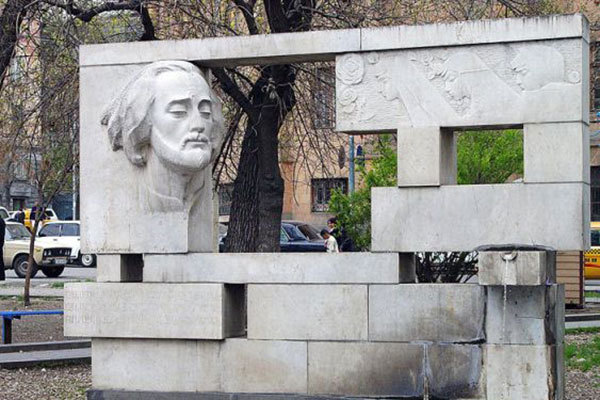
The monument to Sayat Nova in central Yerevan.

The monument to Sayat Nova in central Yerevan.


His life was not peaceful. There were conspiracies against him and he was expelled from the palace at least twice, in 1753 and 1759. The last one was the final, and his life as poet, composer, and musician ended there, at the age of 37. He would still live for more than three decades.


In 1759 Irakli II forced him to become a priest, with the name of Der Stepanos, and he was sent to the port of Enzeli (Persia), on the southern shore of the Caspian Sea. He “repented” here and copied the poem Book of Lamentations, by Gregory of Narek, in 1760. In 1766 he was a priest in the small town of Kakhi, on the road from Zakatala to Shamakhi, where he copied another manuscript, a compilation of biblical fragments. Both manuscripts are kept today in the Matenadaran of Yerevan.


Sayat-Nova’s wife, Marmar, passed away in 1768 and left four small children (Hovhannes or Ohan, Melkiset, Sarah, and Mariam). In 1768 or 1769 Der Stepanos, the former Sayat-Nova, moved to Tiflis, where he served in the prelacy of the congregation of Haghbat, which had settled in the Georgian city. In 1778, when the monastery of Haghbat was rebuilt, he was designated sacristan of the church of Surp Nshan. He returned to Tiflis with the congregation later, probably in 1784.


On September 22, 1795, during the Afghan invasion of Georgia, led by Agha-Mahmad Kajar, Sayat-Nova was killed when he refused to renege his religion. He was buried in the courtyard of the church of Surp Kevork. There, by initiative of poet Hovhannes Tumanian, the memory of Sayat-Nova has been observed since 1914 every May with popular festivities.


Read Full Post »

THIS WEEK IN ARMENIAN HISTORY

(Prepared by the Armenian National Education Committee (ANEC)


Massacre of Baku
(September 14-15, 1918)


At the beginning of the twentieth century, Baku was, after Tiflis, the second Armenian city of the Caucasus. By the end of the same century, the Armenian population of the city had been practically wiped out.

One of the chapters of that ethnic cleansing was the massacre of September 1918. While the Third Ottoman Army Corps was stopped in its advance in the battles of May 1918 that allowed Armenia to become an independent state, the Second Army Corps continued its advance through the line Gharakilise-Dilijan-Ghazakh (Ijevan)-Elizavetpol (Gandzak, Ganja) towards Baku.


Azerbaijan had proclaimed its independence on May 27, 1918 with Elizavetpol as its capital. Baku, the richest city in the country with its oil fields, had been governed since April 1918 by a Soviet (council) led by Bolshevik Stepan Shahumian. The Baku Soviet collaborated with the local branch of the Armenian Revolutionary Federation to establish control over the city and its environs. While the Bolsheviks had the revolution in mind, the Armenians were primarily concerned with physical survival. However, by the beginning of summer, the Soviet found itself under increased threat by the Ottoman army, which had been enthusiastically received by the newly created Azerbaijani government, presided by M. Fatali Khan-Khoyski. Both sides clashed in June and July, but the joint Ottoman-Azerbaijani offensive could not be stopped by the forces loyal to the Baku Soviet, which, with no promise of material support from Moscow, was forced to turn to a British expeditionary force stationed in Persia under the command of Major-General Lionel C. Dunsterville. Although Shahumian had been ordered by Moscow to deny entry to the British, he was overruled by his peers in the Soviet, which formally requested help in late July. On July 31 Shahumian and the other Bolshevik members resigned from their posts and the Centro-Caspian Dictatorship assumed control of the city.


The size of the British force, however, proved to be too small to make much of an impact. In August, the Ottoman military, led by the so-called Army of Islam headed by Nuri Pasha (Ottoman War Minister Enver Pasha’s half-brother), launched a new assault against the frontline positions, which were primarily manned by Armenians, who were forced to retreat despite some initial victories. In the first week of September, a joint Ottoman-Azerbaijani force composed of 15,000 men advanced without much resistance toward Baku and reached the suburbs by September 13. Meanwhile, the Muslim population of Baku prepared to welcome the entry of the Ottoman army. The Armenian troops were too ill-prepared to halt the advance and Dunsterville refused to retain his force, which evacuated from Baku on September 14 and sailed to Enzeli, in Persia, leaving the city virtually defenseless.


A terrible panic ensued once the invaders entered Baku. The Armenians crowded the harbor in a frantic effort to escape the fate that they knew very well. Regular Ottoman troops were not allowed to enter the city for two days, so that the local irregulars (bashibozuks) would conduct the usual looting and pillaging. Despite this order, regular Ottoman troops participated alongside the irregulars and the Azeris of Baku in the plundering, and then turned their fury against the Armenian population. Calls by German officers attached to the Ottoman command staff to treat the local population with leniency were ignored.

Massacre of Baku

Armenians fleeing the massacre through the Azerbaijani countryside.


On September 16, the Ottoman divisions formally entered the city in a victory parade reviewed by the Ottoman High Command. Baku would subsequently be proclaimed as the capital of the newly established Azerbaijani Republic.


According to a special commission formed by the Armenian National Council of Baku, a total of 8,988 Armenians were massacred, among which were 5,248 Armenian inhabitants, 1,500 Armenian refugees from other areas of the Caucasus, and 2,240 Armenians whose corpses were found in the streets but remained unidentified. Other estimates range up to 30,000 people.

Read Full Post »

THIS WEEK IN ARMENIAN HISTORY
(Prepared by the Armenian National Education Committee)

[ANEC]


Birth of Paul Chater

(September 8, 1846)

Sir Paul Chater is regarded as the man who placed the footprint of Hong Kong down and allowed the city to become one of the leading economies of the world today. In 1902 he represented Hong Kong at the coronation of King Edward VII of England, even though he was neither Chinese nor even born in Hong Kong.


Catchick Paul Chater was born Khachik Poghos Astvatzatoor (Khachik Pogose Astwachatoor) in Calcutta (now Kolkata), India, on September 8, 1846. He was one of the thirteen children of Chater Paul and Miriam Chater. His father was a member of the Indian civil service.


The young Khachik, orphaned at the age of seven, entered La Martiniere College. In the early 1910s he would become a benefactor of the desperately struggling school by making his single biggest donation to any institution or organization while still alive. It allowed his alma mater to avoid certain closure.


Chater moved in 1864 to Hong Kong and lived with the family of his sister Anna and sister’s husband Jordan Paul Jordan. He was an assistant at the Bank of Hindustan, China, and Japan. Later, with the aid of the Sassoon family, he set up business as an exchange broker, resigned from the bank, and traded gold bullion and land on his own account. He took sea-bed soundings at night and was thus instrumental in the reclamation of Victoria Harbour. He is credited with a fundamental role in the colonial government’s success in acquiring lands then held by the military.


In 1868 he and Sir Hormusjee Naorojee Mody formed Chater & Mody, a largely successful business partnership in Hong Kong. In 1886 Chater entered the Legislative Council, taking the place of another Armenian, F. D. Sassoon. In 1889 he partnered with James Johnstone Kewsick to establish Hong Kong Land. The following year, the company commenced the land reclamation project under the Praya Reclamation Scheme. They secretly acquired an old graveyard, where they built one of the earliest electricity power stations in the world. The Hong Kong Electric Company went into production with Chater’s help as an informal member of the Executive Council of Hong Kong. He was appointed to the Council in 1896 and served until 1926.


Chater was knighted in 1902. The year before, he had built a very fine home with imported European marble, which he named Marble Hall. He housed there his collection of fine porcelain. In 1904 Chater financed the construction of St. Andrew’s Church.

PAUL CHATER

PAUL CHATER


The Armenian businessman held many titles and positions, including those of senior justice in Hong Kong and consul for the kingdom of Siam (Thailand).


Chater died on May 27, 1926 and bequeathed Marble Hall and its entire contents, including his unique collection of porcelain and paintings, to Hong Kong. The remainder of his estate, besides generous bequests to nephews and members of his family, went to the Armenian Church of the Holy Nazareth in Calcutta, which runs a home for Armenian elderly, named The Sir Catchick Paul Chater Home. He was interred at the Hong Kong cemetery.


His wife lived in Marble Hall as a life tenant until her death in 1935. Ownership then passed to the government. It became the official residence of the naval commander-in-chief, and was commandeered by the Japanese during their occupation. It accidentally burned down in 1946, and government buildings occupied the site since its demolition in 1953. Government residences named “Chater Hall Flats” are today located on the site of Marble Hall.


Chater gifted to Hong Kong his large collection of historical pictures and engravings relating to China (430 pieces). The Chater Collection was dispersed and largely destroyed during the Japanese occupation, and only 94 pieces, now at the Hong Kong Museum of Art, are known to have survived.


His name is also preserved in other places of Hong Kong, such as Chater Road, Catchick Street, Chater House, and Chater Garden. In 2009 the company he cofounded, Hong Kong Land, commissioned a bust of him on the 120th anniversary of its foundation, which is permanently displayed in Chater House.

Read Full Post »

THIS WEEK IN ARMENIAN HISTORY
(Prepared by the Armenian National Education Committee)

[ANEC]

Death of St. Nerses Shnorhali

(August 13, 1173)

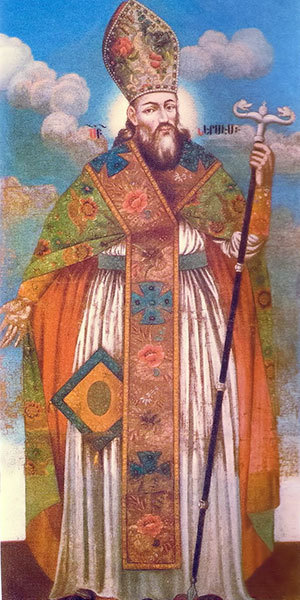
One of the saints of the Armenian and the universal Church, Nerses Shnorhali, is also one of the most revered names in the Armenian Christian tradition. He was known with the appellative of Shnorhali (“Graceful”) due to his multiple talents: he was theologian, poet, musicologist, composer, and historian, and excelled in all those endeavors

Nesess Shnorhali

Nesess Shnorhali

Nerses Glayetsi was born in the castle of Tzovk, in the district of Tluk, in the Armenian Mesopotamia (the area around the city of Edesa or Urfa) in 1102. He belonged to the princely Pahlavuni family. His great-grandfather was Krikor Pahlavuni or Magistros (990-1058), a famous writer, scholar, and public official.

After the early death of his father, Prince Apirat Pahlavuni, Nerses and his older brother Krikor were placed under the guardianship of their maternal great uncle, Catholicos Krikor II Martyrophile (1066-1105), who placed them in the monastery at Fhoughri. Later, Krikor’s successor, Barsegh (1105-1113) sent them to the school of the monastery of Karmir Vank, headed by Bishop Stepanos Manouk, a highly regarded scholar and theologian.

Nerses’ brother Krikor became Catholicos at the age of 21, in 1113. Nerses was ordained a celibate priest in 1119 and consecrated a bishop at the age of 35, in 1137. He was one of the best educated men of his time.

He assisted Catholicos Krikor III in moving the Catholicosate to Dzovk, on the property of their father, in 1125. This move was brief, as in 1151 the Catholicosate moved its headquarters to the fortress of Hromkla, near the Euphrates River (Nerses’ surname “Glayetsi” was derived from the name of the fortress). In 1165 hostilities broke out between Toros II, Prince of Cilicia, and one of the strongest princes of the country, Oshin of Lambron. Krikor III sent his brother to mediate.

On his way to the mediation, Nerses met Byzantine governor Alexios and discussed the strained relations between the Armenian and Greek churches since the Greek Orthodox Church had declared that the Armenian Church and the Jacobite Church were heretics in 1140. This discussion impressed the Byzantine governor to the point that he urged the Armenian bishop to write an exposition of the Armenian faith. Nerses stressed in his letter that, as both the Armenian and Greek churches accepted the statements of the first Council of Ephesus (431), there was no clear reason for them not to be in agreement, and did not make any polemical statements about the later Council of Chalcedon and its Confession.

On Nerses’ return from his successful mediation effort and the death of his brother shortly thereafter, he was made Catholicos of the Armenian Church. He convened a council with emissaries selected by Byzantine emperor Manuel I Comnenos to discuss how they might be able to reunite the two churches (1171). The terms the emperor offered were, however, unacceptable to both Nerses and the Armenian Church, and the negotiations collapsed.

Nerses Shnorhali passed away on August 13, 1173 and was buried in the fortress of Hromkla. The Armenian Church celebrates him as a saint on October 13, during the feast of the Holy Translators, while the Catholic Church also celebrates him, but on August 13.

His prolific literary output included long poems like Lament of Edesa (1145-1146), Jesus the Son (1152), and others, such as the cosmological poem About the Sky and Its Ornaments. He refined and completed the Sharaknots (collection of liturgical hymns) and the Divine Liturgy, enriching it with his own songs, whose number amounts to more than a hundred. One of his best sharakans is the well-known Morning of Light (Առաւօտ լուսոյ, Aravod luso). He also composed some 300 riddles, extracted from Armenian folklore. His Universal Epistle, written in 1166 and addressed to the entire Armenian people, was particularly influential in Armenian medieval thought.

Read Full Post »

THIS WEEK IN ARMENIAN HISTORY
(Prepared by the Armenian National Education Committee)

[ANEC]


Birth of Stepan Lianozov

(August 9, 1872)

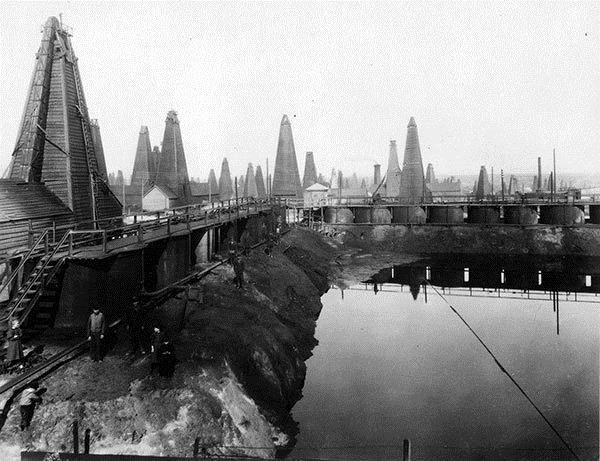
John Reed, the American Communist militant who witnessed the October Revolution that would give birth to the Union Soviet, called Stepan Lianozov the “Russian Rockefeller.” Both Lianozov and Rockefeller competed for the oil of Baku in the early twentieth century, at the time when Armenians like Lianozov had an important share in its production and exploitation.

Stepan Lianozov (Lianosian) was born on August 9, 1872 in Moscow. His father, Gevorg Lianozov (1835-1906), descended from an Armenian family that had been deported from Eastern Armenia by Iranian Shah Abbas III at the beginning of the seventeenth century.  He was a dominant name in the production of caviar from the Caspian Sea, and would inherit the interests in the oil of Baku that his brother, also called Stepan, had built since 1872.

Gevorg Lianozov’s son Stepan graduated from high school and in 1894 entered the School of Natural Sciences of the University of Moscow. He changed his career and graduated from the School of Law four years later. He worked for two years as an assistant to a magistrate in the court chamber of Moscow.

Stepan Lianozov

Stepan Lianozov

In 1901 Stepan left to his brothers Martin and Levon the caviar business and entered the growing and lucrative field of oil to assist his father.

After the death of his father, Stepan Lianozov founded the oil company G. M. Lianozov and Sons in St. Petersburg (1907), with a statutory capital of 2 million rubles. He transformed the family business into a corporative activity, attracting big investors, and engaging the biggest players in Baku: the Nobels, the Rothschilds, and the Shell Company. Between 1907 and 1910, G. M. Lianozov and Sons multiplied its production almost nine times.


The company owned oil fields, as well as subsidiaries in Baku that produced kerosene and refined petroleum, a pipeline in the Caspian shore, and others. Lianozov was elected member of the Baku City Council and the Baku Stock Exchange council.

On July 28, 1912 the Russian Main Oil Union, also called Oil, was founded in London. It united three Armenian and one Russian oil companies, several big Russian banks and representatives of British business, with a founding capital of 2.5 million sterling pounds. Stepan Lianozov became director-manager of the new company, which soon bought twelve big oil companies (including Mantashov and Co., Mirzoyev Brothers and Co., A. S. Melikov and Co., and Aramazd), and became the third biggest oil company in the world, after Standard Oil and Royal Dutch Shell.

G. M. Lianozov and Sons paid 18% to its shareholders in 1913. It had representative companies in Great Britain (British Lianosoff Wite Oil Company), France (La Lianosoff Français), and Germany (Deutsche Lianozoff Mineralöl Import Act.Ges).

In the spring of 1914 Lianozov and the Mantashov brothers (sons of the late Armenian oil magnate Alexander Mantashov or Mantashiants) made a big investment in the movie company Biochrome, founded by Sergei Prokudin-Gorski. The headquarters of the company were in Moscow, in one of the houses of the Lianozovs, which would become the offices of the Ministry of Cinematography after the Russian Revolution. The company filmed several movies until 1918, when the movie sets were burned by a fire: “No Exit,” “The God of Revenge,” “The Eternal Tale of Life.”

Lianozov’s business activities continued successfully after the beginning of World War I, but the Russian Revolution ruined the oil magnates of Baku. Unlike many other businessmen, Stepan Lianozov actively entered politics and participated in the civil war that followed. After migrating to Finland, in May 1919 he participated in a meeting organized by the counterrevolutionary forces (the Whites), which decided to create the Northwest Republic with center on the north of current Estonia. Lianozov was designated head of government, and took the positions of Prime Minister, Minister of Finances, and Minister of Foreign Affairs. General Nikolai Yudenich, who had been one of the main Russian commanders in the Caucasian front, and was one of the military leaders of the counterrevolutionary movement, together with Generals Kolchak and Denikin, took the position of Minister of War and commander in chief of the Northwest Army.

Oil rigs around a pool of crude in Baku around 1900

Oil rigs around a pool of crude in Baku around 1900

One of the first measures by Lianozov was to recognize the independence of Estonia on August 11, 1919, followed by the recognition of Latvia (September 3) and Finlandia (September 23). He also issued rubles of the Northwest Republic, signed by Yudenich and himself.

In October 1919 Yudenich headed an attack against St. Petersburg. However, the White offensive failed to occupy the capital of Soviet Russia, and, as a result, the Northwest Republic self-dissolved on December 5, 1919 and Lianozov moved to Paris.

In 1920 Stepan Lianozov founded TorgProm (Russian Trade-Industrial and Financial Union), together with the brothers Poghos and Abraham Ghukasian, and some Russian emigré businessmen, to protect the interests of Russian businessmen in Francia. He worked as a film producer in 1925, which became his main source of income for several years. Meanwhile, in 1926 he was the representative for France of the Russian Congress Abroad. This organization published its own newspaper from 1925 to 1940, called Renaissance.

Stepan Lianozov passed away on August 10, 1951 in Paris and was buried in the cemetery of Passy. He left one son, called Nikolai.


Read Full Post »

THIS WEEK IN ARMENIAN HISTORY
(Prepared by the Armenian National Education Committee)

[ANEC]


Death of Hampartsum Limonjian
(June 29, 1839)

Hampartsum Limonjian, better known by the sobriquet Baba Hampartsum, was one of the most important figures of Armenian music. He opened a new era in Armenian songs, as he cleaned them from foreign influences, and became the creator of the Armenian new musical notation, which helped maintain the heritage of popular and spiritual songs.


Limonjian was born in Constantinople in 1768. His childhood was marked by poverty. As soon as he had learned how to write and to read, he became an apprentice in a tailor shop and, after learning the trade, became a tailor himself.


He had an innate love for singing and music, and in his free time he devoted himself to learning music, and this is how he advanced in musicology. He later became a student of Zenne Boghos and learned Armenian religious music. He met Turkish dervishes and in a short time learned the style of their classical singing. The mystic teachings of the dervishes made a great impact on him, as well as their introspective life and their prayers that were accompanied by songs, music, and ritual dances.


Afterwards, Hampartsum Limonjian, who was already known as Baba Hampartsum, studied also European musical theory. His acquaintance with Hovhannes Chelebi Duzian became crucial. Hovhannes Chelebi, who was also a music lover, noted the exceptional abilities of Baba Hampartsum and had him hired as a music teacher in the Mekhitarist School of Constantinople. Simultaneously, he also worked as a scribe for the Balians, who were the imperial architects.


Once he assured his living, Baba Hampartsum strove to improve his musical knowledge. He took lessons from Greek musicians and maintained his links with the dervishes. He also studied old Armenian religious songs and tried to transcribe them. The European notation was not appropriate and he invented an Armenian notation system that resembled the khaz (the Armenian notation used in the Armenian hymns or sharagan) and corresponded to the European musical scale. He worked on his invention until 1815. In 1837 he wrote his autobiography, in Turkish, where he wrote about the motives that had led him to create the Armenian notation.


Hampartsum Limonjian had a group of students who continued his work, among them his son Nezen Zenob (1810-1866), Tamburi Alexan, Apisoghom Utudjian, Aristakes Hovhannesian, Bedros Cheomlekian and Hovhannes Muhendisian.


He passed away on June 29, 1839, at the age of 71. Decades later, Kevork IV, Catholicos of All Armenians, took the initiative to organize the teaching and the promotion of the notation system invented by Baba Hampartsum, which was particularly important in the maintenance and the normalization of Armenian religious music.

Read Full Post »

THIS WEEK IN ARMENIAN HISTORY
(Prepared by the Armenian National Education Committee)

[ANEC]


Assembly of Shahabivan

(June 24, 444)

In a period when the kingdom had fallen (428) and the country was divided between Persia and Byzantium, the Armenian Church rose as the main unifying force. Victim of various accusations, after the fall of the kingdom Catholicos Sahag Bartev was retained in Persia, and Surmak, from the house of Aghbianos—rival to the house of St. Gregory of Illuminator—became Catholicos, supported by the Persian king Vram V, although he never enjoyed the support of the Armenian Church. After his death in 443, Hovsep I Hoghotsmetsi, a student of Mesrop Mashtots, was elected Catholicos and was recognized both by the Church and by new Persian king Yazkert II.


Catholicos Hovsep and governor of Armenia Vasak Siuni agreed to convene a national-ecclesiastical assembly in the town of Shahabivan, in the district of Dzaghkotn of the province of Ayrarat (Great Armenia), which was the headquarters of the Armenian royal army. The assembly was attended by 40 bishops and other ecclesiastics, as well as many laymen, including princes, members of the military, etcetera. It started on June 24, 444.


The assembly was convened, mainly, to confirm the rules established by the Apostles and the Council of Nicea, which many ecclesiastics had broken, and to reaffirm the internal order and moral norms of the Armenian Church, as well as to give its judgment upon various heresies and wrongdoings.


The assembly of Shahabivan was canonical, but its resolutions, unlike other cases, were the only ones that established punishment for various transgressions. For these reason, its resolutions took the character of a judicial code. Only one of the 20 rules had an advisory character. Otherwise, ten rules (six of them fully, and four partly) were devoted to ecclesiastics, and they established canonical and criminal punishments for canonical violations and transgressions. Nine rules in their totality and four of them partly were about princes and villagers, with different punishments. Interestingly, while villagers received corporal punishment (beating), the princes were only sentenced to advice, fine, and repentance.


However, some transgressions had the same punishment for both villagers and princes. The fines established for villagers were half or less than half of the fines for princes. The rules took into consideration the economic situation of both social classes.


According to the resolutions of the assembly, all fines would go to the churches and homes for the aged, and in certain cases a portion of the fines would be distributed among the poor. In the canons of the assembly, women and men were equal before the law: “Whether male or woman, the canon applies.”


The assembly passed severe resolutions against the heresy of the Messalians. This heresy, which had originated in the fourth century, denied that the Sacraments gave grace, including baptism, and declared that the only spiritual power was constant prayer that led to possession by the Holy Spirit. The adult members of heretical families were confined to leper colonies, while the children were delivered to the Church, which took their spiritual education in its hands.


The assembly of Shahabivan was very important in the consolidation of the grounds of the Armenian Church and the formation and development of a corpus of Armenian law. It might also be said that its momentum was still felt a few years later, when the attempt of Persia to impose Zoroastrianism met a fiery Armenian resistance symbolized by the battle of Avarair in 451.


Read Full Post »

THIS WEEK IN ARMENIAN HISTORY
(Prepared by the Armenian National Education Committee)

[ANEC]


Birth of Axel Bakunts

(June 13, 1899)

Axel Bakunts was the most important prose writer in the first generation of Soviet Armenian literature. As many other intellectuals, he would also become a victim of totalitarianism.


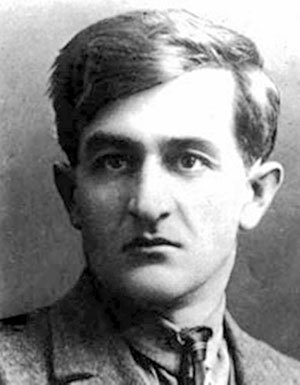
BaAxelBakuntskunts was born Alexander Tevosian on June 13, 1899, in Goris (Zangezur), in a family with eleven children. As he wrote in his autobiography, “my parents had had land and wealth, but I did not see either that land or that wealth. I recall horrendous poverty and a house filled with children. . .” He studied in the parish school from 1905-1910 and then he was admitted in the Kevorkian Seminary of Etchmiadzin, where he studied until 1915. After his short story, “The Fool Man,” published in the children’s monthly Aghbiur in 1911, a satirical piece appeared in July 1915 in the newspaper Paylak under a pseudonym, that cost him a stint in prison, as it was a criticism of the mayor of Goris and the provincial administration. The Seminary was closed in the school year 1915-1916 due to the flow of refugees from the genocide, and after 34 days, the future writer was freed from prison and invited to teach at the village school of Lor, in Zangezur.


By then, Alexander had been replaced by Axel, as his friends called him after the name of the character he played in a comedy, “The Newly Married,” by Norwegian writer and Nobel laureate Bjørnstjerne Bjørnson. He would later adopt the family name Bakunts as his pseudonym.


He graduated in 1917 from the Seminary, and in the fall he became a soldier in the battlefronts of Erzerum and Kars, until his participation in the crucial battle of Sardarabad in late May 1918. He worked in Yerevan as a proofreader and reporter in 1918-1919, and in 1919-1920 he studied at the Polytechnic Institute of Tiflis and taught at the high school of an orphanage. After three years of studies at the Agricultural Institute of Kharkov (Ukraine), in 1923 he returned to Armenia, where he worked as an agronomist. In the same year, the authorities organized the so-called “liquidation” of the Armenian Revolutionary Federation in a conference of party members, and 24-year-old Bakunts chaired the conference.


He worked in Goris from 1924-1926 as head of the land section of the executive provincial committee, and moved in 1926 to Yerevan, where he was deputy head in the Land Commission of the republican government until 1931. After a short stint at the Nor Ughi journal, he dedicated himself to literary activities until 1936.


Bakunts started a serious literary career in 1924, and his short stories soon established his reputation as a gifted writer, which was strengthened by his first collection, Mtnadzor (The Dark Valley), published in 1927. Together with Yeghishe Charents, Gurgen Mahari, and other first-rate writers, he was also involved in the literary movements of the time, and fought for the development of Armenian literature in years when the Soviet regime had not yet established its iron fist over culture. Besides several collections of short stories (The White Horse, The Walnut Trees of Brotherhood, etcetera), he published the satirical novel Hovnatan March and also wrote three novels that were lost. He also wrote the screenplays for the films Zangezur and The Son of the Sun.

As Charents wrote in a poem dedicated to his friend Bakunts, “Sadness flows in your Dark Valley / And longing of childhood in the familiar valley, / But work to ensure that in that dark valley / Your bright road will not be lost forever.” There was an insidious campaign against both writers, as well as their friends, especially by fellow writers who tried to follow faithfully the directives of the Communist party. Political accusations started to pile up and Bakunts, together with other names, was victim of a round up on August 9, 1936. He was charged with “anti-revolutionary, anti-Soviet and chauvinist activities.” He was tortured for eleven months in jail. All his attempts at defending himself were useless, and his letters remained unanswered. As many others who were subjected to the terror installed by Stalin in 1936-1938, he was finally given a 25-minute trial and summarily condemned to the firing squad. He was shot on July 18, 1937.


His name disappeared from public recognition until the death of Stalin in 1953. He was later rehabilitated and Bakunts became a classic of Armenian literature in the twentieth century. In 1957 his childhood house became a house-museum.


Read Full Post »

THIS WEEK IN ARMENIAN HISTORY
(Prepared by the Armenian National Education Committee)

[ANEC]


Death of Vahram Papazian

(June 5, 1968)

From Constantinople to Yerevan and from Paris to Moscow, Vahram Papazian would become the most accomplished Shakespearean actor of the Armenian scene worldwide for half a century.


He was born in Constantinople on January 6, 1888, in a middle-class family. He graduated from the Esayan School (1902) and the lyceum of Kadikoy (1902-1904), and had his debut on the stage in 1904. Then he went to the Murad-Raphaelian School of the Mekhitarist Congregation, in Venice, where he studied from 1905-1907.


In 1907 he departed for Paris and then for Baku, where he performed with an Armenian theater group for a few months. After this experience, he returned to Italy and studied at the Art Academy of Milan from 1908-1911. Famed actress Eleonora Duse was among his teachers. During his student years, he performed with Italian itinerant groups and gradually perfected his roles (Othello, Romeo, and Hamlet, among them). He returned to Constantinople in 1908 and his performances of Othello, at the age of 20, earned him the applause of Armenian audiences and the press. He went to Paris in the early 1910s to study the different currents of theater and become closely acquainted with acting techniques. As a professional actor, he performed from 1910-1913 in Constantinople and Smyrna, and from 1913-1917, in Baku and Tiflis. He enriched his repertory with a roster of roles in Armenian and non-Armenian plays.

Papazian played in fifteen Russian silent movies from 1917-1918 with the pseudonym of Ernesto Vahram, and would later play in three more films in 1922-1923. In 1920 he returned to Constantinople, where he performed until 1922. After the occupation of the city by the Kemalist forces, he settled in Soviet Armenia. He would perform and direct in Yerevan, Baku, and Tiflis between 1922 and 1927. He moved to Moscow in 1928 and then performed in Leningrad (now St. Petersburg) from 1929-1931. In 1932 he played in Lithuania, Letonia, and Estonia, and in the same year he left for Paris, where he played Othello with the Odeon Theater group; his performances were singled out by the French press. In 1933 he visited Berlin, where he met the famous director Max Reinhardt and studied closely the German school of acting.


Thereafter, he returned to the Soviet Union and was distinguished as People’s Artist of Armenia and Georgia in 1933, and People’s Artist of Azerbaijan in 1935. He toured the cities of the three countries in 1934-1935, and continued his tour through Russia and Ukraine from 1936-1941. He played in Moscow in 1941 and settled in Leningrad from 1941-1944, where he survived the German blockade.

After years of new presentations in Russia, Ukraine, Central Asia, and Transcaucasia, from 1946-1954, Papazian finally settled back in Yerevan as a member of the Sundukian Academic Theater, and he also directed plays in Yerevan and Leninakan (now Gumri). He returned to cinema in four films from 1953-1964, and in 1956 he was given the title of People’s Artist of the Soviet Union. In the last fifteen years of his life, the actor revealed himself to be an accomplished writer with his two-volume memoir, Retrospective Regard (1956-1957). He also wrote his reminiscences on Western Armenian actors, My Heart’s Duty (1959), and several books on performance analysis about the roles of Hamlet, Othello, and King Lear.


His art belonged to the classical school, enriched by elements of neo-romanticism and psychological realism. His performances of Shakespearean roles were grounded on the traditions of ancient tragedy and the Renaissance, as well as his own Armenian viewpoint.


Vahram Papazian passed away in Leningrad on June 5, 1968, and was buried in the Pantheon of Yerevan. The State Theater of Stepanakert (Karabagh) carries his name.

Read Full Post »

« Newer Posts - Older Posts »