Archive for the ‘the Armenian National Education Committee (ANEC)’ Category

THIS WEEK IN ARMENIAN HISTORY
(Prepared by the Armenian National Education Committee)


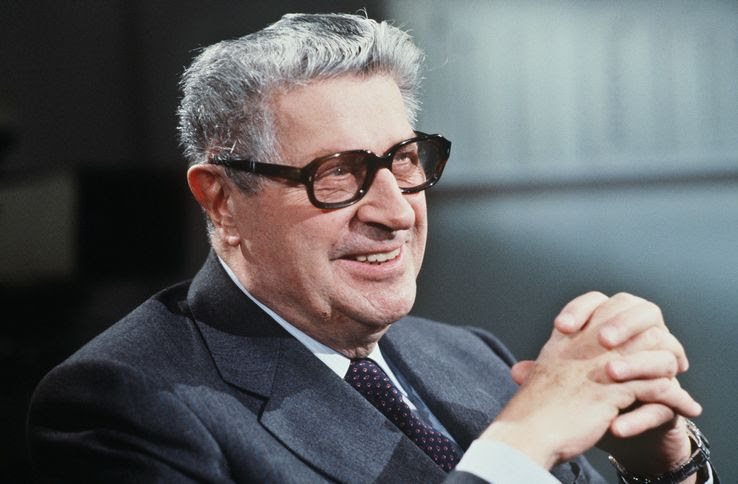
Death of Alexander Khatisian
(March 10, 1945)
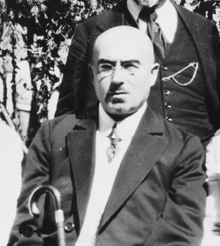
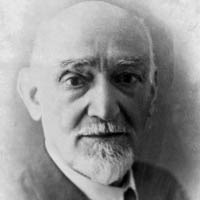
Alexander_Khatisian


Alexander Khatisian, one of the prime ministers of the first Republic of Armenia, was a remarkable public figure before and after the crucial years of 1918-1920.


He was born in Tiflis (nowadays Tbilisi), the capital of Georgia, on February 17, 1874. He belonged to a well-to-do family. His brother Kostandin Khatisian (1864-1913) was among the founding members of the Armenian Revolutionary Federation.


After graduating from the local gymnasium (Russian high school) in 1891, Khatisian went to Russia to pursue higher education. He studied medicine at the universities of Moscow and Kharkov, and graduated in 1897. He mastered half a dozen languages, including English, French, and German.


From 1898 to 1900 he traveled abroad for specialization courses in the best clinics. He visited Italy, France, and Germany, where he also studied public hygiene, laws, and municipal work in slaughterhouses, hospitals, and water works. Later on, he would publish articles and pamphlets on cultural and health-related topics.


Upon his return to Tiflis, in 1900, Khatisian worked as a doctor, and also entered the political arena. In 1902 he was elected to the City Council, and in 1905 he became a member of the City Board. He participated in the revolutionary movements of 1905. He wanted to join the A.R.F. at that date, but he was dissuaded by Rostom, one of the party founders, and Hamo Ohanjanian, among others, who argued that he could better serve the Armenian people and the party as a non-partisan. In 1907 he became an assistant to the mayor of Tiflis, and from 1910-1917 served as mayor of Tiflis. He was president of the Caucasus branch of the Union of Cities (including a total of forty-four cities) from 1914-1917.


During World War I, Khatisian was among the organizers of assistance for Armenian refugees and genocide survivors. He collaborated with the formation of the Armenian volunteer battalions and was elected vice-president of the Armenian National Bureau of Tiflis from 1915-1917.


After the February Revolution of 1917, Khatisian entered the ranks of the A.R.F. During that decisive year, he led the National Bureau until October, presided over the Council of Armenian Political Parties (March-April), and participated in the convention of peasants of Transcaucasia (June 1917). He moved to Armenia at the end of the year and was elected mayor of Alexandropol (nowadays Gumri). In February 1918 he participated in the peace negotiations held with the Ottoman Empire in Trebizonda (Trabzon). However, in April 1918 he went back to Tiflis, when he was designated Minister of Finances and Provisions of the short-lived Republic of Transcaucasia. In May he returned to the table of negotiations with the Turks, and was one of the three Armenian representatives who signed the Treaty of Batum on June 4, 1918, where the Ottoman Empire recognized the independence of Armenia over a stretch of territory.


He moved to Yerevan, and Prime Minister Hovhannes Kajaznuni designated him as Minister of Foreign Affairs. After Kajaznuni left Armenia in February 1919 on official mission, in April Khatisian was designated acting Prime Minister and was confirmed as Prime Minister in May, while also retaining his position in Foreign Affairs. He reshuffled his cabinet first in August 1919 and then in the spring of 1920.

After the failed May 1920 uprising engineered by Armenian Communists, Khatisian resigned from his post. He was replaced by Hamo Ohanjanian, the representative of the A.R.F. Bureau, while the Bureau members took the cabinet posts. Khatisian traveled abroad in the summer to organize a loan for the country within the Armenian communities and create a “Golden Fund.”


After his return, on the eve of the Sovietization, he signed the Treaty of Alexandropol along the representatives of Mustafa Kemal on behalf of the Republic of Armenia in the early morning of December 2-3, 1920.


After the fall of the Republic, Khatisian settled in Paris. He continued his political activities, and participated in the Lausanne Conference in 1922-1923 defending the rights of the Armenian people. He was a member of various Armenian and Russian public organizations. He published his memoirs of his time as mayor of Tiflis and the volume The Origin and Development of the Republic of Armenia (1930).


During World War II and the occupation of Paris, Khatisian moved to Portugal. However, after the liberation of the French capital, he was arrested under trumped-up charges of collaboration with the Nazis, but was soon liberated due to lack of proofs. He passed away on March 10, 1945, in Paris
 

Read Full Post »


THIS WEEK IN ARMENIAN HISTORY
(Prepared by the Armenian National Education Committee)


Death of Henri Troyat
(March 2, 2007)

HenriTroyat

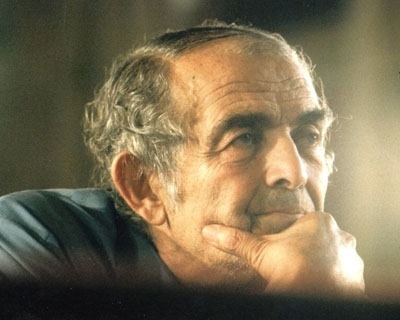
Prolific and popular French novelist and biographer Henri Troyat, a member of the French Academy for almost half a century, was also of Armenian origin, even though he had little connection to Armenian life.


He was born Lev Aslanovich Tarasov on November 1, 1911, in Moscow. His last name was the Russianized form of Torosian, and his maternal grandfather was of Armenian-Georgian mixed descent. His father was a wealthy Armenian draper who had made a fortune through investment in railways and banking. His privileged environment included a Swiss governess who taught him French. When the Soviet Revolution broke in 1917, the family retreated to their estate in the Caucasus, but the failure of the counter-revolutionary movement forced them to catch the last émigré boat from Crimea to Constantinople in 1920. From Constantinople, they traveled with passports of the Republic of Armenia to France and joined the exiled Russian community in Paris. They settled in the prosperous suburb of Neuilly, where young Lev attended the Lycée Pasteur. The family found exile life difficult and was forced to move to the city, where Lev Tarasov studied law at the Sorbonne. He would once say: “Success means nothing. I know what I’m talking about: at the very beginning of my life, I saw my parents lose everything in a reversal of fortune, and I kept that lesson in mind.”


He would never return to Russia, even after the fall of the Soviet Union, claiming that he wanted to keep alive the imaginary country he had created out of childhood memories and dreams. He acquired French citizenship in 1933, and departed to Metz to complete his mandatory military service. He was still under arms when he published his first novel, False Light, in 1935, which obtained the Prix du Roman Populiste, under the pseudonym Henri Troyat.


After returning from military service, the writer was appointed as a civil servant in the prefecture of the Seine. He continued his literary career, publishing a series of short psychological novels. In 1938 his fifth novel, The Web, earned him both the Prix Max Barthou of the French Academy and the very prestigious Prix Goncourt. He was mobilized with the outbreak of World War II and returned to Paris in 1940.

At this point Troyat’s career took a major shift. He continued with his short psychological fiction–his novel Snow in Mourning (1952) was filmed with Spencer Tracy in 1956 as The Mountain—but his subsequent work was dominated by two major innovations: the long novel cycle and biography. In 1942 he left his civil service job to devote himself entirely to literature. He married twice; he had a son from his marriage, which ended in divorce, and later married a widow, the love of his life, with a young daughter whom he raised as his own.


He initiated a whole series of biographies of Russian writers (Fyodor Dostoevsky, Alexander Pushkin, Leon Tolstoy, Nikolai Gogol, and Anton Chekhov) and tsars (Catherine the Great, Peter the Great, Alexander I, and Ivan the Terrible). These works brought an introduction to Russian literary and political culture to the French public. The historical research became the grounds for a series of historical novels, mostly based in Russia. Troyat devoted the trilogy While the Earth Endures (1947-1950) to pre-revolutionary Russia, the revolution, the civil war, and the exile, and then explored France from the same perspective in the tetralogy The Seed and the Fruit (1953-1958), which became a popular French television series in 2001. These cycles of novels were followed by other multivolume novels from the late 1950s to the mid-1970s. He would have more than a hundred literary works in his count, including novels, short stories, biographies, and plays.


Troyat became one the first French best-sellers, combining critical recognition with commercial success. In 1952 he won the Grand Prix Littéraire du Prince Pierre de Monaco. Seven years later, on May 21, 1959, at the age of forty-seven, he was inducted into the French Academy. Intriguingly, he sat on seat number 28, which had previously belonged to Claude Farrere, a novelist well-known for his pro-Turkish stances. He became the most long-standing member of the group of forty “immortals” who safeguard the French language. He would later earn a series of state decorations, including the Grand Cross of the Legion of Honor, the highest ranking in France.


Henri Troyat published his last novel, The Hunt, in 2006, at the age of ninety-five. He passed away on March 2, 2007.


Read Full Post »

THIS WEEK IN ARMENIAN HISTORY
(Prepared by the Armenian National Education Committee)

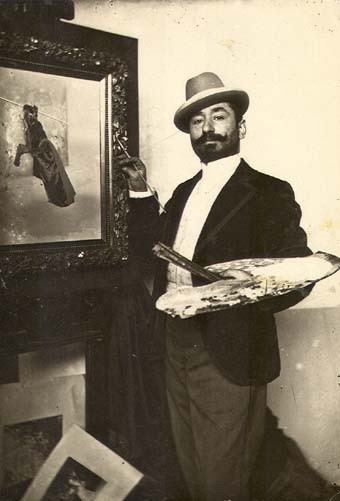
Birth of Vardges Sureniants
(February 27, 1860)


Vartges Surenyan 2

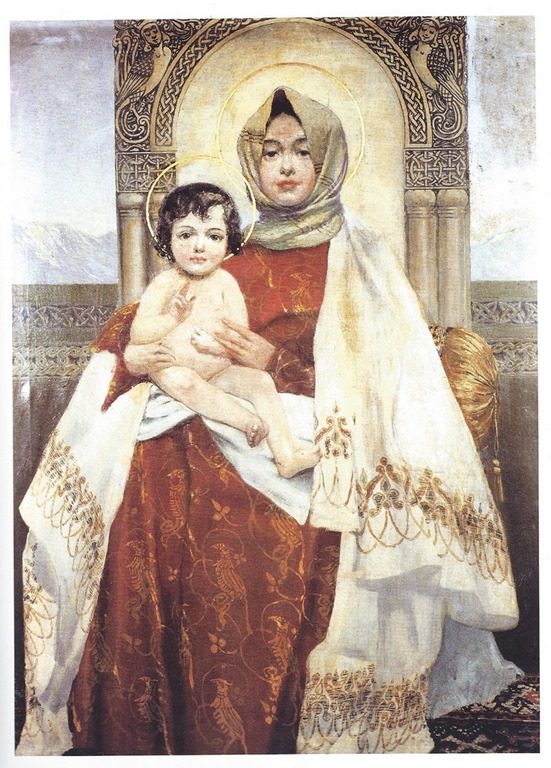
A multifaceted artist and intellectual, Vardges Sureniants is considered the founder of Armenian historical painting. He was born in Akhaltskha (Akhaltsikhe), in modern-day Georgia, on February 27, 1860. His father Hakop was a priest who taught religious history. After their family moved to Simferopol, in Crimea, in 1868, his father was appointed to the Armenian diocese in Moscow. This gave young Sureniants an opportunity to study at the prestigious Lazarian School from 1870-1875.


From early on, the future artist showed his interest and aptitude for the arts. He furthered his education at the department of Architecture of the Moscow Art School (1875-1878). He went to Munich (Germany), and after a year at the department of Architecture of the Academy of Fine Arts (1879), he made a crucial shift and studied at the department of Painting for the next five years until 1885.


Sureniants became interested in caricatures and sketches during his years at the Lazarian School. In Munich, some of his caricatures were published in the Fliegende Blätter magazine.


The painter traveled to Italy in 1881 and visited Venice, including the island of San Lazzaro. In the library of the Mekhitarist Congregation he studied Armenian fine arts and manuscripts. In 1883 he published his first article, about Armenian architecture, in the daily Meghu Hayastani of Tiflis.


After his return to Russia, in 1885–87 he traveled to Persia as a member of the scientific expedition led by Valentin Zhukovski, a professor of Oriental Studies at the University of Saint Petersburg. They visited the cities of Tabriz, Tehran, and Shiraz, and Sureniants spent several months in Ispahan. Afterwards, he translated William Shakespeare’s play Richard III and sent it to the celebrated Shakespearean actor Bedros Atamian (1849-1891), in Constantinople, to have it produced there. He would later translate Midsummer’s Night Dream and some of Shakespeare’s sonnets. He taught painting and general art history at the Gevorgian Seminary of Holy Echmiadzin in 1890-1891.


After 1892 Sureniants participated actively in the artistic, theatrical, and social life of Moscow, Saint-Petersburg, Tiflis, and Baku. He visited Ani and Lake Sevan, and became familiar with historical monuments and everyday customs of Armenian rural life. He also studied the Armenian illustrated manuscripts in the repository of the monastery of Holy Echmiadzin. He traveled to France and Spain in 1897-1898.


He has been categorized as a realist painter in his representations of landscapes and historical events, and played an important role in the revival of the Armenian past through art. His paintings would reflect the aesthetic knowledge acquired during his studies and his travels. In 1901 he held a solo exhibition of his works in Baku, which would be his only exhibition in his lifetime. Afterwards, he moved to St. Petersburg, where he worked as a stage decorator until 1915.


Sureniants was also known for his illustrations of famous literary works, such as Ferdowsi’s Shahname, Alexander Pushkin’s The Fountain of Bakhchisaray, Oscar Wilde’s fairy tales, and works by Belgian poet Georges Rodenbach and Armenian poets Smbat Shahaziz and Alexander Tzaturian.


His famous painting “Salome” was included in the exhibition dedicated to the 100th anniversary of the Academy of Fine Arts of Munich (1912). In 1915 he returned to the Caucasus, and in 1916 he founded the Armenian Artists’ Society, together with Yeghishe Tateosian, Martiros Sarian, and Panos Terlemezian. He also made many paintings of survivors of the Armenian Genocide.

In 1917 Sureniants moved to Yalta, in Crimea, where he was commissioned to draw the decorations for the newly built Armenian cathedral. He decorated the altar, walls, and dome of the church. However, he suffered a grave illness during his task. He passed away on April 6, 1921, and was buried in the courtyard of the cathedral he had contributed to decorate

 Vartges Surenyan 3Vartges Surenyan

Read Full Post »

THIS WEEK IN ARMENIAN HISTORY
(Prepared by the Armenian National Education Committee)


Birth of Ervand Kogbetliantz
(February 21, 1888)

Ervand_Koghbetlyanc

His is not a household name, but Ervand Kogbetliantz was an accomplished mathematician and inventor who lived and taught in the United States from the 1940s-1960s.


Ervand George Kogbetliantz was born on February 21, 1888, in the old Armenian community of Nor Nakhichevan (Novo Nakhichevan), in the Northern Caucasus, now part of Rostov-on-the-Don (Russia). We do not know anything about his early years, but it appears that love for mathematics came to him naturally. He studied mathematics at the University of Paris (1907) and graduated from the School of Mathematics at Moscow University (1912), where he taught from 1912-1918. In 1918 he invented one of the oldest forms of three-dimensional chess. He returned to the Northern Caucasus, and taught at the Polytechnic Institute of Ekaterinodar (nowadays Krasnodar) from 1918-1920.


It appears that the newly-opened University of Yerevan, in the fledgling Republic of Armenia, attracted him, and he taught there for a few months. A couple of weeks after Armenia became a Soviet republic, on December 17, 1920, Commissar of Education Ashot Hovhannisian issued a decree about the restructuring of the university, and established an advisory committee presided by Kogbetliantz, which was entrusted with the task.


In 1921 Kogbetliantz left Armenia for France. He obtained a doctorate in mathematics from the University of Paris in 1923. He taught at the Russian High School of Paris in the 1920s and was president of the Union of Geophysicists from 1927-1933.


Kogbetliantz received an invitation from Reza Shah to organize the chairs of mathematics and celestial mechanics at the University of Tehran in 1933, which he also directed until 1938. His efforts were rewarded with the Elmi Order, the highest of Iran.


In 1939 he returned to Paris as a researcher for the National Center of Scientific Research and kept that position until 1942. As many other scholars, he left occupied France and crossed the Atlantic. He taught mathematics at Lehigh University (1942-1944) and then at the New School of Social Research (1944-1954) and Columbia University (1946-1953). Meanwhile, he was a consultant for Standard Oil (1945-1946) and then for IBM (1953-1964). He became a member of the Rockefeller Institute in 1956.


His mathematical work was mainly on integral equations, the theory of orthogonal polynomials, numerical analysis, gravity and magnetic theories, etcetera. He formulated an algorithm for singular value decomposition which bears his name. He authored close to one hundred scholarly articles and books, some of them in translation (Fundamentals of Mathematics from an Advanced Viewpoint, 4 volumes, 1968; Handbook of First Complex Prime Numbers, 1971, with Alice Krikorian). He also invented precision devices to measure Earth magnetism, and various analogical and gyroscopic devices. Kogbetliantz was one of the co-creators of the IBM 7030, also known as Stretch, the first transistorized supercomputer created by IBM, which was on sale from 1961-1964.


In 1952 Kogbetliantz’s three-dimensional chess received much media attention, and was described in several articles in Time, Newsweek, New Yorker, and Life, including pictures of his chess set. At his death, he was working with world champion Bobby Fischer on a game of chess for three people.

He retired in 1964 and moved back to Paris, where he passed away on November 5, 1974.


Read Full Post »


THIS WEEK IN ARMENIAN HISTORY
(Prepared by the Armenian National Education Committee)


Death of Rafael Ishkhanyan
(February 6, 1995)

 Ishkhanyan

Rafael Ishkhanyan was a prominent expert of Armenian language and book history, and also an engaged intellectual in Soviet times and the first years of the second independence.


He was born on March 9, 1922, in Yerevan. His parents, Avetis Kirakosian and Haykanush Ishkhanyan, who had become Bolshevik revolutionaries in 1919, then divorced. Rafael lost his mother at the age of eight, and grew up with his maternal uncle and grandmother, adopting their last name. In 1937 he lost his father, who was shot during the Stalin purges. (He would later marry Burakn Cheraz-Andreasyan, whose parents, Vahan Cheraz, a founder of the Armenian scout movement, and Vartanush were also shot by the Soviet regime in 1928 and 1937.)


In 1939 Rafael Ishkhanyan entered the Faculty of Philology in Yerevan State University. However, he interrupted his studies in 1940 when he was drafted by the Soviet army. He was wounded in World War II, fell prisoner to the German army, and after being released, he returned to the battle front. After the end of the war, he was discharged and returned to his studies. After finishing university in 1949, he left for Moscow, where he also graduated from the Institute of Library Studies in 1954.


From 1955-1963, Ishkhanyan worked in the field of library studies. He entered the Public (now National) Library where he worked as a senior librarian, head of subdivision, and head of division, and also worked at the Matenadaran as director of the scientific library. He also taught at the distance course of the Pedagogical Institute of Armenia. In 1962 he defended his first Ph.D. dissertation about Axel Bakunts (1899-1937), one of the prominent writers killed during the purges. The following year, he entered his alma mater, where he would spend the next thirty years (1963-1992) teaching at the chairs of Armenian language and history of the Armenian language. His main subjects were Armenian contemporary language, dialectology, and history of the language of Armenian literature. He would defend his second Ph.D., “History of the language of modern Armenian literature,” in 1973, and earn the title of professor in 1978. In the late 1970s, Ishkhanyan published some of his major works, Bakunts’ Life and Art (1974), History of the Armenian book (vol. 1) (1977), History of the language of Eastern Armenian poetry (1978), and The New Literary Armenian in the Seventeenth-Eighteenth Centuries (1979).


From the 1960s, two controversial subjects attracted Ishkhanyan’s attention, who published his views whenever possible: the origin of the Armenian people, which he considered autochthonous to the Armenian Plateau, and the restoration of traditional orthography (in replacement of the “reformed” orthography imposed in 1922 and 1940). He would ardently defend his views until the end of his life. Not by chance, his first books published on the subject appeared in the Diaspora, because the views expressed did not make it possible to publish in Soviet Armenia: Our Fundamental Orthographic Question (1983) and The Origin and Earliest History of the Armenians (1984).


When the Karabagh movement started in 1988, Ishkhanyan was also at the forefront of the national issues that were attached to the claims for Karabagh, and particularly the status of the Armenian language in Armenia. He also wrote extensively about political issues, including Armenian-Turkish relations (The Law of Excluding the Third Force, 1991). He became the editor of “Lousavorich,” a newspaper entirely published in traditional orthography. Two books on his views on Armenian origins were finally published in 1988 (Questions on the Origin and Earliest History of the Armenian People) and 1989 (Armenian Native Words and Earliest Loanwords). In the 1980s he had serialized a history of the Armenian people for children and teenagers, Armenian Illustrated History, of which the first volume appeared in 1990 (two more volumes would be posthumously published in 1997 and 2004). He published a total of forty books in his life and countless articles.


In 1991 Ishkhanian was elected a deputy to the Supreme Council (the forerunner to the National Assembly) of Armenia and designated director of the National Library of Armenia. He passed away on February 6, 1995, in Yerevan. The school No. 153 of the Armenian capital now bears his name.


Read Full Post »

THIS WEEK IN ARMENIAN HISTORY
(Prepared by the Armenian National Education Committee)


Death of Zabelle Boyajian
(January 26, 1957)


 ZabelleBoyajian

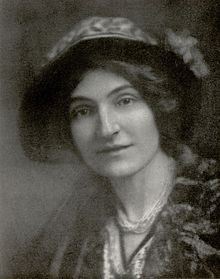
Alice Stone Blackwell in the United States and Zabelle Boyajian in England played a central role in the promotion in Armenian literature at the turn of the twentieth century.

Boyajian was born in 1873 in Diarbekir. Her father Thomas was a former Evangelical pastor who had become the British vice-consul in the city. After the death of his first wife, he had remarried to Catherine Rogers, an Englishwoman who was a descendant of poet Samuel Rogers (1763-1855). Her parents homeschooled her and taught her history, geography, and several languages (Armenian, English, French, Turkish, German, and Russian). They also instilled in her the love for Armenian and English literature.


During the Hamidian massacres of 1895, Thomas Boyajian was killed by the Turkish mob in Kharpert, where he was spending the summer with his family. His wife, together with their children Zabelle and Henry, relocated to London. Zabelle would spend the rest of her life in the British capital. She enrolled at the Slade School of Fine Art in University Central London (UCL). In 1901 she published her first work of fiction, the novel Yestere: The Romance of a Life, under the pen name Varteni, to avoid endangering the life of her relatives still living in Constantinople. It was based on the events following the massacres of Sasoun in 1894. The novel was very successful and it was immediately published in German. An Armenian translation remained unpublished, however.


Zabelle would actively devote herself to writing and painting. She wrote important essays on figures of world literature like William Shakespeare, Lord Byron, and Euripides, but also published essays and many translations of Armenian literature.


She was close to Anna Raffi, widow of the famous Armenian novelist, and her sons Aram (1876-1919) and Arshak. In 1916 she compiled and translated the anthology Armenian Legends and Poems, which had an introduction by Viscount James Bryce and an essay on Armenian literature by Aram Raffi. The anthology was illustrated by her works inspired by Armenian legends.


In the same year, she participated in one of the many commemorative festivals taking place on April 23, 1916, on the occasion of the 300 th anniversary of Shakespeare’s death. She recited her personal ode to the Bard, entitled “Armenia’s Love to Shakespeare.” Her poetic tribute was selected, along with 165 others, to be published in A Book of Homage to Shakespeare.


As a painter, Boyajian had individual exhibitions in London in 1910 and 1912, in Germany in 1920, in Egypt in 1928, in France, in Italy, and in Belgium between 1940 and 1950. In 1921 a revised edition of the Armenian translation of Hamlet, by Hovhannes Masehian, was printed in Vienna, illustrated by her.


She published her most important work, Gilgamesh: A Dream of the Eternal Quest, a dramatic rendering in poetic form of the tale of the mythical Sumerian hero Gilgamesh, in 1924. She traveled widely and in 1938 published her travel notes and illustrations of Greece, In Greece with Pen and Palette . This was followed by a play, Etchmiadzin, in 1943, which was performed in New York in 1946. Two years later, she published her translation of Avetik Isahakian’s epic poem Abu Lala Mahari.


Zabel Boyajian passed away on January 26, 1957. Her Armenian Legends and Poems, which had been out of print since its first publication, was reprinted in 1958 in London and New York.


Read Full Post »

THIS WEEK IN ARMENIAN HISTORY
(Prepared by the Armenian National Education Committee)

[ANEC]


Birth of Lord Byron
(January 22, 1788)

Byron's visit to San Lazzaro by Ivan Aivazovsky

Byron’s visit to San Lazzaro by Ivan Aivazovsky


For two centuries, Lord Byron’s Armenian connection has become the stuff of legend, and the fact that one of the greatest British poets took an interest in the Armenian culture to the point of learning the language has been widely discussed.


George Gordon Byron was born on January 22, 1788 in London. He spent his childhood in Aberdeenshire. His father, a womanizer mired in debts, died when he was three years old, and he remained under the care of his mother. After his elementary education in Aberdeen Grammar School and a private school in Dulwich, from 1801-1805 he studied in Harrow School, a boarding school in London. In 1805 he went up to Trinity College, in Cambridge, where he spent three years, engaging in sexual escapades, boxing, horse riding, and gambling.


Byron had written poetry since his teenage years, and after he recalled and burned a book called Fugitive Pieces, he published his actual first book, Hours of Idleness, in 1807. It was savagely reviewed in Edinburgh, and Byron responded in 1809 with his first major satire, English Bards and Scotch Reviewers.


As it was customary for young noblemen, Byron undertook a grand tour of Europe from 1809-1811. He avoided most of continental Europe due to the Napoleonic wars, and instead he traveled through the Mediterranean. He went over Portugal, Spain, Albania, and Greece, and he reached the Ottoman Empire, visiting Smyrna and Constantinople. He returned to England from Malta in July 1811.


The next year, Byron became a celebrity with the publication of the first two cantos of his poem Childe Harold’s Pilgrimage, which established him as a leading romantic poet. His last period in England included the production of many works. However, his rising star was darkened by scandal. Various love affairs, including rumors of an incestuous relationship with his half-sister Augusta Leigh, and the pressure of debt led him to seek marriage with Annabella Millbanke in 1815. They had a daughter in the same year, but the marriage did not end Byron’s escapades, but ended in disaster. His wife left him in January 1816 and divorced him. Rumors and debts did not end, and Byron left England three months later for good.


After a few months in Switzerland, Byron wintered in Venice, where he resumed his love adventures with two married women. It was natural, then, that he visited for the first time the monastery of San Lazzaro in November 1816. However, he was not just a random visitor of the Mekharist Congregation. He made his goal to get acquainted with Armenian culture and, more importantly, to study the Armenian language with Rev. Harutiun Avkerian (Pascal Aucher). In a letter of December 1816 to his publisher Thomas Moore, he wrote: “By way of divertisement, I am studying daily, at an Armenian monastery, the Armenian language. I found that my mind wanted something craggy to break upon; and this — as the most difficult thing I could discover here for an amusement — I have chosen, to torture me into attention. It is a rich language, however, and would amply repay any one the trouble of learning it. I try, and shall go on; — but I answer for nothing, least of all for my intentions or my success.”


He collaborated with his teacher in two books: Grammar English and Armenian (1817), an English textbook for Armenians, and A Grammar Armenian and English (1819), a grammar of Classical Armenian for the use of English speakers. Byron also translated from Armenian the Epistle of Paul to the Corinthians, two chapters of Movses Khorenatsi’s History of Armenia, and section of Nerses Lambronatsi’s Orations. The poet’s lyricism would become an inspiration for many Armenian poets of the nineteenth and early twentieth century.


In Venice, Byron also wrote the fourth canto of Childe Harold, and around the same time, he published other poems. He wrote the first five cantos of Don Juan between 1818 and 1820, and continued his work in Ravenna from 1819-1821. He fell in love with eighteen-year-old Countess Teresa Guiccioli, a married aristocrat who abandoned her husband and followed him to Ravenna, Pisa, and Genoa. Living in this city, in July 1823 accepted an offer from representatives of the Greek independence movement and left Genoa for Greece. He first settled in the Ionian Islands and then traveled to the mainland in January 1824.

Byron settled in Missolonghi, in southern Greece, and was entangled in the internal fights of different Greek factions. However, his presence in Greece would draw the increasing active participation of European nations. He sold his estate in Scotland to help raise money for the revolution. When planning an attack on Lepanto, at the mouth of the Gulf of Corinth, Byron fell ill in February 1824. He made a partial recovery, but caught a strong cold in April, and then developed a violent fever, which caused his death in Missolonghi on April 19, 1824. His remains were sent to England for burial in Westminster Abbey, but this was rejected for reason of “questionable morality.” He is buried at the Church of St. Mary Magdalene in Hucknall, Nottinghamshire.


A statue remembers Byron in Athens, and April 19, the anniversary of his death, is honored in Greece as “Byron Day.” A street also bears his name in Yerevan.


Read Full Post »

THIS WEEK IN ARMENIAN HISTORY
(Prepared by the Armenian National Education Committee)

[ANEC]


Henri_Verneuil

Death of Henri Verneuil
(January 11, 2002)

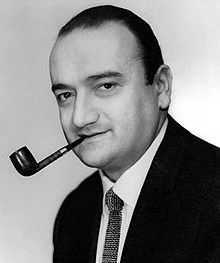
Prolific filmmaker Henri Verneuil was one of the well-known names in French cinema for forty years, and closed his cinematographic career with two autobiographic films that narrated the Armenian experience.


He was born Ashod Malakian on October 15, 1920, in Rodosto, Turkey. The Malakians emigrated from their hometown in 1924 as a result of Turkish anti-Armenian persecution in the years after the genocide and settled in Marseilles (France).


Young Ashod graduated from the French lyceum in Aix-en-Haute and entered the École Nationale d’Arts et Metiers in Aix-en-Provence (1942). Upon graduation in 1944, he put aside his technical diploma and started working as a journalist. In 1945 he wrote an article about the Armenian genocide and the editor suggested he adopt a French name to make it look more objective. Thus, Henri Verneuil was born.


In the postwar, Verneuil entered the world of cinema. He directed his first short film in 1946 and moved to Paris in 1949, where he became an assistant director. In 1951 he directed his first feature, the black comedy The Hunting Ground. His second film, the drama Forbidden Fruit (1952), won him international acclaim. Both films featured the great French comic actor Fernandel in the main role. The same actor played the six main roles (a father and his five sons) in The Sheep Has Five Legs (1954), which earned the first prize at the Locarno International Film Festival and an Oscar nomination for best script to Verneuil in 1955. Verneuil’s biggest hit, before the New Wave of the 1960s, was The Cow and I (1959), once again with Fernandel.


Later he also directed other movie stars including Jean Gabin, Alain Delon, Lino Ventura, Jean Paul Belmondo, Yves Montand, and Michele Morgan. In the 1970s he directed a few films in English with Anthony Quinn, Yul Brynner, and Henry Fonda. His last commercial film was in 1984.


Afterwards, the veteran filmmaker would focus on his Armenian heritage. In 1985 he published an autobiographical work, Mayrig, which recounted his childhood and the Armenian experience in Marseilles. It would become the basis for his two last films, Mayrig (1991) and 588, rue Paradis (1992), featuring Omar Sharif and Claudia Cardinale. In 1988 he had directed the video clip of “Pour toi, Arménie” (For You, Armenia), the song composed by Charles Aznavour to the benefit of the victims of the 1988 earthquake in Armenia.


In 1996 Verneuil, who had earned the French Legion of Honor in 1955, was awarded an honorary César, France’s equivalent of the Oscar, for lifetime achievement in film. He was elected a member of the Academy of Fine Arts in 2000. He died in Bagnolet, a suburb of Paris, on January 11, 2002. Two of his children, Patrick Malakian (a TV director) and Gaya Verneuil (an actress), followed in his steps. Several streets and squares in France and Armenia bear his name.


Read Full Post »


THIS WEEK IN ARMENIAN HISTORY
(Prepared by the Armenian National Education Committee)

[ANEC]


Stepan Lisitsian

September 22, 1865-January 4, 1947

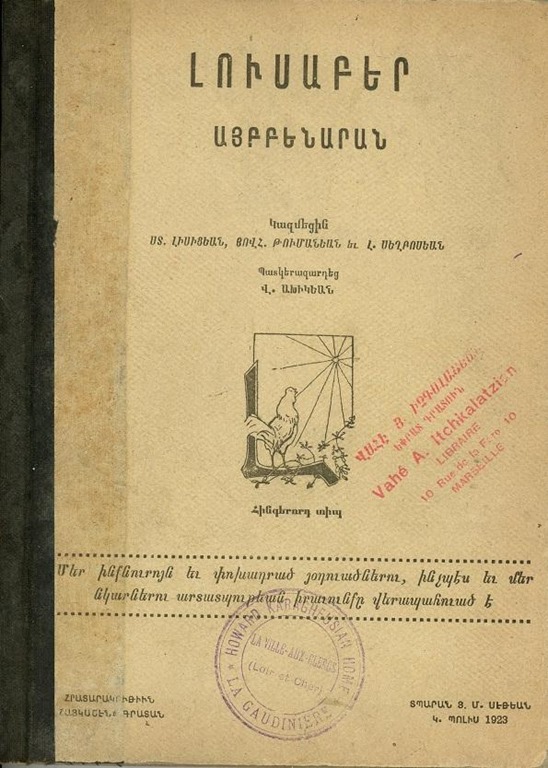
Stepan Lisitsian Cover of an edition of Lusaber _1923_

Stepan Lisitsian was a pioneering name in several fields at the turn of the twentieth century. He is particularly remembered for his work as an educator and ethnographer.


He was born on September 22, 1865, in Tiflis, in a doctor’s family. After graduating from the Russian gymnasium (high school) in 1884 with highest grades, he entered the school of History and Philology of Odessa University (Crimea) the following year. After a year, he moved to the University of Warsaw and graduated in 1889. From 1889-1891 he taught Russian literature at the Gevorgian Lyceum of Holy Etchmiadzin, but he was fired by an order from Catholicos Makar I for leading student agitations against the administration.


Lisitsian moved back to Tiflis. He contributed to the journal Taraz, and was its de facto editor in 1892-1893, when editor in chief Tigran Nazarian was abroad. In 1894 he was hired as teacher at the Nersessian School, where he taught Armenian history, general history, and Russian geography at different times until 1915.


Meanwhile, in 1904 his request to the authorities to publish a magazine for children was refused due to his questionable background. In the end, a year later Hasker appeared, formally under the editorship of Lisitsian’s wife Ekaterina. The magazine gathered the best Armenian writers, illustrators, and scientists, including names like Hovhannes Toumanian, Avetik Isahakian, or Atabek Khenkoyan, and actually the first true magazine for children in the Armenian press. Stepan Lisitsian became the editor in 1913 and continued the magazine until 1917 (it had a short revival in 1922).


Lisitsian worked in the pedagogical field for almost 60 years. Besides the publication of Hasker, he wrote textbooks, curricula, and specialized studies. The textbook Lusabats (“Daybreak”), which he authored with Toumanian and Levon Shant, was particularly popular. He also traveled to Russia, Switzerland, France, and Germany to study new teaching methods. In 1911 he turned his wife’s elementary school into a middle school and then a high school, of which he became its principal in 1924, when the school was dissolved. He moved to Yerevan in 1924 and became a university professor, and from 1938 he also taught at the Pedagogical Institute.


Lisitsian, who knew several Western languages, was also an accomplished and prolific translator, literary scholar, and polemicist. Among his many works, he translated Henrik Sienkiewicz famous novel Quo Vadis? from the Polish original. He is also particularly remembered for his extensive work in the field of ethnography, especially since the 1920s, and geography. He gathered much material during fieldwork and wrote pioneering studies on different ethnographic areas of Armenia. In 1928 he became the head of the section of Ethnography in the State Museum of History. He wrote an important textbook on physical geography of Armenia in 1940 and was the author of an “ethnographic questionnaire,” published in 1946, that became a guide for scholars in the field for many decades. In 1945 he was honored with the title of Emeritus Worker of Science of Soviet Armenia and decorated with the Order of the Red Banner of Labor.

Lisitsian passed away on January 4, 1947. A school in Yerevan carries his name, as well as the ethnographic section of the Museum of History of Armenia.


Read Full Post »

THIS WEEK IN ARMENIAN HISTORY
(Prepared by the Armenian National Education Committee)

[ANEC]


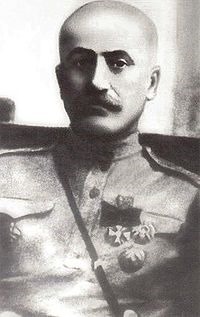
TanielBek-Tirumian

Birth of Taniel Bek-Pirumian
(November 22, 1861)


The decisive battles that led to the creation of the Republic of Armenia in 1918 had several professional officers among their leaders.


Taniel Bek-Pirumian came from a region that gave many military leaders throughout history: Artsakh (Gharabagh). He was born on November 21, 1861, in the village of Nakhichevanik, in the district of Khachen. He graduated from the city lyceum of Shushi, then capital of Artsakh, and started his military service at the age of twenty. He studied at the infantry lyceum of Tiflis from 1881-1883. Three decades later, in 1913, he graduated from the courses of the school of artillery of Oranienbaum (nowadays Lomonosov, in the region of St. Petersburg, Russia).


Meanwhile, he ascended in the ranks of the Russian army: sergeant in 1883, lieutenant in 1888, captain in 1890, and deputy colonel in 1913. He held positions as commander of squad, platoon, and battalion.

Pirumian fought at the Caucasian front in the Russian army during World War I. He was ascended to the rank of colonel in 1915 and decorated with several medals for his bravery. Like many of his colleagues, Pirumian remained in the region after the evacuation of Russian troops following the October Revolution of 1917, helping organize the nascent Armenian army.


In the decisive days of May 1918, Taniel Bek-Pirumian was entrusted with the general command of the front of Sardarabad, which was dangerously close to Etchmiadzin. On May 21, the Ottoman forces occupied the village and the railway station of Sardarabad, and advanced towards Ghamishlu. The next day, the battalion of the “Condemned to Death” (մահապարտների գունդ) of Gharabagh, headed by Poghos Bek-Pirumian (first cousin to Taniel), counterattacked and chased away the Ottoman troops up to Sardarabad, which was liberated in the late afternoon. The Ottomans fortified themselves in the surrounding heights and led a counteroffensive on May 24-26. The three-day battle was fiercely contested and ended in an Armenian victory. In those delicate moments, Taniel Bek-Pirumian’s military experience and his iron will played a fundamental role. He entered the fraught of the battle, leaving the command to Lieutenant Alexandre Chnéour, a Russian officer in the Armenian army. Personally heading a column of soldiers, he disrupted and repelled the Turkish advance in the central area of the battlefront.


Bek-Pirumian continued his career in the Republic of Armenia and was ascended to the rank of major-general in late 1919. He was appointed military commander of Kars. However, he broke his leg in a car accident, and was taken prisoner by the Turks in October 1920 after the fall of Kars. In January 1921 he was transported to Alexandropol and delivered to the representatives of the 11th Red Army.


The Bolshevik terror was rampant in newly sovietized Armenia. In 1921, soon after being liberated from Turkish prison, Bek-Pirumian and other high-ranking Armenian officers were shot on the road of Gharakilise (nowadays Vanadzor) to Dilijan. The corpse of the unfortunate general was secretly moved to Etchmiadzin and buried in the cemetery of the church of St. Gayane. Another hero of Sardarabad, his cousin Poghos Bek-Pirumian, overwhelmed by the Bolshevik terror, took his own life.


Read Full Post »

« Newer Posts - Older Posts »