Archive for the ‘News’ Category

By: Khatchig Mouradian

Sourp Giragos Opens to the Faithful

http://www.armenianweekly.com/2011/10/25/mouradian-armenians-locals-in-diyarbakir-send-powerful-message/

DIYARBAKIR, Turkey (A.W.)—Armenians from around the world flocked to Surp Giragos Church in Diyarbakir [Dikranakerd] on Oct. 22 to attend both the consecration of the largest Armenian church in the Middle East and the Badarak held the following day.

They were greeted with welcome signs written in Armenian, and with Armenian music playing on the streets, cafes, and hotels in the city.

Renovated by the Surp Giragos Armenian Foundation, with the support of the local Kurdish-controlled municipality, the church, which had witnessed a century of destruction, neglect, and denial, now stood as defiant as ever to the forces suppressing freedom in Turkey. And as the faithful of different religions prayed in unison, the political message wasn’t lost on anyone.

Diyarbakir Mayor Osman Baydemir underlined the importance of confronting the past and seeking justice as part of the process of reconciliation and democratization. In an interview with the Weekly, the Kurdish politician said many view the renovation as an act asking for forgiveness. “You are not our guests. We are your guests,” stressed Baydemir, who heads the Diyarbakir Metropolitan Municipality.

“It’s a bittersweet return for the Armenian nation,” Raffi Hovannisian, the chairman of Armenia’s Heritage Party, told  the Weekly. “Here, in this courtyard, you see the great potential and the depth of the loss we as a nation have registered.”

Scott Avedisian, the mayor of Warwick, R.I., who was invited by the Diyarbakir Municipality to attend the opening, concurred. “The faces of people who once worshipped here, were forced out, survived, and have now returned to their church, attest to the fact that they never lost hope and never lost faith,” he said. The renovation constitutes a “powerful message,” he added, as the church is finally “being used for the very purpose it was originally intended.”

Osman Kavala, the president of “Anadolu Kultur,” [Anatolian Culture] an organization that promotes the art and culture of the region, said that “both the state and metropolitan municipalities provided full support for this project.”

“They are open to confronting the past and the responsibilities of the local population,” he said, and expressed his hope that one day the initiatives in Diyarbakir “will have an impact beyond the city, on the national policy.”

“Our grandparents, incited by others, committed wrongs,” Abdullah Demirbas, the mayor of the Sur Municipality in Diyarbakir, told the Weekly in an exclusive interview after the Badarak in Surp Giragos. “But we, their grandchildren, will not repeat them. Not only that, but we will also not allow others to repeat them.”

The challenge in Turkey, he added, is not only to renovate churches, but to renovate mentalities.

The Armenian Weekly will continue to publish in-depth coverage and interviews from Diyarbakir and Mush throughout the week.

Posted from the Armenian Weekly http://www.armenianweekly.com/2011/10/25/mouradian-armenians-locals-in-diyarbakir-send-powerful-message/

Read Full Post »

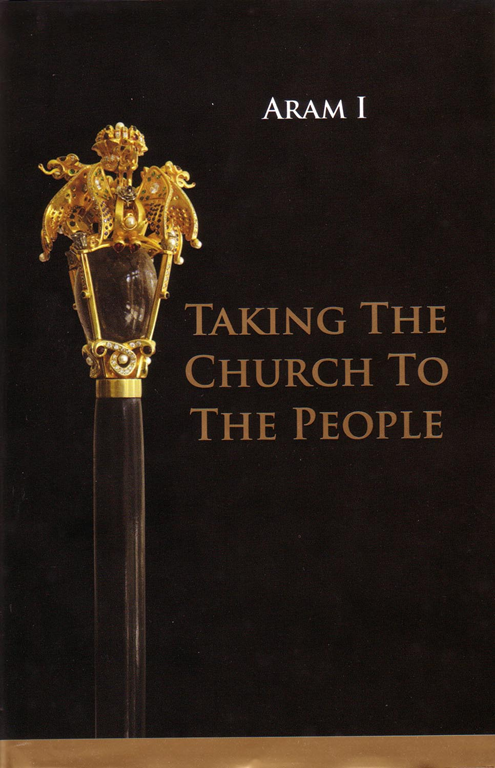
"TAKING THE CHURCH TO THE PEOPLE":
THE TITLE OF THE LATEST BOOK OF HIS HOLINESS ARAM I

      This timely book has been published through the generous contribution of the Calouste Gulbenimagekian Foundation. The book prepares the ground for the forthcoming pastoral visit of His Holiness Aram I to the United States of America. The concerns the Catholicos highlights apply both to Armenia and the Diaspora. In his introduction His Holiness Aram I writes, "I chose this title because the Church is the people."
The book consists of three parts. In the first part, Catholicos Aram I describes the nature of the church, its mission and its institutional expressions, including the parish, the dioceses and the wider Armenian community in Armenia and the diaspora. While describing the organization of each, he proposes ways in which they should be renewed.

       In the second part the Catholicos identifies the core issues that the Armenian Church is currently facing. He starts with the Bible as the foundation of Christian faith and its interpretation; he then discusses the family, the school and Christian education. At the end of this section, His Holiness Aram I explains the meaning of the term ’people of God’ and explains why Armenian women, youth and children, who have been marginalized in the Church and all community organizations, should participate in building their communities.
In the final part of the book, the Catholicos includes certain pastoral letters and messages that he has previously addressed to youth in order to prompt a meaningful dialogue with them.

      The book is a basic reader for all Armenians who want to learn about the Armenian Church and its faith, mission and organization. It is an invitation to the people in Armenia and the Diaspora to equip themselves with the legacy of the past and build Armenian communities responsive to the challenges of globalization. Finally, it is a guide to Being the Church as the people of God both in Armenia and Diaspora.

Read Full Post »

By David Luhrssen

We don’t often hear Armenian spoken in a film shown at Milwaukee theaters, or see the crowded streets of Yerevan or the Caucasus Mountains looming over the grassy uplands of Karabakh. But Armenia is the unusual setting for Here, a thoughtful film by U.S. director Braden King, starring Ben Foster as Will, a young American sent to Artsakh to make a detailed map of the countryside, and Lubna Azabal as Gadarine, the local photographer who becomes his guide and love interest.

A quiet film, introducing its characters and situations slowly, Here shows the enduring hospitality of the Armenian people along with the divisions between rich and poor and the disapproval sometimes faced by independent-minded women such as Gadarine. To her father and brother (but not her mother!), she’s the prodigal daughter. The rocky landscape is studded with the khumpets of the holy sites and the soundtrack includes the lively rhythms of contemporary Armenian pop music as well as the timeless melodies of the Badarak.

Co-sponsored by Armenian Fest, Here will be shown three times at the Milwaukee Film Festival: 9:30 p.m., Sept. 23 at the Oriental Theatre; 4:15 p.m., Sept. 24 at the Northshore Theatre; and 7:15 p.m., Sept. 26 at the Ridge Cinema.

Read Full Post »

By David Luhrssen

Justin Aprahamian, chef de cuisine at Sanford Restaurant (1547 N. Jackson St.), achieved national recognition this spring as a finalist for Best Chef: Midwest and semi-finalist for Rising Star of the Year at the James Beard Awards—fine dining’s answer to the Oscars. Aprahamian started in his uncle’s catering business at age 12 and grew up with stories about the importance of food in his Armenian heritage. “A big part was the power it had to bring people together,” he says. For the month of September, Aprahamian has prepared an Armenian menu, offered Monday through Friday at Sanford for $49. The courses include grilled eggplant stuffed with mint, raisins and pinenuts; sorrel and lentil soup with cherry tomatoes, tarragon and candied garlic; braised chuck and grilled tongue of beef with bell peppers and toasted bulgur; and semolina walnut cake with preserved cherries and walnut ice cream. According to Aprahamian, putting a gourmet spin on family recipes passed down through the generations was simple. “It’s very soulful,” he says of the dishes. “It’s easy for me to relate to and pass that joy on to our guests.”

Read Full Post »

By Matti Friedman
Associated Press
Published: Friday, May 13, 2011

JERUSALEM — One of the four quarters of old Jerusalem belongs to the Armenians, keepers of an ancient monastery and library, heirs to a tragic history and to a stubborn 1,600-year presence that some fear is now in doubt.

Buffeted by Mideast forces more powerful than themselves and drawn by better lives elsewhere, this historic Jerusalem community has seen its numbers quietly drop below 1,000 people. The Armenians, led by an ailing 94-year-old patriarch, find themselves caught between Jews and Muslims in a Middle East emptying of Christians, and between a deep sense of belonging in Jerusalem and a realization that their future might lie elsewhere.

"Very few will remain here if it goes on like this," said Kevork Kahvedjian, a Jerusalem storeowner.

Kahvedjian sells vintage black-and-white photos of the Holy Land from a store founded in 1949 by his father, who arrived in Jerusalem as a child after mass killings of Armenians under Ottoman rule during World War I claimed his own parents. Today, Kahvedjian said, he has siblings in Canada and the U.S., a son in Washington, D.C., and a daughter who plans to move away soon.

The insular world of the Jerusalem Armenians is reached through a modest iron door set in a stone wall.

The door, locked every night at 10:30, leads into a monastery compound that is home to a contingent of cloaked clergymen and also to several hundred Armenian laypeople: grandparents, parents and children, living in a warrens of small apartments alongside their priests in a self-contained outpost that has existed here, in some form, at least as far back as the fifth century A.D.

Also inside is a library, a health center, two social clubs and a school where each grade now has an average of only six or seven pupils.

"We worry about this, of course. But we haven’t found a solution," said Samuel Aghoyan, 71, one of the community’s senior priests.

On a recent afternoon in the Armenian monastery’s nerve center, the medieval cathedral of St. James, clerics in black cowls chanted under dozens of oil lamps suspended from the vaulted ceiling. Next to a priest waving a censer was an inlaid panel concealing the entrance to a staircase ascending inside the wall to the church’s second floor.

The monastery, led by the patriarch Torkom Manoogian, 94, guards other secrets. It holds the world’s second-largest collection of ancient Armenian manuscripts, 4,000 texts guarded in a chapel opened only once a year. It also owns the Bible of Keran, a gold-covered manuscript named for an Armenian queen and kept in a treasury whose location the priests will not divulge, and the staff of King Hetum, made from a single piece of amber and revealed to the public for a few minutes every January.

The several dozen priests, most of whom are sent to Jerusalem by the church from elsewhere, will remain, as will their edifices and relics. But the community itself, made up of laypeople subject to the pressures and pulls of this world, may not.

Aghoyan arrived at the monastery as a 16-year-old seminarian in 1956 from Syria, where his parents had fled from Turkey. He found the Jerusalem monastery crowded with families, most of them refugees or descendants of refugees who escaped the killings.

Many international historians say up to 1.5 million Armenians were killed by Ottoman Turks around the time of World War I, which they call the first genocide of the 20th century. Turkey disputes this, saying the death toll has been inflated and those killed were victims of civil war and unrest as the Ottoman Empire collapsed.

The resulting refugees swelled the small existing community of Armenian priests and laymen, and by the time Jerusalem was split between Jordan and Israel in 1948 the Armenians numbered more than 25,000, by some counts. They were traders and craftsmen whose distinctive mosaics of painted tiles remain one of the city’s signature design features.

After 1948, with the city divided, the Old City under Jordanian control and economic prospects bleak, most Armenians left, joining thriving exile communities in places like Fresno, Calif., and Toronto.

Perhaps 3,000 remained by the time Israel captured the Old City in 1967.

The Armenians, along with Arab residents of east Jerusalem, were given residency rights in Israel, and some have since applied for full citizenship. But the community has tried to plot a neutral course in a place where that is difficult. Ties with both Israelis and Palestinians have been tense at times.

Israel’s Interior Ministry does not have statistics on the number of Armenians. Community leaders like Aghoyan and Tsolag Momjian, the honorary consul of Armenia, agree there are now fewer than 1,000 in the city.

The slow decline of the Jerusalem Armenians reflects a broader shrinking of the Middle East’s ancient Christian population. For much of the past century, Christians in Lebanon, Iraq, Egypt, the Palestinian territories and elsewhere have been moving to the West, fleeing poverty, religious intolerance and violence like the anti-Christian riot that erupted this week in Cairo, leaving 12 dead and a church burned.

Young Armenians, expected to marry Armenians, are faced with a shortage of potential spouses. Because they are typically well-educated, fluent in English and have family connections abroad, they are equipped to leave.

Those who do join a diaspora that numbers an estimated 11 million people worldwide and supports churches, community centers and at least a dozen international online dating sites with names like Armenians Connect and armenianpassion.com.

"Whoever leaves still dreams about Jerusalem and says they’ll come back. But they won’t," Aghoyan said.

Others are more optimistic. Ruppen Nalbandian, 29, a community youth leader with a master’s degree in neurobiology from an Israeli university, said the outflow has slowed. Of 11 students in his class at school, he said, only two have left. Ten men he knows have found brides in Armenia and brought them back to Jerusalem, he said.

Some in the community point to an unexpected boon in the form of Armenian Christians — possibly more than 10,000 of them, though estimates vary — who arrived in Israel as part of a mass immigration of Soviet Jews in the 1990s and were eligible for citizenship because they had a Jewish parent or spouse. Some have mixed with the established Armenian community.

Not long after the Armenians adopted Christianity in 301 A.D. in their homeland around the biblical Mt. Ararat, on the eastern border of modern-day Turkey, they dispatched priests to Jerusalem.

They have remained ever since, through often devastating conquests by Arab dynasties, Persian armies, mounted Turkish archers, Crusaders, the Ottoman Empire, Englishmen, Jordanians and Jews.

"As we have lived here for 1,600 years, we will continue to live here," Nalbandian said.

Read Full Post »

By David Luhrssen

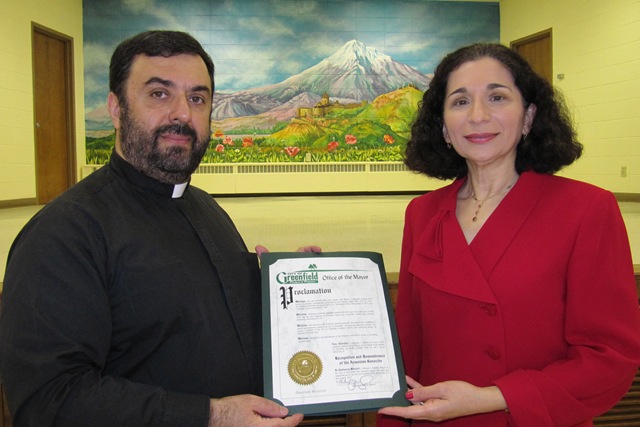
Milwaukee  Armenians gathered at St. John the Baptist Armenian Church in suburban Greenfield for the parish’s annual Martyrs Day commemoration. Greenfield alderwoman Shirley Saryan presented a proclamation from the city’s mayor, Michael J. Neitzche, which acknowledged the longtime presence of Armenians in the community, called memory of the events of 1915 “crucial for preventing new genocides” anSaryanpresentingProclamationd proclaimed a day of remembrance in Greenfield.

The reading of the proclamation was part of a program held on Sunday, May 1, which also included a requiem in honor of the 1.5 million who fell during the Genocide, a traditional madagh dinner in the church’s cultural hall and the screening of a DVD filmed during the 2009 Genocide commemoration at Glendale Community College in California. The film’s keynote speaker, Rev. Fr. Vazken Movsesian, emphatically presented the prevention of genocide in our time as the message for Martyrs Day by placing the Armenian response to 1915 in the context of wider world campaigns for human rights. Movsesian is a well-known activist for the homeless and the needy in California and has taken the lead in involving Armenians in protests against genocide in Darfur.

It’s no coincidence, he reminded listeners, that Martyrs Day Commemoration as we know it began in 1965 alongside the rise of the American civil rights movement under Martin Luther King, Jr. But the resulting renewal of ethnic pride and call for public protests has had only limited effect in the U.S., where several years ago Secretary of State Condoleezza Rice blandly called for more historical study and President Barack Obama has not fulfilled his pledge to call the Genocide by its name.

“We need to look at ourselves as something bigger than a community consumed with Genocide,” Movesian said. “We need to show we are worthy to be called the people of the first genocide.” Movsesian recounted a 2006 visit to Rwanda, where his conversations with survivors of that country’s genocide where virtually identical with the memories of his grandparents. “Every story was an Armenian story—except the color of their skin was different.” He also noted that the Genocide Museum in Rwanda devoted two rooms to 1915 while the so-called Museum of Tolerance in West Hollywood, CA, constructed by a governor of Armenian descent ignores the Armenian Genocide.

A greater involvement by Armenians in contemporary campaigns against oppression could pay political dividends in the form of Genocide recognition, but Movsesian reminded listeners that the greater imperative comes from the gospel message of compassion for the least of our brethren. Only by being true to the deeper meaning of the Armenian Christian heritage will the Armenian cause of Genocide recognition move forward.

Read Full Post »

PALM SUNDAY at St. John’s

April 17, 2011 – Palm Sunday

Divine Liturgy 10:00 A.M.
Opening of the Great Door Service 11:30 A.M.

PALM SUNDAY BRUNCH

At the conclusion of the church services on Palm Sunday, our Sunday School teachers and parents of the students will once again prepare and serve brunch to everyone. We cordially invite everyone to attend.

Կիրակի Ապրիլ 17, 2011 Ծաղկազարդ

Ս. Պատարագ                      Ժամը 10:00-ին
Դռնբացէք                            Ժամը 11:30-ին

Յաւարտ Ծաղկազարդի Ս. Պատարագի ու դռնբացեքի արարողութեանց, Կիրակնօրեայ Վարժարանիս ուսուցչական կազմն ու աշակերտութեանց ծնող-ները այս տարի եւս պիտի սպասարկեն՝ մեր եկեղեցիէն ներս աւանդութիւն դարձած՝ Ծաղկազարդի Նախաճաշ: Սիրով կը հրաւիրենք մեր հաւատացեալ ժողովուրդը սոյն նախաճաշին:

Read Full Post »

By David Luhrssen

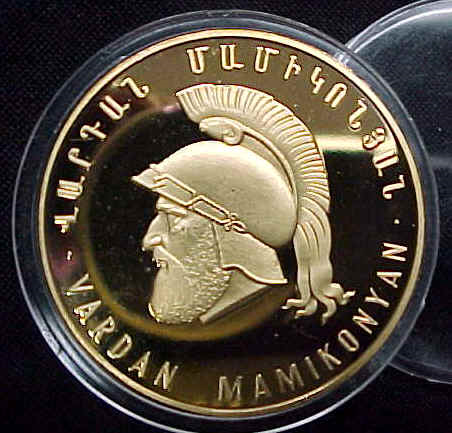
(Milwaukee, WI) Vartanants, commemorating the Armenian defeat by Persia at the Battle of Avarayr (AD 451), is familiar to all Armenians. Less well known than the martyrdom of St. Vartan Mamigonian and his companions in the struggle for religious freedom is the road that led to Avarayr and the decades-long conflict that followed. In a talk at St. John the Baptist Armenian Church of Milwaukee during its Feb. 27 observation of Vartanants, Dr. Levon Saryan provided the battle with its historical context, outlining the events that came before animaged after Avarayr.

A professor of pathology at Medical College of Wisconsin and a member of the Armenian National Academy of Sciences, Saryan has also pursued a scholarly interest in Armenian numismatics and antiquities. He is a member of the Society for Armenian Studies, the Armenian Library and Museum of America, and the Armenian Numismatic Society and other organizations.

“It seems as though the political landscape has not changed in its essential characteristics,” he began, pointing to Armenia’s perennial location at the cusp of larger, more powerful states. In the centuries before Avarayr, Armenia had been a buffer state between Rome and Persia and was later partitioned between the Byzantine and Persian empires. During this time Armenia’s unique Christian culture flourished, encouraged by the introduction of the Mesrobic alphabet and the growth of Armenian translations and original literature. However, it was not entirely a happy period. Saryan described a fourth century Persian invasion that ransacked cities, pillaged the countryside and took tens of thousands of lives as “a holocaust proportionately comparable to the 1915 Genocide.”

Given their country’s precarious status, it might be expected that Armenia’s princes would have accepted the edict by the Persian shah to renounce Christianity in favor of Zoroastrianism. But in St. Vartan’s famous words, “From this faith no one can shake us.” But resistance against the Persian effort to impose fire worship by force was not universal and many traitors collaborated with the enemy. Vartan lost his life at Avarayr but as Saryan explained, his nephew Vahan continued the struggle with a force of only 400 men. Using guerilla tactics, Vahan scored defeats against the Persian occupiers and their collaborators and by 484 forced the shah to sign a treaty. Along with protecting the freedom of the Armenian Church, it guaranteed the right to a just and tolerant government 800 years before English nobles forced their monarch to sign the Magna Carta.

For Saryan, the lesson of Avarayr is that “we should always we wary of disunity when our national interest is at stake. We should not let go of our principles for the sake of temporary expediency.”

Read Full Post »

VAHAN OF KOGHTN

Posted from Crossroads, Eastern Prelacy E-Newsletter

       On Tuesday, January 25, 2011, the Armenian Church remembers Vahan Koghtnatzi. As a young child he and many other children of Armenian nobility were taken to Damascus for education. When they reached adulthood, the Arab overlords granted them permission to return to Armenia. Vahan promised his overlord he would return. Vahan married and established himself over his father’s lands; however the Arab overlords demanded his return. After fleeing from place to place, Vahan surrendered and expressed his desire to remain in Armenia and practice his Christian religion. He was imprisoned and martyred. It is believed that the melody and words of the sharagan (hymn) dedicated to Vahan (Zarmanali e ints) were written by his sister.

Read Full Post »

Wednesday, January 5, 2011
Eve of the Feast of the Nativity and Theophany

Reading from the Prophetic writings and

Divine Liturgy 7:00 PM

Sunday, January 9, 2011
Feast of the Nativity and Theophany of our Lord

Divine Liturgy 10:00 AM
Blessing of Water Service 11:30 AM
Blessing of Home Service & Potluck Luncheon 12:15 PM

At the conclusion of the Church Services, we will have Blessing of Home Service in our Cultural hall followed by traditional Armenian Christmas potluck luncheon.


www.stjohnarmenianchurch.org

Ճրագալոյց ՝
Ծննդեան Տեառն Մերոյ Յիսուսի Քրիստոսի
Երեքշաբթի, 5 Յունուար 2011

Ընթերցում Մարգարէական Թուղթերէ եւ

Ս. Պատարագ Ժամը 19:00–ին

Կիրակի 9 Յունուար, 2011
Ս. Ծնունդ Տեառն Մերոյ Յիսուսի Քրիստոսի

Ս. Պատարագ Ժամը 10:00-ին

Ջրօրհնէք Ժամը 11:30-ին

Տնօրհնէք ու Ճաշ Ժամը 12:15-ին

Ս. Ծննդեան Պատարագի ու Ջրօրհնէքի արարողութեան աւարտին տեղի պիտի ունենայ Տնօրհնէք ու Ծննդեան ճաշ եկեղեցւոյս սրահին մէջ, պատրասուած գաղութիս անդամներու կողմէ:

Սիրով կը հրաւիրենք մեր բարեպաշտ ժողովուրդը միասնաբար տօնելու մեր Տիրոջ Ծնունդն ու Աստուածայայտնութիւնը:

РОЖДЕСТВО ХРИСТОВА
ВОСКРЕСЕНЬЕ, 9 ЯНВАРЯ, 2011Г

Святая Литургия в 10:00
Осевщение Воды в 11:30
Благославление Дома (Церкови) и Рожденственский Обед в 12:15

После Рожденственской Литургии и Осевещение Воды в церковном зале торжеств должно произайти Благославление Дома (Церкови) и Рожденственский Обед, который приготовлен прихожанами нашей церкови.

Дорогие прехожани с любовю приглошаем вас вместе с нами встретить Рождество и Богоявление нашего Спасителя Исуса Христа 9-ого Января, 2011г.

Христос Родился и Явился,
Блогославенно Явление Христа!

Read Full Post »

« Newer Posts