Archive for the ‘History’ Category


Prepared by

the Armenian National Education Committee (ANEC)


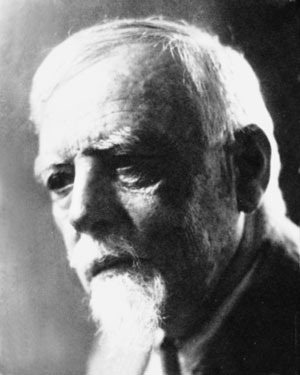
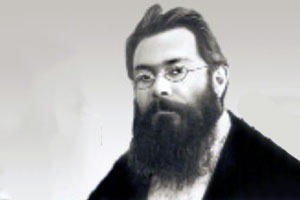
       Poet Hovhannes Shiraz, one of the most popular names in Armenia and the Diaspora during Soviet times, was born in Alexandropol (later Leninakan, now Gumri), in 1915. His birth name was Onnig Garabedian. At the age of five, he lost his father, who was killed in the Turkish invasion of Armenia that followed the Armenian-Turkish war of 1920. He grew in poverty. He went to work at the textile factory of Leninakan in 1932. He published his first poems in the factory newspapers. Apparently, he first signed them with the pseudonym Hovhannes Shirag (Gumri is located in the plain of Shirag).HovhannesShiraz
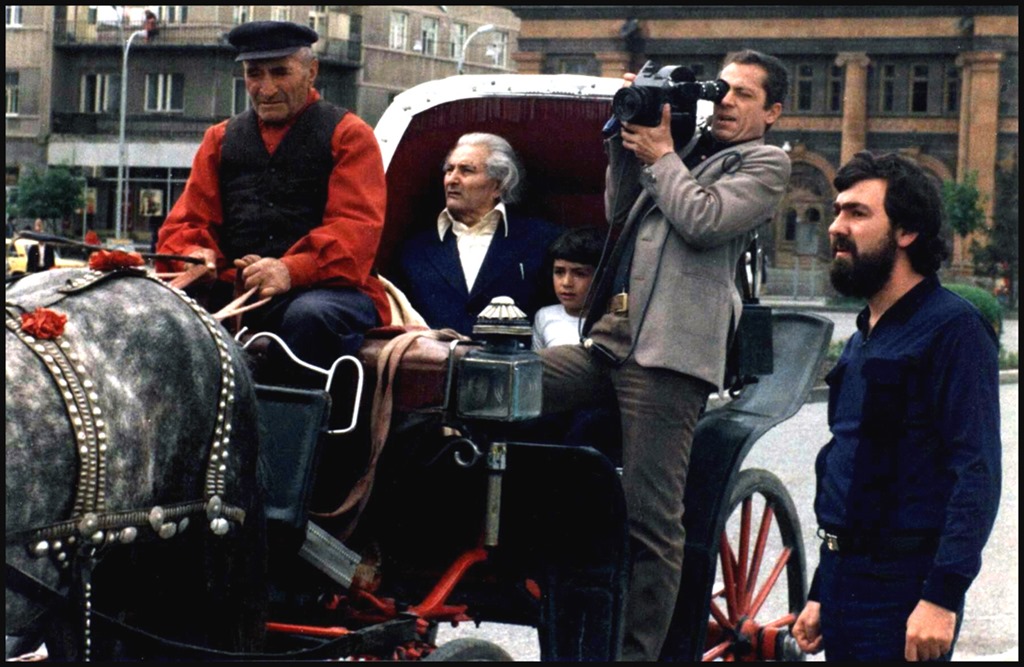
A behind the scenes shot of the making of the film, Shiraz, in Gyumri, in 1983. Hovhannes Shiraz is second from left, sitting in the carriage.

        One year later, he was hired as teacher in the village of Haji Nazar (now Kamo), in the district of Akhurian. He published his first book of poetry, “Spring Initiation,” in 1935, with the pseudonym Hovhannes Shiraz. According to his testimony, writer Atrpet (1860-1937) gave him the pseudonym of Shiraz (a city in Iran, well known for its flowers), saying: “The poems of this young man have the perfume of the fresh and dew-covered roses of Shiraz.” In the same year, Shiraz became a member of the Writers Union of Armenia.

        He attended the Faculty of Philology of the Yerevan State University between 1941 and 1947, where he studied Armenian language and literature. Afterwards, he lived from his pen. He also followed the courses of the Institute of Literature Maxim Gorky of Moscow from 1952-1954.

        Shiraz’s most important collection of poetry was “Lyre of Armenia” (three volumes, 1958, 1965, and 1974). He won the State Prize of Soviet Armenia in 1975 and the Hovhannes Tumanian prize in 1982.

       Although the press run of his books was over half a million copies and his poems were translated into 58 languages, Shiraz ran into many problems with censorship. His patriotic poetry, particularly his evocation of the historical injustice suffered by Armenians and the lost territories of Western Armenia and, at the time, Gharapagh, was forbidden several times. In 1974, when the well-known literary critic Suren Aghababian told Shiraz about receiving the Lenin Medal, the response was: “And what do they want from me in exchange? To buy my silence?”

        He was never allowed to travel outside the Soviet Union, but many of his unpublished poems were smuggled outside the country and published in the Diaspora press. For instance, the first draft of his poem “The Armenian Dante,” about the Armenian Genocide, was written in 1941. Only a few excerpts were published in Armenia during his lifetime and a few chapters in Beirut and Tehran. The entire poem was posthumously published in 1990. His poem “Ani,” about the medieval capital of Armenia, written in 1950, was also published in excerpts in the Diaspora, and the final edition only appeared in 2012.

        Shiraz first married poet Silva [Gaboudigian] Kaputikian (1919-2006). They had a son, the future sculptor Ara Shiraz. Shiraz and his second wife, Shushan, had seven children, including poet Sipan Shiraz (1967-1997).

        Shiraz, who had become a living legend, passed away in Yerevan on March 14, 1984. He was buried in the pantheon of Gomidas Park, where many famous Armenians are buried.

Read Full Post »

In the first decade and half of the twentieth century, poet Taniel Varoujan rose to become the most remarkable name of Armenian literature. He would have become an internationally known name had not his exile and assassination trounced his career during the Armenian Genocide.

            Taniel Chibukkiarian was born in the village of Perknik, in the vilayet of Sepastia. After attending the local school, in 1896 he went to Constantinople, where he attended one of the schools of the Mekhitarist Congregation of Venice. He then continued his education at the Moorat-Raphaelian school of Venice from 1902-1905. In 1905 he entered the University of Ghent, in Belgium, where he followed courses in literature, sociology, and economics. He adopted the surname Varoujan (from an Armenian word that means "male dove") when he started to publish his poems. In 1906 he published his first volume of poetry, Shivers, followed the next year by a booklet that contained a long poem, The Massacre. He graduated in 1909 and returned to the Ottoman Empire. The same year he published a new volume, Heart of the Race, which TanielVaroujanestablished him as a poet.

Returning to Sepastia, he became a teacher between 1909 and 1912. In 1910 he married his student, Araksi Tashjian, vanquishing the opposition of her father. In 1912 they moved to Constantinople, where he became the principal of the St. Gregory the Illuminator School until his deportation in April 1915.

               He published a new and even more powerful collection of poetry, Pagan Songs, in 1912. In late 1913 he joined forces with four young writers, Kostan Zarian (1885-1969), Hagop Oshagan (1883-1948), Kegham Parseghian (1883-1915), and Aharon Dadourian (1888-1965), to create the group "Mehyan." They issued a manifesto that called for the renovation of Armenian literature and language, and founded a short-lived but important monthly journal, Mehyan, that published seven issues (January-July 1914). Due to aesthetic divergences, Varoujan left the group after the third issue (March 1914).

                The poet had three children: Veronica, Armen, and Haig. His wife was pregnant with their third child, when Varoujan was included in the Turkish black list and arrested on the night of April 23-24, 1915, by the police with hundreds of Armenian intellectuals and leaders. He was deported to Changr (Chankiri) together with many of his colleagues, where they lived in a sort of internal exile for the next two months. On August 26, 1915, along with his friend, the poet and physician Rupen Sevag (Chilingirian, 1885-1915), and three other Armenians, they were taken to Kalayjek. On the road, following a previous plan, a group of Turkish chetes (irregular soldiers) attacked the carriage that transported them. They were forced to take their clothes out, and then savagely assassinated. The same day, Varoujan’s son, Haig, was born in Constantinople.

            The poet’s papers had been confiscated at the time of his arrest. In 1921 his wife Araksi was able to recover, after paying a hefty bribe, his unfinished last book, The Song of the Bread, which was published the same year in Constantinople.

               After his death, Varoujan’s works were published in no less than thirty editions over the past nine decades. Collections of his poetry have been also published in French and Italian. His daughter Veronica Safrasian (1910-2009) lived for many years in New York, while his younger son Haig (1915-2002) passed away in Fresno.

Read Full Post »

Prepared by

the Armenian National Education Committee (ANEC)


This year is the 160th anniversary of the birth of composer Kristapor Kara-Murza, introducer of choral music in Armenian culture. He was born on March 2, 1853 (February 18, according to the old Julian calendar) in the town of Gharasu-Bazar, currently Bielogorsk, in the Crimea (Ukraine). He started to play piano and flute at age 8 and also took private lessonsKaraKurza from music teachers in the town. He developed his abilities to read and write music. He was just a teenager when he started to organize and offer concerts.

He moved to Tiflis, the capital of the viceroyalty of the Caucasus, in 1882, and then to Baku from 1885-1892. He was the editor of musical criticism for the daily Mshak, edited by Grigor Artzruni. Kara-Murza offered the first concert of choral music in Armenian history, with a program of patriotic songs, at the theater founded by Artzruni in Tiflis. This was a novelty, as Armenian music was fundamentally written on a one-voice basis, as opposed to European four voices (polyphony). During the next seventeen years, until his premature death at the age of 49, the composer organized some 90 choral groups in fifty cities of Armenia and outside the country, including Tiflis, Baku, Etchmiadzin, Nakhichevan-on-the-Don, Odessa, Batum, Moscow, Kars, Shushi, Constantinople, and others, and gave more than 250 concerts with the participation of 6,000 people.

        Kara-Murza’s most important achievement was the collection of Armenian religious and popular songs, and their musical arrangement and conversion into polyphonic music. In 1887 he premiered his arrangement of the Divine Liturgy in a concert in Baku. He taught music at the Kevorkian Seminary of Holy Etchmiadzin in 1892-1893, and later settled back in Tiflis, where he gave special courses to musical conductors.

        He also composed songs with lyrics by Armenian poets, as well as music a cappella, and also arranged operatic melodies. He presented in Baku fragments of Faust, the famous opera of French composer Charles Gounod (1818-1893), in Armenian translation. Kara-Murza arranged 300 choral and popular songs, among them such classics as “Dzidzernag,” “Zinch oo zinch,” “Kezi mernim,” “Khorodig,” “Lepho lele.”  He also composed and transcribed popular dances, and became the precursor to the modern song and dance ensembles.

        In recent years, Kara-Murza has been credited with the composition of the music of the song “Mer Hairenik,” with lyrics by Mikael Nalbandian (1829-1866), which he premiered in Tiflis, in 1885. His music was the basis for the arrangement by Parsegh Ganachian (1885-1967), one of Gomidas’ disciples, which is performed today as the Armenian national anthem.

Read Full Post »

Prepared by

the Armenian National Education Committee (ANEC)


       An accomplished intellectual, educator, and public figure, Nikol [Nigol] Aghbalian was a self-appointed missionary of Armenian values wherever he went and wherever he worked, from the Caucasus to Beirut.

       He was born in Tiflis in a working-NigoleAghpalianclass family. He graduated from the Lyceum Nersisian in Tiflis and the Kevorkian Seminary in Etchmiadzin, and he dedicated himself to teaching. At the same time, he started writing literary criticism for the monthly Murj, and the quality of his writing attracted the attention of the readership and the intelligentsia. Despite his precarious financial situation, he managed to follow university courses in Moscow, Paris, and Lausanne, although he was never able to graduate.

       Aghbalian became a member of the Armenian Revolutionary Federation at a young age and he used his intellectual qualities to service the political cause. Since 1905, he was among the leading members of the Vernadun, the circle of intellectuals that gathered in the attic of poet Hovhannes Tumanian’s house to discuss literary and cultural issues of the day.

       He was the principal of the Armenian school of Tehran between 1909 and 1912. He returned to Tiflis in 1913, where he became the editor of the A.R.F. newspaper Horizon and vice president of the Armenian Writers Society.After the beginning of World War I, Aghbalian was one of the founders of the Armenian National Council and played a crucial role in the organization of the Armenian volunteer movement that gave several battalions of Armenian soldiers to the Russian army fighting on the Caucasian front. When the retreat of the Russian forces brought thousands of survivors of the Armenian genocide from Western Armenia, he devoted himself to the daily work of sheltering, nourishing, and treating those refugees.

       After the establishment of the Republic of Armenia, Aghbalian was elected a member of the Parliament and in 1919-1920 he became Minister of Education and Art. He established the grounds of the University of Yerevan and sponsored various educational and cultural initiatives. It is a well-known fact that his sponsorship of the yet unknown poet, Yeghishe Charents, whom he gave a job at the ministry, permitted him to concentrate on his  literary creations.

       After the sovietization of Armenia, he was incarcerated by the Bolshevik regime on February 9, 1921, and he was able to save his life, as well as many others, thanks to the popular rebellion of February 18, which liberated the prisoners, who had been condemned to death. After the end of the rebellion, he left Armenia and went to Tabriz, in Iran. A short time later, he moved to Alexandria (Egypt), where he worked as a teacher until 1928. In that year, he was among the initiators and founders of the Hamazkayin Armenian Educational and Editorial Society (today Hamazkayin Armenian Educational and Cultural Society). Later he moved with his friend and associate, the writer and educator Levon Shant (1869-1951), to Lebanon, where they founded the Armenian College (Jemaran) of Hamazkayin in Beirut (later Nshan Palanjian College and today Melanchton and Haig Arslanian College).

       Until his death on August 15, 1947, Aghbalian followed an active schedule as a teacher and scholar. He taught the history of Armenian literature, Classical Armenian, and Armenian classical literature. He also organized a cycle of widely attended popular lectures to attract the interest of the Armenian community towards its literature and culture. He remained one of the intellectual referents of the Diaspora in its first decades.

       His extended activities as a public figure and an educator did not allow Aghbalian to complete many of his projects. However, he managed to publish several books on Armenian literature and politics, and a four-volume collection of his works was published in the late 1950s in Beirut.

       His family remained in Yerevan after his exile in 1921. His name was forbidden in Armenia until the final years of the Soviet regime. His name and his work were fully rehabilitated after the second independence. Some of his works, as well as monographs about him, have been published, and a school has been named after him.


Read Full Post »

THIS WEEK IN ARMENIAN HISTORY
Prepared by
the Armenian National Education Committee (ANEC)

Throughout history, statesmen of Armenian origin have also served in different countries in the world. One of them was Nubar Pasha, who spent most of his life in Egypt, where he became Prime Minister three times.

Nubar Nubarian was born in Smyrna (Izmir) in 1825. He was the son of an Armenian merchant, Mgrdich Nubarian. His mother was a relative of Boghos Bey Yusufian, an influential minister of Muhammad Ali, Viceroy of Egypt (1805-1849) and the founder of the modern Egyptian state.

Nubar was educated in Switzerland (Vevey) and France (Toulouse), and acquired an excellent command of the French language. He went to Egypt before he was eighteen. He first was trained as secretary to Boghos Bey, Minister of Commerce and Foreign Affairs, and in 1845 started his state career, first under Muhammad Ali (second secretary), the heir apparent Ibrahim Pasha (first secretary), and then under the latter’s successor, Abbas Pasha.

He was the Egyptian representative for various diplomatic missions in London and Vienna between 1850 and 1854, and he was rewarded with the title of bey for his success. In 1856 the new viceroy, Said [Saaid], appointed him as his chief secretary, and then charged him with the important transport service from Egypt to India. Despite his success in that task, he was dismissed by Said and then rehired again as principal secretary, until the death of the viceroy in 1863.

Said [Saaid] was succeeded by Ismail Pasha, who recognized Nubar’s ability and charged him with a mission to Constantinople to smooth the way for several ambitious projects: the completion of the Suez Canal, the change in title to that of khedive, and the change in the order of succession. Nubar obtained the consent of the Sultan for the completion of the Canal and was made a pasha by Ismail. After his return from Paris, where he went to complete the arrangements for the construction of the Suez Canal, he was made Minister of Public Works. In 1866 he became Minister of Foreign Affairs and succeeded to complete the other two projects; in 1867 Ismail was declared khedive of Egypt, with succession in favor of his eldest son.

Despite mounting opposition, Nubar Pasha was able to replace the antiquated system of capitulations of the Ottoman Empire in Egypt by mixed international civil courts and a uniform code, instead of seventeen consulates administering seventeen different codes.

Ismail’s extravagant administration brought Egypt to the verge of bankruptcy, and prompted Great Britain and France to intervene. Representatives of both countries were included in the Egyptian cabinet, with Nubar as Prime Minister (1878-1879), who tried to reduce the khedive to the position of constitutional monarch. However, Ismail incited a military rising against him. Nubar was dismissed, but finally the British and the French realized that the situation was not to their advantage and Ismail was deposed in 1879. Nubar remained out of office until 1884, when he was designated Prime Minister by Ismail’s son Tawfiq. He was forced to carry out a policy which he openly disapproved, but which the country was forced to accept under British dictation.

Nubar was dismissed from his post in 1888 and returned for a short stint as Prime Minister between April 1894 and November 1895, when he retired after completing his fifty years of service.

He lived afterwards between Cairo and Paris, where he died on January 14, 1899. His son Boghos Nubar Pasha (1851-1930) was one of the founding members and first president of the Armenian General Benevolent Union (1906-1928).

Read Full Post »

THIS WEEK IN ARMENIAN HISTORY
Prepared by
the Armenian National Education Committee (ANEC)


The Treaty of Alexandropol
(December 2-3, 1920)

       The Armenian-Turkish war of 1920 put the Republic of Armenia on the brink of collapse. It also brought back the very real threat of physical disappearance for the Armenian people. The secret pact signed between the Turkish Great National Assembly led by Mustafa Kemal (Ataturk) and Soviet Russia in August 1920 had ensured the support of Bolshevism to the Turkish insurgents. The latter, unlike the Ottoman legal government, were leading the so-called “war of independence” against Greece in order to overturn the partition of the Ottoman Empire that included the division of current Turkey into different zones of influence and the loss of most of its territories.

       Turkish forces commanded by General Kiazim Karabekir had already reached Alexandropol (now Gumri) at the end of November 1920 when a ceasefire was forced upon the Armenian government. On the other side, a small group of Armenian Bolsheviks had crossed the border from Soviet Azerbaijan into Armenia on November 29 and proclaimed Armenia a Soviet republic, appealing for the intervention of the Red Army. The government of the Republic of Armenia, led by Prime Minister Simon Vratsian (who had assumed power on November 25), was forced to choose the lesser of two evils: to turn away the potential annihilation of Eastern Armenians, it decided to relinquish power to the Communists. The change of regime was legalized through the signature of an agreement between the authorities of the Republic of Armenia and Boris Legran, representative of the Russian Soviet Federative Socialist Republic (RSFSR), in the morning of December 2, 1920. It was enforced on the same day at 6 pm. It established that Armenia would become an independent Soviet Socialist republic within the frontiers that had been under the jurisdiction of the government before the Turkish invasion and a revolutionary committee would take power temporarily. On its final session of the same day, the government of the Republic of Armenia decided to resign power. After more than two and half years, the first independence had come to an end.

The sovietization of Armenia did not end the Turkish menace. Karabekir threatened to resume his offensive unless his terms were accepted. The onerous terms obliged Armenia to renounce the Treaty of Sevres and all claims to Western Armenia and the province of Kars, and to accept temporary Turkish jurisdiction in Nakhichevan, among other issues. Alexander Khatisian, representative of the Republic of Armenia, signed the treaty in the wee hours of December 3.

       However, the Armenian government had already resigned and, therefore, Khatisian had no power whatsoever. On the other hand, Kiazim Karabekir represented the Great National Assembly of Turkey, with headquarters in Ankara, but the legal authority of Turkey, until November 1922, was in the hands of Sultan Mehmed VI and the Ottoman government in Constantinople. Legally, none of the signing parties had any attribution to stamp their signature under the document. Writes Richard Hovannisian: “Denounced and branded a traitor by Soviet and other non-Dashnakist authors, Khatisian justified his action as an exigency measure taken with the knowledge of the new Erevan government and intended to give time for the Red Army to enter Armenia in sufficient numbers to block a further Turkish advance. Realizing that he had not legal jurisdiction, Khatisian hoped that the new Soviet government, with the support of Russia, would repudiate his action and force the Turks to withdraw, at least to the pre-war boundaries.”

       The Treaty of Alexandropol was never ratified and was replaced by the treaties of Moscow and Kars (March and October 1921). The latter was signed by the Great National Assembly of Turkey, Soviet Russia, Soviet Armenia, Soviet Georgia, and Soviet Azerbaijan. However, these treaties cannot be recognized as valid according to international law. Mustafa Kemal had not been invested with any powers by the legally recognized Ottoman government, and Soviet Armenia was not a legally recognized state anymore.


Read Full Post »

THIS WEEK IN ARMENIAN HISTORY
Prepared by

the Armenian National Education Committee (ANEC)

INTRODUCTION OF THE “DRAM” [TRAM]

AS ARMENIA’S CURRENCY
(November 22, 1993)

The first independent Republic of Armenia (1918-1920) used Russian rubles as currency. The Armenian banknotes, which kept “rubli” (ռուբլի, ruble) as the name of the currency, were designed by painter Arshag Fetvadjian (1866-1947). They were under printing in Europe when Armenia became a Soviet republic in December 1920 and were never put into circulation. 

            After the second independence, the Central Bank of Armenia was created on March 27, 1993. The new Armenian monetary unit was called dram [Tram] (դրամ); the name, which means “money” in Armenian, was also the name of the silver coins in circulation during the Armenian kingdom of Cilicia (1199-1375). Interestingly, the word դրամ, pronounced tram, designates “money” in Western Armenian; Eastern Armenian uses the word փող (pogh) to designate “money.” Pogh was also the name of a certain type of copper coins in the Armenian state of Cilicia. 

            The devaluation of the Russian ruble (which initially continued as the currency in the former Soviet Union following the collapse of the state) prompted the replacement of old currency by new one, and a flood of worthless old Russian rubles into Armenian forced the introduction of the dram, earlier than anticipated, on November 22, 1993. The initial value was 1 dram = 200 Russian rubles, while 1 American dollar equaled 14 drams. The high inflation of the period 1993-1994 in Armenia depreciated the dram to a value of 1 U$S = 100 AMD.  It reached 420 drams per dollar in March 1995 and stabilized afterwards (450 AMD per dollar in 1997). On November 19, 2012, the exchange rate was 407 dram per American dollar. 

            The banknotes issued in 1993-1995 were put out of circulation in 2005. Their value went from 10 to 5,000 drams. This old series, which today only has a historical value, featured different national symbols:  for instance, the 10 dram note showed the Yerevan Central Train Station and the statue of David of Sassoun (across the station) on the obverse and Mount Ararat on the reverse, while the 5000 dram note exhibited the pagan temple of Garni [Karni] on the obverse and the head of goddess Anahit kept in the British Museum on the reverse.

Tram

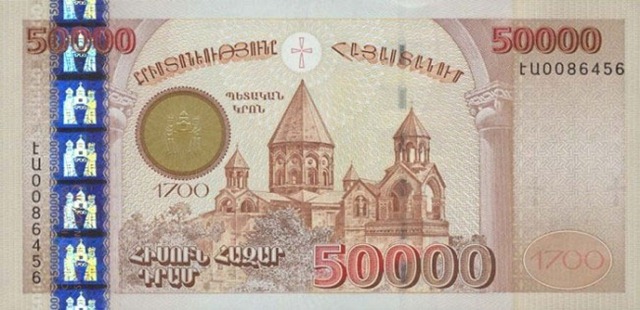
A new series of banknotes, currently in circulation, was  issued starting in 1998. The first six values, from 50 to 20,000 drams (the notes of 50, 100, and 500 were later put out of circulation and replaced by coins), featured six figures of twentieth century Armenian culture and an image related to them: Aram Khachaturian, Victor Hambardsumian, Alexander Tamanian, Yeghishe Charents, Hovhannes Tumanian, and Avetik Isahakian. The 50,000 dram banknote was issued in 2001, on the 1700th anniversary of Christianity in Armenia, and featured the cathedral of Holy Etchmiadzin. The highest value, 100,000 dram, pictured King Abgar V of Edessa, who according to tradition received the painting (portrayed alive) of Jesus Christ from St. Thaddeus.

Read Full Post »

THIS WEEK IN ARMENIAN HISTORY
Prepared by

the Armenian National Education Committee (ANEC)

Death of Hovhannes Masehian (November 18, 1931)  

       Hovhannes Masehian (1864-1931) was a Persian Armenian diplomat and writer, who became the foremost translator of Shakespeare into Armenian. He was born in Tehran in 1864. His father, Dzeruni Khan Masehian, was the chief jeweler of Shah Naser al-Din (1848-1896). From 1870 to 1878 he studied at the newly opened Haigazian School in Tehran. Afterwards, he went to Tabriz to continue his studies with his maternal uncle, Andon Khan Yervandian, who was the tutor of the heir prince. After three years of studies, in 1881 he went to Paris where he studied philosophy, law, political economy, and literature at the College de France.

        Masehian returned to Tehran in 1884, where he taught at the Haigazian School and was hired as a translator at the royal court. He traveled to London in 1897 as the chief translator for the Persian delegation sent to participate in the fiftieth anniversary of the coronation of Queen Victoria. Ten years later, he would be the first secretary of another delegation sent to London for the Queen’s sixtieth anniversary. Meanwhile, in 1895 he had been named head of office of the Ministry of Foreign Affairs of Persia. He managed different positions in the ministry until 1901, when he was designated counselor to the Persian ambassador in Berlin. He became chargé d’affairs in 1906 and held the position until his return to Persia in 1911.

        By that time, Masehian had also become a household name in Armenian letters. As the official translator of the Shah’s court (he knew some ten languages), he had translated around 30 books into Persian, of which there is no trace. In 1894 he published his first version of Shakespeare’s Hamlet in Tiflis. The famous Eastern Armenian poet, Hovhannes Hovhannisian, wrote, “This translation of Hamlet leaves a very beautiful impression on us; first, because . . . the translator knows his mother tongue very well and uses his knowledge with confidence, an advantage that many of our famous authors and translators may envy; second, because that language is rich and poetic, a necessary condition to translate authors such as Shakespeare.” Other translations followed: As You Like It, King Lear, Romeo and Juliet, and Merchant of Venice. Masehian was unable, however, to publish his translations of Otello, Macbeth, and The Tempest. He continued his work until 1901, when he traveled to Europe as a diplomat; by 1909, he had translated nine Shakespearean plays and had translated anew his unpublished works.

        In 1912, after spending a year in Tehran as chief of the secretariat of the Persian court, Masehian was faced with an unprecedented task. It was unheard of a Christian to represent diplomatically an Islamic country like Persia. However, disputes among the officers of young Ahmad Shah (1909-1925) ended when in 1912 the sovereign signed the decree that designated the Armenian diplomat as Ambassador of Persia in Germany. He held this position until March 1916, when he went to Paris, probably commissioned by the Shah. In 1919 he represented Persia in the Peace Conference at Versailles.

        In the meantime, in 1916 Masehian had been officially invited to London as a speaker in the festivities of the 300th anniversary of Shakespeare’s birth. Between 1921 and 1923, he was able to publish several more of his translations in the presses of the Mekhitarist Congregation, in Vienna: Hamlet, Otello, Macbeth, and Merchant of Venice. Indeed, Hamlet and The Merchant of Venice were published in new versions. In the 1910s he had also translated Antonio and Cleopatra, Much Ado about Nothing, Julius Caesar, and A Midsummer Night’s Dream. Between 1923 and 1931, the indefatigable translator finished new translations: Coriolanus, Timon of Athens, and Winter’s Tale. “I am convinced that the translation of Shakespeare’s works,” he wrote to his friend, the poet Avetik Isahakian, “will leave a deep influence on our literature. If the giants of German literature have been impacted by Shakespeare, how much more our writers need that impact? This is why I have devoted myself to that task with all my energy.” He also was a translator of works by other literary giants: Johann Wolfgang Goethe, Lord George Byron, Heinrich Heine, Omar Khayyam, and Rabindranath Tagore.

        In 1927 Masehian was elected to the Persian Parliament. In the same year, he was designated as Ambassador to London. He held the position until 1929, when Persia established diplomatic relations with Japan and Masehian became the first ambassador to that country from 1929-1931. Because of illness, in 1931 he tended his resignation to Reza Shah (1925-1941) and left Tokyo to return to Persia. However, on his way he died in Harbin (China) on November 18, 1931. The efforts of the Armenian community of China and the special permission of Reza Shah allowed for his remains to be moved from China to Persia and be buried in Tehran on April 1, 1932.

        A school of Shakespeare studies was developed in Soviet Armenia and several good translators appeared in the next decades. However, according to many specialists, Masehian’s translations remain unsurpassed.


Read Full Post »

THIS WEEK IN ARMENIAN HISTORY
Prepared by

the Armenian National Education Committee (ANEC)


First issue of the first Armenian newspaper, “Aztarar”

(October 16, 1794)

       The small community of India, which was an offspring of the famous Armenian community of New Julfa (Nor Chugha), created in the early seventeenth century near Ispahan (Persia), went into history for two main reasons: the publication of the first draft of an Armenian Constitution (1773) and the birth of the first Armenian newspaper (1794).

       Father Harutiun Shmavonian (1750-1824) was born in the city of Shiraz, in Persia. He studied at the local school and learned Armenian and Persian language and literature. Years later, he was sent to Madras, in India, to become the priest of the local church.

       After long meditations and preparations, Shmavonian founded a print shop of his own in 1789, the second Armenian printing house in Madras. His publications reflected his interest in books which were able to satisfy the requirements of the Armenian communities. For instance, he published textbooks, such as Baghdasar Tpir’s Grammar of the Mother Language; the translation of Porphyry of Tyre’s Introduction to Categories, and David the Invincible’s Book of Definitions. His collaborator and friend, Fr. Samuel Ghaytmaziants, wrote later: “He always wished the common benefit and the flourishing of the nation; he left aside the care of his family and children, lived in foreign lands, and worked to this effect.”

       Shmavonian decided to publish a monthly newspaper. The Armenian community was ripe for such a project. Despite its small size, Armenian intellectuals in Calcutta and Madras were in touch with British and French traders and officials, and read European publications. The publications of the Armenian printing house of Nor Nakhichevan, in the northern Caucasus, were regularly sold in Madras. He was also encouraged by Archbishop Yeprem, who had arrived in India as legate of the Catholicate of Etchmiadzin.

       Aztarar, unlike most of the press of the time, was not primarily coverage of commercial issues. The contents of the monthly were mostly cultural and historical. The print-run was 200 copies.

       Many Armenian merchants wrote to the monthly from Madras, Calcutta, Basra, and as far as China and the Philippines. The publication printed news from Yerevan and Shushi, in Karabagh. Most of the articles were written in Classical Armenian (krapar), but some appeared in a mix of classical and vulgar language, which reflected the dialect of New Julfa.

       Articles on political and patriotic issues were also included in the monthly, sometimes written by columnists who mostly signed with pseudonyms.

       Aztarar was published for eighteen months until it folded in March 1796 due to economic difficulties. Father Shmavonian continued his activities in community life. He was active as a book publisher until 1817. He passed away in 1824, submerged in poverty.

Shmavonian

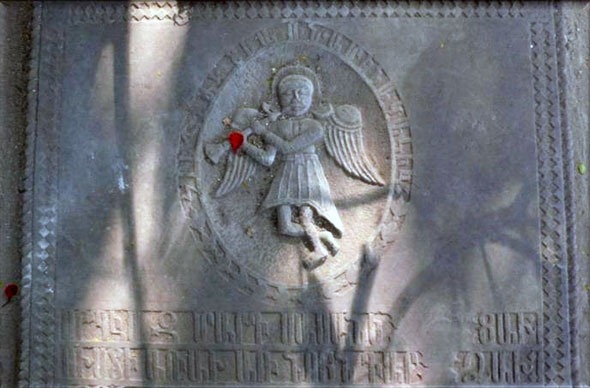
Father Harutiun Shmavonian’s tomb at the Holy Virgin Armenian Apostolic Church in Chennai (formerly Madras), India

Read Full Post »

 THIS WEEK IN ARMENIAN HISTORY
Prepared by

the Armenian National Education Committee (ANEC)


Demonstration of Bab Ali (September 30, 1895)


       The three great powers (Great Britain, France, and Russia), backed by Germany, Austria, and Italy, had demanded that Sultan Abdul Hamid II introduce the reforms in the “provinces inhabited by Armenians,” as stipulated by the Treaty of Berlin (1878) in what was called the Armenian Reform Program of May 11, 1895. The refusal of the sultan to carry the reforms led the Social Democratic Hnchakian Party to stage the demonstration of Bab Ali (Great Door or Sublime Porte) in Constantinople on September 30, 1895.

        The party was represented in the Ottoman capital by the Board of Directors, that give instructions for nearly all party activity in Turkey with the approval of general headquarters at Geneva, and the Executive Committee, which directed the organization work according to the instructions of the Board of Directors.

        The Executive Committee chose three men to supervise the demonstration after receiving the order from the Board of Directors. The leader was Garo Sahakian. After various discussions, the Board of Directors decided that the demonstration should be peaceful. Months of preparations were ended on September 28, when the Hnchakian Party presented a letter in French to the foreign embassies and to the Turkish government. The letter stated that the demonstration would be “of a strictly peaceful character” and would be aimed to express Armenian wishes with regard to the reforms. It added that “the intervention of the police and military for the purpose of preventing it may have regrettable consequences, for which we disclaim beforehand all responsibility.”

        The demonstration took place two days later. The Turkish government had taken security measures; soldiers were posted on the streets around administrative buildings, and the police were alerted. Around noon, the Hnchakian leaders entered the Armenian Patriarchate, from where they led thousands of demonstrators to the palace of the Sultan.

        Garo Sahakian, head of the demonstration, was to present the petition to the Sultan on behalf of both the Armenians of Constantinople and of the six Armenian provinces. The petition, written by the Hnchakian Board of Directors, complained against massacres, unjust arrests, Kurdish injustices, corruption of tax collectors, and the massacre in Sasun (1894). It demanded: (a) equality before the law; freedom of the press; freedom of speech; and freedom of assembly; (b) right of habeas corpus to all persons under arrest, and permission to Armenians to bear arms if the Kurds could not be disarmed; (c) a redrawing of the six Armenian provinces; (d) an European governor for the provinces; and (e) financial and land reforms.

       Garo Sahakian and some demonstrators, after reaching the gates of Bab Ali, were denied entrance by the officer in charge, and Sahakian was seized by the zaptiehs (Turkish police). Brought before a Turkish official, he was imprisoned after delivering the petition. Fighting and violence had already broken out. Hundreds of demonstrators were arrested on that day and for several days ensuing. The prisons became crowded with wounded men and scores of dead bodies were collected from the streets of Constantinople.

       The rioting and bloodshed in Constantinople alarmed the Turkish government and disturbed Europe. The Ottoman Council of Ministers assembled to discuss the situation, while some of the leading European papers gave much attention to the rioting in Constantinople. Finally, pressure by European governments induced Sultan Abdul Hamid to sign the Armenian Reform Program on October 17, 1895, about a month after the bloody demonstration. The Hnchakian Revolutionary Party considered this a great victory. However, this signature did not bring peace to Ottoman Armenians. Like so many decrees by the Sultan, this one too became a dead letter.


Read Full Post »

« Newer Posts - Older Posts »