Archive for the ‘History’ Category


THIS WEEK IN ARMENIAN HISTORY

(Prepared by the Armenian National Education Committee[ANEC])


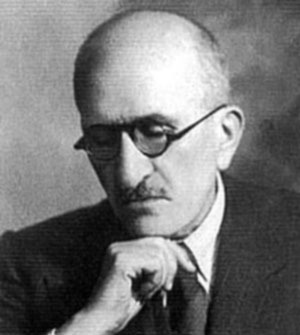
Death of Teotig
 (May 24, 1928)

Almanacs were very fashionable in the Western world at the beginning of the twentieth century, when a real fever of publication started in the Armenian realm. Almanacs (daretsuyts) of very different size, quality, and duration—sometimes confused with yearbooks (darekirk)—would be published until the 1970s. In the history of Armenian almanacs, Teotig and his almanac would become synonyms and models.

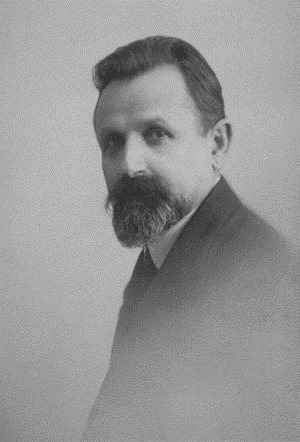
Teotoros Lapjinjian was born in 1873 in Scutari (Üsküdar), a suburb of Constantinople on the Asiatic side of the Bosphorus, in a modest family that migrated from Erzinga. He would later adopt his childhood nickname Teotig as a literary pseudonym.

After primary studies at the local school, he first attended the Berberian College, but could not graduate due to financial problems. For a while, he attended the American-financed Robert College (now Bogazici University), which he could not finish either. In 1889, at the age of 16 he went to work as a bookkeeper in a store.

However, his avid interest in books and reading led him to self-teaching. He was just past his teens when he started to contribute literary pieces and essays to various newspapers. Meanwhile, he became a “bibliomaniac,” as he called himself: “I have not eaten, drunk, or bought clothes, and have allocated all my earnings to books,” he confessed once.Teotig
In 1902 he married Arshaguhi Jizvejian (1875-1922), a young woman educated in Paris and London. Three years later, he won the prestigious Izmirlian Literary Prize for a voluminous work on the Armenian dialect of Constantinople, which remained unpublished until the present.

1907 would become a crucial date in Teotig’s life. With the crucial assistance of his wife, he started the publication of his lifelong project, Amenun daretsutyse (Ամէնուն տարեցոյցը “Everyone’s Almanac”). For the next twenty-two years, the nineteen volumes, with a total of 8,500 pages, would offer the reader the most complete information about every aspect of Armenian life. The most important writers of the time would contribute literary pieces and articles on the most various topics. The almanac became a sort of illustrated encyclopedia of Armenian life during the first quarter of the twentieth century, with much information and photographs of unique nature in its pages.

In 1912 Teotig produced a book called Dib oo Dar (Typeface and Letter), on the 1500th anniversary of the creation of the Armenian alphabet (which at the time was commemorated in 1913) and the 400th anniversary of Armenian printing. In the same year, he published a collection of short stories, The New Year.

Teotig became one of the targets of the Turkish secret police at the beginning of World War I. In March 1915, right after the publication of the 1915 issue of the almanac, he was arrested and on the grounds of trumped-up charges, a war tribunal sentenced him to one year in the central prison of Constantinople. In March 1916, just out of prison, he was arrested in the street and sent to Anatolia with a caravan of deportees. He reached Bozanti, in Cilicia, where a group of Armenian young people was able to rescue him and hide him in a workplace of the Constantinople-Baghdad railway. He remained there, with a false identity, until the armistice of Mudros in November 1918, when he returned to Constantinople.

He resumed the publication of his beloved almanac. In the meantime, in 1919 he published Memorial to April 11 (April 24 in the old Ottoman calendar), on the first commemoration of the arrests of April 24, with 761 biographies of intellectuals. He also published a booklet, The Catastrophe and Our Orphans, in 1920, and wrote a lengthy study on the Armenian clergy victims of the genocide, commissioned by the Armenian Patriarchate, which was posthumously published in 1985.

His wife Arshaguhi, a writer and educator, died of tuberculosis in a sanatorium in Switzerland in 1922, and Teotig was left with their only son, Vahakn. In the same year, the triumph of Kemalism in Turkey prompted him to leave his birthplace and become an exile. He would live in precarious conditions in Corfu, Cyprus, and finally Paris, continuing the publication of his almanac in Vienna, Venice, and Paris. He passed away in Paris on May 24, 1928, when the publication of the 1929 issue was halfway. His son had come to the United States, where he would die in the 1960s.

In 2006, the Cilicia Publishing House of Aleppo, with the sponsorship of the Calouste Gulbenkian Foundation, started to reprint Teotig’s almanac in a photographic edition introduced and indexed by Aleppine intellectual Levon Sharoyan. Unfortunately, only 13 volumes had been published until 2011, when the catastrophic Syrian civil war disrupted the project, as well as the entire life of the Syrian Armenian community.
 

Read Full Post »

THIS WEEK IN ARMENIAN HISTORY

(Prepared by the Armenian National Education Committee[ANEC])


Death of Simon Vratsian
(May 21, 1969)

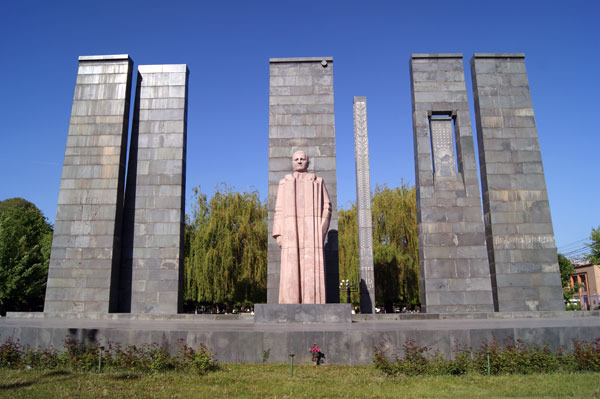
The last Prime Minister of the first Republic of Armenia, Simon Vratsian, was born in 1882, in the village of Medz Sala, near Nakhichevan-on-the-Don (today Rostov-on Don, in the northern Caucasus). He studied in the local Armenian and Russian schools, and in 1900 he was admitted in the Kevorkian Lyceum of Etchmiadzin, of which he was a brilliant graduate in 1906. By that time, he was already a member of the Armenian Revolutionary Federation. He had participated in the protests against the confiscation of the properties of the Armenian Church by the imperial regime (1903-1905), in the first Russian Revolution (1905), and in the Armenian self-defense during the Armeno-Tatar conflict of 1905-1906.SimonVratsian

He was a representative of the A.R.F. Student Union to the fourth General Assembly of the party (Vienna, 1907), which would have a decisive importance in its ideological orientation. He later went to St. Petersburg, where he studied law, agronomy, and pedagogy at the university. In 1910, when the persecution against the A.R.F. had peaked in the Russian Empire, he went to Karin (Erzerum), where Rostom, one of the founders of the party, had settled, gathering around him many experienced and promising members in order to dedicate himself to the development of Western Armenians in the country itself.

Vratsian edited the A.R.F. organ Harach in Karin for a year (1910-1911), and then, by Rostom’s recommendation, he was sent to Boston, where he edited Hairenik, then a biweekly, until 1914. He returned to Karin and participated in the crucial eighth General Assembly of the A.R.F., where he was elected a member of the Bureau and left for Tiflis, in the Caucasus. There, he took the editorship of the party daily Horizon and was elected member of the Armenian National Council, which dedicated itself to the organization of the volunteer movement.

After the independence of Armenia, Vratsian moved to Yerevan, where he was elected member of the Parliament and collaborated with the governments of Hovhannes Kachaznuni and Alexander Khatisian. In May 1920, when Hamo Ohanjanian became prime minister, Vratsian took the position of Minister of Labor and Agriculture, until the fall of the government in November 1920. As prime minister from November 24 to December 2, 1920, he would become the witness of the final agony of the independence after the defeat in the Armeno-Turkish war, which would force the sovietization of the country to escape destruction. He signed the agreement to transfer power to the Revolutionary Committee of the Bolsheviks, and he also became the president of the Committee of Salvation of the Homeland, which led Armenia after the rebellion of February 18, 1921.

After the re-establishment of Soviet power in April 1921, Vratsian took the road of exile and settled in Paris, where in 1924 he became the editor of Droshak [Pronounced Troshag], the A.R.F. central organ, until its demise in 1933. He wrote his monumental work, The Republic of Armenia, which he published in 1928, with a second, revised edition published in 1958. He was a prolific writer on political, historical, and literary subjects, and published and edited a journal of history and culture, Vem, between 1933 and 1939.

During the war, he moved to the United States, where he was one of the founders of the Armenian National Committee in 1945 and participated in the lobbying for the Armenian Cause during the founding meetings of the United Nations in San Francisco. In 1952, after the death of writer Levon Shant, Vratsian succeeded him as principal of the Nshan Palandjian Lyceum of Hamazkayin in Beirut, a position that he maintained until his death. He worked actively to consolidate the economic foundations of the Lyceum and continued the publishing of books, including a revised edition of The Republic of Armenia in 1958 and his memoirs in six volumes, “On the Path of Life."

He had written: “The regimes are a temporary phenomenon. The leaders are temporary. Nations and fatherlands, the people sitting in their homeland, are eternal. The freedom-loving Armenian people, which had trampled death with death, forged the independence of the fatherland. The Republic of Armenia continues to live in the heart of the Armenian people as a burning reminder of the past and a lively hope of the future.” He was far from imagining that Armenia would become an independent country less than a quarter of a century after his death in Beirut on May 21, 1969.


Read Full Post »

THIS WEEK IN ARMENIAN HISTORY

(Prepared by the Armenian National Education Committee[ANEC])


Death of Stepanos Nazariants
(May 9, 1879)

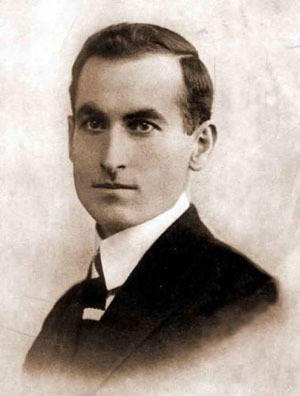
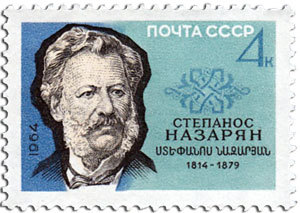
The nineteenth century was a period of awakening for Armenians both in the Ottoman and the Russian Empire. In Russia, one of its pioneers was Stepanos Nazariants, a journalist, teacher, and orientalist.StepanosNazariants

He was born on May 27, 1812, in Tiflis (now Tbilisi), in the family of a priest. The Nersisian Lyceum, founded by the primate of the Armenian Apostolic Church in Georgia, Nerses Ashdaragetsi, was opened in 1824, and Nazariants studied there between 1824 and 1829. He became also one of the first Armenian students of the Caucasus to study in Dorpat (now Tartu, in Estonia), which had one of the best, German-speaking universities in the Russian Empire.

In Dorpat, Nazariants first studied at the gymnasium for a year (1833-1834) and then at the schools of Medicine (1835-1836) and Philosophy (1836-1840). He wrote his doctoral dissertation on the work of Persian poet Ferdowsi, Shahnameh (Book of Kings). From 1842-1849 he was the chair of the Armenian language department at the University of Kazan. Later he moved to Moscow, where he was professor of Persian language and literature at the famous Lazarian Lyceum until his death. From 1869-1871 he was also principal of the lyceum.

Influenced by European enlightenment and Russian social movements of the 1840s, Nazariants wrote against the ruling feudal system and its ideology. He was a fervent advocate of modernization, as well as of patriotic ideas, such as the struggle against Turkish domination. He saw education as the key of Armenian progress, and supported the development of secular instruction and methods of pedagogy that were consistent and age-appropriate. He advocated the use of Modern Armenian, and perhaps his greatest achievement was the publication of the monthly Hiusisapayl (Aurora Borealis, 1858-1864), together with his younger associate Mikayel Nalbandian, which had an important role in the development of Eastern Armenian. The monthly became the voice of progressive ideas, and ran afoul of the Armenian establishment due to the discussion of sensitive issues, such as his criticism of serfdom and clerical power. Nazariants and Nalbandian developed principles to modernize literary criticism among Armenians.

Nazariants wrote a number of books in Russian (A Brief Survey of Thirteenth Century Armenian Literature, 1844; A Survey of Armenian Literature in the Modern Period, 1846) and Armenian (Discourse on Experimental Psychology, 1853; First Spiritual Nutrition for Armenian Children, 1853; Source Book of Religion, 1854, and Review of Modern Armenian Speaking, 1857). He also wrote poetry and translated many works, including those of Swiss poet Friedrich Schiller. He passed away on May 9, 1879, in Moscow.


Read Full Post »

THIS WEEK IN ARMENIAN HISTORY

(Prepared by the Armenian National Education Committee[ANEC])


Death of Levon I (May 2, 1219)


The Armenian state of Cilicia (1080-1375) started as a princedom under the rule of Rupen I (1080-1095). It played an important role during the first Crusades under the Rupenian dynasty. In a hundred years, it would become a kingdom due to the efforts of Prince Levon II.

Levon (known as Leo in non-Armenian sources) was born in 1150. His father Stepan, the third son of Prince Levon I (1129-1137), was murdered by the Byzantines in 1165. His paternal uncle, Mleh I (1169-1175), had made a host of enemies and was assassinated by his own soldiers in Sis. Levon’s elder brother, Rupen, elected to succeed Mleh, was imprisoned in 1183 by Prince Bohemond III of Antioch, who had begun hostilities against him in alliance with Prince Hetum III of Lambron.Levon_I

Levon became regent during his brother’s absence. Rupen was released in 1187 after the payment of a large ransom and cession of two cities to Antioch. He relinquished power to his brother and retired to the monastery of Drazark.

Levon II had an initial rapprochement with Bohemond III as a result of the alliance between Byzantium and Sultan Saladin of Egypt. He even married Isabelle, a niece of his rival’s wife.

He approached Frederick I Barbarossa, the German emperor, when he entered the Armenian territories on his way during the Third Crusade, but the emperor drowned in Cilicia in 1190. Nevertheless, Levon participated in the siege of Acre and in 1191 he joined King Richard the Lionheart in the conquest of Cyprus.

Levon II was intent upon ensuring the security of Cilicia. He entered in conflict with Saladin, who died in 1193, and Bohemond III, whom he took prisoner in the same year. A solution of the conflict between Cilicia and Antioch was found when Raymond of Antioch, son of Bohemond III, married Levon’s niece Alice. However, Raymond died soon and Alice and her infant son Raymond-Rupen were returned to Cilicia. The Armenian prince determined that his great-nephew should inherit Antioch on the death of Bohemond III.

Levon II pressed for a royal crown and sought the assistance of German emperor Henry VI and Pope Celestine III. The latter required submission of the Armenian Church to Rome, but this was opposed by the Armenian bishops. Byzantine emperor Alexios III sent Levon a royal crown, and the negotiations between an Armenian embassy headed by Bishop Nerses of Lambron and the Byzantine side in Constantinople centered on religious questions, and were fruitless in the end.

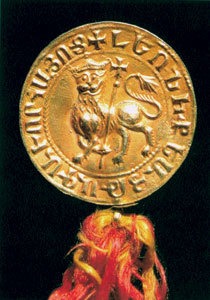
Finally, Levon II was crowned on January 6, 1198, in Tarsus by Catholicos Gregory VI Abirad, and received another royal insignia by the Papal legate, Archbishop Conrad of Mainz. After the fall of the Bagratuni kingdom of Ani in 1045, an Armenian kingdom had been restored. He was Levon II when a prince, but after his coronation, he became Levon I, because he was the first king of that name. He would issue coins with the legend “King of All Armenians” (Takavor Amenayn Hayots).

Levon I was entangled in the conflict of succession of Antioch. When Bohemond III died in 1201, although the barons had sworn allegiance to the king’s great-nephew Raymond-Roupen, Bohemond’s second son, Count Bohemond of Tripoli, opposed the validity of the oath and was installed as Bohemond IV of Antioch. The Papacy, the Templars, the emir of Aleppo, and the Seljuk Sultan of Konia were involved in the conflict at one time or another. Levon was finally able to install Raymond-Roupen as prince of Antioch in 1216.

Meanwhile, he received “injurious information” about his wife Isabelle. The king imprisoned her in the fortress of Vahka, where she died around 1206. He married Sibylle, the half-sister of King Hugh I of Cyprus, in 1211. His daughter Rita (d. in 1220) married King John I of Jerusalem in 1214.

However, before his death in 1219, Levon quarreled with his great nephew Raymond Roupen and named his young daughter Zabel (born in 1215) as his rightful heir. Levon I is known in Armenian history as Levon I Medzakordz (the Magnificent). Several years of conflict for the succession of the throne of Cilicia would ensue. Finally, in 1226 Zabel would marry Hetum, son of Constantin of Baberon, and this would end the long dynastic and territorial rivalry, unifying the two most powerful families of the kingdom: the Rupenians and the Hetumians.


Read Full Post »

THIS WEEK IN ARMENIAN HISTORY

(Prepared by the Armenian National Education Committee[ANEC])


Death of Panos Terlemezian
(April 30, 1941)

Many Armenian intellectuals were also involved in the movement of national liberation at the end of the nineteenth and beginning of the twentieth century. Painter Panos Terlemezian was one of them.

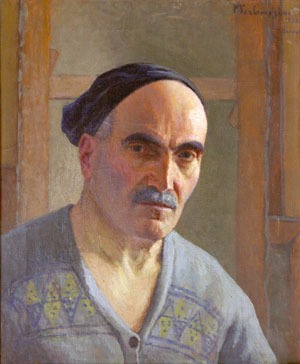
Self portrait by Panos TerlemezianHe was born in Aygestan, the Armenian suburb of the city of Van, on March 3, 1865. His father was a farmer. After studying at the elementary school, he attended the Van Central College (1881-1886), which he graduated with honors. He became a teacher, while at the same time he joined the first Armenian political party, the Armenagan Organization, founded in 1885.

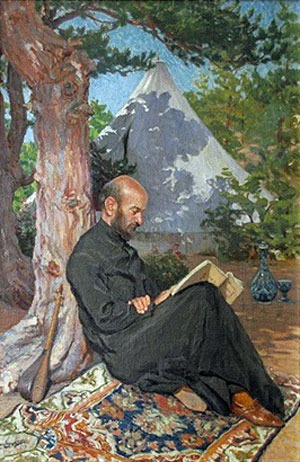
His political activities attracted the attention of the Turkish government, which tried him in absentia. In 1893 he escaped to Persia and later to Tiflis, in the Russian Empire. After working for a while there, he 1895 he moved to St. Petersburg, where he entered the school of the Art Society. The Turkish government had him imprisoned in 1897 and sent to prison in Tiflis and then in Yerevan, from where he was exiled to Persia. In 1898 he clandestinely traveled to Paris and entered the Académie Julian in 1899. He graduated in 1904, when he won the first prize for his works in the academy’s exhibition. His work “ThKomitas Vardapet by Panos Terlemeziane Entrance of the Monastery of Sanahin” (1904) won the gold medal of an all-European exhibition in Munich (Germany).

After living and creating in Armenia between 1905 and 1908, he returned to Paris for the next two years. In 1910 he moved to Constantinople, where he lived and exhibited until 1913, when he returned to Van. He was one of the seven members of the military authority that led the successful self-defense of Van in April-May 1915 and allowed some 200,000 Armenians of the town and the environment to save their lives. After the evacuation of the town and the emigration of the population towards the Caucasus, he settled in Tiflis, where he participated in the organization of the Union of Armenian Artists.

After the end of the war, Terlemezian lived again on the move. He was in Constantinople, Italy and France between 1919 and 1922, and crossed the Atlantic Ocean to the United States, where he lived for the next five years, always painting and giving exhibitions. Finally, in 1928 he settled in Soviet Armenia, where he continued producing landscapes, a genre where he excelled, and portraits of celebrated Armenians. He received the title of People’s Artist in 1935. He passed away on April 30, 1941. The Art School (now Art College) of Yerevan bears his name.


Read Full Post »

THIS WEEK IN ARMENIAN HISTORY

(Prepared by the Armenian National Education Committee[ANEC])


Death of Avedis Aharonian

(April 20, 1948)

AvedisAharonan

Avedis Aharonan

Avedis Aharonian, known as the “singer of Armenian sorrow,” was one of the popular names of Eastern Armenian literature in the first half of the twentieth century. He was equally noted for his active participation in the revolutionary movement and the first Republic of Armenia.

Aharonian was born in 1866 in the village of Igdir Mava, in the district of Surmalu, which would be lost to Turkey after the Moscow and Kars treaties of 1921. He graduated from the Gevorgian Lyceum of Etchmiadzin in 1886, and taught for a few years. He became a member of the Armenian Revolutionary Federation in the 1890s and in 1897 he departed to Europe, where he graduated from the literature course of the University of Lausanne (Switzerland) in 1901. His first stories on Western Armenian emigrants and the movement of national liberation, published in the A.R.F. organ Troshag, attracted the attention of the readers. His most famous stories on these subjects are collected in the volume On the Road to Freedom (1908) and would make him the successor to novelist Raffi (1835-1888) as an inspiration for the Armenian liberation movement.

In 1902 he returned to the Caucasus and became the principal of the Nersesian Lyceum of Tiflis from 1907-1909. The persecution started by the Russian government against revolutionary parties, including the A.R.F., targeted him and he was arrested and jailed for two years. Due to his poor health, he was liberated and went first to Constantinople and then to Europe for treatment. He returned to the Caucasus before World War I, and in 1917 he was elected president of the Armenian National Council in Tiflis. After the independence of Armenia, he was elected a Parliament member and then president. He went to Paris in 1919, where he headed the Delegation of the Republic of Armenia that signed the Treaty of Sevres in 1920. He also participated in the conventions of London (1921) and Lausanne (1922-1923). He wrote down his reflections on the Armenian Cause in a book called From Sardarabad to Sevres and Lausanne (1943).

He had to stay abroad after the establishment of the Soviet regime in Armenia, where his works were banned. Besides his political activities, Aharonian continued writing a steady flow of stories, novellas, literary and political studies, memoirs, travelogues. Symbolist in some of his works and romantic in some others, his emotional style appealed to the heart of the masses and made him particularly cherished among Armenian readers throughout the world, even after his death.

It may be said that he fell on the line of duty. He was one of the keynote speakers at an event organized by Hamazkayin in Marseilles on February 11, 1934, before an audience of 2,000 people. His speech started with the following paragraph: “Armenian people, you have to know that this is a waiting situation. You have to believe that you will return to the land of your ancestors, your braves. We have not come here to stay; we have come here to return…”  He had just reached the fourth paragraph of his speech, when he was silenced by a stroke. He lived for the next fourteen years in Marseilles, unable to speak or write.

He passed away on April 20, 1948, and was buried in the cemetery of Père Lachaise, in Paris. His collected works were published in 10 volumes in Boston and Venice between 1947 and 1951.

After the independence of Armenia, his name was returned to the homeland. His works have been published over the years and a street in Yerevan bears his name.

Read Full Post »

THIS WEEK IN ARMENIAN HISTORY

(Prepared by the Armenian National Education Committee[ANEC])


Foundation of Armenfilm (April 16, 1923)

The first Armenian movie, called “Armenian Cinema” (Հայկական սինեմա), was filmed in 1912 in Cairo (Egypt). In the same year, it was shown in several Armenian communities of the United States. But the first and biggest Armenian studio was created eleven years later, in 1923, in Yerevan.

The Council of Popular Commissars (Council of Ministers) of Soviet Armenia adopted a decision on April 16, 1923, to nationalize all private cinemas and to found the company “Petkino” (State Cinema), which was shortly thereafter renamed “Haypetfotokino” (Armenian State Photo Cinema). The board of the company was directed by Daniel Dznuni. The company was renamed “Haykino” in 1928 and then Yerevan Film Studio (1937).

The first film was a documentary, “Soviet Armenia” in 1924 (directed by I. Kraslavski). It was followed by the first feature film, H. Bek-Nazarian’s Namus (The Honor), a year later. A series of silent films by Bek-Nazarian, the pioneering director of Armenian cinema, and others brought recognition to Armenian productions within the Soviet Union. The beginning of the “talkies” was marked by the production of the masterpiece of Armenian cinema, Pepo (1935), also directed by Bek-Nazarian. It followed a long period of historical films, before and during World War II, including Zangezur (1938), by Bek-Nazarian, which won the USSR State Prize. However, Lev Atamanov filmed the first Armenian cartoon, The Dog and the Cat (1938), during this period.

After a period dominated by the production of documentaries, feature films resumed in 1954, and the period of maturity was reached in the 1960-1980s, when some of those films even made their way to the international market. The company was renamed Armenfilm in 1957 (it was known in Armenian as Hayfilm) and the studios were baptized with the name of Hamo Bek-Nazarian in 1966. Some of the more remarkable films of this period were: “Hello, It’s Me” (Frunze Dovlatyan, 1965), “Triangle” (Henrik Malian, 1967), “We Are Our Mountains” (Henrik Malian, 1969), “The Color of Pomegranate” (Sergei Parajanov, 1969), “Nahapet” (Henrik Malian, 1977), “A Piece of Sky” (Henrik Malian, 1980), “White Dreams” (Sergei Israelian, 1984), “The Tango of Our Childhood” (Albert Mkrtchyan, 1985), “Nostalgia” (Frunze Dovlatyan, 1990), and others.

After the fall of the Soviet Union, Armenfilm entered a period of decline and was privatized in 2005 to Armenia Studios LLC (a branch of CS Media Holding).

Henrik Malian’s “The Tango of Our Childhood” (Մեր մանկութեան Թանկոն), 1985. Watch the entire film by clicking the above link.

Read Full Post »

THIS WEEK IN ARMENIAN HISTORY

(Prepared by the Armenian National Education Committee[ANEC])


Death of Vahan Tekeyan
(April 4, 1945)

Poet and public figure, Vahan Tekeyan belonged to the surviving generation of the Armenian Genocide and during the last three decades of his life he influenced an entire generation.

Tekeyan was born in Constantinople on January 21, 1878. He was the youngest of five children, fourteen years younger than his closest brother. His father passed away when he was eleven. He attended Nersesian, Berberian, and Getronagan schools, but did not finish his secondary schooling and was self-taught for the most part.

He went to work with an insurance firm as a secretary at the age of sixteen. Two years later, in 1896, he was transferred to Liverpool, England, just before the massacres of Armenians in Constantinople ordered by Sultan Abdul Hamid II. In 1897 he was sent to Marseilles, where he stayed for four years, and then to Hamburg (Germany). In 1901 he published his first volume of poetry, Burdens, in Paris. In 1904 he was in Egypt and the following year he began publishing the literary monthly Shirag with Mikayel Gurjian (1878-1965). After the restoration of the Ottoman Constitution in 1908, Tekeyan returned to Constantinople and resumed publication of Shirag for a short while. He was elected a member of the National Church Council. In 1911 he visited Armenia for the first time for the election of Catholicos of All Armenians Gevorg V Sureniants.VahanTekeyan

He published his second book, Miraculous Rebirth, in 1914, which was received with unanimous praise. It was on the eve of World War I, and Tekeyan would escape the fate of Armenian intellectuals during the genocide by chance. He was sent to Jerusalem to settle a church dispute as a representative of the Armenian National Assembly. At the outbreak of the war, he went to Cairo and followed the developments from there.

Tekeyan had been originally a member of the Social Democrat Hunchakian Party, and after its split in 1896 he entered the Reorganized Hunchakian Party. He went back to Yerevan in 1919 to lead negotiations on behalf of the Armenian National Delegation headed by Boghos Nubar Pasha with representatives of the Republic of Armenia. Then he participated in the Armenian Congress held in Paris in the same year.

He published his third book in 1919 (From Midnight to Dawn). The next year he returned to Constantinople after an absence of six years. In 1921 he was instrumental in the fusion of four parties that gave origin to the Democratic Liberal Party (Ramgavar Azadagan). Tekeyan became the editor of its organ, Joghovurti Tzayne, and in 1922, together with four other noted intellectuals (Gostan Zarian, Hagop Oshagan, Shahan Berberian, and Kegham Kavafian), founded the short-lived literary monthly Partzravank. From 1921-1922 he was also principal of Getronagan School.

After the occupation of Constantinople by Kemalist forces, Tekeyan left the city, and went to Bulgaria, Greece, Egypt, and Syria to supervise Armenian refugee and orphan care. He was particularly helpful to one of those orphans, future Armenian American writer Leon Surmelian (1906-1998), and encouraged and collected his Armenian poetry, which he published in a book in 1924, Joyful Light.

From 1926-1932 he became editor of Arev, his party’s publication in Cairo. He moved to Paris, where he published his fourth collection of poetry, Love (1933). After a stint at the Melkonian Educational Institution in 1935-1936, he became the founding editor of the daily Zartonk of Beirut in 1937. Then he returned to Cairo to resume editorship of Arev.

He published his last two books in 1943 (Song of Armenia) and 1944 (Odes). His poetry, be it lyrical, patriotic, or philosophical, would always reflect the sobriety of its author. By the time of his death, some of his poems had become classics, and had earned him the title of “Prince of Armenian poetry.” His literary style had already created a numerous following, which would be active for several decades after him.

After a long life of service, Tekeyan died in Cairo on April 4, 1945. The Tekeyan Cultural Association, founded in 1947, bears his name.


Read Full Post »

THIS WEEK IN ARMENIAN HISTORY

(Prepared by the Armenian National Education Committee[ANEC])


Death of Alexander Miasnikian
(March 22, 1925)

Few communist leaders are still celebrated in Armenia after the collapse of the Soviet Union and the second independence. Alexander Miasnikian is one of them.

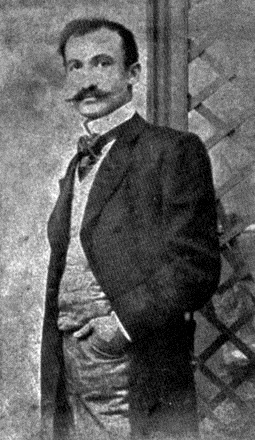
He was born in Nakhichevan-on-Don (Nor Nakhichevan), the town near Rostov founded by Armenian migrants from Crimea in the late eighteenth century, on January 28 (February 9 in the Gregorian calendar), 1886. Son of a small merchant, he studied first at the diocesan school of his hometown and then at the Lazarian Lyceum of Moscow from 1904-1906. He was attracted by revolutionary ideology as a student, first in Nakhichevan and then in Moscow. Miasnikian formally became a member of the underground revolutionary movement (the Bolshevik branch of the Russian Social-Democratic Party) in 1904 and was arrested and exiled to Baku in 1906. He continued his revolutionary activities, first in Baku and then in Moscow, where he graduated from the law department of Moscow University in 1911. Between 1912 and 1914, he worked as an assistant to a lawyer in Moscow and participated in the dissemination of political literature. His revolutionary nom de guerre was Al. Martuni (“son of fight”). AlexandrMiasnikian1

During those years, he also devoted himself to literary criticism and journalism. He edited ten periodicals. He published articles in the 1910s about the meaning of the discovery of the Armenian alphabet and the works of poets Mikayel Nalbandian, Hovhannes Tumanian, Hovhannes Hovhannisian, and Alexander Tzaturian. He wrote many times about the Armenian Question, which he labeled “Gordian knot,” where the disagreements and the interests of the European powers were tied.

Miasnikian was drafted into the Russian Army in 1914, where he promoted revolutionary ideas among the soldiers. After the February Revolution of 1917, he became a member of the Western Front’s frontline committee and was elected as a delegate for the 6th Congress of the Bolshevik Party. He later became chairman of the Northwestern Regional Committee of the Bolshevik Party, member of the Military Revolutionary Committee of the Western Region, and commander of the Western Front. In early 1919 he was appointed chairman of the Central Executive Committee and the Bolshevik Party in Bielorussia (Belarus).

After his long parenthesis outside Armenian life, Miasnikian, who was on the Polish front in 1920, was appointed chairman of the Council of People’s Commissars, the newly installed government of Soviet Armenia which replaced the Revolutionary Committee that had been in power after the fall of independent Armenia. He took the position in April 1921, after the end of the February uprising against the Soviet regime. He brought a letter from Vladimir Lenin, where the leader of the Soviet revolution exhorted his Armenian comrades: “(…) A slower, more careful, more systematic transition towards socialism; this is what is possible and necessary. To work at the same time to improve the situation of the villager and took over the great work of electrification and watering…”

Miasnikian’s constructive policy led to the formation of state institutions and the economic infrastructure of the republic, stabilizing the internal situation. He actively pursued work towards the eradication of illiteracy and the development of local manufacturing. Many intellectuals exiled in Iran before and after the February uprising returned to Armenia, while many others settled from Constantinople and other places. Many refugees from Western Armenia also started to settle in the country. He voted in July 1921 against the decision of incorporating Mountainous Karabagh into the territory of Azerbaijan, which was fueled by Joseph Stalin.

After the creation of the Transcaucasian Federative Republic in March 1922, where Armenia, Georgia, and Azerbaijan were integrated in one political unit, Miasnikian left his position and went to occupy leadership positions in the government of the federation as one of the chairmen of the Executive Committee and later first secretary of the Transcaucasian Committee of the Communist Party. AlexandrMiasnikian2

He died tragically on March 22, 1925, when he was departing from Tiflis (Tbilisi) to Sukhumi with Gevorg Atarbekian and S. Mogilevsky to participate in the Congress of the Soviets of Abkhazia. The “Junkers” airplane took fire due to an engine problem and the three men died. They were buried in Tbilisi three days later. Although the official version was an accident, there are views that it was not, and that the incident was orchestrated by, among others, the influential Georgian Bolshevik Laurenti Beria, who had started his career as right hand of Stalin. 

A factory, a square, and a street took Miasnikian’s name (in Russian Myasnikov) in Minsk, the capital of Belarus. Later, two cities in Armenia and Karabagh were named Martuni after his pseudonym, while a village in the province of Armavir was called Miasnikian. His statue is placed in Miasnikian Square of Yerevan.

Read Full Post »

THIS WEEK IN ARMENIAN HISTORY

(Prepared by the Armenian National Education Committee[ANEC])

March 15, 1921: Assassination of Talaat Pasha

On March 16, 1921, one of the headlines of The New York Times read: “Talaat Pasha Slain in Berlin Suburb.” After giving the details of the killing the day before, the report noted: “Talaat, whose name was on the second Entente list of Turkish war criminals, left Constantinople two years ago and had been living as a fugitive ever since under assumed names, first in Switzerland and later in Germany. He evidently feared the fate which has now overtaken him, for he had frequently changed his address in Berlin and at the time of his death was living at a pension in the West End.” The correspondent for the American newspaper added that the killer had been identified as an Armenian student (“Solomon Tellirian,” according to the Associated Press) and that “it is assumed that the deed was an act of revenge for the massacres of his compatriots.”
Jagadamard

On the front page of the daily paper, Jagadamard, the headline in Armenian below the banner reads, "An Armenian student kills Talaat Pasha."

In July 1919, the Turkish martial court of Constantinople had condemned to death in absentia, among others, the “Three Pashas,” the members of the Young Turk triumvirate that had led the Ottoman Empire during the war: Talaat (Minister of Interior and Great Vizir in 1917-1918), Enver (Minister of War), and Djemal (Minister of Navy). The three had already fled Turkey, and the sentences were never carried out either by Turkey or by the allies.

The 9th General Assembly of the Armenian Revolutionary Federation convened in Yerevan, the capital of the Republic of Armenia, between September and October 1919, and adopted a resolution to punish those responsible for the genocide. A list of 200 names was prepared. The secret operation received the code name “Nemesis” (the name of the Greek god of vengeance). It was led by Shahan Natalie (Hagop Der-Hagopian, 1884-1983) and Armen Garo (Bastermadjian, 1873-1923), the latter being the Armenian ambassador to the United States.
SoghomonTehlerian

The number one target of the operation was Talaat, who the U.S. Ambassador Henry Morgenthau had called the “Big Boss” of Turkey and already considered responsible of the extermination in his memoirs.

Soghomon Tehlirian (1897-1960), a 23-year-old student who had survived the Armenian Genocide in Erzinga, was selected to execute the mission. Some of the personnel in the Armenian diplomatic mission in Berlin gave logistic support, and other A.R.F. members worked from outside. Once Talaat’s whereabouts were established, Tehlirian arrived in the German capital in December 1920. For the next three months, he carried a surveillance task with his associates. He rented an apartment near the Turkish leader’s house in order to study his everyday movements. Talaat was killed by Tehlirian with a single shot on March 15, 1921, as he came out of his house in the Charlottenburg district. The assassination took place in broad daylight and led to Tehlirian’s immediate arrest by German police.

The young avenger was tried for murder on June 2-3, 1921. The three German defense attorneys focused on the influence of the genocide on Tehlirian’s mental state. When asked by the judge if he felt any sort of guilt, Tehlirian remarked, “I do not consider myself guilty because my conscience is clear … I have killed a man. But I am not a murderer.” It took the jury slightly over an hour to render a verdict of “not guilty.”

Operation Nemesis, which continued until 1922, went totally unnoticed at the time. The partial story of Talaat’s liquidation was told by Tehlirian in his memoirs, published in 1953. The main details of the operation were not uncovered until the 1980s.

Read Full Post »

« Newer Posts - Older Posts »